FLNA
Gene Information
- Official Symbol: FLNA
- Official Name: filamin A
- Aliases and Previous Symbols: N/A
- Entrez ID: 2316
- UniProt: P21333
- Interactions: BioGRID
- PubMed articles: Open PubMed
- OMIM: Open OMIM
Function Summary
- Entrez Summary: The protein encoded by this gene is an actin-binding protein that crosslinks actin filaments and links actin filaments to membrane glycoproteins. The encoded protein is involved in remodeling the cytoskeleton to effect changes in cell shape and migration. This protein interacts with integrins, transmembrane receptor complexes, and second messengers. Defects in this gene are a cause of several syndromes, including periventricular nodular heterotopias (PVNH1, PVNH4), otopalatodigital syndromes (OPD1, OPD2), frontometaphyseal dysplasia (FMD), Melnick-Needles syndrome (MNS), and X-linked congenital idiopathic intestinal pseudoobstruction (CIIPX). Two transcript variants encoding different isoforms have been found for this gene.[provided by RefSeq, Mar 2009].
- UniProt Summary: Promotes orthogonal branching of actin filaments and links actin filaments to membrane glycoproteins. Anchors various transmembrane proteins to the actin cytoskeleton and serves as a scaffold for a wide range of cytoplasmic signaling proteins. Interaction with FLNA may allow neuroblast migration from the ventricular zone into the cortical plate. Tethers cell surface- localized furin, modulates its rate of internalization and directs its intracellular trafficking (By similarity). Involved in ciliogenesis. Plays a role in cell-cell contacts and adherens junctions during the development of blood vessels, heart and brain organs. Plays a role in platelets morphology through interaction with SYK that regulates ITAM- and ITAM-like-containing receptor signaling, resulting in by platelet cytoskeleton organization maintenance (By similarity). {ECO:0000250, ECO:0000250|UniProtKB:Q8BTM8, ECO:0000269|PubMed:22121117}.
Pfam Domains GO Terms
Pfam Domains
| CH |
| Filamin |
GO Terms
| regulation of membrane repolarization during atrial cardiac muscle cell action potential |
| Fc-gamma receptor I complex binding |
| protein localization to bicellular tight junction |
| protein localization to cell-cell junction |
| Myb complex |
| formation of radial glial scaffolds |
| mu-type opioid receptor binding |
| negative regulation of transcription by RNA polymerase I |
| regulation of membrane repolarization during cardiac muscle cell action potential |
| establishment of Sertoli cell barrier |
| regulation of atrial cardiac muscle cell action potential |
| positive regulation of integrin-mediated signaling pathway |
| regulation of atrial cardiac muscle cell membrane repolarization |
| regulation of membrane repolarization during action potential |
| hindbrain radial glia guided cell migration |
| actin crosslink formation |
| adenylate cyclase-inhibiting dopamine receptor signaling pathway |
| Ral GTPase binding |
| protein localization to cell junction |
| regulation of integrin-mediated signaling pathway |
| cell migration in hindbrain |
| Sertoli cell development |
| apical dendrite |
| positive regulation of neuron migration |
| cortical cytoskeleton |
| mRNA transcription by RNA polymerase II |
| Sertoli cell differentiation |
| small GTPase binding |
| cytoplasmic sequestering of protein |
| epiboly involved in wound healing |
| mRNA transcription |
| protein localization to cell surface |
| wound healing, spreading of cells |
| epiboly |
| regulation of cardiac muscle cell membrane repolarization |
| regulation of cardiac muscle cell action potential |
| Rho GTPase binding |
| regulation of transcription by RNA polymerase I |
| regulation of membrane repolarization |
| GTPase binding |
| dopamine receptor signaling pathway |
| dendritic shaft |
| positive regulation of protein import into nucleus |
| positive regulation of substrate adhesion-dependent cell spreading |
| semaphorin-plexin signaling pathway |
| mitotic spindle assembly |
| positive regulation of potassium ion transmembrane transport |
| regulation of cardiac muscle cell contraction |
| positive regulation of protein import |
| potassium channel regulator activity |
| regulation of actin filament-based movement |
| regulation of neuron migration |
| platelet aggregation |
| positive regulation of potassium ion transport |
| receptor clustering |
| regulation of action potential |
| morphogenesis of an epithelial sheet |
| positive regulation of neural precursor cell proliferation |
| SMAD binding |
| regulation of substrate adhesion-dependent cell spreading |
| Rac GTPase binding |
| regulation of protein import into nucleus |
| regulation of protein import |
| homotypic cell-cell adhesion |
| positive regulation of actin filament bundle assembly |
| positive regulation of nucleocytoplasmic transport |
| actin cytoskeleton reorganization |
| G protein-coupled receptor binding |
| regulation of cardiac conduction |
| positive regulation of protein localization to nucleus |
| mitotic spindle organization |
| regulation of cardiac muscle contraction |
| regulation of potassium ion transmembrane transport |
| actin filament |
| postsynapse |
| adenylate cyclase-inhibiting G protein-coupled receptor signaling pathway |
| localization within membrane |
| cellular response to dopamine |
| response to dopamine |
| regulation of neural precursor cell proliferation |
| regulation of striated muscle contraction |
| kinase binding |
| regulation of actin filament bundle assembly |
| signal transduction involved in cellular response to ammonium ion |
| regulation of potassium ion transport |
| spindle assembly |
| cellular response to catecholamine stimulus |
| cellular response to monoamine stimulus |
| microtubule cytoskeleton organization involved in mitosis |
| response to catecholamine |
| maintenance of protein location |
| regulation of nucleocytoplasmic transport |
| response to monoamine |
| cerebral cortex development |
| regulation of protein localization to nucleus |
| positive regulation of cell-substrate adhesion |
| ion channel binding |
| platelet degranulation |
| cellular response to ammonium ion |
| Z disc |
| negative regulation of protein catabolic process |
| male gonad development |
| development of primary male sexual characteristics |
| platelet activation |
| positive regulation of cation transmembrane transport |
| mitotic nuclear division |
| hindbrain development |
| positive regulation of intracellular protein transport |
| positive regulation of cell morphogenesis involved in differentiation |
| spindle organization |
| positive regulation of ion transmembrane transport |
| male sex differentiation |
| regulation of muscle contraction |
| negative regulation of DNA-binding transcription factor activity |
| maintenance of location |
| cell junction assembly |
| cell-cell junction |
| pallium development |
| protein stabilization |
| protein localization to plasma membrane |
| response to ammonium ion |
| positive regulation of I-kappaB kinase/NF-kappaB signaling |
| epithelial cell development |
| defense response to virus |
| positive regulation of supramolecular fiber organization |
| positive regulation of transmembrane transport |
| actin filament binding |
| positive regulation of intracellular transport |
| adenylate cyclase-modulating G protein-coupled receptor signaling pathway |
| gonad development |
| regulation of cell-substrate adhesion |
| cell junction organization |
| actin cytoskeleton |
| development of primary sexual characteristics |
| positive regulation of cytoskeleton organization |
| protein localization to cell periphery |
| regulation of intracellular protein transport |
| regulation of muscle system process |
| regulation of I-kappaB kinase/NF-kappaB signaling |
| actin filament organization |
| regulation of heart contraction |
| G protein-coupled receptor signaling pathway, coupled to cyclic nucleotide second messenger |
| telencephalon development |
| regulation of actin filament organization |
| sex differentiation |
| positive regulation of ion transport |
| response to virus |
| nuclear division |
| regulation of protein stability |
| regulation of blood circulation |
| blood coagulation |
| coagulation |
| hemostasis |
| regulation of cell morphogenesis involved in differentiation |
| cadherin binding |
| negative regulation of catabolic process |
| organelle fission |
| positive regulation of cellular protein localization |
| transcription factor binding |
| regulation of cation transmembrane transport |
| regulation of actin cytoskeleton organization |
| cilium assembly |
| glutamatergic synapse |
| regulation of intracellular transport |
| regulation of supramolecular fiber organization |
| cilium organization |
| neuronal cell body |
| regulation of protein catabolic process |
| regulation of metal ion transport |
| forebrain development |
| regulation of actin filament-based process |
| positive regulation of cell adhesion |
| cellular response to drug |
| focal adhesion |
| reproductive structure development |
| positive regulation of protein transport |
| regulation of DNA-binding transcription factor activity |
| reproductive system development |
| regulation of membrane potential |
| morphogenesis of an epithelium |
| plasma membrane bounded cell projection assembly |
| supramolecular fiber organization |
| cell projection assembly |
| positive regulation of establishment of protein localization |
| positive regulation of neurogenesis |
| microtubule cytoskeleton organization |
| regulation of ion transmembrane transport |
| wound healing |
| protein localization to membrane |
| transcription by RNA polymerase II |
| regulation of cell morphogenesis |
| actin cytoskeleton organization |
| regulation of body fluid levels |
| positive regulation of cell migration |
| cell-cell adhesion |
| positive regulation of cellular component biogenesis |
| positive regulation of cell motility |
| positive regulation of nervous system development |
| positive regulation of cellular component movement |
| regulation of cellular protein localization |
| regulation of cytoskeleton organization |
| cellular response to organic cyclic compound |
| positive regulation of cell development |
| positive regulation of locomotion |
| cell morphogenesis involved in differentiation |
| regulation of transmembrane transport |
| tissue morphogenesis |
| actin filament-based process |
| response to wounding |
| regulation of system process |
| mitotic cell cycle process |
| cellular response to organonitrogen compound |
| positive regulation of organelle organization |
| transcription, DNA-templated |
| nucleic acid-templated transcription |
| RNA biosynthetic process |
| cellular response to nitrogen compound |
| developmental process involved in reproduction |
| microtubule-based process |
| epithelial cell differentiation |
| regulation of cell adhesion |
| mitotic cell cycle |
| mRNA metabolic process |
| perinuclear region of cytoplasm |
| regulation of ion transport |
| regulated exocytosis |
| regulation of protein transport |
| cell morphogenesis |
| regulation of peptide transport |
| brain development |
| regulation of establishment of protein localization |
| organelle assembly |
| head development |
| exocytosis |
| regulation of neurogenesis |
| cellular component morphogenesis |
| regulation of cell migration |
| nucleolus |
| protein homodimerization activity |
| negative regulation of apoptotic process |
| negative regulation of programmed cell death |
| regulation of cell motility |
| positive regulation of cell population proliferation |
| regulation of cellular localization |
| response to organic cyclic compound |
| regulation of nervous system development |
| cell adhesion |
| regulation of cell development |
| biological adhesion |
| defense response to other organism |
| regulation of cellular component biogenesis |
| cell migration |
| positive regulation of cell differentiation |
| central nervous system development |
| regulation of locomotion |
| positive regulation of transport |
| negative regulation of cell death |
| regulation of catabolic process |
| regulation of cellular component movement |
| cell cycle process |
| response to organonitrogen compound |
| secretion by cell |
| positive regulation of intracellular signal transduction |
| response to drug |
| regulation of protein localization |
| export from cell |
| cellular response to oxygen-containing compound |
| regulation of anatomical structure morphogenesis |
| cell activation |
| cell motility |
| localization of cell |
| response to nitrogen compound |
| immune effector process |
| nucleobase-containing compound biosynthetic process |
| negative regulation of protein metabolic process |
| cytoskeleton organization |
| epithelium development |
| plasma membrane bounded cell projection organization |
| secretion |
| negative regulation of molecular function |
| cell projection organization |
| heterocycle biosynthetic process |
| aromatic compound biosynthetic process |
| negative regulation of transcription, DNA-templated |
| positive regulation of cellular component organization |
| cellular response to endogenous stimulus |
| negative regulation of nucleic acid-templated transcription |
| negative regulation of RNA biosynthetic process |
| regulation of organelle organization |
| response to other organism |
| organic cyclic compound biosynthetic process |
| response to external biotic stimulus |
| locomotion |
| G protein-coupled receptor signaling pathway |
| response to biotic stimulus |
| negative regulation of RNA metabolic process |
| defense response |
| cell cycle |
| positive regulation of developmental process |
| negative regulation of cellular macromolecule biosynthetic process |
| RNA binding |
| reproductive process |
| reproduction |
| negative regulation of nucleobase-containing compound metabolic process |
| negative regulation of macromolecule biosynthetic process |
| response to endogenous stimulus |
| negative regulation of cellular biosynthetic process |
| generation of neurons |
| regulation of apoptotic process |
| negative regulation of biosynthetic process |
| movement of cell or subcellular component |
| response to oxygen-containing compound |
| regulation of programmed cell death |
| cellular protein localization |
| cellular macromolecule localization |
| establishment of protein localization |
| regulation of cell population proliferation |
| neurogenesis |
| cellular nitrogen compound biosynthetic process |
| cell development |
| positive regulation of signal transduction |
| RNA metabolic process |
| regulation of cell death |
| cellular macromolecule biosynthetic process |
| negative regulation of gene expression |
| positive regulation of multicellular organismal process |
| tissue development |
| macromolecule biosynthetic process |
| regulation of cell differentiation |
| positive regulation of cell communication |
| positive regulation of signaling |
| regulation of intracellular signal transduction |
| regulation of transport |
| extracellular region |
| vesicle-mediated transport |
| membrane |
| gene expression |
CRISPR Data
Compound Hit Most Correlated Genes in Chemogenomics Tissues where Essential in the Avana Dataset (DepMap 20Q1)
Compound Hit
No hits were found.
Most Correlated Genes in Chemogenomics
No correlation found to any other genes in chemogenomics.
Tissues where Essential in the Avana Dataset (DepMap 20Q1)
Global Fraction of Cell Lines Where Essential: 0/694
| Tissue | Fraction Of Cell Lines Where Essential |
|---|---|
| 1290807.0 | 0/1 |
| 909776.0 | 0/1 |
| bile duct | 0/28 |
| blood | 0/26 |
| bone | 0/26 |
| breast | 0/30 |
| central nervous system | 0/49 |
| cervix | 0/4 |
| colorectal | 0/17 |
| esophagus | 0/11 |
| fibroblast | 0/1 |
| gastric | 0/14 |
| kidney | 0/18 |
| liver | 0/19 |
| lung | 0/72 |
| lymphocyte | 0/16 |
| ovary | 0/25 |
| pancreas | 0/22 |
| peripheral nervous system | 0/15 |
| plasma cell | 0/12 |
| prostate | 0/1 |
| skin | 0/20 |
| soft tissue | 0/9 |
| thyroid | 0/2 |
| upper aerodigestive | 0/22 |
| urinary tract | 0/28 |
| uterus | 0/5 |
Essentiality in NALM6
- Essentiality Rank: 12122
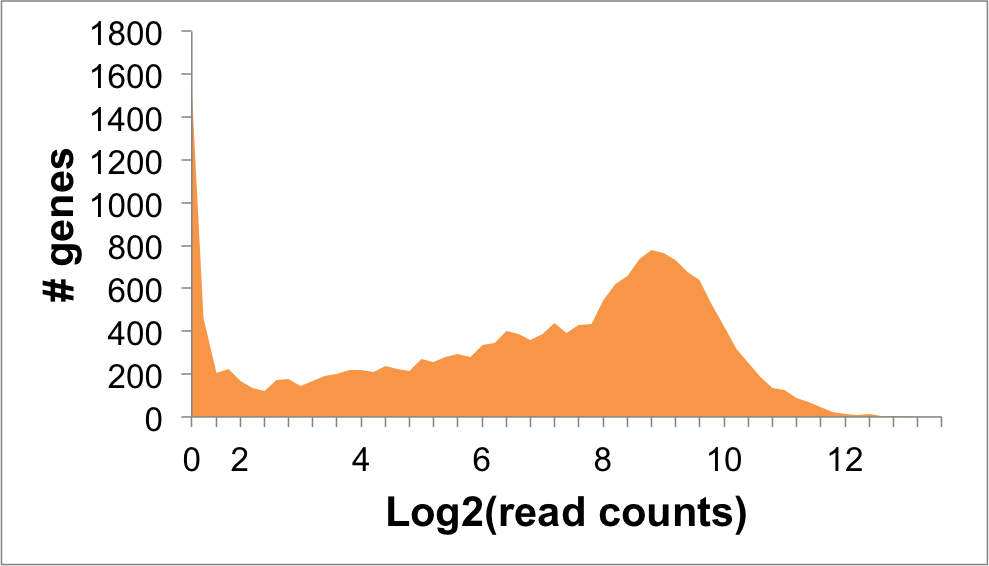
- Expression level (log2 read counts): 8.92
Expression Distribution
FLNA Expression in NALM6 Cells: 8.92