GATA6
Gene Information
- Official Symbol: GATA6
- Official Name: GATA binding protein 6
- Aliases and Previous Symbols: N/A
- Entrez ID: 2627
- UniProt: Q92908
- Interactions: BioGRID
- PubMed articles: Open PubMed
- OMIM: Open OMIM
Function Summary
- Entrez Summary: This gene is a member of a small family of zinc finger transcription factors that play an important role in the regulation of cellular differentiation and organogenesis during vertebrate development. This gene is expressed during early embryogenesis and localizes to endo- and mesodermally derived cells during later embryogenesis and thereby plays an important role in gut, lung, and heart development. Mutations in this gene are associated with several congenital defects. [provided by RefSeq, Mar 2012].
- UniProt Summary: Transcriptional activator (PubMed:19666519, PubMed:27756709, PubMed:22750565, PubMed:22824924). Regulates SEMA3C and PLXNA2 (PubMed:19666519). Involved in gene regulation specifically in the gastric epithelium (PubMed:9315713). May regulate genes that protect epithelial cells from bacterial infection (PubMed:16968778). Involved in bone morphogenetic protein (BMP)-mediated cardiac-specific gene expression (By similarity). Binds to BMP response element (BMPRE) DNA sequences within cardiac activating regions (By similarity). {ECO:0000250|UniProtKB:Q61169, ECO:0000269|PubMed:16968778, ECO:0000269|PubMed:19666519, ECO:0000269|PubMed:22750565, ECO:0000269|PubMed:22824924, ECO:0000269|PubMed:27756709, ECO:0000269|PubMed:9315713}.
Pfam Domains GO Terms
Pfam Domains
| GATA |
| GATA-N |
GO Terms
| negative regulation of transforming growth factor beta2 production |
| endodermal cell fate determination |
| positive regulation of cardiac muscle myoblast proliferation |
| regulation of cardiac muscle myoblast proliferation |
| Clara cell differentiation |
| type II pneumocyte differentiation |
| negative regulation of transforming growth factor beta1 production |
| cardiac vascular smooth muscle cell differentiation |
| positive regulation of cardioblast differentiation |
| pancreatic A cell differentiation |
| regulation of cardioblast differentiation |
| lung saccule development |
| regulation of transforming growth factor beta2 production |
| positive regulation of myoblast proliferation |
| lung secretory cell differentiation |
| negative regulation of transforming growth factor beta production |
| regulation of transforming growth factor beta1 production |
| regulation of myoblast proliferation |
| endodermal cell fate commitment |
| cardiac muscle hypertrophy in response to stress |
| cardiac muscle adaptation |
| vascular smooth muscle cell differentiation |
| muscle hypertrophy in response to stress |
| cellular response to gonadotropin stimulus |
| type B pancreatic cell differentiation |
| intestinal epithelial cell differentiation |
| enteroendocrine cell differentiation |
| lung epithelial cell differentiation |
| positive regulation of stem cell differentiation |
| lung cell differentiation |
| positive regulation of cardiac muscle cell proliferation |
| striated muscle adaptation |
| cell fate commitment involved in formation of primary germ layer |
| outflow tract septum morphogenesis |
| response to gonadotropin |
| positive regulation of cardiocyte differentiation |
| cardiac muscle hypertrophy |
| lung epithelium development |
| striated muscle hypertrophy |
| muscle adaptation |
| muscle hypertrophy |
| smooth muscle cell differentiation |
| positive regulation of cardiac muscle tissue growth |
| animal organ formation |
| RNA polymerase II repressing transcription factor binding |
| regulation of transforming growth factor beta production |
| positive regulation of heart growth |
| glandular epithelial cell differentiation |
| endocrine pancreas development |
| cell fate determination |
| regulation of cardiac muscle cell proliferation |
| endodermal cell differentiation |
| lung alveolus development |
| positive regulation of cardiac muscle tissue development |
| coronary vasculature development |
| endoderm formation |
| positive regulation of organ growth |
| regulation of cardiocyte differentiation |
| regulation of cardiac muscle tissue growth |
| regulation of heart growth |
| positive regulation of muscle organ development |
| positive regulation of striated muscle tissue development |
| positive regulation of muscle tissue development |
| pancreas development |
| outflow tract morphogenesis |
| endoderm development |
| cardiac septum morphogenesis |
| response to estrogen |
| regulation of cardiac muscle tissue development |
| positive regulation of cell cycle arrest |
| cardiac muscle cell differentiation |
| regulation of organ growth |
| columnar/cuboidal epithelial cell differentiation |
| cellular response to BMP stimulus |
| response to BMP |
| regulation of cell cycle arrest |
| cardiac septum development |
| formation of primary germ layer |
| cardiocyte differentiation |
| regulation of stem cell differentiation |
| endocrine system development |
| liver development |
| cardiac chamber morphogenesis |
| hepaticobiliary system development |
| digestive tract development |
| regulation of striated muscle tissue development |
| male gonad development |
| regulation of muscle tissue development |
| development of primary male sexual characteristics |
| regulation of muscle organ development |
| digestive system development |
| male sex differentiation |
| gastrulation |
| cardiac muscle tissue development |
| positive regulation of angiogenesis |
| lung development |
| cardiac chamber development |
| positive regulation of developmental growth |
| respiratory tube development |
| positive regulation of vasculature development |
| cellular response to hypoxia |
| respiratory system development |
| cellular response to decreased oxygen levels |
| striated muscle cell differentiation |
| transcription factor complex |
| gonad development |
| cellular response to oxygen levels |
| development of primary sexual characteristics |
| transcription regulatory region DNA binding |
| nuclear membrane |
| muscle cell differentiation |
| cell fate commitment |
| heart morphogenesis |
| positive regulation of growth |
| sex differentiation |
| negative regulation of cytokine production |
| striated muscle tissue development |
| positive regulation of cell cycle process |
| regulation of angiogenesis |
| blood coagulation |
| coagulation |
| muscle tissue development |
| hemostasis |
| muscle system process |
| regulation of vasculature development |
| regulation of developmental growth |
| transcription factor binding |
| response to hypoxia |
| response to decreased oxygen levels |
| phospholipid metabolic process |
| in utero embryonic development |
| positive regulation of cell cycle |
| response to oxygen levels |
| chromatin binding |
| gland development |
| reproductive structure development |
| reproductive system development |
| protein kinase binding |
| muscle structure development |
| wound healing |
| transcription by RNA polymerase II |
| blood vessel development |
| regulation of body fluid levels |
| cellular response to growth factor stimulus |
| RNA polymerase II proximal promoter sequence-specific DNA binding |
| vasculature development |
| cardiovascular system development |
| heart development |
| response to growth factor |
| embryonic morphogenesis |
| response to wounding |
| cellular response to hormone stimulus |
| chordate embryonic development |
| transcription, DNA-templated |
| nucleic acid-templated transcription |
| embryo development ending in birth or egg hatching |
| RNA biosynthetic process |
| tube morphogenesis |
| developmental process involved in reproduction |
| regulation of growth |
| DNA-binding transcription factor activity |
| epithelial cell differentiation |
| regulation of cytokine production |
| regulation of cell cycle process |
| zinc ion binding |
| tube development |
| negative regulation of transcription by RNA polymerase II |
| circulatory system development |
| organophosphate metabolic process |
| negative regulation of apoptotic process |
| anatomical structure formation involved in morphogenesis |
| negative regulation of programmed cell death |
| response to hormone |
| positive regulation of cell population proliferation |
| animal organ morphogenesis |
| cellular lipid metabolic process |
| positive regulation of cell differentiation |
| embryo development |
| negative regulation of cell death |
| response to drug |
| regulation of anatomical structure morphogenesis |
| nucleobase-containing compound biosynthetic process |
| epithelium development |
| response to abiotic stimulus |
| heterocycle biosynthetic process |
| aromatic compound biosynthetic process |
| regulation of cell cycle |
| negative regulation of transcription, DNA-templated |
| negative regulation of multicellular organismal process |
| lipid metabolic process |
| positive regulation of transcription by RNA polymerase II |
| cellular response to endogenous stimulus |
| negative regulation of nucleic acid-templated transcription |
| negative regulation of RNA biosynthetic process |
| organic cyclic compound biosynthetic process |
| negative regulation of RNA metabolic process |
| positive regulation of developmental process |
| negative regulation of cellular macromolecule biosynthetic process |
| reproductive process |
| reproduction |
| negative regulation of nucleobase-containing compound metabolic process |
| negative regulation of macromolecule biosynthetic process |
| response to endogenous stimulus |
| negative regulation of cellular biosynthetic process |
| regulation of apoptotic process |
| positive regulation of transcription, DNA-templated |
| negative regulation of biosynthetic process |
| DNA-binding transcription factor activity, RNA polymerase II-specific |
| regulation of programmed cell death |
| regulation of cell population proliferation |
| cellular nitrogen compound biosynthetic process |
| positive regulation of nucleic acid-templated transcription |
| positive regulation of RNA biosynthetic process |
| RNA metabolic process |
| regulation of cell death |
| cellular response to stress |
| cellular macromolecule biosynthetic process |
| negative regulation of gene expression |
| positive regulation of RNA metabolic process |
| positive regulation of multicellular organismal process |
| tissue development |
| macromolecule biosynthetic process |
| regulation of cell differentiation |
| positive regulation of nucleobase-containing compound metabolic process |
| positive regulation of macromolecule biosynthetic process |
| system process |
| positive regulation of cellular biosynthetic process |
| positive regulation of gene expression |
| gene expression |
| positive regulation of biosynthetic process |
CRISPR Data
Compound Hit Most Correlated Genes in Chemogenomics Tissues where Essential in the Avana Dataset (DepMap 20Q1)
Compound Hit
No hits were found.
Most Correlated Genes in Chemogenomics
No correlation found to any other genes in chemogenomics.
Tissues where Essential in the Avana Dataset (DepMap 20Q1)
Global Fraction of Cell Lines Where Essential: 0/739
| Tissue | Fraction Of Cell Lines Where Essential |
|---|---|
| 1290807.0 | 0/1 |
| 909776.0 | 0/1 |
| bile duct | 0/28 |
| blood | 0/28 |
| bone | 0/26 |
| breast | 0/33 |
| central nervous system | 0/56 |
| cervix | 0/4 |
| colorectal | 0/17 |
| esophagus | 0/13 |
| fibroblast | 0/1 |
| gastric | 0/16 |
| kidney | 0/21 |
| liver | 0/20 |
| lung | 0/75 |
| lymphocyte | 0/16 |
| ovary | 0/26 |
| pancreas | 0/24 |
| peripheral nervous system | 0/16 |
| plasma cell | 0/15 |
| prostate | 0/1 |
| skin | 0/24 |
| soft tissue | 0/9 |
| thyroid | 0/2 |
| upper aerodigestive | 0/22 |
| urinary tract | 0/29 |
| uterus | 0/5 |
Essentiality in NALM6
- Essentiality Rank: 9207
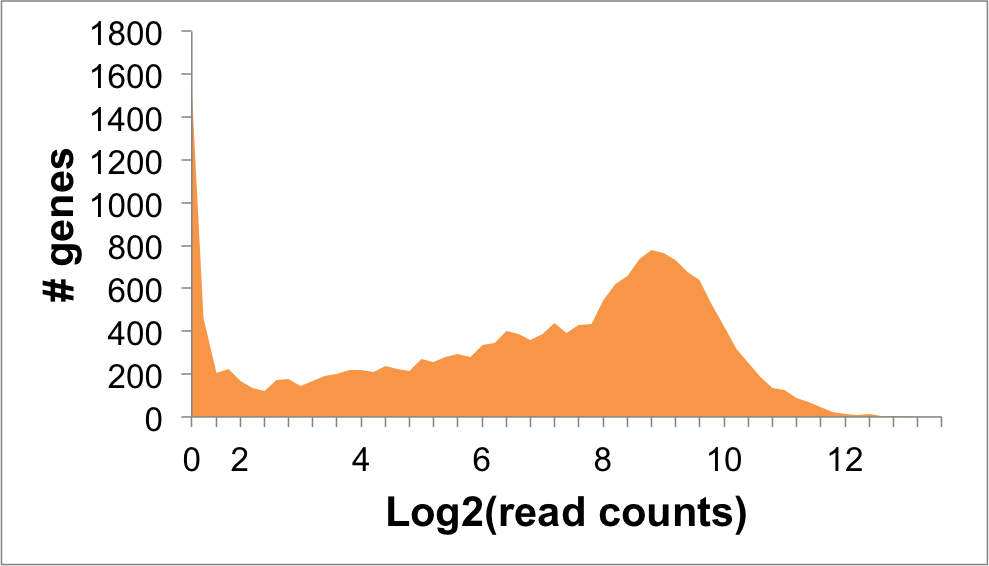
- Expression level (log2 read counts): -5.28
Expression Distribution
GATA6 Expression in NALM6 Cells: -5.28