HMGA2
Gene Information
- Official Symbol: HMGA2
- Official Name: high mobility group AT-hook 2
- Aliases and Previous Symbols: N/A
- Entrez ID: 8091
- UniProt: P52926
- Interactions: BioGRID
- PubMed articles: Open PubMed
- OMIM: Open OMIM
Function Summary
- Entrez Summary: This gene encodes a protein that belongs to the non-histone chromosomal high mobility group (HMG) protein family. HMG proteins function as architectural factors and are essential components of the enhancesome. This protein contains structural DNA-binding domains and may act as a transcriptional regulating factor. Identification of the deletion, amplification, and rearrangement of this gene that are associated with myxoid liposarcoma suggests a role in adipogenesis and mesenchymal differentiation. A gene knock out study of the mouse counterpart demonstrated that this gene is involved in diet-induced obesity. Alternate transcriptional splice variants, encoding different isoforms, have been characterized. [provided by RefSeq, Jul 2008].
- UniProt Summary: Functions as a transcriptional regulator. Functions in cell cycle regulation through CCNA2. Plays an important role in chromosome condensation during the meiotic G2/M transition of spermatocytes. Plays a role in postnatal myogenesis, is involved in satellite cell activation (By similarity). {ECO:0000250|UniProtKB:P52927, ECO:0000269|PubMed:14645522}.
Pfam Domains GO Terms
Pfam Domains
No Pfam Domain information is available for this gene.
GO Terms
| histone H2A-S139 phosphorylation |
| MH1 domain binding |
| mesodermal-endodermal cell signaling |
| positive regulation of cellular response to X-ray |
| oncogene-induced cell senescence |
| MH2 domain binding |
| programmed DNA elimination |
| chromosome breakage |
| regulation of cellular response to X-ray |
| senescence-associated heterochromatin focus assembly |
| senescence-associated heterochromatin focus |
| histone H2A phosphorylation |
| 5-deoxyribose-5-phosphate lyase activity |
| negative regulation of double-strand break repair via nonhomologous end joining |
| SMAD protein complex |
| regulation of cell proliferation in bone marrow |
| positive regulation of cell proliferation in bone marrow |
| AT DNA binding |
| heterochromatin assembly |
| chondrocyte proliferation |
| histone-serine phosphorylation |
| DNA-(apurinic or apyrimidinic site) endonuclease activity |
| positive regulation of cellular senescence |
| cAMP response element binding |
| negative regulation of single stranded viral RNA replication via double stranded DNA intermediate |
| negative regulation by host of viral transcription |
| positive regulation of cell aging |
| C2H2 zinc finger domain binding |
| heterochromatin organization |
| regulation of single stranded viral RNA replication via double stranded DNA intermediate |
| mitotic G2 DNA damage checkpoint |
| negative regulation of cellular senescence |
| DNA binding, bending |
| negative regulation of cell aging |
| regulation of double-strand break repair via nonhomologous end joining |
| positive regulation of transcription regulatory region DNA binding |
| mesodermal cell differentiation |
| negative regulation of viral transcription |
| regulation of stem cell population maintenance |
| nuclear chromosome |
| mitotic G2/M transition checkpoint |
| histone phosphorylation |
| G2 DNA damage checkpoint |
| negative regulation of double-strand break repair |
| cellular senescence |
| negative regulation of DNA repair |
| regulation of cellular response to drug |
| base-excision repair |
| DNA damage response, detection of DNA damage |
| positive regulation of stem cell proliferation |
| endodermal cell differentiation |
| regulation of cellular senescence |
| chromosome condensation |
| protein-DNA complex |
| nucleosomal DNA binding |
| endoderm formation |
| regulation of cell aging |
| SMAD binding |
| regulation of transcription regulatory region DNA binding |
| negative regulation of DNA binding |
| positive regulation of DNA binding |
| negative regulation of viral genome replication |
| cell aging |
| regulation of viral transcription |
| regulation of stem cell proliferation |
| mesoderm formation |
| mesoderm morphogenesis |
| epithelial to mesenchymal transition |
| modification by host of symbiont morphology or physiology |
| endoderm development |
| interaction with symbiont |
| regulation of double-strand break repair |
| negative regulation of response to DNA damage stimulus |
| positive regulation of cell cycle arrest |
| negative regulation of viral life cycle |
| chondrocyte differentiation |
| transcription coregulator activity |
| negative regulation of G2/M transition of mitotic cell cycle |
| regulation of viral genome replication |
| mitotic DNA damage checkpoint |
| negative regulation of viral process |
| regulation of response to drug |
| positive regulation of response to DNA damage stimulus |
| negative regulation of cell cycle G2/M phase transition |
| mitotic DNA integrity checkpoint |
| fat cell differentiation |
| regulation of cell cycle arrest |
| modification of morphology or physiology of other organism involved in symbiotic interaction |
| formation of primary germ layer |
| negative regulation of DNA metabolic process |
| regulation of DNA repair |
| mesoderm development |
| regulation of DNA binding |
| DNA damage checkpoint |
| chromatin assembly |
| DNA integrity checkpoint |
| regulation of viral life cycle |
| mitotic cell cycle checkpoint |
| modification of morphology or physiology of other organism |
| chromatin assembly or disassembly |
| mesenchymal cell differentiation |
| stem cell differentiation |
| gastrulation |
| chromatin remodeling |
| positive regulation of angiogenesis |
| negative regulation of binding |
| cartilage development |
| peptidyl-serine phosphorylation |
| DNA packaging |
| positive regulation of binding |
| positive regulation of vasculature development |
| cell cycle checkpoint |
| regulation of G2/M transition of mitotic cell cycle |
| peptidyl-serine modification |
| regulation of viral process |
| regulation of cell cycle G2/M phase transition |
| negative regulation of mitotic cell cycle phase transition |
| negative regulation of multi-organism process |
| transcription regulatory region DNA binding |
| regulation of response to DNA damage stimulus |
| regulation of symbiosis, encompassing mutualism through parasitism |
| mesenchyme development |
| connective tissue development |
| negative regulation of cell cycle phase transition |
| DNA-binding transcription repressor activity, RNA polymerase II-specific |
| aging |
| response to virus |
| positive regulation of cell cycle process |
| regulation of angiogenesis |
| DNA conformation change |
| negative regulation of mitotic cell cycle |
| regulation of vasculature development |
| negative regulation of cell cycle process |
| transcription factor binding |
| positive regulation of protein serine/threonine kinase activity |
| regulation of DNA metabolic process |
| histone modification |
| covalent chromatin modification |
| positive regulation of cell cycle |
| regulation of binding |
| regulation of mitotic cell cycle phase transition |
| DNA-binding transcription activator activity, RNA polymerase II-specific |
| regulation of cell cycle phase transition |
| cell division |
| skeletal system development |
| RNA polymerase II proximal promoter sequence-specific DNA binding |
| DNA repair |
| regulation of protein serine/threonine kinase activity |
| positive regulation of protein kinase activity |
| cell population proliferation |
| tissue morphogenesis |
| embryonic morphogenesis |
| negative regulation of cell cycle |
| positive regulation of kinase activity |
| mitotic cell cycle process |
| regulation of mitotic cell cycle |
| positive regulation of apoptotic process |
| positive regulation of programmed cell death |
| positive regulation of transferase activity |
| regulation of growth |
| mitotic cell cycle |
| detection of stimulus |
| positive regulation of cell death |
| chromatin organization |
| regulation of cellular response to stress |
| DNA metabolic process |
| regulation of cell cycle process |
| cellular response to DNA damage stimulus |
| regulation of multi-organism process |
| symbiotic process |
| regulation of protein kinase activity |
| interspecies interaction between organisms |
| negative regulation of transcription by RNA polymerase II |
| regulation of kinase activity |
| peptidyl-amino acid modification |
| negative regulation of apoptotic process |
| anatomical structure formation involved in morphogenesis |
| negative regulation of programmed cell death |
| positive regulation of cell population proliferation |
| negative regulation of developmental process |
| protein phosphorylation |
| embryo development |
| regulation of transferase activity |
| negative regulation of cell death |
| cell cycle process |
| positive regulation of protein phosphorylation |
| positive regulation of phosphorylation |
| regulation of anatomical structure morphogenesis |
| chromosome organization |
| cell-cell signaling |
| positive regulation of phosphorus metabolic process |
| positive regulation of phosphate metabolic process |
| negative regulation of molecular function |
| regulation of cell cycle |
| negative regulation of transcription, DNA-templated |
| positive regulation of transcription by RNA polymerase II |
| positive regulation of protein modification process |
| negative regulation of nucleic acid-templated transcription |
| negative regulation of RNA biosynthetic process |
| phosphorylation |
| response to other organism |
| response to external biotic stimulus |
| response to biotic stimulus |
| negative regulation of RNA metabolic process |
| cell cycle |
| positive regulation of developmental process |
| negative regulation of cellular macromolecule biosynthetic process |
| positive regulation of catalytic activity |
| negative regulation of nucleobase-containing compound metabolic process |
| regulation of protein phosphorylation |
| DNA binding |
| negative regulation of macromolecule biosynthetic process |
| regulation of response to stress |
| negative regulation of cellular biosynthetic process |
| positive regulation of transcription, DNA-templated |
| regulation of apoptotic process |
| negative regulation of biosynthetic process |
| DNA-binding transcription factor activity, RNA polymerase II-specific |
| regulation of programmed cell death |
| regulation of phosphorylation |
| positive regulation of cellular protein metabolic process |
| regulation of cell population proliferation |
| negative regulation of response to stimulus |
| positive regulation of nucleic acid-templated transcription |
| positive regulation of RNA biosynthetic process |
| regulation of cell death |
| cellular response to stress |
| positive regulation of protein metabolic process |
| negative regulation of gene expression |
| positive regulation of RNA metabolic process |
| positive regulation of multicellular organismal process |
| tissue development |
| positive regulation of molecular function |
| regulation of phosphate metabolic process |
| regulation of phosphorus metabolic process |
| regulation of protein modification process |
| positive regulation of nucleobase-containing compound metabolic process |
| positive regulation of macromolecule biosynthetic process |
| positive regulation of cellular biosynthetic process |
| positive regulation of gene expression |
| positive regulation of biosynthetic process |
CRISPR Data
Compound Hit Most Correlated Genes in Chemogenomics Tissues where Essential in the Avana Dataset (DepMap 20Q1)
Compound Hit
No hits were found.
Most Correlated Genes in Chemogenomics
No correlation found to any other genes in chemogenomics.
Tissues where Essential in the Avana Dataset (DepMap 20Q1)
Global Fraction of Cell Lines Where Essential: 0/726
| Tissue | Fraction Of Cell Lines Where Essential |
|---|---|
| 1290807.0 | 0/1 |
| 909776.0 | 0/1 |
| bile duct | 0/28 |
| blood | 0/28 |
| bone | 0/25 |
| breast | 0/33 |
| central nervous system | 0/56 |
| cervix | 0/4 |
| colorectal | 0/17 |
| esophagus | 0/13 |
| fibroblast | 0/1 |
| gastric | 0/15 |
| kidney | 0/21 |
| liver | 0/20 |
| lung | 0/75 |
| lymphocyte | 0/14 |
| ovary | 0/26 |
| pancreas | 0/24 |
| peripheral nervous system | 0/16 |
| plasma cell | 0/15 |
| prostate | 0/1 |
| skin | 0/24 |
| soft tissue | 0/7 |
| thyroid | 0/2 |
| upper aerodigestive | 0/22 |
| urinary tract | 0/29 |
| uterus | 0/5 |
Essentiality in NALM6
- Essentiality Rank: 15382
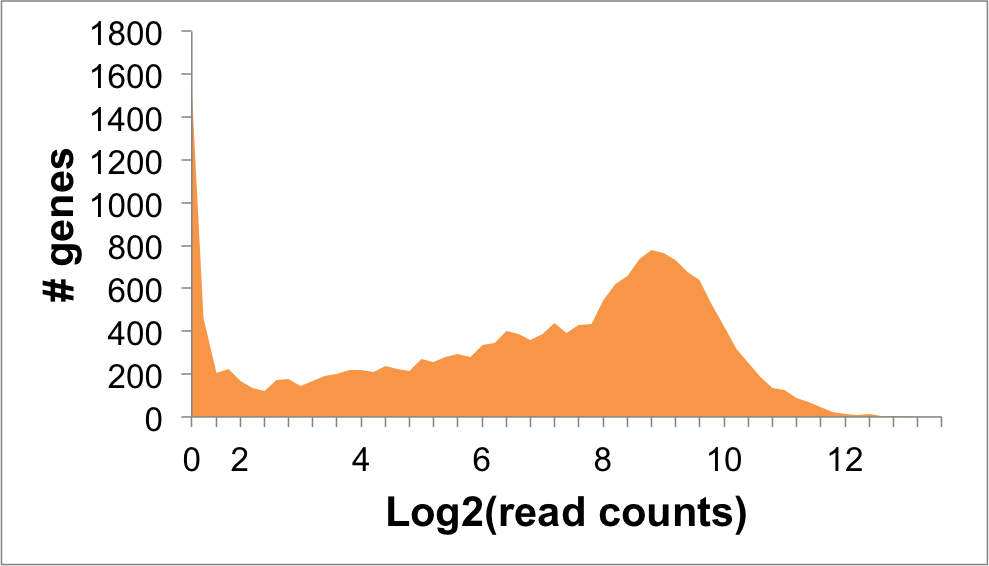
- Expression level (log2 read counts): 2.49
Expression Distribution
HMGA2 Expression in NALM6 Cells: 2.49