SUMO3
Gene Information
- Official Symbol: SUMO3
- Official Name: small ubiquitin like modifier 3
- Aliases and Previous Symbols: N/A
- Entrez ID: 6612
- UniProt: P55854
- Interactions: BioGRID
- PubMed articles: Open PubMed
- OMIM: Open OMIM
Function Summary
- Entrez Summary: This gene encodes a member of the small ubiquitin-related modifier (SUMO) family of eukaryotic proteins. The encoded protein is covalently conjugated to other proteins via a post-translation modification known as sumoylation. Sumoylation may play a role in a wide variety of cellular processes, including nuclear transport, DNA replication and repair, mitosis, transcriptional regulation, and signal transduction. Alternatively spliced transcript variants encoding distinct proteins have been described. [provided by RefSeq, Feb 2014].
- UniProt Summary: Ubiquitin-like protein which can be covalently attached to target lysines either as a monomer or as a lysine-linked polymer. Does not seem to be involved in protein degradation and may function as an antagonist of ubiquitin in the degradation process. Plays a role in a number of cellular processes such as nuclear transport, DNA replication and repair, mitosis and signal transduction. Covalent attachment to its substrates requires prior activation by the E1 complex SAE1-SAE2 and linkage to the E2 enzyme UBE2I, and can be promoted by an E3 ligase such as PIAS1-4, RANBP2 or CBX4 (PubMed:11451954, PubMed:18538659, PubMed:21965678). Plays a role in the regulation of sumoylation status of SETX (PubMed:24105744). {ECO:0000269|PubMed:11451954, ECO:0000269|PubMed:18538659, ECO:0000269|PubMed:21965678}.
CRISPR Data
Essentiality in NALM6
- Essentiality Rank: 13911
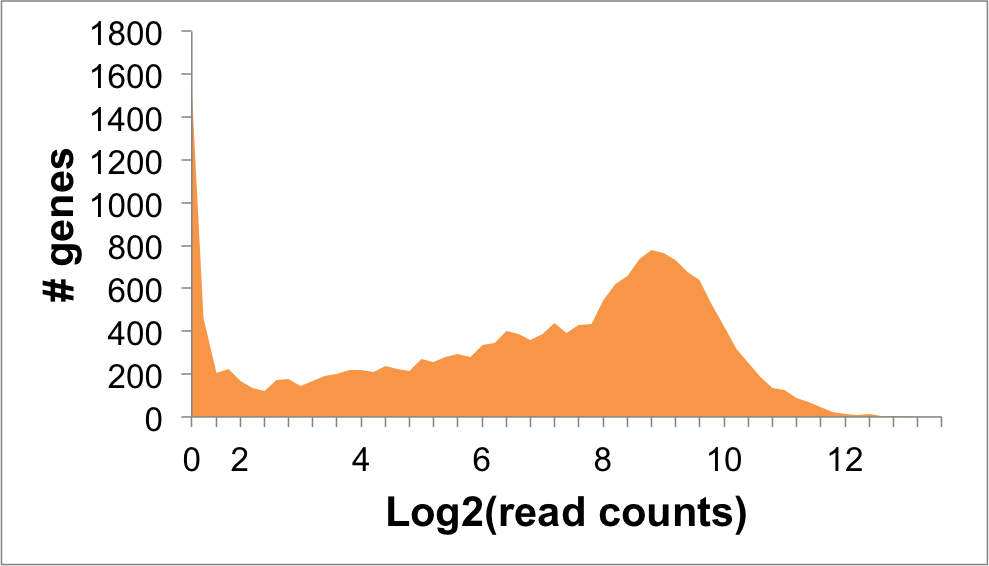
- Expression level (log2 read counts): 6.49
SUMO3 Expression in NALM6 Cells: 6.49