ADA
Gene Information
- Official Symbol: ADA
- Official Name: adenosine deaminase
- Aliases and Previous Symbols: N/A
- Entrez ID: 100
- UniProt: P00813
- Interactions: BioGRID
- PubMed articles: Open PubMed
- OMIM: Open OMIM
Function Summary
- Entrez Summary: This gene encodes an enzyme that catalyzes the hydrolysis of adenosine to inosine. Various mutations have been described for this gene and have been linked to human diseases. Deficiency in this enzyme causes a form of severe combined immunodeficiency disease (SCID), in which there is dysfunction of both B and T lymphocytes with impaired cellular immunity and decreased production of immunoglobulins, whereas elevated levels of this enzyme have been associated with congenital hemolytic anemia. [provided by RefSeq, Jul 2008].
- UniProt Summary: Catalyzes the hydrolytic deamination of adenosine and 2- deoxyadenosine (PubMed:8452534, PubMed:16670267). Plays an important role in purine metabolism and in adenosine homeostasis. Modulates signaling by extracellular adenosine, and so contributes indirectly to cellular signaling events. Acts as a positive regulator of T-cell coactivation, by binding DPP4 (PubMed:20959412). Its interaction with DPP4 regulates lymphocyte- epithelial cell adhesion (PubMed:11772392). Enhances dendritic cell immunogenicity by affecting dendritic cell costimulatory molecule expression and cytokines and chemokines secretion (By similarity). Enhances CD4+ T-cell differentiation and proliferation (PubMed:20959412). Acts as a positive modulator of adenosine receptors ADORA1 and ADORA2A, by enhancing their ligand affinity via conformational change (PubMed:23193172). Stimulates plasminogen activation (PubMed:15016824). Plays a role in male fertility (PubMed:21919946, PubMed:26166670). Plays a protective role in early postimplantation embryonic development (By similarity). {ECO:0000250|UniProtKB:P03958, ECO:0000250|UniProtKB:P56658, ECO:0000269|PubMed:11772392, ECO:0000269|PubMed:15016824, ECO:0000269|PubMed:16670267, ECO:0000269|PubMed:20959412, ECO:0000269|PubMed:21919946, ECO:0000269|PubMed:23193172, ECO:0000269|PubMed:26166670, ECO:0000269|PubMed:8452534}.
Pfam Domains GO Terms
Pfam Domains
| A deaminase |
GO Terms
| xanthine biosynthetic process |
| purine deoxyribonucleoside catabolic process |
| negative regulation of adenosine receptor signaling pathway |
| deoxyadenosine metabolic process |
| negative regulation of penile erection |
| deoxyadenosine catabolic process |
| negative regulation of circadian sleep/wake cycle, non-REM sleep |
| purine deoxyribonucleoside metabolic process |
| negative regulation of mucus secretion |
| hypoxanthine salvage |
| hypoxanthine metabolic process |
| deoxyribonucleoside catabolic process |
| germinal center B cell differentiation |
| adenosine catabolic process |
| positive regulation of germinal center formation |
| xanthine metabolic process |
| dATP catabolic process |
| inosine biosynthetic process |
| hypoxanthine biosynthetic process |
| purine nucleoside binding |
| purine nucleobase salvage |
| negative regulation of mature B cell apoptotic process |
| adenosine deaminase activity |
| regulation of adenosine receptor signaling pathway |
| cytoplasmic vesicle lumen |
| regulation of mature B cell apoptotic process |
| inosine metabolic process |
| purine deoxyribonucleoside triphosphate catabolic process |
| negative regulation of circadian sleep/wake cycle, sleep |
| dATP metabolic process |
| purine nucleoside triphosphate catabolic process |
| purine deoxyribonucleotide catabolic process |
| regulation of penile erection |
| purine nucleotide salvage |
| negative regulation of thymocyte apoptotic process |
| Peyers patch development |
| histamine secretion |
| mucosal-associated lymphoid tissue development |
| histamine transport |
| regulation of circadian sleep/wake cycle, non-REM sleep |
| deoxyribonucleoside metabolic process |
| deoxyribonucleoside triphosphate catabolic process |
| regulation of mucus secretion |
| regulation of germinal center formation |
| purine deoxyribonucleoside triphosphate metabolic process |
| purine nucleoside catabolic process |
| purine ribonucleoside catabolic process |
| adenosine metabolic process |
| regulation of cell-cell adhesion mediated by integrin |
| negative regulation of B cell apoptotic process |
| purine deoxyribonucleotide metabolic process |
| positive regulation of T cell differentiation in thymus |
| response to vitamin E |
| purine nucleobase biosynthetic process |
| regulation of thymocyte apoptotic process |
| nucleoside triphosphate catabolic process |
| positive regulation of T cell receptor signaling pathway |
| nucleotide salvage |
| negative regulation of circadian rhythm |
| trophectodermal cell differentiation |
| purine-containing compound salvage |
| regulation of circadian sleep/wake cycle, sleep |
| regulation of B cell apoptotic process |
| negative regulation of behavior |
| negative regulation of T cell apoptotic process |
| mature B cell differentiation involved in immune response |
| azole transport |
| deoxyribonucleoside triphosphate metabolic process |
| purine ribonucleoside monophosphate biosynthetic process |
| purine nucleoside monophosphate biosynthetic process |
| nucleobase biosynthetic process |
| deoxyribonucleotide catabolic process |
| regulation of circadian sleep/wake cycle |
| deoxyribose phosphate catabolic process |
| positive regulation of antigen receptor-mediated signaling pathway |
| purine nucleobase metabolic process |
| purine nucleoside biosynthetic process |
| ribonucleoside catabolic process |
| purine ribonucleoside biosynthetic process |
| ribonucleoside biosynthetic process |
| regulation of T cell differentiation in thymus |
| mature B cell differentiation |
| positive regulation of heart rate |
| negative regulation of lymphocyte apoptotic process |
| dendrite cytoplasm |
| positive regulation of smooth muscle contraction |
| 2-deoxyribonucleotide metabolic process |
| regulation of T cell apoptotic process |
| response to isoquinoline alkaloid |
| response to morphine |
| deoxyribose phosphate metabolic process |
| ribonucleoside monophosphate biosynthetic process |
| embryonic digestive tract development |
| cellular metabolic compound salvage |
| deoxyribonucleotide metabolic process |
| nucleoside catabolic process |
| purine ribonucleoside monophosphate metabolic process |
| purine nucleoside monophosphate metabolic process |
| positive regulation of heart contraction |
| blastocyst formation |
| nucleoside biosynthetic process |
| regulation of T cell receptor signaling pathway |
| positive regulation of B cell proliferation |
| lung alveolus development |
| nucleobase metabolic process |
| positive regulation of calcium-mediated signaling |
| glycosyl compound biosynthetic process |
| nucleoside monophosphate biosynthetic process |
| B cell activation involved in immune response |
| negative regulation of leukocyte migration |
| purine nucleotide catabolic process |
| glycosyl compound catabolic process |
| positive regulation of muscle contraction |
| regulation of cell adhesion mediated by integrin |
| negative regulation of leukocyte apoptotic process |
| positive regulation of alpha-beta T cell differentiation |
| negative regulation of G protein-coupled receptor signaling pathway |
| pigment biosynthetic process |
| nucleobase-containing small molecule catabolic process |
| ribonucleoside monophosphate metabolic process |
| regulation of lymphocyte apoptotic process |
| ammonium transport |
| purine-containing compound catabolic process |
| negative regulation of reproductive process |
| regulation of smooth muscle contraction |
| positive regulation of alpha-beta T cell activation |
| purine ribonucleoside metabolic process |
| regulation of B cell proliferation |
| regulation of antigen receptor-mediated signaling pathway |
| regulation of alpha-beta T cell differentiation |
| pigment metabolic process |
| purine nucleoside metabolic process |
| nucleotide catabolic process |
| purine nucleoside triphosphate metabolic process |
| positive regulation of blood circulation |
| nucleoside phosphate catabolic process |
| regulation of behavior |
| nucleoside monophosphate metabolic process |
| ribonucleoside metabolic process |
| response to anesthetic |
| regulation of leukocyte apoptotic process |
| positive regulation of T cell differentiation |
| response to vitamin |
| regulation of alpha-beta T cell activation |
| nucleoside triphosphate metabolic process |
| positive regulation of lymphocyte differentiation |
| regulation of calcium-mediated signaling |
| regulation of heart rate |
| blastocyst development |
| positive regulation of adaptive immune response based on somatic recombination of immune receptors built from immunoglobulin superfamily domains |
| positive regulation of adaptive immune response |
| nucleobase-containing small molecule biosynthetic process |
| B cell differentiation |
| nucleoside metabolic process |
| lymphocyte activation involved in immune response |
| response to alkaloid |
| regulation of circadian rhythm |
| response to hydrogen peroxide |
| liver development |
| organophosphate catabolic process |
| hepaticobiliary system development |
| positive regulation of lymphocyte proliferation |
| digestive tract development |
| positive regulation of mononuclear cell proliferation |
| glycosyl compound metabolic process |
| negative regulation of inflammatory response |
| positive regulation of leukocyte proliferation |
| regulation of T cell differentiation |
| regulation of G protein-coupled receptor signaling pathway |
| digestive system development |
| drug catabolic process |
| regulation of adaptive immune response based on somatic recombination of immune receptors built from immunoglobulin superfamily domains |
| positive regulation of leukocyte differentiation |
| placenta development |
| B cell activation |
| purine nucleotide biosynthetic process |
| regulation of reproductive process |
| regulation of adaptive immune response |
| regulation of muscle contraction |
| positive regulation of B cell activation |
| regulation of lymphocyte differentiation |
| lung development |
| purine-containing compound biosynthetic process |
| respiratory tube development |
| neurotransmitter transport |
| response to ammonium ion |
| positive regulation of hemopoiesis |
| carbohydrate derivative catabolic process |
| response to reactive oxygen species |
| regulation of leukocyte migration |
| respiratory system development |
| positive regulation of T cell activation |
| negative regulation of defense response |
| regulation of B cell activation |
| regulation of lymphocyte proliferation |
| regulation of mononuclear cell proliferation |
| response to nutrient |
| negative regulation of multi-organism process |
| positive regulation of leukocyte cell-cell adhesion |
| regulation of leukocyte proliferation |
| negative regulation of secretion |
| regulation of muscle system process |
| T cell activation |
| lymphocyte differentiation |
| regulation of heart contraction |
| nucleotide biosynthetic process |
| nucleoside phosphate biosynthetic process |
| lysosome |
| positive regulation of cell-cell adhesion |
| negative regulation of cell migration |
| regulation of leukocyte differentiation |
| negative regulation of cell motility |
| aging |
| regulation of blood circulation |
| regulation of leukocyte cell-cell adhesion |
| response to xenobiotic stimulus |
| response to antibiotic |
| negative regulation of cellular component movement |
| regulation of T cell activation |
| negative regulation of locomotion |
| purine nucleotide metabolic process |
| leukocyte differentiation |
| regulation of inflammatory response |
| response to hypoxia |
| response to decreased oxygen levels |
| positive regulation of lymphocyte activation |
| negative regulation of response to external stimulus |
| purine-containing compound metabolic process |
| neuronal cell body |
| nucleobase-containing compound catabolic process |
| in utero embryonic development |
| response to oxygen levels |
| lymphocyte activation |
| response to oxidative stress |
| external side of plasma membrane |
| regulation of cell-cell adhesion |
| positive regulation of cell adhesion |
| positive regulation of leukocyte activation |
| gland development |
| positive regulation of cell activation |
| reproductive structure development |
| reproductive system development |
| heterocycle catabolic process |
| embryonic organ development |
| cellular nitrogen compound catabolic process |
| small molecule catabolic process |
| negative regulation of immune system process |
| aromatic compound catabolic process |
| nucleotide metabolic process |
| regulation of hemopoiesis |
| nucleoside phosphate metabolic process |
| organic cyclic compound catabolic process |
| negative regulation of transport |
| regulation of body fluid levels |
| response to nutrient levels |
| drug metabolic process |
| response to toxic substance |
| regulation of lymphocyte activation |
| response to extracellular stimulus |
| response to inorganic substance |
| organophosphate biosynthetic process |
| nucleobase-containing small molecule metabolic process |
| cell junction |
| hemopoiesis |
| regulation of system process |
| small molecule biosynthetic process |
| regulation of leukocyte activation |
| hematopoietic or lymphoid organ development |
| cell surface |
| carbohydrate derivative biosynthetic process |
| leukocyte activation involved in immune response |
| cell activation involved in immune response |
| chordate embryonic development |
| regulation of cell activation |
| immune system development |
| embryo development ending in birth or egg hatching |
| developmental process involved in reproduction |
| regulation of cell adhesion |
| regulation of defense response |
| regulation of multi-organism process |
| regulation of secretion |
| cation transport |
| zinc ion binding |
| tube development |
| regulation of cell migration |
| positive regulation of immune response |
| organophosphate metabolic process |
| negative regulation of apoptotic process |
| anatomical structure formation involved in morphogenesis |
| negative regulation of programmed cell death |
| regulation of cell motility |
| positive regulation of cell population proliferation |
| response to organic cyclic compound |
| leukocyte activation |
| cell adhesion |
| biological adhesion |
| positive regulation of cell differentiation |
| embryo development |
| regulation of locomotion |
| negative regulation of cell death |
| regulation of cellular component movement |
| response to organonitrogen compound |
| positive regulation of intracellular signal transduction |
| response to drug |
| carbohydrate derivative metabolic process |
| regulation of anatomical structure morphogenesis |
| organonitrogen compound catabolic process |
| cell activation |
| response to nitrogen compound |
| immune effector process |
| regulation of response to external stimulus |
| nucleobase-containing compound biosynthetic process |
| secretion |
| positive regulation of immune system process |
| regulation of immune response |
| response to abiotic stimulus |
| heterocycle biosynthetic process |
| aromatic compound biosynthetic process |
| negative regulation of multicellular organismal process |
| negative regulation of signal transduction |
| organic cyclic compound biosynthetic process |
| negative regulation of cell communication |
| negative regulation of signaling |
| positive regulation of developmental process |
| ion transport |
| organonitrogen compound biosynthetic process |
| reproductive process |
| reproduction |
| regulation of response to stress |
| regulation of apoptotic process |
| response to oxygen-containing compound |
| regulation of programmed cell death |
| extracellular space |
| regulation of cell population proliferation |
| negative regulation of response to stimulus |
| cellular nitrogen compound biosynthetic process |
| regulation of immune system process |
| positive regulation of signal transduction |
| regulation of cell death |
| positive regulation of multicellular organismal process |
| small molecule metabolic process |
| tissue development |
| organic substance catabolic process |
| cellular catabolic process |
| regulation of cell differentiation |
| positive regulation of cell communication |
| positive regulation of signaling |
| regulation of intracellular signal transduction |
| nitrogen compound transport |
| regulation of transport |
| immune response |
| membrane |
CRISPR Data
Compound Hit Most Correlated Genes in Chemogenomics Tissues where Essential in the Avana Dataset (DepMap 20Q1)
Compound Hit
No hits were found.
Most Correlated Genes in Chemogenomics
No correlation found to any other genes in chemogenomics.
Tissues where Essential in the Avana Dataset (DepMap 20Q1)
Global Fraction of Cell Lines Where Essential: 0/739
| Tissue | Fraction Of Cell Lines Where Essential |
|---|---|
| 1290807.0 | 0/1 |
| 909776.0 | 0/1 |
| bile duct | 0/28 |
| blood | 0/28 |
| bone | 0/26 |
| breast | 0/33 |
| central nervous system | 0/56 |
| cervix | 0/4 |
| colorectal | 0/17 |
| esophagus | 0/13 |
| fibroblast | 0/1 |
| gastric | 0/16 |
| kidney | 0/21 |
| liver | 0/20 |
| lung | 0/75 |
| lymphocyte | 0/16 |
| ovary | 0/26 |
| pancreas | 0/24 |
| peripheral nervous system | 0/16 |
| plasma cell | 0/15 |
| prostate | 0/1 |
| skin | 0/24 |
| soft tissue | 0/9 |
| thyroid | 0/2 |
| upper aerodigestive | 0/22 |
| urinary tract | 0/29 |
| uterus | 0/5 |
Essentiality in NALM6
- Essentiality Rank: 15577
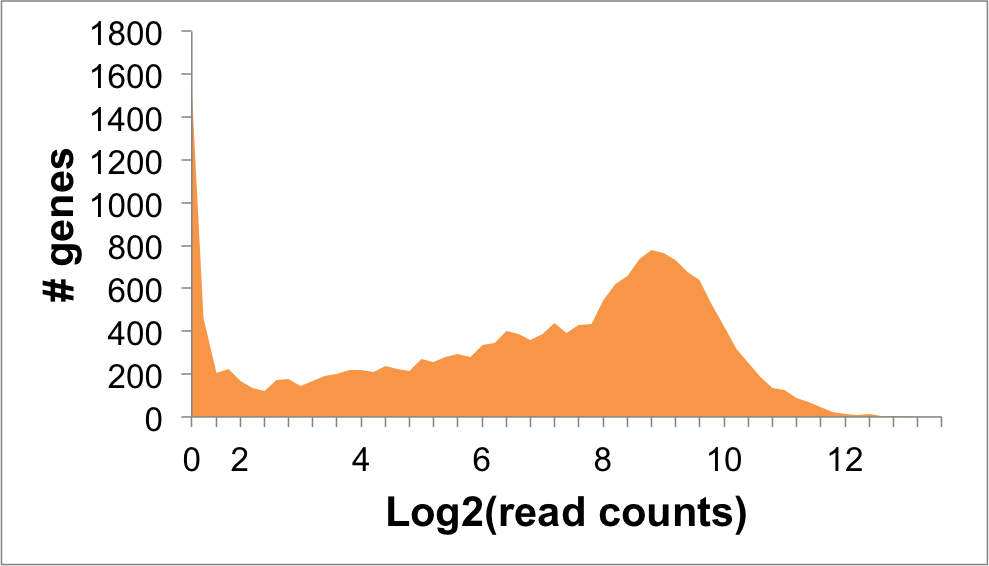
- Expression level (log2 read counts): 5.71
Expression Distribution
ADA Expression in NALM6 Cells: 5.71