CLCN1
Gene Information
- Official Symbol: CLCN1
- Official Name: chloride voltage-gated channel 1
- Aliases and Previous Symbols: N/A
- Entrez ID: 1180
- UniProt: P35523
- Interactions: BioGRID
- PubMed articles: Open PubMed
- OMIM: Open OMIM
Function Summary
- Entrez Summary: The CLCN family of voltage-dependent chloride channel genes comprises nine members (CLCN1-7, Ka and Kb) which demonstrate quite diverse functional characteristics while sharing significant sequence homology. The protein encoded by this gene regulates the electric excitability of the skeletal muscle membrane. Mutations in this gene cause two forms of inherited human muscle disorders: recessive generalized myotonia congenita (Becker) and dominant myotonia (Thomsen). Alternative splicing results in multiple transcript variants. [provided by RefSeq, Mar 2012].
- UniProt Summary: Voltage-gated chloride channel. Chloride channels have several functions including the regulation of cell volume; membrane potential stabilization, signal transduction and transepithelial transport. {ECO:0000269|PubMed:12456816, ECO:0000269|PubMed:22521272, ECO:0000269|PubMed:26007199, ECO:0000269|PubMed:26502825, ECO:0000269|PubMed:26510092, ECO:0000269|PubMed:7951242, ECO:0000269|PubMed:8112288, ECO:0000269|PubMed:9122265, ECO:0000269|PubMed:9736777}.
CRISPR Data
Essentiality in NALM6
- Essentiality Rank: 9025
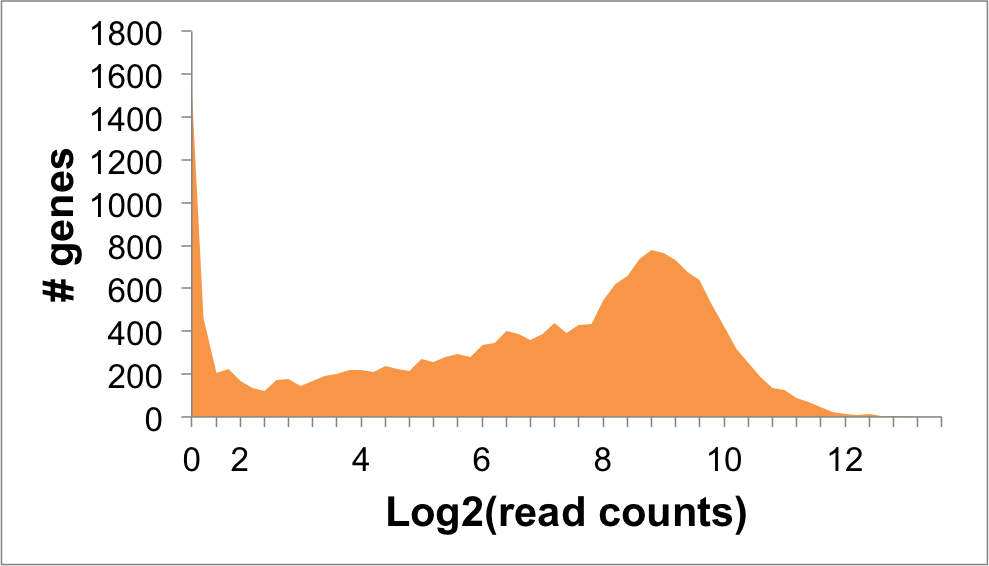
- Expression level (log2 read counts): -6.6
CLCN1 Expression in NALM6 Cells: -6.6