FOXP1
Gene Information
- Official Symbol: FOXP1
- Official Name: forkhead box P1
- Aliases and Previous Symbols: N/A
- Entrez ID: 27086
- UniProt: Q9H334
- Interactions: BioGRID
- PubMed articles: Open PubMed
- OMIM: Open OMIM
Function Summary
- Entrez Summary: This gene belongs to subfamily P of the forkhead box (FOX) transcription factor family. Forkhead box transcription factors play important roles in the regulation of tissue- and cell type-specific gene transcription during both development and adulthood. Forkhead box P1 protein contains both DNA-binding- and protein-protein binding-domains. This gene may act as a tumor suppressor as it is lost in several tumor types and maps to a chromosomal region (3p14.1) reported to contain a tumor suppressor gene(s). Alternative splicing results in multiple transcript variants encoding different isoforms. [provided by RefSeq, Jul 2008]. COMPLETENESS: complete on the 3' end.
- UniProt Summary: N/A
Pfam Domains GO Terms
Pfam Domains
| Fork head |
GO Terms
| interleukin-21 secretion |
| interleukin-21 production |
| chemokine secretion |
| chemokine (C-C motif) ligand 2 secretion |
| chemokine (C-X-C motif) ligand 2 production |
| T follicular helper cell differentiation |
| regulation of macrophage colony-stimulating factor production |
| regulation of endothelial tube morphogenesis |
| regulation of interleukin-12 secretion |
| positive regulation of B cell receptor signaling pathway |
| osteoclast development |
| monocyte activation |
| chemokine production |
| endothelial cell activation |
| negative regulation of B cell apoptotic process |
| negative regulation of androgen receptor signaling pathway |
| regulation of B cell apoptotic process |
| regulation of defense response to bacterium |
| regulation of monocyte differentiation |
| positive regulation of antigen receptor-mediated signaling pathway |
| bone cell development |
| regulation of androgen receptor signaling pathway |
| regulation of B cell receptor signaling pathway |
| T-helper cell differentiation |
| CD4-positive, alpha-beta T cell differentiation involved in immune response |
| negative regulation of lymphocyte apoptotic process |
| alpha-beta T cell differentiation involved in immune response |
| alpha-beta T cell activation involved in immune response |
| T cell differentiation involved in immune response |
| CD4-positive, alpha-beta T cell differentiation |
| negative regulation of intracellular steroid hormone receptor signaling pathway |
| CD4-positive, alpha-beta T cell activation |
| osteoclast differentiation |
| androgen receptor binding |
| negative regulation of leukocyte apoptotic process |
| regulation of interleukin-1 beta secretion |
| cytokine secretion |
| alpha-beta T cell differentiation |
| macrophage activation |
| regulation of lymphocyte apoptotic process |
| regulation of interleukin-12 production |
| regulation of interleukin-1 secretion |
| protein self-association |
| myeloid cell development |
| alpha-beta T cell activation |
| regulation of antigen receptor-mediated signaling pathway |
| T cell activation involved in immune response |
| somatic stem cell population maintenance |
| regulation of intracellular steroid hormone receptor signaling pathway |
| regulation of interleukin-1 beta production |
| regulation of leukocyte apoptotic process |
| positive regulation of smooth muscle cell proliferation |
| regulation of interleukin-1 production |
| positive regulation of endothelial cell migration |
| lymphocyte activation involved in immune response |
| myeloid leukocyte differentiation |
| regulation of myeloid leukocyte differentiation |
| regulation of smooth muscle cell proliferation |
| T cell differentiation |
| stem cell population maintenance |
| maintenance of cell number |
| positive regulation of epithelial cell migration |
| regulation of tumor necrosis factor production |
| cytokine production |
| regulation of tumor necrosis factor superfamily cytokine production |
| regulation of endothelial cell migration |
| protein secretion |
| establishment of protein localization to extracellular region |
| protein localization to extracellular region |
| peptide secretion |
| regulation of morphogenesis of an epithelium |
| bone development |
| regulation of cytokine secretion |
| regulation of epithelial cell migration |
| myeloid cell differentiation |
| regulation of myeloid cell differentiation |
| T cell activation |
| lymphocyte differentiation |
| regulation of leukocyte differentiation |
| response to lipopolysaccharide |
| response to molecule of bacterial origin |
| leukocyte differentiation |
| regulation of inflammatory response |
| lymphocyte activation |
| sequence-specific DNA binding |
| regulation of hemopoiesis |
| regulation of protein secretion |
| skeletal system development |
| regulation of peptide secretion |
| positive regulation of cell migration |
| positive regulation of cell motility |
| regulation of response to biotic stimulus |
| positive regulation of cellular component movement |
| positive regulation of locomotion |
| hemopoiesis |
| myeloid leukocyte activation |
| hematopoietic or lymphoid organ development |
| leukocyte activation involved in immune response |
| cell activation involved in immune response |
| immune system development |
| response to bacterium |
| regulation of cytokine production |
| regulation of protein transport |
| regulation of peptide transport |
| regulation of establishment of protein localization |
| regulation of secretion by cell |
| regulation of defense response |
| cellular response to DNA damage stimulus |
| regulation of multi-organism process |
| regulation of secretion |
| regulation of cell migration |
| response to lipid |
| positive regulation of immune response |
| negative regulation of apoptotic process |
| negative regulation of programmed cell death |
| regulation of cell motility |
| positive regulation of cell population proliferation |
| leukocyte activation |
| regulation of locomotion |
| negative regulation of cell death |
| regulation of cellular component movement |
| secretion by cell |
| regulation of protein localization |
| export from cell |
| regulation of anatomical structure morphogenesis |
| identical protein binding |
| cell activation |
| immune effector process |
| regulation of response to external stimulus |
| secretion |
| positive regulation of immune system process |
| regulation of immune response |
| negative regulation of transcription, DNA-templated |
| negative regulation of nucleic acid-templated transcription |
| negative regulation of RNA biosynthetic process |
| negative regulation of signal transduction |
| response to other organism |
| response to external biotic stimulus |
| response to biotic stimulus |
| negative regulation of RNA metabolic process |
| negative regulation of cell communication |
| negative regulation of signaling |
| negative regulation of cellular macromolecule biosynthetic process |
| negative regulation of nucleobase-containing compound metabolic process |
| negative regulation of macromolecule biosynthetic process |
| regulation of response to stress |
| protein transport |
| negative regulation of cellular biosynthetic process |
| peptide transport |
| regulation of apoptotic process |
| negative regulation of biosynthetic process |
| response to oxygen-containing compound |
| DNA-binding transcription factor activity, RNA polymerase II-specific |
| regulation of programmed cell death |
| amide transport |
| establishment of protein localization |
| regulation of cell population proliferation |
| negative regulation of response to stimulus |
| cell development |
| regulation of immune system process |
| positive regulation of signal transduction |
| regulation of cell death |
| cellular response to stress |
| negative regulation of gene expression |
| positive regulation of multicellular organismal process |
| regulation of cell differentiation |
| positive regulation of cell communication |
| positive regulation of signaling |
| nitrogen compound transport |
| regulation of transport |
| immune response |
CRISPR Data
Compound Hit Most Correlated Genes in Chemogenomics Tissues where Essential in the Avana Dataset (DepMap 20Q1)
Compound Hit
Most Correlated Genes in Chemogenomics
No correlation found to any other genes in chemogenomics.
Tissues where Essential in the Avana Dataset (DepMap 20Q1)
Global Fraction of Cell Lines Where Essential: 0/739
| Tissue | Fraction Of Cell Lines Where Essential |
|---|---|
| 1290807.0 | 0/1 |
| 909776.0 | 0/1 |
| bile duct | 0/28 |
| blood | 0/28 |
| bone | 0/26 |
| breast | 0/33 |
| central nervous system | 0/56 |
| cervix | 0/4 |
| colorectal | 0/17 |
| esophagus | 0/13 |
| fibroblast | 0/1 |
| gastric | 0/16 |
| kidney | 0/21 |
| liver | 0/20 |
| lung | 0/75 |
| lymphocyte | 0/16 |
| ovary | 0/26 |
| pancreas | 0/24 |
| peripheral nervous system | 0/16 |
| plasma cell | 0/15 |
| prostate | 0/1 |
| skin | 0/24 |
| soft tissue | 0/9 |
| thyroid | 0/2 |
| upper aerodigestive | 0/22 |
| urinary tract | 0/29 |
| uterus | 0/5 |
Essentiality in NALM6
- Essentiality Rank: 11770
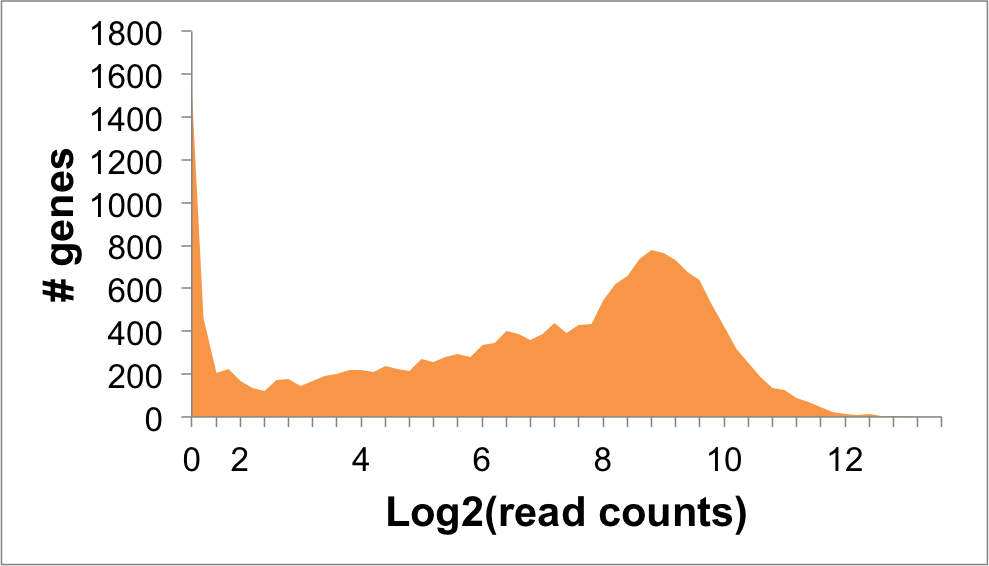
- Expression level (log2 read counts): 6.04
Expression Distribution
FOXP1 Expression in NALM6 Cells: 6.04