KCNJ13
Gene Information
- Official Symbol: KCNJ13
- Official Name: potassium inwardly rectifying channel subfamily J member 13
- Aliases and Previous Symbols: N/A
- Entrez ID: 3769
- UniProt: O60928
- Interactions: BioGRID
- PubMed articles: Open PubMed
- OMIM: Open OMIM
Function Summary
- Entrez Summary: This gene encodes a member of the inwardly rectifying potassium channel family of proteins. Members of this family form ion channel pores that allow potassium ions to pass into a cell. The encoded protein belongs to a subfamily of low signal channel conductance proteins that have a low dependence on potassium concentration. Mutations in this gene are associated with snowflake vitreoretinal degeneration. Alternate splicing results in multiple transcript variants.[provided by RefSeq, Feb 2010].
- UniProt Summary: Inward rectifier potassium channels are characterized by a greater tendency to allow potassium to flow into the cell rather than out of it. Their voltage dependence is regulated by the concentration of extracellular potassium; as external potassium is raised, the voltage range of the channel opening shifts to more positive voltages. The inward rectification is mainly due to the blockage of outward current by internal magnesium. KCNJ13 has a very low single channel conductance, low sensitivity to block by external barium and cesium, and no dependence of its inward rectification properties on the internal blocking particle magnesium.
CRISPR Data
Essentiality in NALM6
- Essentiality Rank: 18834
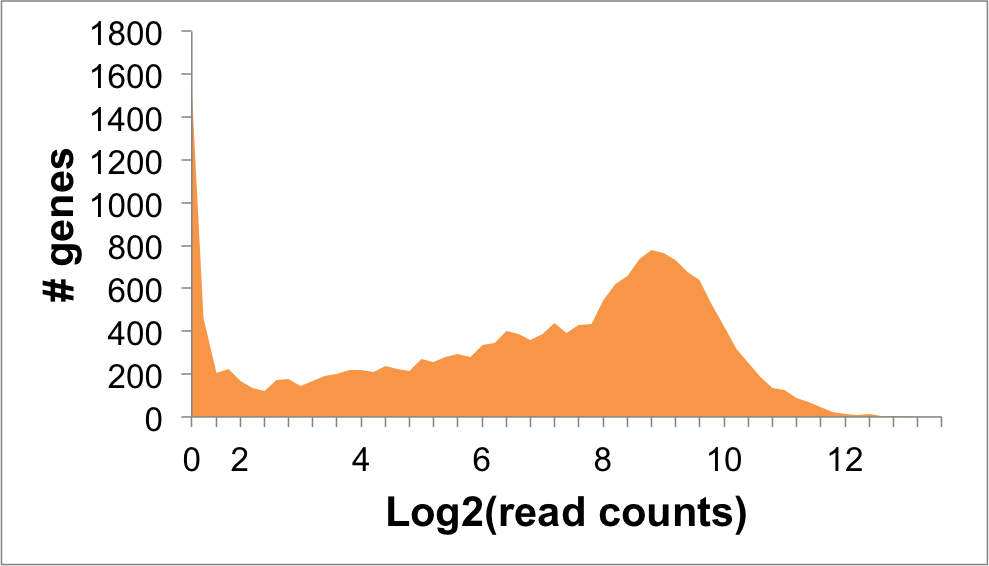
- Expression level (log2 read counts): -1.82
KCNJ13 Expression in NALM6 Cells: -1.82