LGMN
Gene Information
- Official Symbol: LGMN
- Official Name: legumain
- Aliases and Previous Symbols: N/A
- Entrez ID: 5641
- UniProt: Q99538
- Interactions: BioGRID
- PubMed articles: Open PubMed
- OMIM: Open OMIM
Function Summary
- Entrez Summary: N/A
- UniProt Summary: Has a strict specificity for hydrolysis of asparaginyl bonds. Can also cleave aspartyl bonds slowly, especially under acidic conditions. Required for normal lysosomal protein degradation in renal proximal tubules. Required for normal degradation of internalized EGFR. Plays a role in the regulation of cell proliferation via its role in EGFR degradation (By similarity). May be involved in the processing of proteins for MHC class II antigen presentation in the lysosomal/endosomal system. {ECO:0000250, ECO:0000269|PubMed:23776206}.
Pfam Domains GO Terms
Pfam Domains
| Peptidase C13 |
GO Terms
| vacuolar protein processing |
| endolysosome lumen |
| self proteolysis |
| negative regulation of multicellular organism growth |
| activation of cysteine-type endopeptidase activity |
| vitamin D metabolic process |
| positive regulation of endothelial cell chemotaxis |
| cellular response to hepatocyte growth factor stimulus |
| response to hepatocyte growth factor |
| positive regulation of monocyte chemotaxis |
| regulation of endothelial cell chemotaxis |
| positive regulation of long-term synaptic potentiation |
| response to acidic pH |
| positive regulation of mononuclear cell migration |
| regulation of monocyte chemotaxis |
| receptor catabolic process |
| dendritic spine organization |
| fat-soluble vitamin metabolic process |
| cellular response to amyloid-beta |
| neuron projection organization |
| response to pH |
| zymogen activation |
| regulation of long-term synaptic potentiation |
| tau protein binding |
| regulation of mononuclear cell migration |
| response to amyloid-beta |
| negative regulation of ERBB signaling pathway |
| regulation of multicellular organism growth |
| apical part of cell |
| associative learning |
| peptidase activity |
| cellular response to calcium ion |
| postsynapse organization |
| positive regulation of leukocyte chemotaxis |
| regulation of ERBB signaling pathway |
| cysteine-type endopeptidase activity |
| lysosomal lumen |
| positive regulation of endothelial cell migration |
| toll-like receptor signaling pathway |
| antigen processing and presentation of exogenous peptide antigen via MHC class II |
| antigen processing and presentation of peptide or polysaccharide antigen via MHC class II |
| antigen processing and presentation of peptide antigen via MHC class II |
| receptor metabolic process |
| negative regulation of developmental growth |
| renal system process |
| regulation of leukocyte chemotaxis |
| memory |
| vitamin metabolic process |
| late endosome |
| pattern recognition receptor signaling pathway |
| positive regulation of leukocyte migration |
| positive regulation of chemotaxis |
| positive regulation of epithelial cell migration |
| negative regulation of neuron apoptotic process |
| learning |
| response to calcium ion |
| positive regulation of synaptic transmission |
| positive regulation of mitotic cell cycle |
| positive regulation of cysteine-type endopeptidase activity |
| regulation of endothelial cell migration |
| protein processing |
| positive regulation of endopeptidase activity |
| antigen processing and presentation of exogenous peptide antigen |
| antigen processing and presentation of exogenous antigen |
| regulation of synaptic plasticity |
| antigen processing and presentation of peptide antigen |
| positive regulation of peptidase activity |
| cellular response to metal ion |
| regulation of leukocyte migration |
| negative regulation of neuron death |
| regulation of neuron apoptotic process |
| regulation of chemotaxis |
| antigen processing and presentation |
| cellular response to inorganic substance |
| regulation of epithelial cell migration |
| protein maturation |
| innate immune response-activating signal transduction |
| regulation of cysteine-type endopeptidase activity |
| negative regulation of growth |
| lysosome |
| activation of innate immune response |
| learning or memory |
| steroid metabolic process |
| synapse organization |
| cognition |
| regulation of neuron death |
| cellular response to peptide |
| regulation of developmental growth |
| positive regulation of innate immune response |
| positive regulation of proteolysis |
| positive regulation of response to biotic stimulus |
| response to metal ion |
| positive regulation of cell cycle |
| regulation of endopeptidase activity |
| modulation of chemical synaptic transmission |
| regulation of trans-synaptic signaling |
| regulation of peptidase activity |
| regulation of innate immune response |
| organic hydroxy compound metabolic process |
| response to peptide |
| positive regulation of defense response |
| cellular response to growth factor stimulus |
| positive regulation of cell migration |
| positive regulation of multi-organism process |
| positive regulation of cell motility |
| regulation of response to biotic stimulus |
| response to growth factor |
| response to inorganic substance |
| positive regulation of cellular component movement |
| positive regulation of locomotion |
| immune response-activating signal transduction |
| behavior |
| proteolysis involved in cellular protein catabolic process |
| immune response-regulating signaling pathway |
| cellular response to organonitrogen compound |
| positive regulation of response to external stimulus |
| cellular protein catabolic process |
| activation of immune response |
| regulation of mitotic cell cycle |
| cellular response to nitrogen compound |
| regulation of growth |
| protein catabolic process |
| perinuclear region of cytoplasm |
| regulation of proteolysis |
| regulation of defense response |
| positive regulation of hydrolase activity |
| regulation of multi-organism process |
| regulation of cell migration |
| positive regulation of immune response |
| negative regulation of apoptotic process |
| negative regulation of programmed cell death |
| cellular macromolecule catabolic process |
| regulation of cell motility |
| positive regulation of cell population proliferation |
| negative regulation of developmental process |
| regulation of locomotion |
| negative regulation of cell death |
| regulation of cellular component movement |
| response to organonitrogen compound |
| macromolecule catabolic process |
| cellular response to oxygen-containing compound |
| organonitrogen compound catabolic process |
| response to nitrogen compound |
| regulation of response to external stimulus |
| plasma membrane bounded cell projection organization |
| positive regulation of immune system process |
| regulation of immune response |
| response to abiotic stimulus |
| cell projection organization |
| regulation of cell cycle |
| negative regulation of multicellular organismal process |
| lipid metabolic process |
| cellular response to endogenous stimulus |
| negative regulation of signal transduction |
| proteolysis |
| regulation of hydrolase activity |
| negative regulation of cell communication |
| negative regulation of signaling |
| nervous system process |
| positive regulation of catalytic activity |
| response to endogenous stimulus |
| regulation of response to stress |
| regulation of apoptotic process |
| response to oxygen-containing compound |
| regulation of programmed cell death |
| positive regulation of cellular protein metabolic process |
| regulation of cell population proliferation |
| negative regulation of response to stimulus |
| regulation of immune system process |
| regulation of cell death |
| positive regulation of protein metabolic process |
| negative regulation of gene expression |
| positive regulation of multicellular organismal process |
| small molecule metabolic process |
| organic substance catabolic process |
| positive regulation of molecular function |
| cellular catabolic process |
| positive regulation of cell communication |
| positive regulation of signaling |
| extracellular region |
| system process |
| gene expression |
CRISPR Data
Compound Hit Most Correlated Genes in Chemogenomics Tissues where Essential in the Avana Dataset (DepMap 20Q1)
Compound Hit
No hits were found.
Most Correlated Genes in Chemogenomics
No correlation found to any other genes in chemogenomics.
Tissues where Essential in the Avana Dataset (DepMap 20Q1)
Global Fraction of Cell Lines Where Essential: 0/739
| Tissue | Fraction Of Cell Lines Where Essential |
|---|---|
| 1290807.0 | 0/1 |
| 909776.0 | 0/1 |
| bile duct | 0/28 |
| blood | 0/28 |
| bone | 0/26 |
| breast | 0/33 |
| central nervous system | 0/56 |
| cervix | 0/4 |
| colorectal | 0/17 |
| esophagus | 0/13 |
| fibroblast | 0/1 |
| gastric | 0/16 |
| kidney | 0/21 |
| liver | 0/20 |
| lung | 0/75 |
| lymphocyte | 0/16 |
| ovary | 0/26 |
| pancreas | 0/24 |
| peripheral nervous system | 0/16 |
| plasma cell | 0/15 |
| prostate | 0/1 |
| skin | 0/24 |
| soft tissue | 0/9 |
| thyroid | 0/2 |
| upper aerodigestive | 0/22 |
| urinary tract | 0/29 |
| uterus | 0/5 |
Essentiality in NALM6
- Essentiality Rank: 13127
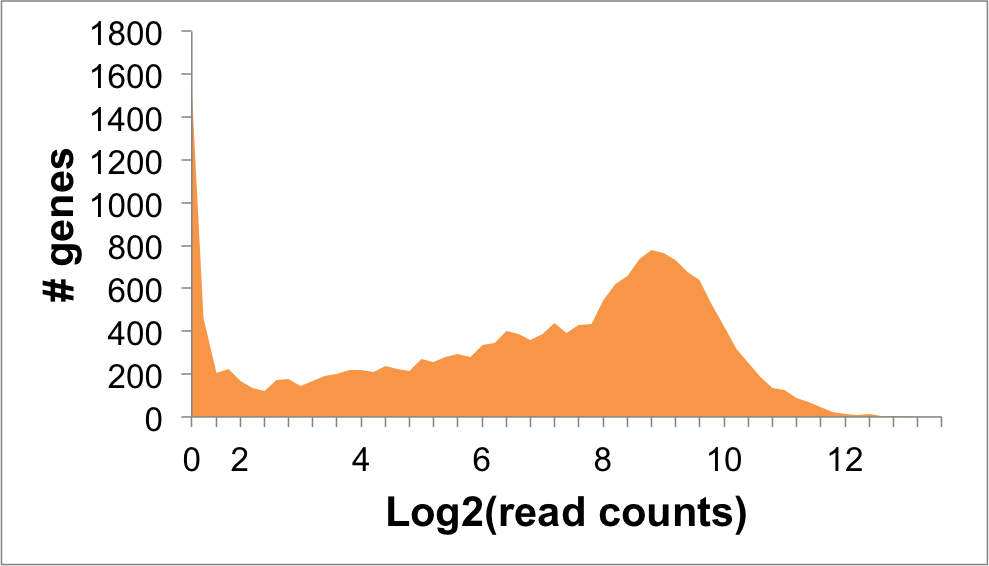
- Expression level (log2 read counts): 1.09
Expression Distribution
LGMN Expression in NALM6 Cells: 1.09