MSX1
Gene Information
- Official Symbol: MSX1
- Official Name: msh homeobox 1
- Aliases and Previous Symbols: N/A
- Entrez ID: 4487
- UniProt: P28360
- Interactions: BioGRID
- PubMed articles: Open PubMed
- OMIM: Open OMIM
Function Summary
- Entrez Summary: This gene encodes a member of the muscle segment homeobox gene family. The encoded protein functions as a transcriptional repressor during embryogenesis through interactions with components of the core transcription complex and other homeoproteins. It may also have roles in limb-pattern formation, craniofacial development, particularly odontogenesis, and tumor growth inhibition. Mutations in this gene, which was once known as homeobox 7, have been associated with nonsyndromic cleft lip with or without cleft palate 5, Witkop syndrome, Wolf-Hirschom syndrome, and autosomoal dominant hypodontia. [provided by RefSeq, Jul 2008].
- UniProt Summary: Acts as a transcriptional repressor. May play a role in limb-pattern formation. Acts in cranofacial development and specifically in odontogenesis. Expression in the developing nail bed mesenchyme is important for nail plate thickness and integrity. {ECO:0000269|PubMed:11369996, ECO:0000269|PubMed:12807959}.
Pfam Domains GO Terms
Pfam Domains
| Homeobox |
GO Terms
| positive regulation of mesenchymal cell apoptotic process |
| activation of meiosis |
| embryonic nail plate morphogenesis |
| positive regulation of intrinsic apoptotic signaling pathway by p53 class mediator |
| BMP signaling pathway involved in heart development |
| cellular response to nicotine |
| nail development |
| regulation of mesenchymal cell apoptotic process |
| epithelial to mesenchymal transition involved in endocardial cushion formation |
| regulation of transcription from RNA polymerase II promoter involved in heart development |
| positive regulation of meiotic nuclear division |
| enhancer binding |
| positive regulation of DNA damage response, signal transduction by p53 class mediator |
| mesenchymal cell proliferation |
| endocardial cushion formation |
| middle ear morphogenesis |
| signal transduction involved in regulation of gene expression |
| negative regulation of transcription regulatory region DNA binding |
| positive regulation of signal transduction by p53 class mediator |
| cell surface receptor signaling pathway involved in heart development |
| positive regulation of meiotic cell cycle |
| regulation of odontogenesis |
| cardiac epithelial to mesenchymal transition |
| embryonic hindlimb morphogenesis |
| cartilage morphogenesis |
| regulation of intrinsic apoptotic signaling pathway by p53 class mediator |
| regulation of meiotic nuclear division |
| positive regulation of BMP signaling pathway |
| face morphogenesis |
| embryonic forelimb morphogenesis |
| regulation of DNA damage response, signal transduction by p53 class mediator |
| endocardial cushion morphogenesis |
| hindlimb morphogenesis |
| head morphogenesis |
| negative regulation of striated muscle cell differentiation |
| forelimb morphogenesis |
| pituitary gland development |
| endocardial cushion development |
| body morphogenesis |
| face development |
| regulation of meiotic cell cycle |
| response to nicotine |
| mesenchyme morphogenesis |
| regulation of transcription regulatory region DNA binding |
| negative regulation of DNA binding |
| negative regulation of muscle cell differentiation |
| mammary gland epithelium development |
| positive regulation of intrinsic apoptotic signaling pathway |
| embryonic digit morphogenesis |
| p53 binding |
| positive regulation of nuclear division |
| epithelial to mesenchymal transition |
| diencephalon development |
| positive regulation of reproductive process |
| odontogenesis of dentin-containing tooth |
| midbrain development |
| regulation of BMP signaling pathway |
| roof of mouth development |
| BMP signaling pathway |
| positive regulation of response to DNA damage stimulus |
| regulation of striated muscle cell differentiation |
| positive regulation of transmembrane receptor protein serine/threonine kinase signaling pathway |
| response to BMP |
| cellular response to BMP stimulus |
| bone morphogenesis |
| ear morphogenesis |
| odontogenesis |
| endocrine system development |
| regulation of DNA binding |
| embryonic limb morphogenesis |
| embryonic appendage morphogenesis |
| mammary gland development |
| appendage morphogenesis |
| limb morphogenesis |
| regulation of muscle cell differentiation |
| mesenchymal cell differentiation |
| stem cell differentiation |
| regulation of intrinsic apoptotic signaling pathway |
| regulation of reproductive process |
| protein localization to nucleus |
| negative regulation of binding |
| cartilage development |
| positive regulation of apoptotic signaling pathway |
| protein stabilization |
| appendage development |
| regulation of signal transduction by p53 class mediator |
| limb development |
| negative regulation of cell growth |
| regulation of nuclear division |
| transmembrane receptor protein serine/threonine kinase signaling pathway |
| bone development |
| cellular response to toxic substance |
| anterior/posterior pattern specification |
| regulation of response to DNA damage stimulus |
| ear development |
| mesenchyme development |
| connective tissue development |
| regulation of transmembrane receptor protein serine/threonine kinase signaling pathway |
| skeletal system morphogenesis |
| negative regulation of growth |
| DNA-binding transcription repressor activity, RNA polymerase II-specific |
| heart morphogenesis |
| sensory organ morphogenesis |
| regulation of animal organ morphogenesis |
| regulation of cellular response to growth factor stimulus |
| positive regulation of cell cycle process |
| regulation of protein stability |
| embryonic organ morphogenesis |
| muscle organ development |
| RNA polymerase II regulatory region sequence-specific DNA binding |
| regionalization |
| positive regulation of cell cycle |
| in utero embryonic development |
| regulation of binding |
| forebrain development |
| regulation of apoptotic signaling pathway |
| cellular response to drug |
| gland development |
| regulation of cell growth |
| embryonic organ development |
| pattern specification process |
| DNA-binding transcription activator activity, RNA polymerase II-specific |
| muscle structure development |
| skeletal system development |
| cellular response to growth factor stimulus |
| response to toxic substance |
| heart development |
| response to growth factor |
| sensory organ development |
| cell population proliferation |
| tissue morphogenesis |
| embryonic morphogenesis |
| positive regulation of organelle organization |
| chordate embryonic development |
| positive regulation of apoptotic process |
| positive regulation of programmed cell death |
| embryo development ending in birth or egg hatching |
| regulation of growth |
| negative regulation of cell population proliferation |
| positive regulation of cell death |
| negative regulation of cell differentiation |
| enzyme linked receptor protein signaling pathway |
| cell morphogenesis |
| protein localization to organelle |
| regulation of cellular response to stress |
| brain development |
| regulation of cell cycle process |
| head development |
| cellular component morphogenesis |
| negative regulation of transcription by RNA polymerase II |
| circulatory system development |
| negative regulation of apoptotic process |
| anatomical structure formation involved in morphogenesis |
| negative regulation of programmed cell death |
| negative regulation of developmental process |
| animal organ morphogenesis |
| embryo development |
| central nervous system development |
| negative regulation of cell death |
| positive regulation of intracellular signal transduction |
| response to drug |
| regulation of anatomical structure morphogenesis |
| epithelium development |
| negative regulation of molecular function |
| regulation of cell cycle |
| negative regulation of transcription, DNA-templated |
| positive regulation of cellular component organization |
| positive regulation of transcription by RNA polymerase II |
| cellular response to endogenous stimulus |
| negative regulation of nucleic acid-templated transcription |
| negative regulation of RNA biosynthetic process |
| regulation of organelle organization |
| negative regulation of RNA metabolic process |
| negative regulation of cellular macromolecule biosynthetic process |
| negative regulation of nucleobase-containing compound metabolic process |
| negative regulation of macromolecule biosynthetic process |
| response to endogenous stimulus |
| regulation of response to stress |
| negative regulation of cellular biosynthetic process |
| positive regulation of transcription, DNA-templated |
| regulation of apoptotic process |
| negative regulation of biosynthetic process |
| DNA-binding transcription factor activity, RNA polymerase II-specific |
| regulation of programmed cell death |
| cellular protein localization |
| cellular macromolecule localization |
| regulation of cell population proliferation |
| positive regulation of nucleic acid-templated transcription |
| positive regulation of RNA biosynthetic process |
| positive regulation of signal transduction |
| regulation of cell death |
| negative regulation of gene expression |
| positive regulation of RNA metabolic process |
| tissue development |
| regulation of cell differentiation |
| positive regulation of cell communication |
| positive regulation of signaling |
| regulation of intracellular signal transduction |
| positive regulation of nucleobase-containing compound metabolic process |
| positive regulation of macromolecule biosynthetic process |
| positive regulation of cellular biosynthetic process |
| positive regulation of gene expression |
| positive regulation of biosynthetic process |
CRISPR Data
Compound Hit Most Correlated Genes in Chemogenomics Tissues where Essential in the Avana Dataset (DepMap 20Q1)
Compound Hit
No hits were found.
Most Correlated Genes in Chemogenomics
No correlation found to any other genes in chemogenomics.
Tissues where Essential in the Avana Dataset (DepMap 20Q1)
Global Fraction of Cell Lines Where Essential: 0/739
| Tissue | Fraction Of Cell Lines Where Essential |
|---|---|
| 1290807.0 | 0/1 |
| 909776.0 | 0/1 |
| bile duct | 0/28 |
| blood | 0/28 |
| bone | 0/26 |
| breast | 0/33 |
| central nervous system | 0/56 |
| cervix | 0/4 |
| colorectal | 0/17 |
| esophagus | 0/13 |
| fibroblast | 0/1 |
| gastric | 0/16 |
| kidney | 0/21 |
| liver | 0/20 |
| lung | 0/75 |
| lymphocyte | 0/16 |
| ovary | 0/26 |
| pancreas | 0/24 |
| peripheral nervous system | 0/16 |
| plasma cell | 0/15 |
| prostate | 0/1 |
| skin | 0/24 |
| soft tissue | 0/9 |
| thyroid | 0/2 |
| upper aerodigestive | 0/22 |
| urinary tract | 0/29 |
| uterus | 0/5 |
Essentiality in NALM6
- Essentiality Rank: 18199
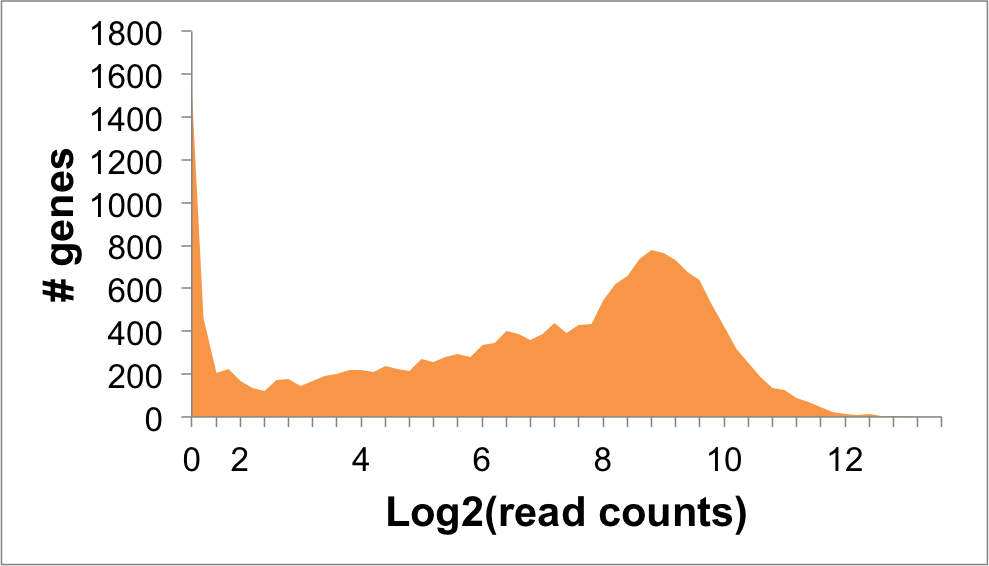
- Expression level (log2 read counts): 2.0
Expression Distribution
MSX1 Expression in NALM6 Cells: 2.0