NCK2
Gene Information
- Official Symbol: NCK2
- Official Name: NCK adaptor protein 2
- Aliases and Previous Symbols: N/A
- Entrez ID: 8440
- UniProt: O43639
- Interactions: BioGRID
- PubMed articles: Open PubMed
- OMIM: Open OMIM
Function Summary
- Entrez Summary: N/A
- UniProt Summary: Adapter protein which associates with tyrosine- phosphorylated growth factor receptors or their cellular substrates. Maintains low levels of EIF2S1 phosphorylation by promoting its dephosphorylation by PP1. Plays a role in ELK1- dependent transcriptional activation in response to activated Ras signaling. {ECO:0000269|PubMed:10026169, ECO:0000269|PubMed:16835242}.
Pfam Domains GO Terms
Pfam Domains
| SH3 2 |
| SH3 1 |
| SH2 |
GO Terms
| positive regulation of translation in response to endoplasmic reticulum stress |
| negative regulation of transcription from RNA polymerase II promoter in response to endoplasmic reticulum stress |
| negative regulation of endoplasmic reticulum stress-induced eIF2 alpha phosphorylation |
| negative regulation of PERK-mediated unfolded protein response |
| positive regulation of translation in response to stress |
| regulation of translation in response to endoplasmic reticulum stress |
| signal complex assembly |
| positive regulation of endoplasmic reticulum stress-induced intrinsic apoptotic signaling pathway |
| regulation of PERK-mediated unfolded protein response |
| negative regulation of endoplasmic reticulum unfolded protein response |
| negative regulation of transcription from RNA polymerase II promoter in response to stress |
| cytoskeletal adaptor activity |
| immunological synapse formation |
| regulation of translation in response to stress |
| receptor signaling complex adaptor activity |
| regulation of endoplasmic reticulum unfolded protein response |
| negative regulation of peptidyl-serine phosphorylation |
| regulation of epidermal growth factor-activated receptor activity |
| dendritic spine development |
| vesicle membrane |
| regulation of endoplasmic reticulum stress-induced intrinsic apoptotic signaling pathway |
| lamellipodium assembly |
| positive regulation of response to endoplasmic reticulum stress |
| phosphotyrosine residue binding |
| lamellipodium organization |
| negative regulation of response to endoplasmic reticulum stress |
| epidermal growth factor receptor signaling pathway |
| SH3/SH2 adaptor activity |
| positive regulation of intrinsic apoptotic signaling pathway |
| scaffold protein binding |
| vascular endothelial growth factor receptor signaling pathway |
| cell-cell recognition |
| ERBB signaling pathway |
| regulation of translational initiation |
| regulation of epidermal growth factor receptor signaling pathway |
| regulation of response to endoplasmic reticulum stress |
| ephrin receptor signaling pathway |
| regulation of protein tyrosine kinase activity |
| regulation of ERBB signaling pathway |
| positive regulation of actin filament polymerization |
| positive regulation of T cell proliferation |
| dendrite development |
| regulation of transcription from RNA polymerase II promoter in response to stress |
| regulation of DNA-templated transcription in response to stress |
| positive regulation of translation |
| positive regulation of protein polymerization |
| positive regulation of lymphocyte proliferation |
| positive regulation of mononuclear cell proliferation |
| positive regulation of leukocyte proliferation |
| regulation of peptidyl-serine phosphorylation |
| positive regulation of cellular amide metabolic process |
| regulation of T cell proliferation |
| regulation of intrinsic apoptotic signaling pathway |
| regulation of actin filament polymerization |
| regulation of signaling receptor activity |
| positive regulation of apoptotic signaling pathway |
| regulation of actin polymerization or depolymerization |
| regulation of actin filament length |
| positive regulation of supramolecular fiber organization |
| positive regulation of T cell activation |
| regulation of lymphocyte proliferation |
| regulation of mononuclear cell proliferation |
| positive regulation of leukocyte cell-cell adhesion |
| positive regulation of cytoskeleton organization |
| regulation of leukocyte proliferation |
| regulation of protein polymerization |
| T cell activation |
| cell recognition |
| actin filament organization |
| positive regulation of protein complex assembly |
| regulation of peptidyl-tyrosine phosphorylation |
| postsynaptic density |
| positive regulation of cell-cell adhesion |
| response to endoplasmic reticulum stress |
| regulation of actin filament organization |
| protein-containing complex binding |
| regulation of leukocyte cell-cell adhesion |
| regulation of T cell activation |
| regulation of actin cytoskeleton organization |
| regulation of supramolecular fiber organization |
| regulation of translation |
| positive regulation of lymphocyte activation |
| regulation of cellular component size |
| lymphocyte activation |
| regulation of actin filament-based process |
| regulation of apoptotic signaling pathway |
| regulation of cell-cell adhesion |
| positive regulation of cell adhesion |
| regulation of cellular amide metabolic process |
| positive regulation of leukocyte activation |
| negative regulation of protein phosphorylation |
| positive regulation of cell activation |
| negative regulation of phosphorylation |
| plasma membrane bounded cell projection assembly |
| regulation of protein complex assembly |
| supramolecular fiber organization |
| cell projection assembly |
| actin cytoskeleton organization |
| transmembrane receptor protein tyrosine kinase signaling pathway |
| regulation of lymphocyte activation |
| regulation of anatomical structure size |
| positive regulation of cellular component biogenesis |
| posttranscriptional regulation of gene expression |
| regulation of cytoskeleton organization |
| negative regulation of phosphate metabolic process |
| negative regulation of phosphorus metabolic process |
| actin filament-based process |
| negative regulation of protein modification process |
| regulation of leukocyte activation |
| positive regulation of organelle organization |
| regulation of cell activation |
| positive regulation of apoptotic process |
| positive regulation of programmed cell death |
| neuron projection development |
| negative regulation of cell population proliferation |
| regulation of cell adhesion |
| positive regulation of cell death |
| enzyme linked receptor protein signaling pathway |
| regulation of cellular response to stress |
| regulation of protein kinase activity |
| neuron development |
| cellular protein-containing complex assembly |
| negative regulation of transcription by RNA polymerase II |
| regulation of kinase activity |
| positive regulation of cell population proliferation |
| leukocyte activation |
| regulation of cellular component biogenesis |
| cell migration |
| regulation of transferase activity |
| endoplasmic reticulum |
| neuron differentiation |
| positive regulation of intracellular signal transduction |
| negative regulation of cellular protein metabolic process |
| cell activation |
| cell motility |
| localization of cell |
| negative regulation of protein metabolic process |
| cytoskeleton organization |
| plasma membrane bounded cell projection organization |
| positive regulation of immune system process |
| cell projection organization |
| negative regulation of transcription, DNA-templated |
| positive regulation of cellular component organization |
| positive regulation of transcription by RNA polymerase II |
| negative regulation of nucleic acid-templated transcription |
| negative regulation of RNA biosynthetic process |
| negative regulation of signal transduction |
| regulation of organelle organization |
| locomotion |
| negative regulation of RNA metabolic process |
| negative regulation of cell communication |
| negative regulation of signaling |
| negative regulation of cellular macromolecule biosynthetic process |
| negative regulation of nucleobase-containing compound metabolic process |
| regulation of protein phosphorylation |
| negative regulation of macromolecule biosynthetic process |
| regulation of response to stress |
| negative regulation of cellular biosynthetic process |
| generation of neurons |
| regulation of apoptotic process |
| positive regulation of transcription, DNA-templated |
| negative regulation of biosynthetic process |
| movement of cell or subcellular component |
| protein-containing complex assembly |
| regulation of programmed cell death |
| regulation of phosphorylation |
| positive regulation of cellular protein metabolic process |
| regulation of cell population proliferation |
| negative regulation of response to stimulus |
| neurogenesis |
| positive regulation of nucleic acid-templated transcription |
| positive regulation of RNA biosynthetic process |
| cell development |
| positive regulation of signal transduction |
| regulation of immune system process |
| regulation of cell death |
| cellular response to stress |
| positive regulation of protein metabolic process |
| negative regulation of gene expression |
| positive regulation of RNA metabolic process |
| regulation of phosphate metabolic process |
| regulation of phosphorus metabolic process |
| positive regulation of cell communication |
| positive regulation of signaling |
| regulation of intracellular signal transduction |
| regulation of protein modification process |
| protein-containing complex subunit organization |
| positive regulation of nucleobase-containing compound metabolic process |
| positive regulation of macromolecule biosynthetic process |
| positive regulation of cellular biosynthetic process |
| positive regulation of gene expression |
| positive regulation of biosynthetic process |
CRISPR Data
Compound Hit Most Correlated Genes in Chemogenomics Tissues where Essential in the Avana Dataset (DepMap 20Q1)
Compound Hit
No hits were found.
Most Correlated Genes in Chemogenomics
No correlation found to any other genes in chemogenomics.
Tissues where Essential in the Avana Dataset (DepMap 20Q1)
Global Fraction of Cell Lines Where Essential: 0/739
| Tissue | Fraction Of Cell Lines Where Essential |
|---|---|
| 1290807.0 | 0/1 |
| 909776.0 | 0/1 |
| bile duct | 0/28 |
| blood | 0/28 |
| bone | 0/26 |
| breast | 0/33 |
| central nervous system | 0/56 |
| cervix | 0/4 |
| colorectal | 0/17 |
| esophagus | 0/13 |
| fibroblast | 0/1 |
| gastric | 0/16 |
| kidney | 0/21 |
| liver | 0/20 |
| lung | 0/75 |
| lymphocyte | 0/16 |
| ovary | 0/26 |
| pancreas | 0/24 |
| peripheral nervous system | 0/16 |
| plasma cell | 0/15 |
| prostate | 0/1 |
| skin | 0/24 |
| soft tissue | 0/9 |
| thyroid | 0/2 |
| upper aerodigestive | 0/22 |
| urinary tract | 0/29 |
| uterus | 0/5 |
Essentiality in NALM6
- Essentiality Rank: 8504
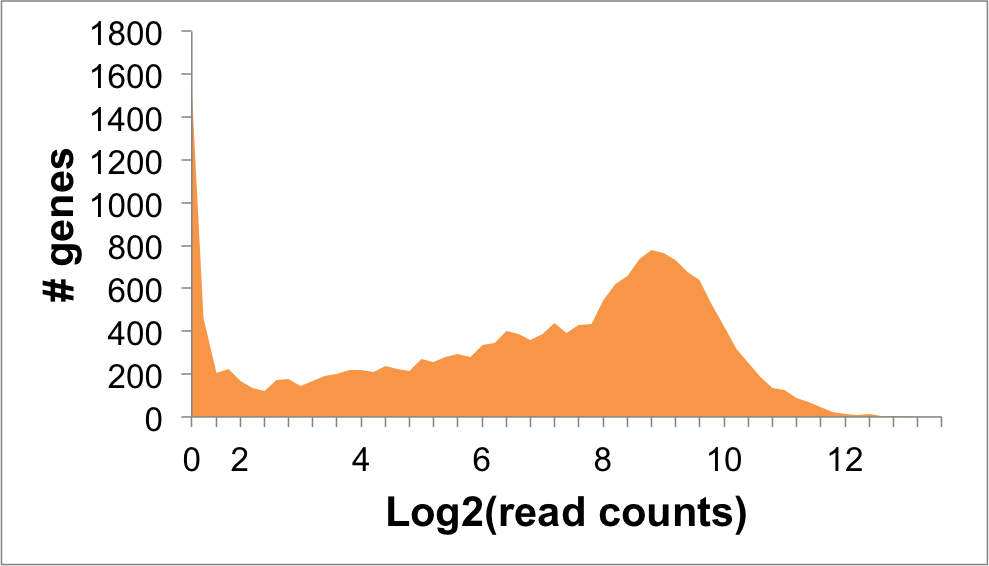
- Expression level (log2 read counts): 3.08
Expression Distribution
NCK2 Expression in NALM6 Cells: 3.08