SLC8A1
Gene Information
- Official Symbol: SLC8A1
- Official Name: solute carrier family 8 member A1
- Aliases and Previous Symbols: N/A
- Entrez ID: 6546
- UniProt: P32418
- Interactions: BioGRID
- PubMed articles: Open PubMed
- OMIM: Open OMIM
Function Summary
- Entrez Summary: N/A
- UniProt Summary: Mediates the exchange of one Ca(2+) ion against three to four Na(+) ions across the cell membrane, and thereby contributes to the regulation of cytoplasmic Ca(2+) levels and Ca(2+)- dependent cellular processes (PubMed:1374913, PubMed:11241183, PubMed:1476165). Contributes to Ca(2+) transport during excitation-contraction coupling in muscle. In a first phase, voltage-gated channels mediate the rapid increase of cytoplasmic Ca(2+) levels due to release of Ca(2+) stores from the endoplasmic reticulum. SLC8A1 mediates the export of Ca(2+) from the cell during the next phase, so that cytoplasmic Ca(2+) levels rapidly return to baseline. Required for normal embryonic heart development and the onset of heart contractions. {ECO:0000250|UniProtKB:P70414, ECO:0000269|PubMed:11241183, ECO:0000269|PubMed:1374913, ECO:0000269|PubMed:1476165}.
Pfam Domains GO Terms
Pfam Domains
| Na Ca ex |
| Calx-beta |
GO Terms
| calcium:cation antiporter activity involved in regulation of postsynaptic cytosolic calcium ion concentration |
| ion antiporter activity involved in regulation of postsynaptic membrane potential |
| calcium:sodium antiporter activity |
| positive regulation of the force of heart contraction |
| relaxation of smooth muscle |
| cellular response to caffeine |
| regulation of postsynaptic cytosolic calcium ion concentration |
| regulation of cell communication by electrical coupling |
| positive regulation of fibroblast migration |
| negative regulation of cytosolic calcium ion concentration |
| relaxation of cardiac muscle |
| sodium ion export across plasma membrane |
| cellular response to purine-containing compound |
| sodium ion import across plasma membrane |
| vascular smooth muscle contraction |
| cell communication by electrical coupling involved in cardiac conduction |
| response to diuretic |
| response to caffeine |
| cellular sodium ion homeostasis |
| membrane depolarization during cardiac muscle cell action potential |
| response to muscle stretch |
| cell communication by electrical coupling |
| regulation of cardiac muscle contraction by regulation of the release of sequestered calcium ion |
| ankyrin binding |
| relaxation of muscle |
| regulation of cardiac muscle contraction by calcium ion signaling |
| response to immobilization stress |
| regulation of the force of heart contraction |
| regulation of release of sequestered calcium ion into cytosol by sarcoplasmic reticulum |
| membrane depolarization during action potential |
| regulation of fibroblast migration |
| response to ATP |
| vasoconstriction |
| sodium ion homeostasis |
| cellular response to alkaloid |
| dendritic shaft |
| export across plasma membrane |
| positive regulation of bone mineralization |
| negative regulation of blood vessel diameter |
| calcium ion import |
| T-tubule |
| cell communication involved in cardiac conduction |
| integral component of postsynaptic membrane |
| intercalated disc |
| positive regulation of biomineralization |
| positive regulation of biomineral tissue development |
| cardiac muscle cell action potential |
| membrane depolarization |
| smooth muscle contraction |
| cellular response to cAMP |
| cardiac muscle cell development |
| cardiac cell development |
| regulation of cardiac conduction |
| calcium ion transport into cytosol |
| regulation of bone mineralization |
| inorganic ion import across plasma membrane |
| inorganic cation import across plasma membrane |
| cytoskeletal protein binding |
| regulation of cardiac muscle contraction |
| regulation of release of sequestered calcium ion into cytosol |
| cardiac muscle contraction |
| positive regulation of ossification |
| regulation of sodium ion transport |
| heart contraction |
| cardiac muscle cell differentiation |
| cytosolic calcium ion transport |
| sodium ion transmembrane transport |
| regulation of striated muscle contraction |
| cardiac conduction |
| regulation of biomineralization |
| regulation of biomineral tissue development |
| action potential |
| regulation of heart rate |
| import across plasma membrane |
| regulation of calcium ion transport into cytosol |
| response to cAMP |
| sarcolemma |
| heart process |
| cellular monovalent inorganic cation homeostasis |
| striated muscle contraction |
| response to alkaloid |
| cardiocyte differentiation |
| response to hydrogen peroxide |
| regulation of sequestering of calcium ion |
| ion channel binding |
| Z disc |
| striated muscle cell development |
| multicellular organismal signaling |
| response to organophosphorus |
| response to glucose |
| regulation of blood vessel diameter |
| regulation of tube diameter |
| regulation of tube size |
| monovalent inorganic cation homeostasis |
| response to hexose |
| calcium-mediated signaling |
| regulation of calcium ion transmembrane transport |
| dendritic spine |
| muscle cell development |
| response to monosaccharide |
| response to purine-containing compound |
| sodium ion transport |
| regulation of muscle contraction |
| cardiac muscle tissue development |
| vascular process in circulatory system |
| response to carbohydrate |
| cellular response to xenobiotic stimulus |
| cellular response to hypoxia |
| regulation of ossification |
| response to reactive oxygen species |
| cellular response to decreased oxygen levels |
| calcium ion transmembrane transport |
| striated muscle cell differentiation |
| calmodulin binding |
| response to mechanical stimulus |
| cellular response to oxygen levels |
| response to nutrient |
| regulation of muscle system process |
| regulation of heart contraction |
| muscle cell differentiation |
| regulation of calcium ion transport |
| calcium ion transport |
| muscle contraction |
| telencephalon development |
| positive regulation of cytosolic calcium ion concentration |
| striated muscle tissue development |
| regulation of blood circulation |
| divalent metal ion transport |
| muscle tissue development |
| muscle system process |
| response to xenobiotic stimulus |
| divalent inorganic cation transport |
| response to antibiotic |
| microtubule |
| regulation of cytosolic calcium ion concentration |
| regulation of cation transmembrane transport |
| second-messenger-mediated signaling |
| response to hypoxia |
| response to decreased oxygen levels |
| response to oxygen levels |
| regulation of metal ion transport |
| forebrain development |
| response to oxidative stress |
| blood circulation |
| circulatory system process |
| monovalent inorganic cation transport |
| cellular response to drug |
| regulation of membrane potential |
| cellular calcium ion homeostasis |
| calcium ion homeostasis |
| cellular divalent inorganic cation homeostasis |
| muscle structure development |
| regulation of ion transmembrane transport |
| divalent inorganic cation homeostasis |
| response to nutrient levels |
| positive regulation of cell migration |
| response to toxic substance |
| regulation of anatomical structure size |
| positive regulation of cell motility |
| heart development |
| response to extracellular stimulus |
| response to inorganic substance |
| positive regulation of cellular component movement |
| cellular response to organic cyclic compound |
| positive regulation of locomotion |
| cellular metal ion homeostasis |
| inorganic cation transmembrane transport |
| regulation of transmembrane transport |
| regulation of system process |
| cellular response to organonitrogen compound |
| cation transmembrane transport |
| metal ion homeostasis |
| cellular cation homeostasis |
| metal ion transport |
| cellular ion homeostasis |
| inorganic ion transmembrane transport |
| cellular response to nitrogen compound |
| import into cell |
| regulation of ion transport |
| cation homeostasis |
| inorganic ion homeostasis |
| calcium ion binding |
| brain development |
| cellular chemical homeostasis |
| head development |
| ion homeostasis |
| cation transport |
| regulation of cell migration |
| circulatory system development |
| cellular homeostasis |
| regulation of cell motility |
| regulation of cellular localization |
| response to organic cyclic compound |
| ion transmembrane transport |
| central nervous system development |
| regulation of locomotion |
| regulation of cellular component movement |
| response to organonitrogen compound |
| response to drug |
| export from cell |
| cellular response to oxygen-containing compound |
| response to nitrogen compound |
| chemical homeostasis |
| response to abiotic stimulus |
| cellular response to endogenous stimulus |
| mitochondrion |
| transmembrane transport |
| positive regulation of developmental process |
| ion transport |
| integral component of plasma membrane |
| response to endogenous stimulus |
| response to oxygen-containing compound |
| homeostatic process |
| cell development |
| intracellular signal transduction |
| cellular response to stress |
| positive regulation of multicellular organismal process |
| tissue development |
| establishment of localization in cell |
| regulation of transport |
| system process |
CRISPR Data
Compound Hit Most Correlated Genes in Chemogenomics Tissues where Essential in the Avana Dataset (DepMap 20Q1)
Compound Hit
No hits were found.
Most Correlated Genes in Chemogenomics
No correlation found to any other genes in chemogenomics.
Tissues where Essential in the Avana Dataset (DepMap 20Q1)
Global Fraction of Cell Lines Where Essential: 0/739
| Tissue | Fraction Of Cell Lines Where Essential |
|---|---|
| 1290807.0 | 0/1 |
| 909776.0 | 0/1 |
| bile duct | 0/28 |
| blood | 0/28 |
| bone | 0/26 |
| breast | 0/33 |
| central nervous system | 0/56 |
| cervix | 0/4 |
| colorectal | 0/17 |
| esophagus | 0/13 |
| fibroblast | 0/1 |
| gastric | 0/16 |
| kidney | 0/21 |
| liver | 0/20 |
| lung | 0/75 |
| lymphocyte | 0/16 |
| ovary | 0/26 |
| pancreas | 0/24 |
| peripheral nervous system | 0/16 |
| plasma cell | 0/15 |
| prostate | 0/1 |
| skin | 0/24 |
| soft tissue | 0/9 |
| thyroid | 0/2 |
| upper aerodigestive | 0/22 |
| urinary tract | 0/29 |
| uterus | 0/5 |
Essentiality in NALM6
- Essentiality Rank: 5678
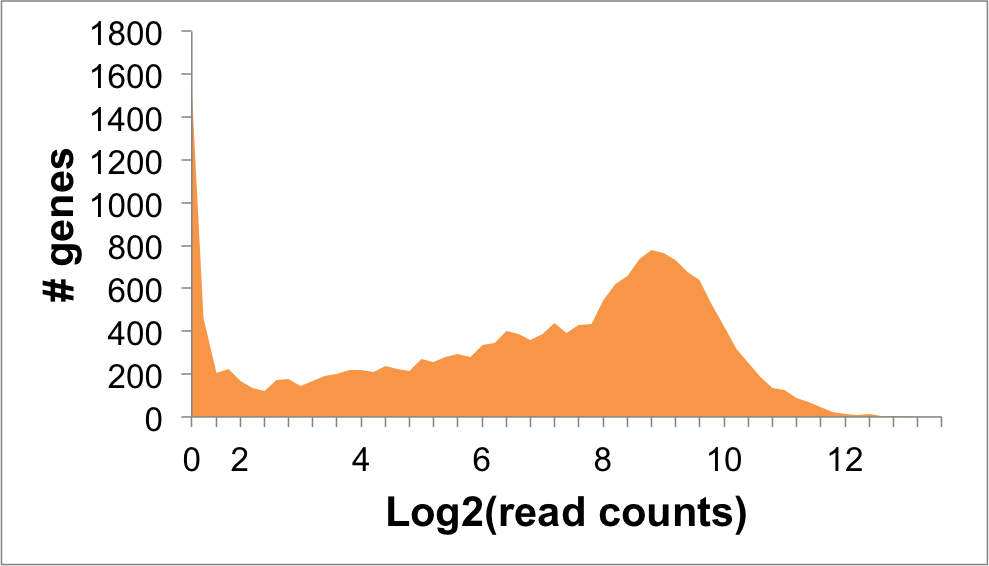
- Expression level (log2 read counts): 4.56
Expression Distribution
SLC8A1 Expression in NALM6 Cells: 4.56