TAS2R38
Gene Information
- Official Symbol: TAS2R38
- Official Name: taste 2 receptor member 38
- Aliases and Previous Symbols: N/A
- Entrez ID: 5726
- UniProt: P59533
- Interactions: BioGRID
- PubMed articles: Open PubMed
- OMIM: Open OMIM
Function Summary
- Entrez Summary: This gene encodes a seven-transmembrane G protein-coupled receptor that controls the ability to taste glucosinolates, a family of bitter-tasting compounds found in plants of the Brassica sp. Synthetic compounds phenylthiocarbamide (PTC) and 6-n-propylthiouracil (PROP) have been identified as ligands for this receptor and have been used to test the genetic diversity of this gene. Although several allelic forms of this gene have been identified worldwide, there are two predominant common forms (taster and non-taster) found outside of Africa. These alleles differ at three nucleotide positions resulting in amino acid changes in the protein (A49P, A262V, and V296I) with the amino acid combination PAV identifying the taster variant (and AVI identifying the non-taster variant). [provided by RefSeq, Oct 2009].
- UniProt Summary: Receptor that may play a role in the perception of bitterness and is gustducin-linked. May play a role in sensing the chemical composition of the gastrointestinal content. The activity of this receptor may stimulate alpha gustducin, mediate PLC-beta-2 activation and lead to the gating of TRPM5 (By similarity). {ECO:0000250}.
CRISPR Data
Essentiality in NALM6
- Essentiality Rank: 18220
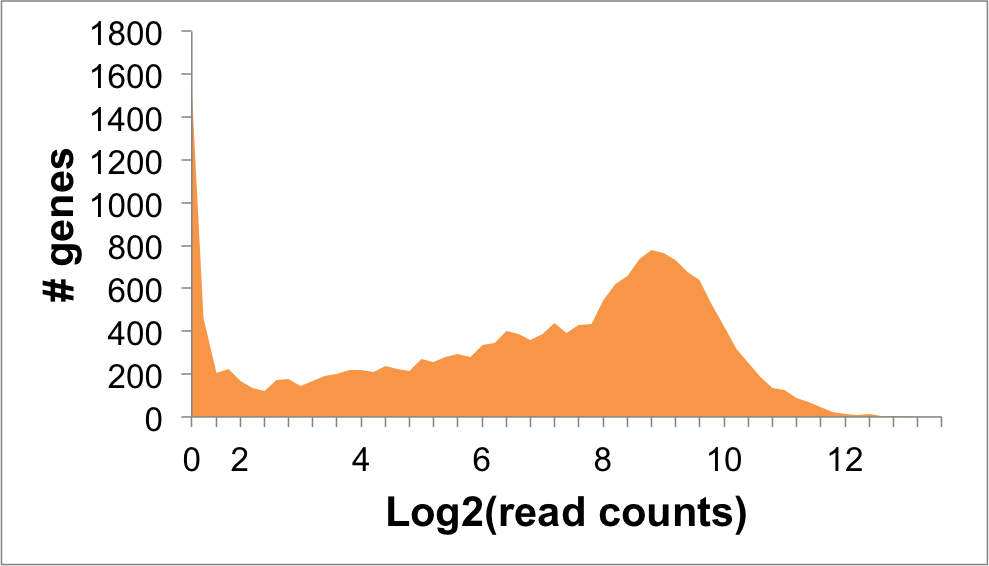
- Expression level (log2 read counts): -7.68
TAS2R38 Expression in NALM6 Cells: -7.68