Welcome to the Chemical-Genetic Interaction Map Project
Overview
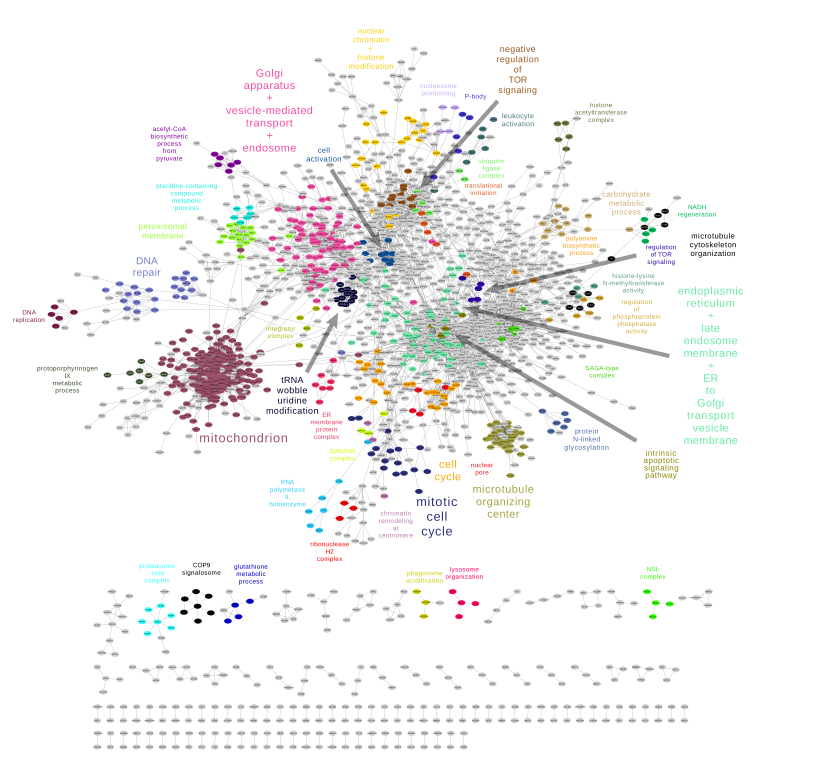
Gene mutations that alter the response to drugs can inform chemical mechanism-of-action and reveal the underlying genetic network structure of the cell. More than 400 genome-wide CRISPR/Cas9 knockout screens were used to generate isogenic chemical-gene interaction profiles in a human lymphoid cell line for 300 mechanistically diverse drugs and bioactive small molecules.
Statistical correction for predicted gene knockout fitness defects enabled assembly of a large-scale network of >10,000 high confidence chemical-gene interactions. Genetic resistance and sensitization signatures uncovered novel mechanisms-of-action for many known drugs and uncharacterized compounds. Dense modules in the network illuminated the genetic organization of mitotic regulation, the DNA damage response, mTOR signaling, metabolism, epigenetic control, and stress responses.
The dataset allows identification of multi-drug sensitization and resistance mechanisms, precise inference of gene function, and prediction of chemical synergism. This chemogenomic dataset illuminates the genetic architecture of human cells and provides a rational basis for the control of cellular phenotypes by small molecules.
Browse Data
| Screens | Treatments | Genes | Interactions |
|---|---|---|---|
| 400+ | 300+ | 19,000+ | 10,000+ |
| Genome-wide CRISPR/Cas9 knockout screens | Mechanistically diverse drugs, bioactive molecules and growth conditions | Human genes analyzed with the EKO library | High confidence chemical-gene interactions identified with CRANKS |