CTNNB1
Gene Information
- Official Symbol: CTNNB1
- Official Name: catenin beta 1
- Aliases and Previous Symbols: N/A
- Entrez ID: 1499
- UniProt: P35222
- Interactions: BioGRID
- PubMed articles: Open PubMed
- OMIM: Open OMIM
Function Summary
- Entrez Summary: The protein encoded by this gene is part of a complex of proteins that constitute adherens junctions (AJs). AJs are necessary for the creation and maintenance of epithelial cell layers by regulating cell growth and adhesion between cells. The encoded protein also anchors the actin cytoskeleton and may be responsible for transmitting the contact inhibition signal that causes cells to stop dividing once the epithelial sheet is complete. Finally, this protein binds to the product of the APC gene, which is mutated in adenomatous polyposis of the colon. Mutations in this gene are a cause of colorectal cancer (CRC), pilomatrixoma (PTR), medulloblastoma (MDB), and ovarian cancer. Alternative splicing results in multiple transcript variants. [provided by RefSeq, Aug 2016].
- UniProt Summary: Key downstream component of the canonical Wnt signaling pathway. In the absence of Wnt, forms a complex with AXIN1, AXIN2, APC, CSNK1A1 and GSK3B that promotes phosphorylation on N-terminal Ser and Thr residues and ubiquitination of CTNNB1 via BTRC and its subsequent degradation by the proteasome. In the presence of Wnt ligand, CTNNB1 is not ubiquitinated and accumulates in the nucleus, where it acts as a coactivator for transcription factors of the TCF/LEF family, leading to activate Wnt responsive genes. Involved in the regulation of cell adhesion, as component of an E- cadherin:catenin adhesion complex. Acts as a negative regulator of centrosome cohesion. Involved in the CDK2/PTPN6/CTNNB1/CEACAM1 pathway of insulin internalization. Blocks anoikis of malignant kidney and intestinal epithelial cells and promotes their anchorage-independent growth by down-regulating DAPK2. Disrupts PML function and PML-NB formation by inhibiting RANBP2-mediated sumoylation of PML (PubMed:17524503, PubMed:18077326, PubMed:18086858, PubMed:18957423, PubMed:21262353, PubMed:22647378, PubMed:22699938, PubMed:22155184). Promotes neurogenesis by maintaining sympathetic neuroblasts within the cell cycle (By similarity). {ECO:0000250|UniProtKB:Q02248, ECO:0000269|PubMed:17524503, ECO:0000269|PubMed:18077326, ECO:0000269|PubMed:18086858, ECO:0000269|PubMed:18957423, ECO:0000269|PubMed:21262353, ECO:0000269|PubMed:22155184, ECO:0000269|PubMed:22647378, ECO:0000269|PubMed:22699938}.
Pfam Domains GO Terms
Pfam Domains
| Arm |
GO Terms
| glial cell fate determination |
| regulation of chromatin-mediated maintenance of transcription |
| canonical Wnt signaling pathway involved in positive regulation of cardiac outflow tract cell proliferation |
| regulation of euchromatin binding |
| positive regulation of chromatin-mediated maintenance of transcription |
| negative regulation of mitotic cell cycle, embryonic |
| renal inner medulla development |
| regulation of cell proliferation involved in outflow tract morphogenesis |
| Scrib-APC-beta-catenin complex |
| renal outer medulla development |
| positive regulation of determination of dorsal identity |
| canonical Wnt signaling pathway involved in positive regulation of epithelial to mesenchymal transition |
| mesenchymal cell proliferation involved in lung development |
| positive regulation of epithelial cell proliferation involved in prostate gland development |
| limb joint morphogenesis |
| regulation of heparan sulfate proteoglycan biosynthetic process |
| oviduct development |
| beta-catenin-TCF7L2 complex |
| lung induction |
| canonical Wnt signaling pathway involved in negative regulation of apoptotic process |
| fungiform papilla formation |
| positive regulation of heparan sulfate proteoglycan biosynthetic process |
| negative regulation of mesenchymal to epithelial transition involved in metanephros morphogenesis |
| positive regulation of proteoglycan biosynthetic process |
| embryonic skeletal limb joint morphogenesis |
| regulation of centriole-centriole cohesion |
| canonical Wnt signaling pathway involved in heart development |
| establishment of endothelial blood-brain barrier |
| regulation of determination of dorsal identity |
| canonical Wnt signaling pathway involved in midbrain dopaminergic neuron differentiation |
| regulation of centromeric sister chromatid cohesion |
| positive regulation of branching involved in lung morphogenesis |
| regulation of mitotic cell cycle, embryonic |
| canonical Wnt signaling pathway involved in regulation of cell proliferation |
| hair follicle placode formation |
| central nervous system vasculogenesis |
| negative regulation of epithelial cell differentiation involved in kidney development |
| regulation of timing of anagen |
| response to indole-3-methanol |
| fungiform papilla morphogenesis |
| Wnt signaling pathway involved in heart development |
| cellular response to indole-3-methanol |
| regulation of branching involved in lung morphogenesis |
| fungiform papilla development |
| renal vesicle formation |
| cranial ganglion development |
| trachea formation |
| positive regulation of fibroblast growth factor receptor signaling pathway |
| positive regulation of core promoter binding |
| establishment of blood-brain barrier |
| dorsal root ganglion development |
| tongue morphogenesis |
| lung-associated mesenchyme development |
| regulation of mesenchymal to epithelial transition involved in metanephros morphogenesis |
| entry of bacterium into host cell |
| regulation of core promoter binding |
| synaptic vesicle clustering |
| flotillin complex |
| embryonic foregut morphogenesis |
| negative regulation of metanephros development |
| regulation of hair follicle maturation |
| regulation of secondary heart field cardioblast proliferation |
| sympathetic ganglion development |
| negative regulation of protein sumoylation |
| fascia adherens |
| alpha-catenin binding |
| beta-catenin-TCF complex |
| foregut morphogenesis |
| regulation of epithelial cell proliferation involved in prostate gland development |
| Wnt signaling pathway involved in midbrain dopaminergic neuron differentiation |
| neural plate development |
| regulation of cardioblast proliferation |
| ectodermal placode formation |
| dorsal/ventral axis specification |
| I-SMAD binding |
| chromatin-mediated maintenance of transcription |
| ectodermal placode morphogenesis |
| embryonic skeletal joint morphogenesis |
| trachea morphogenesis |
| ectodermal placode development |
| midbrain dopaminergic neuron differentiation |
| morphogenesis of an endothelium |
| Wnt signalosome |
| renal vesicle morphogenesis |
| epithelial cell differentiation involved in prostate gland development |
| endothelial tube morphogenesis |
| layer formation in cerebral cortex |
| beta-catenin destruction complex |
| embryonic brain development |
| regulation of nephron tubule epithelial cell differentiation |
| endodermal cell fate commitment |
| renal vesicle development |
| negative regulation of oligodendrocyte differentiation |
| genitalia morphogenesis |
| embryonic skeletal joint development |
| presynaptic active zone cytoplasmic component |
| glial cell fate commitment |
| organ induction |
| positive regulation of histone H3-K4 methylation |
| mesenchymal cell proliferation |
| positive regulation of endothelial cell differentiation |
| negative regulation of morphogenesis of an epithelium |
| negative regulation of kidney development |
| ganglion development |
| regulation of cell proliferation involved in heart morphogenesis |
| nephron tubule formation |
| postsynaptic density, intracellular component |
| regulation of epithelial cell differentiation involved in kidney development |
| trachea development |
| negative regulation of oxidative stress-induced neuron death |
| regulation of hair follicle development |
| positive regulation of glycoprotein biosynthetic process |
| ectoderm development |
| tongue development |
| lung cell differentiation |
| sympathetic nervous system development |
| beta-catenin destruction complex disassembly |
| regulation of protein sumoylation |
| positive regulation of neuroblast proliferation |
| regulation of sister chromatid cohesion |
| positive regulation of glycoprotein metabolic process |
| telencephalon glial cell migration |
| lens morphogenesis in camera-type eye |
| cerebral cortex radial glia guided migration |
| negative regulation of chondrocyte differentiation |
| male genitalia development |
| microvillus membrane |
| regulation of metanephros development |
| regulation of chromatin binding |
| bone resorption |
| cell surface receptor signaling pathway involved in heart development |
| hair follicle morphogenesis |
| positive regulation of transcription regulatory region DNA binding |
| protein localization to cell surface |
| positive regulation of skeletal muscle tissue development |
| negative regulation of glial cell differentiation |
| positive regulation of mesenchymal cell proliferation |
| regulation of oxidative stress-induced neuron death |
| nuclear hormone receptor binding |
| positive regulation of DNA-templated transcription, initiation |
| negative regulation of embryonic development |
| epithelial tube branching involved in lung morphogenesis |
| metanephros morphogenesis |
| negative regulation of osteoclast differentiation |
| developmental induction |
| regulation of histone H3-K4 methylation |
| regulation of hair cycle |
| branching involved in blood vessel morphogenesis |
| embryonic hindlimb morphogenesis |
| gastrulation with mouth forming second |
| cell fate commitment involved in formation of primary germ layer |
| negative regulation of cartilage development |
| epidermis morphogenesis |
| regulation of fibroblast growth factor receptor signaling pathway |
| catenin complex |
| beta-catenin-TCF complex assembly |
| cerebral cortex radially oriented cell migration |
| dopaminergic neuron differentiation |
| nuclear euchromatin |
| proximal/distal pattern formation |
| smooth muscle cell differentiation |
| regulation of neuroblast proliferation |
| establishment of endothelial barrier |
| disordered domain specific binding |
| regulation of mesenchymal cell proliferation |
| regulation of endothelial cell differentiation |
| embryonic forelimb morphogenesis |
| hair cell differentiation |
| positive regulation of morphogenesis of an epithelium |
| negative regulation of animal organ morphogenesis |
| animal organ formation |
| positive regulation of telomere maintenance via telomerase |
| synaptic vesicle transport |
| regulation of DNA-templated transcription, initiation |
| hindlimb morphogenesis |
| glial cell migration |
| androgen receptor signaling pathway |
| regulation of animal organ formation |
| adherens junction assembly |
| embryonic axis specification |
| positive regulation of telomerase activity |
| positive regulation of telomere maintenance via telomere lengthening |
| positive regulation of embryonic development |
| Wnt signaling pathway, calcium modulating pathway |
| regulation of protein localization to cell surface |
| cell periphery |
| oocyte development |
| cell fate determination |
| positive regulation of histone methylation |
| regulation of calcium ion import |
| repressing transcription factor binding |
| positive regulation of stem cell proliferation |
| regulation of oligodendrocyte differentiation |
| regulation of heart morphogenesis |
| synaptic vesicle localization |
| regulation of glycoprotein biosynthetic process |
| prostate gland development |
| negative regulation of epithelial cell differentiation |
| forelimb morphogenesis |
| endodermal cell differentiation |
| negative regulation of gliogenesis |
| regulation of myelination |
| lung morphogenesis |
| oocyte differentiation |
| estrogen receptor binding |
| cerebral cortex cell migration |
| branching involved in ureteric bud morphogenesis |
| protein-DNA complex |
| osteoclast differentiation |
| androgen receptor binding |
| thymus development |
| autonomic nervous system development |
| regulation of glycoprotein metabolic process |
| negative regulation of oxidative stress-induced cell death |
| negative regulation of cellular response to oxidative stress |
| bone remodeling |
| negative regulation of myeloid leukocyte differentiation |
| genitalia development |
| T cell differentiation in thymus |
| negative regulation of response to oxidative stress |
| positive regulation of epithelial to mesenchymal transition |
| endoderm formation |
| digestive tract morphogenesis |
| regulation of skeletal muscle tissue development |
| anterior/posterior axis specification |
| positive regulation of telomere maintenance |
| endothelial cell development |
| regulation of telomerase activity |
| regulation of chondrocyte differentiation |
| cranial nerve development |
| SMAD binding |
| regulation of transcription regulatory region DNA binding |
| positive regulation of neural precursor cell proliferation |
| ureteric bud morphogenesis |
| RNA polymerase II activating transcription factor binding |
| positive regulation of neuron apoptotic process |
| mesonephric tubule morphogenesis |
| regulation of telomere maintenance via telomerase |
| regulation of kidney development |
| regulation of morphogenesis of a branching structure |
| positive regulation of DNA binding |
| lateral plasma membrane |
| positive regulation of osteoblast differentiation |
| regulation of centrosome cycle |
| telencephalon cell migration |
| positive regulation of epithelial cell differentiation |
| neuron projection extension |
| forebrain cell migration |
| regulation of telomere maintenance via telomere lengthening |
| embryonic digit morphogenesis |
| embryonic pattern specification |
| RNA polymerase II transcription factor binding |
| regulation of oxidative stress-induced cell death |
| positive regulation of gene expression, epigenetic |
| adherens junction |
| nephron tubule morphogenesis |
| regulation of osteoclast differentiation |
| regulation of histone methylation |
| regulation of stem cell proliferation |
| cranial skeletal system development |
| nephron epithelium morphogenesis |
| positive regulation of DNA biosynthetic process |
| nephron morphogenesis |
| vasculogenesis |
| renal tubule morphogenesis |
| intracellular steroid hormone receptor signaling pathway |
| regulation of glial cell differentiation |
| positive regulation of striated muscle tissue development |
| positive regulation of muscle organ development |
| chromatin organization involved in regulation of transcription |
| regulation of cartilage development |
| positive regulation of muscle tissue development |
| epithelial to mesenchymal transition |
| apical part of cell |
| hair follicle development |
| pancreas development |
| skin epidermis development |
| endoderm development |
| presynaptic membrane |
| hair cycle process |
| molting cycle process |
| regulation of cellular response to oxidative stress |
| embryonic heart tube development |
| negative regulation of myeloid cell differentiation |
| nephron tubule development |
| lens development in camera-type eye |
| positive regulation of reproductive process |
| oogenesis |
| positive regulation of type I interferon production |
| nerve development |
| renal tubule development |
| regulation of sister chromatid segregation |
| dorsal/ventral pattern formation |
| positive regulation of animal organ morphogenesis |
| regulation of fibroblast proliferation |
| endothelial cell differentiation |
| regulation of telomere maintenance |
| centrosome cycle |
| Schaffer collateral - CA1 synapse |
| odontogenesis of dentin-containing tooth |
| negative regulation of protein modification by small protein conjugation or removal |
| regulation of epithelial to mesenchymal transition |
| adherens junction organization |
| metanephros development |
| positive regulation of ossification |
| regulation of response to oxidative stress |
| kidney morphogenesis |
| cellular response to alcohol |
| axis specification |
| midbrain development |
| protein phosphatase binding |
| ureteric bud development |
| regulation of epidermis development |
| mesonephric epithelium development |
| positive regulation of muscle cell differentiation |
| mesonephric tubule development |
| cell fate specification |
| regulation of neural precursor cell proliferation |
| developmental cell growth |
| canonical Wnt signaling pathway |
| cell growth |
| mesonephros development |
| positive regulation of histone modification |
| hair cycle |
| positive regulation of neuron death |
| molting cycle |
| kinase binding |
| microtubule organizing center organization |
| embryonic skeletal system morphogenesis |
| response to antineoplastic agent |
| endothelium development |
| nephron epithelium development |
| negative regulation of leukocyte differentiation |
| tissue remodeling |
| entry into host |
| negative regulation of angiogenesis |
| regulation of chromosome segregation |
| entry into host cell |
| positive regulation of chromatin organization |
| cell-cell adherens junction |
| negative regulation of blood vessel morphogenesis |
| formation of primary germ layer |
| myeloid leukocyte differentiation |
| regulation of DNA biosynthetic process |
| camera-type eye morphogenesis |
| regulation of osteoblast differentiation |
| developmental growth involved in morphogenesis |
| regulation of myeloid leukocyte differentiation |
| negative regulation of vasculature development |
| regulation of gliogenesis |
| cerebral cortex development |
| synaptic vesicle cycle |
| steroid hormone mediated signaling pathway |
| neuron migration |
| odontogenesis |
| spindle pole |
| embryonic epithelial tube formation |
| bicellular tight junction |
| nephron development |
| embryonic limb morphogenesis |
| ion channel binding |
| regulation of DNA binding |
| embryonic appendage morphogenesis |
| regulation of type I interferon production |
| embryonic skeletal system development |
| cell-matrix adhesion |
| kidney epithelium development |
| regulation of embryonic development |
| vesicle-mediated transport in synapse |
| female gamete generation |
| branching morphogenesis of an epithelial tube |
| digestive tract development |
| regulation of striated muscle tissue development |
| Z disc |
| epithelial tube formation |
| regulation of smooth muscle cell proliferation |
| non-canonical Wnt signaling pathway |
| T cell differentiation |
| regulation of muscle tissue development |
| stem cell population maintenance |
| response to estradiol |
| regulation of muscle organ development |
| maintenance of cell number |
| negative regulation of hemopoiesis |
| cell cortex |
| regulation of epithelial cell differentiation |
| digestive system development |
| morphogenesis of embryonic epithelium |
| regulation of histone modification |
| tube formation |
| eye morphogenesis |
| limb morphogenesis |
| appendage morphogenesis |
| hindbrain development |
| regulation of muscle cell differentiation |
| mesenchymal cell differentiation |
| interaction with host |
| male sex differentiation |
| regulation of T cell proliferation |
| cell maturation |
| gastrulation |
| morphogenesis of a branching epithelium |
| regulation of reproductive process |
| intracellular receptor signaling pathway |
| morphogenesis of a branching structure |
| cell junction assembly |
| lung development |
| hormone-mediated signaling pathway |
| glial cell differentiation |
| cell-cell junction |
| respiratory tube development |
| pallium development |
| positive regulation of chromosome organization |
| establishment of vesicle localization |
| positive regulation of binding |
| central nervous system neuron differentiation |
| lamellipodium |
| limb development |
| appendage development |
| regulation of morphogenesis of an epithelium |
| positive regulation of I-kappaB kinase/NF-kappaB signaling |
| vesicle localization |
| cell-substrate adhesion |
| cellular response to steroid hormone stimulus |
| protein C-terminus binding |
| positive regulation of epithelial cell proliferation |
| regulation of chromatin organization |
| regulation of microtubule cytoskeleton organization |
| tissue homeostasis |
| regulation of ossification |
| epithelial cell development |
| positive regulation of DNA metabolic process |
| respiratory system development |
| basolateral plasma membrane |
| postsynaptic membrane |
| transcription factor complex |
| regulation of neuron apoptotic process |
| negative regulation of neuron death |
| regulation of lymphocyte proliferation |
| regulation of mononuclear cell proliferation |
| cell junction organization |
| gliogenesis |
| anterior/posterior pattern specification |
| myeloid cell differentiation |
| mesenchyme development |
| regulation of leukocyte proliferation |
| regulation of microtubule-based process |
| negative regulation of apoptotic signaling pathway |
| regulation of myeloid cell differentiation |
| regulation of protein modification by small protein conjugation or removal |
| response to alcohol |
| T cell activation |
| regulation of I-kappaB kinase/NF-kappaB signaling |
| regulation of gene expression, epigenetic |
| lymphocyte differentiation |
| skeletal system morphogenesis |
| protein-containing complex disassembly |
| developmental maturation |
| muscle cell differentiation |
| cell fate commitment |
| regulation of calcium ion transport |
| germ cell development |
| sensory organ morphogenesis |
| telencephalon development |
| regulation of animal organ morphogenesis |
| positive regulation of DNA-binding transcription factor activity |
| sex differentiation |
| kidney development |
| synapse |
| synapse organization |
| regulation of cellular response to growth factor stimulus |
| regulation of leukocyte differentiation |
| regulation of canonical Wnt signaling pathway |
| renal system development |
| transcription coactivator activity |
| regulation of angiogenesis |
| embryonic organ morphogenesis |
| negative regulation of neurogenesis |
| protein polyubiquitination |
| epithelial tube morphogenesis |
| negative regulation of mitotic cell cycle |
| cadherin binding |
| regulation of neuron death |
| negative regulation of nervous system development |
| camera-type eye development |
| epidermal cell differentiation |
| regulation of T cell activation |
| angiogenesis |
| urogenital system development |
| regulation of vasculature development |
| multicellular organismal homeostasis |
| proteasome-mediated ubiquitin-dependent protein catabolic process |
| response to steroid hormone |
| leukocyte differentiation |
| transcription factor binding |
| regionalization |
| negative regulation of cell development |
| regulation of epithelial cell proliferation |
| anatomical structure homeostasis |
| enzyme binding |
| proteasomal protein catabolic process |
| regulation of chromosome organization |
| cellular process involved in reproduction in multicellular organism |
| regulation of DNA metabolic process |
| Wnt signaling pathway |
| cell-cell signaling by wnt |
| eye development |
| regulation of Wnt signaling pathway |
| visual system development |
| establishment of organelle localization |
| sensory system development |
| regulation of binding |
| in utero embryonic development |
| skin development |
| lymphocyte activation |
| regulation of metal ion transport |
| forebrain development |
| developmental growth |
| growth |
| chromatin binding |
| regulation of apoptotic signaling pathway |
| cellular component disassembly |
| cellular response to drug |
| blood vessel morphogenesis |
| gland development |
| epidermis development |
| focal adhesion |
| anterograde trans-synaptic signaling |
| chemical synaptic transmission |
| reproductive structure development |
| regulation of DNA-binding transcription factor activity |
| cell surface receptor signaling pathway involved in cell-cell signaling |
| reproductive system development |
| morphogenesis of an epithelium |
| embryonic organ development |
| pattern specification process |
| trans-synaptic signaling |
| negative regulation of immune system process |
| positive regulation of cytokine production |
| regulation of hemopoiesis |
| synaptic signaling |
| protein kinase binding |
| positive regulation of neurogenesis |
| muscle structure development |
| microtubule cytoskeleton organization |
| neuron projection morphogenesis |
| plasma membrane bounded cell projection morphogenesis |
| blood vessel development |
| protein heterodimerization activity |
| cell projection morphogenesis |
| centrosome |
| skeletal system development |
| cellular response to growth factor stimulus |
| cell-cell adhesion |
| vasculature development |
| regulation of lymphocyte activation |
| cell part morphogenesis |
| cardiovascular system development |
| cellular response to lipid |
| heart development |
| ubiquitin-dependent protein catabolic process |
| response to growth factor |
| modification-dependent protein catabolic process |
| positive regulation of nervous system development |
| regulation of cellular protein localization |
| regulation of cytoskeleton organization |
| positive regulation of cell development |
| cellular response to organic cyclic compound |
| positive regulation of MAPK cascade |
| modification-dependent macromolecule catabolic process |
| sensory organ development |
| cell junction |
| cell population proliferation |
| hemopoiesis |
| cell morphogenesis involved in differentiation |
| tissue morphogenesis |
| embryonic morphogenesis |
| negative regulation of cell cycle |
| organelle localization |
| proteolysis involved in cellular protein catabolic process |
| negative regulation of protein modification process |
| protein-containing complex |
| cellular response to organonitrogen compound |
| regulation of leukocyte activation |
| cellular response to hormone stimulus |
| hematopoietic or lymphoid organ development |
| cellular protein catabolic process |
| positive regulation of organelle organization |
| regulation of mitotic cell cycle |
| chordate embryonic development |
| regulation of cell activation |
| positive regulation of apoptotic process |
| immune system development |
| positive regulation of programmed cell death |
| embryo development ending in birth or egg hatching |
| tube morphogenesis |
| positive regulation of transferase activity |
| cellular response to nitrogen compound |
| neuron projection development |
| developmental process involved in reproduction |
| microtubule-based process |
| negative regulation of cell population proliferation |
| DNA-binding transcription factor activity |
| epithelial cell differentiation |
| protein catabolic process |
| protein ubiquitination |
| gamete generation |
| regulation of cytokine production |
| positive regulation of cell death |
| perinuclear region of cytoplasm |
| regulation of ion transport |
| chromatin organization |
| viral process |
| negative regulation of cell differentiation |
| cell morphogenesis |
| regulation of cellular response to stress |
| brain development |
| regulation of MAPK cascade |
| regulation of cell cycle process |
| protein modification by small protein conjugation |
| head development |
| symbiotic process |
| neuron development |
| regulation of neurogenesis |
| interspecies interaction between organisms |
| cellular component morphogenesis |
| multicellular organismal reproductive process |
| sexual reproduction |
| multicellular organism reproduction |
| tube development |
| response to lipid |
| negative regulation of transcription by RNA polymerase II |
| circulatory system development |
| negative regulation of apoptotic process |
| anatomical structure formation involved in morphogenesis |
| cellular macromolecule catabolic process |
| negative regulation of programmed cell death |
| response to hormone |
| positive regulation of cell population proliferation |
| regulation of cellular localization |
| response to organic cyclic compound |
| regulation of nervous system development |
| leukocyte activation |
| cell adhesion |
| regulation of cell development |
| biological adhesion |
| negative regulation of developmental process |
| animal organ morphogenesis |
| cell migration |
| positive regulation of cell differentiation |
| regulation of transferase activity |
| embryo development |
| central nervous system development |
| protein modification by small protein conjugation or removal |
| multi-organism reproductive process |
| negative regulation of cell death |
| cell cycle process |
| response to organonitrogen compound |
| neuron differentiation |
| positive regulation of protein phosphorylation |
| positive regulation of intracellular signal transduction |
| response to drug |
| regulation of protein localization |
| negative regulation of cellular protein metabolic process |
| macromolecule catabolic process |
| cellular response to oxygen-containing compound |
| positive regulation of phosphorylation |
| organonitrogen compound catabolic process |
| regulation of anatomical structure morphogenesis |
| chromosome organization |
| cell activation |
| localization of cell |
| cell motility |
| response to nitrogen compound |
| negative regulation of protein metabolic process |
| cytoskeleton organization |
| epithelium development |
| cell-cell signaling |
| plasma membrane bounded cell projection organization |
| positive regulation of phosphate metabolic process |
| positive regulation of phosphorus metabolic process |
| cell projection organization |
| regulation of cell cycle |
| negative regulation of transcription, DNA-templated |
| negative regulation of multicellular organismal process |
| positive regulation of cellular component organization |
| positive regulation of transcription by RNA polymerase II |
| cellular response to endogenous stimulus |
| positive regulation of protein modification process |
| negative regulation of nucleic acid-templated transcription |
| negative regulation of RNA biosynthetic process |
| negative regulation of signal transduction |
| proteolysis |
| regulation of organelle organization |
| locomotion |
| negative regulation of RNA metabolic process |
| cell cycle |
| negative regulation of cell communication |
| negative regulation of signaling |
| positive regulation of developmental process |
| negative regulation of cellular macromolecule biosynthetic process |
| reproductive process |
| reproduction |
| positive regulation of catalytic activity |
| negative regulation of nucleobase-containing compound metabolic process |
| regulation of protein phosphorylation |
| negative regulation of macromolecule biosynthetic process |
| response to endogenous stimulus |
| regulation of response to stress |
| negative regulation of cellular biosynthetic process |
| generation of neurons |
| positive regulation of transcription, DNA-templated |
| regulation of apoptotic process |
| negative regulation of biosynthetic process |
| movement of cell or subcellular component |
| response to oxygen-containing compound |
| protein-containing complex assembly |
| regulation of programmed cell death |
| cellular protein localization |
| regulation of phosphorylation |
| cellular macromolecule localization |
| positive regulation of cellular protein metabolic process |
| regulation of cell population proliferation |
| negative regulation of response to stimulus |
| neurogenesis |
| positive regulation of nucleic acid-templated transcription |
| positive regulation of RNA biosynthetic process |
| homeostatic process |
| cell development |
| regulation of immune system process |
| positive regulation of signal transduction |
| regulation of cell death |
| positive regulation of protein metabolic process |
| negative regulation of gene expression |
| positive regulation of RNA metabolic process |
| positive regulation of multicellular organismal process |
| tissue development |
| organic substance catabolic process |
| positive regulation of molecular function |
| regulation of phosphate metabolic process |
| regulation of phosphorus metabolic process |
| cellular catabolic process |
| regulation of cell differentiation |
| positive regulation of cell communication |
| positive regulation of signaling |
| regulation of intracellular signal transduction |
| establishment of localization in cell |
| regulation of protein modification process |
| protein-containing complex subunit organization |
| regulation of transport |
| positive regulation of nucleobase-containing compound metabolic process |
| positive regulation of macromolecule biosynthetic process |
| vesicle-mediated transport |
| positive regulation of cellular biosynthetic process |
| positive regulation of gene expression |
| membrane |
| positive regulation of biosynthetic process |
CRISPR Data
Compound Hit Most Correlated Genes in Chemogenomics Tissues where Essential in the Avana Dataset (DepMap 20Q1)
Compound Hit
Tissues where Essential in the Avana Dataset (DepMap 20Q1)
Global Fraction of Cell Lines Where Essential: 33/726
| Tissue | Fraction Of Cell Lines Where Essential |
|---|---|
| 1290807.0 | 0/1 |
| 909776.0 | 0/1 |
| bile duct | 4/28 |
| blood | 0/28 |
| bone | 1/25 |
| breast | 1/33 |
| central nervous system | 0/56 |
| cervix | 0/4 |
| colorectal | 6/17 |
| esophagus | 0/13 |
| fibroblast | 0/1 |
| gastric | 3/15 |
| kidney | 0/21 |
| liver | 2/20 |
| lung | 0/75 |
| lymphocyte | 0/14 |
| ovary | 0/26 |
| pancreas | 3/24 |
| peripheral nervous system | 0/16 |
| plasma cell | 0/15 |
| prostate | 0/1 |
| skin | 0/24 |
| soft tissue | 0/7 |
| thyroid | 0/2 |
| upper aerodigestive | 0/22 |
| urinary tract | 0/29 |
| uterus | 0/5 |
Essentiality in NALM6
- Essentiality Rank: 15088
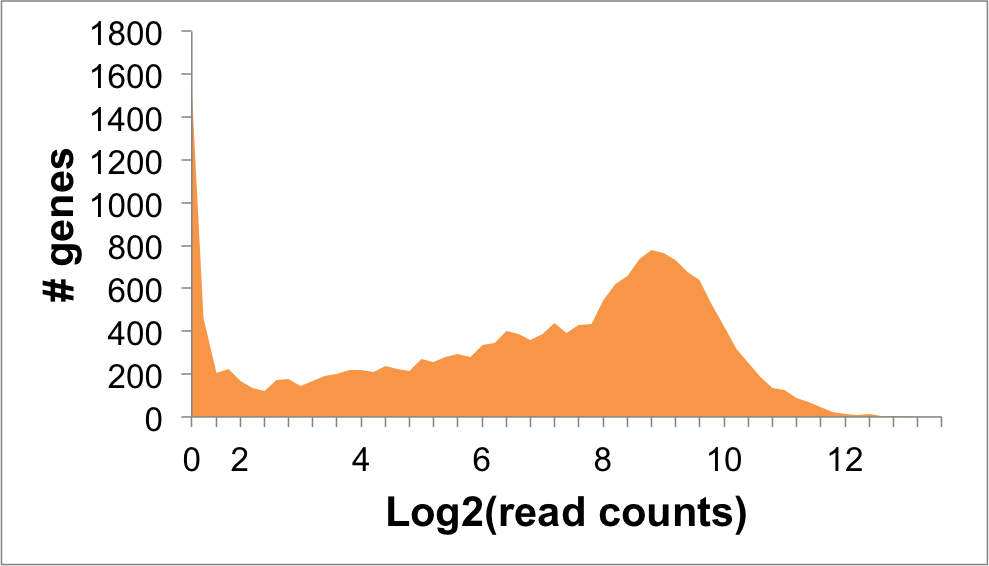
- Expression level (log2 read counts): 7.86
Expression Distribution
CTNNB1 Expression in NALM6 Cells: 7.86