UBASH3A
Gene Information
- Official Symbol: UBASH3A
- Official Name: ubiquitin associated and SH3 domain containing A
- Aliases and Previous Symbols: N/A
- Entrez ID: 53347
- UniProt: P57075
- Interactions: BioGRID
- PubMed articles: Open PubMed
- OMIM: Open OMIM
Function Summary
- Entrez Summary: This gene encodes one of two family members belonging to the T-cell ubiquitin ligand (TULA) family. Both family members can negatively regulate T-cell signaling. This family member can facilitate growth factor withdrawal-induced apoptosis in T cells, which may occur via its interaction with AIF, an apoptosis-inducing factor. Alternative splicing of this gene results in multiple transcript variants. [provided by RefSeq, Aug 2011].
- UniProt Summary: Interferes with CBL-mediated down-regulation and degradation of receptor-type tyrosine kinases. Promotes accumulation of activated target receptors, such as T-cell receptors, EGFR and PDGFRB, on the cell surface. Exhibits negligigle protein tyrosine phosphatase activity at neutral pH. May act as a dominant-negative regulator of UBASH3B-dependent dephosphorylation. May inhibit dynamin-dependent endocytic pathways by functionally sequestering dynamin via its SH3 domain. {ECO:0000269|PubMed:15159412, ECO:0000269|PubMed:17382318, ECO:0000269|PubMed:18189269}.
CRISPR Data
Essentiality in NALM6
- Essentiality Rank: 5884
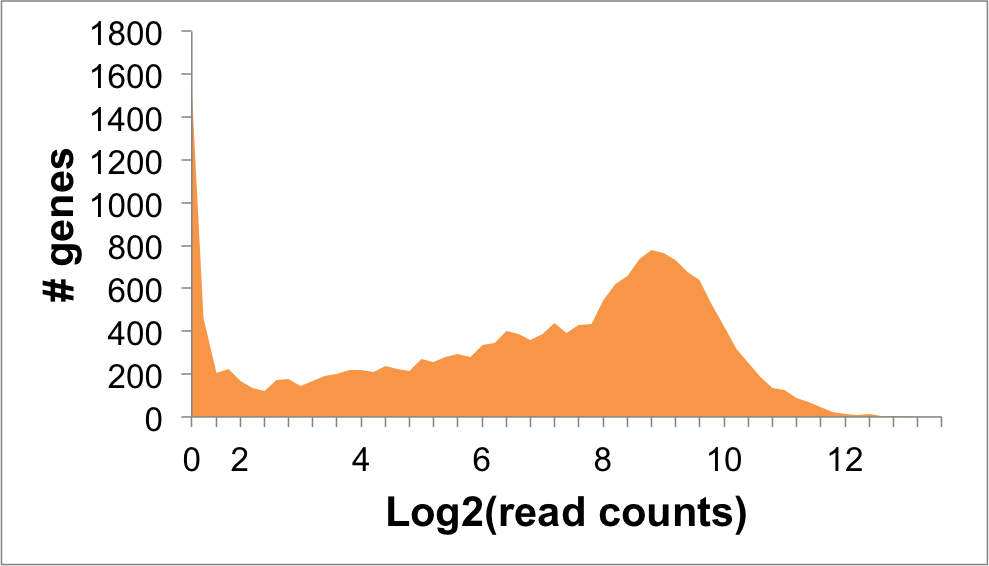
- Expression level (log2 read counts): -0.72
UBASH3A Expression in NALM6 Cells: -0.72