ERRFI1
Gene Information
- Official Symbol: ERRFI1
- Official Name: ERBB receptor feedback inhibitor 1
- Aliases and Previous Symbols: N/A
- Entrez ID: 54206
- UniProt: Q9UJM3
- Interactions: BioGRID
- PubMed articles: Open PubMed
- OMIM: Open OMIM
Function Summary
- Entrez Summary: N/A
- UniProt Summary: Negative regulator of EGFR signaling in skin morphogenesis. Acts as a negative regulator for several EGFR family members, including ERBB2, ERBB3 and ERBB4. Inhibits EGFR catalytic activity by interfering with its dimerization. Inhibits autophosphorylation of EGFR, ERBB2 and ERBB4. Important for normal keratinocyte proliferation and differentiation. Plays a role in modulating the response to steroid hormones in the uterus. Required for normal response to progesterone in the uterus and for fertility. Mediates epithelial estrogen responses in the uterus by regulating ESR1 levels and activation. Important for regulation of endometrium cell proliferation. Important for normal prenatal and perinatal lung development (By similarity). {ECO:0000250}.
Pfam Domains GO Terms
Pfam Domains
| GTPase binding |
| Inhibitor Mig-6 |
GO Terms
| negative regulation of cardiac muscle hypertrophy in response to stress |
| negative regulation of cardiac muscle adaptation |
| lung vasculature development |
| negative regulation of tumor necrosis factor biosynthetic process |
| regulation of cardiac muscle adaptation |
| regulation of cardiac muscle hypertrophy in response to stress |
| skin morphogenesis |
| negative regulation of collagen biosynthetic process |
| cellular hyperosmotic response |
| negative regulation of collagen metabolic process |
| negative regulation of muscle adaptation |
| negative regulation of protein autophosphorylation |
| regulation of type B pancreatic cell proliferation |
| negative regulation of epidermal growth factor-activated receptor activity |
| cellular response to platelet-derived growth factor stimulus |
| response to platelet-derived growth factor |
| small GTPase binding |
| hyperosmotic response |
| negative regulation of cardiac muscle hypertrophy |
| negative regulation of interleukin-1 beta production |
| regulation of epidermal growth factor-activated receptor activity |
| negative regulation of muscle hypertrophy |
| negative regulation of protein tyrosine kinase activity |
| lung epithelium development |
| regulation of tumor necrosis factor biosynthetic process |
| cellular response to dexamethasone stimulus |
| negative regulation of cytokine biosynthetic process |
| negative regulation of interleukin-1 production |
| cellular response to osmotic stress |
| regulation of collagen biosynthetic process |
| response to dexamethasone |
| regulation of collagen metabolic process |
| regulation of keratinocyte differentiation |
| lung alveolus development |
| cellular response to epidermal growth factor stimulus |
| negative regulation of epidermal growth factor receptor signaling pathway |
| regulation of protein autophosphorylation |
| response to epidermal growth factor |
| negative regulation of peptidyl-tyrosine phosphorylation |
| negative regulation of ERBB signaling pathway |
| regulation of cardiac muscle hypertrophy |
| cellular response to glucocorticoid stimulus |
| negative regulation of signaling receptor activity |
| cellular response to corticosteroid stimulus |
| regulation of muscle hypertrophy |
| negative regulation of tumor necrosis factor production |
| extrinsic component of cytoplasmic side of plasma membrane |
| negative regulation of tumor necrosis factor superfamily cytokine production |
| regulation of epidermal cell differentiation |
| negative regulation of ERK1 and ERK2 cascade |
| response to osmotic stress |
| regulation of interleukin-1 beta production |
| regulation of epidermal growth factor receptor signaling pathway |
| regulation of epidermis development |
| regulation of muscle adaptation |
| regulation of protein tyrosine kinase activity |
| regulation of ERBB signaling pathway |
| cellular response to ketone |
| response to antineoplastic agent |
| regulation of interleukin-1 production |
| regulation of cytokine biosynthetic process |
| SH3 domain binding |
| regulation of epithelial cell differentiation |
| response to glucocorticoid |
| regulation of tumor necrosis factor production |
| regulation of tumor necrosis factor superfamily cytokine production |
| response to corticosteroid |
| cellular response to insulin stimulus |
| negative regulation of MAPK cascade |
| lung development |
| regulation of signaling receptor activity |
| respiratory tube development |
| cellular response to xenobiotic stimulus |
| cellular response to steroid hormone stimulus |
| response to ketone |
| respiratory system development |
| negative regulation of protein kinase activity |
| response to insulin |
| regulation of muscle system process |
| negative regulation of kinase activity |
| regulation of peptidyl-tyrosine phosphorylation |
| cellular response to peptide hormone stimulus |
| negative regulation of cytokine production |
| negative regulation of transferase activity |
| GTPase activator activity |
| regulation of ERK1 and ERK2 cascade |
| response to xenobiotic stimulus |
| cellular response to abiotic stimulus |
| cellular response to environmental stimulus |
| cellular response to peptide |
| response to steroid hormone |
| regulation of epithelial cell proliferation |
| skin development |
| response to peptide hormone |
| cellular response to drug |
| negative regulation of protein phosphorylation |
| positive regulation of GTPase activity |
| negative regulation of phosphorylation |
| protein kinase binding |
| response to peptide |
| regulation of GTPase activity |
| cellular response to growth factor stimulus |
| negative regulation of intracellular signal transduction |
| vasculature development |
| cardiovascular system development |
| cellular response to lipid |
| response to growth factor |
| cellular response to organic cyclic compound |
| negative regulation of phosphate metabolic process |
| negative regulation of phosphorus metabolic process |
| regulation of system process |
| negative regulation of protein modification process |
| cellular response to organonitrogen compound |
| cellular response to hormone stimulus |
| cellular response to nitrogen compound |
| regulation of cytokine production |
| regulation of MAPK cascade |
| positive regulation of hydrolase activity |
| negative regulation of catalytic activity |
| regulation of protein kinase activity |
| tube development |
| response to lipid |
| circulatory system development |
| regulation of kinase activity |
| response to hormone |
| response to organic cyclic compound |
| animal organ morphogenesis |
| regulation of transferase activity |
| response to organonitrogen compound |
| response to drug |
| negative regulation of cellular protein metabolic process |
| cellular response to oxygen-containing compound |
| response to nitrogen compound |
| negative regulation of protein metabolic process |
| epithelium development |
| negative regulation of molecular function |
| response to abiotic stimulus |
| negative regulation of multicellular organismal process |
| cellular response to endogenous stimulus |
| negative regulation of signal transduction |
| regulation of hydrolase activity |
| negative regulation of cell communication |
| negative regulation of signaling |
| positive regulation of catalytic activity |
| regulation of protein phosphorylation |
| negative regulation of macromolecule biosynthetic process |
| response to endogenous stimulus |
| regulation of response to stress |
| negative regulation of cellular biosynthetic process |
| negative regulation of biosynthetic process |
| response to oxygen-containing compound |
| regulation of phosphorylation |
| regulation of cell population proliferation |
| negative regulation of response to stimulus |
| cellular response to stress |
| tissue development |
| positive regulation of molecular function |
| regulation of phosphate metabolic process |
| regulation of phosphorus metabolic process |
| regulation of cell differentiation |
| regulation of intracellular signal transduction |
| regulation of protein modification process |
CRISPR Data
Compound Hit Most Correlated Genes in Chemogenomics Tissues where Essential in the Avana Dataset (DepMap 20Q1)
Compound Hit
| Screen | Score |
|---|---|
| 39°C R06 exp303 | -1.92 |
| WYE-354 6μM R02 exp90 | -1.86 |
| WNT3A 44ng/ml R08 exp537 | -1.72 |
Most Correlated Genes in Chemogenomics
No correlation found to any other genes in chemogenomics.
Tissues where Essential in the Avana Dataset (DepMap 20Q1)
Global Fraction of Cell Lines Where Essential: 0/739
| Tissue | Fraction Of Cell Lines Where Essential |
|---|---|
| 1290807.0 | 0/1 |
| 909776.0 | 0/1 |
| bile duct | 0/28 |
| blood | 0/28 |
| bone | 0/26 |
| breast | 0/33 |
| central nervous system | 0/56 |
| cervix | 0/4 |
| colorectal | 0/17 |
| esophagus | 0/13 |
| fibroblast | 0/1 |
| gastric | 0/16 |
| kidney | 0/21 |
| liver | 0/20 |
| lung | 0/75 |
| lymphocyte | 0/16 |
| ovary | 0/26 |
| pancreas | 0/24 |
| peripheral nervous system | 0/16 |
| plasma cell | 0/15 |
| prostate | 0/1 |
| skin | 0/24 |
| soft tissue | 0/9 |
| thyroid | 0/2 |
| upper aerodigestive | 0/22 |
| urinary tract | 0/29 |
| uterus | 0/5 |
Essentiality in NALM6
- Essentiality Rank: 16801
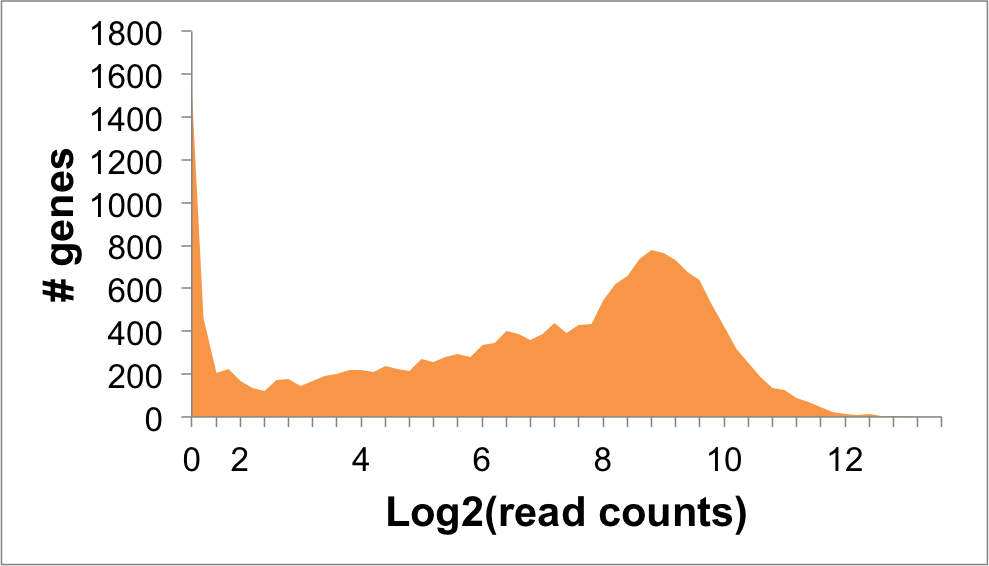
- Expression level (log2 read counts): 0.31
Expression Distribution
ERRFI1 Expression in NALM6 Cells: 0.31