NUPR1
Gene Information
- Official Symbol: NUPR1
- Official Name: nuclear protein 1, transcriptional regulator
- Aliases and Previous Symbols: N/A
- Entrez ID: 26471
- UniProt: O60356
- Interactions: BioGRID
- PubMed articles: Open PubMed
- OMIM: Open OMIM
Function Summary
- Entrez Summary: N/A
- UniProt Summary: Chromatin-binding protein that converts stress signals into a program of gene expression that empowers cells with resistance to the stress induced by a change in their microenvironment. Interacts with MSL1 and inhibits its activity on histone H4 'Lys-16' acetylation (H4K16ac). Binds the RELB promoter and activates its transcription, leading to the transactivation of IER3. The NUPR1/RELB/IER3 survival pathway may provide pancreatic ductal adenocarcinoma with remarkable resistance to cell stress, such as starvation or gemcitabine treatment. In breast cancer cells, NUPR1 overexpression leads to the activation of PI3K/AKT signaling pathway, CDKN1A/p21 phosphorylation and relocalization from the nucleus to the cytoplasm, leading to resistance to chemotherapeutic agents, such as doxorubicin. {ECO:0000269|PubMed:19650074, ECO:0000269|PubMed:22565310, ECO:0000269|PubMed:22858377}.
Pfam Domains GO Terms
Pfam Domains
| Phospho p8 |
GO Terms
| negative regulation of type B pancreatic cell proliferation |
| acetyltransferase activator activity |
| positive regulation of oxidative phosphorylation |
| regulation of type B pancreatic cell proliferation |
| negative regulation of autophagosome assembly |
| regulation of female gonad development |
| negative regulation of programmed necrotic cell death |
| negative regulation of glycolytic process |
| positive regulation of neuroinflammatory response |
| negative regulation of necrotic cell death |
| negative regulation of purine nucleotide metabolic process |
| negative regulation of nucleotide metabolic process |
| regulation of gonad development |
| regulation of programmed necrotic cell death |
| negative regulation of cardiac muscle cell apoptotic process |
| negative regulation of ATP metabolic process |
| negative regulation of striated muscle cell apoptotic process |
| negative regulation of fibroblast proliferation |
| intrinsic apoptotic signaling pathway in response to DNA damage by p53 class mediator |
| regulation of necrotic cell death |
| regulation of oxidative phosphorylation |
| regulation of neuroinflammatory response |
| negative regulation of macroautophagy |
| regulation of autophagosome assembly |
| regulation of cardiac muscle cell apoptotic process |
| negative regulation of muscle cell apoptotic process |
| negative regulation of organelle assembly |
| regulation of striated muscle cell apoptotic process |
| negative regulation of epithelial cell apoptotic process |
| negative regulation of cellular carbohydrate metabolic process |
| regulation of vacuole organization |
| protein-DNA complex |
| positive regulation of ATP metabolic process |
| negative regulation of carbohydrate metabolic process |
| intrinsic apoptotic signaling pathway by p53 class mediator |
| skeletal muscle cell differentiation |
| positive regulation of neuron apoptotic process |
| positive regulation of intrinsic apoptotic signaling pathway |
| regulation of muscle cell apoptotic process |
| acute inflammatory response |
| intrinsic apoptotic signaling pathway in response to DNA damage |
| regulation of epithelial cell apoptotic process |
| regulation of glycolytic process |
| regulation of fibroblast proliferation |
| negative regulation of autophagy |
| regulation of response to endoplasmic reticulum stress |
| regulation of carbohydrate catabolic process |
| negative regulation of small molecule metabolic process |
| positive regulation of neuron death |
| positive regulation of proteasomal protein catabolic process |
| regulation of purine nucleotide metabolic process |
| regulation of nucleotide metabolic process |
| signal transduction by p53 class mediator |
| regulation of ATP metabolic process |
| positive regulation of proteolysis involved in cellular protein catabolic process |
| skeletal muscle tissue development |
| negative regulation of epithelial cell proliferation |
| skeletal muscle organ development |
| male gonad development |
| development of primary male sexual characteristics |
| regulation of cellular carbohydrate metabolic process |
| positive regulation of inflammatory response |
| positive regulation of cellular protein catabolic process |
| protein acetylation |
| intrinsic apoptotic signaling pathway |
| male sex differentiation |
| regulation of generation of precursor metabolites and energy |
| regulation of reproductive process |
| regulation of intrinsic apoptotic signaling pathway |
| negative regulation of DNA-binding transcription factor activity |
| regulation of macroautophagy |
| positive regulation of apoptotic signaling pathway |
| regulation of proteasomal protein catabolic process |
| protein acylation |
| regulation of carbohydrate metabolic process |
| regulation of neuron apoptotic process |
| gonad development |
| regulation of proteolysis involved in cellular protein catabolic process |
| development of primary sexual characteristics |
| positive regulation of protein catabolic process |
| regulation of organelle assembly |
| regulation of cellular protein catabolic process |
| negative regulation of cellular catabolic process |
| sex differentiation |
| striated muscle tissue development |
| transcription coactivator activity |
| apoptotic signaling pathway |
| muscle organ development |
| muscle tissue development |
| negative regulation of catabolic process |
| regulation of neuron death |
| regulation of autophagy |
| regulation of epithelial cell proliferation |
| regulation of inflammatory response |
| positive regulation of proteolysis |
| positive regulation of cellular catabolic process |
| negative regulation of organelle organization |
| regulation of protein catabolic process |
| chromatin binding |
| regulation of apoptotic signaling pathway |
| reproductive structure development |
| regulation of small molecule metabolic process |
| regulation of DNA-binding transcription factor activity |
| reproductive system development |
| positive regulation of catabolic process |
| negative regulation of phosphorylation |
| positive regulation of defense response |
| muscle structure development |
| inflammatory response |
| response to toxic substance |
| cell population proliferation |
| negative regulation of phosphate metabolic process |
| negative regulation of phosphorus metabolic process |
| negative regulation of cell cycle |
| positive regulation of response to external stimulus |
| positive regulation of apoptotic process |
| positive regulation of programmed cell death |
| developmental process involved in reproduction |
| negative regulation of cell population proliferation |
| positive regulation of cell death |
| perinuclear region of cytoplasm |
| negative regulation of cellular component organization |
| regulation of proteolysis |
| regulation of cellular response to stress |
| regulation of defense response |
| cellular response to DNA damage stimulus |
| regulation of cellular catabolic process |
| negative regulation of apoptotic process |
| negative regulation of programmed cell death |
| apoptotic process |
| regulation of cellular component biogenesis |
| negative regulation of cell death |
| regulation of catabolic process |
| positive regulation of intracellular signal transduction |
| programmed cell death |
| positive regulation of phosphorylation |
| cell death |
| regulation of response to external stimulus |
| positive regulation of phosphate metabolic process |
| positive regulation of phosphorus metabolic process |
| negative regulation of molecular function |
| regulation of cell cycle |
| positive regulation of protein modification process |
| regulation of organelle organization |
| defense response |
| reproductive process |
| reproduction |
| positive regulation of catalytic activity |
| negative regulation of nucleobase-containing compound metabolic process |
| DNA binding |
| regulation of response to stress |
| regulation of apoptotic process |
| protein-containing complex assembly |
| regulation of programmed cell death |
| regulation of phosphorylation |
| positive regulation of cellular protein metabolic process |
| regulation of cell population proliferation |
| positive regulation of nucleic acid-templated transcription |
| positive regulation of RNA biosynthetic process |
| positive regulation of signal transduction |
| regulation of cell death |
| intracellular signal transduction |
| cellular response to stress |
| positive regulation of protein metabolic process |
| positive regulation of RNA metabolic process |
| tissue development |
| positive regulation of molecular function |
| regulation of phosphate metabolic process |
| regulation of phosphorus metabolic process |
| positive regulation of cell communication |
| positive regulation of signaling |
| regulation of intracellular signal transduction |
| regulation of protein modification process |
| protein-containing complex subunit organization |
| positive regulation of nucleobase-containing compound metabolic process |
| positive regulation of macromolecule biosynthetic process |
| positive regulation of cellular biosynthetic process |
| positive regulation of biosynthetic process |
CRISPR Data
Compound Hit Most Correlated Genes in Chemogenomics Tissues where Essential in the Avana Dataset (DepMap 20Q1)
Compound Hit
| Screen | Score |
|---|---|
| MKC9989 10μM R03 exp133 | -2.16 |
| GSK-J4 1-1.25μM to day4 R07 exp363 | 1.8 |
| Latrunculin-B 10μM R07 exp374 | 2.02 |
Most Correlated Genes in Chemogenomics
No correlation found to any other genes in chemogenomics.
Tissues where Essential in the Avana Dataset (DepMap 20Q1)
Global Fraction of Cell Lines Where Essential: 0/739
| Tissue | Fraction Of Cell Lines Where Essential |
|---|---|
| 1290807.0 | 0/1 |
| 909776.0 | 0/1 |
| bile duct | 0/28 |
| blood | 0/28 |
| bone | 0/26 |
| breast | 0/33 |
| central nervous system | 0/56 |
| cervix | 0/4 |
| colorectal | 0/17 |
| esophagus | 0/13 |
| fibroblast | 0/1 |
| gastric | 0/16 |
| kidney | 0/21 |
| liver | 0/20 |
| lung | 0/75 |
| lymphocyte | 0/16 |
| ovary | 0/26 |
| pancreas | 0/24 |
| peripheral nervous system | 0/16 |
| plasma cell | 0/15 |
| prostate | 0/1 |
| skin | 0/24 |
| soft tissue | 0/9 |
| thyroid | 0/2 |
| upper aerodigestive | 0/22 |
| urinary tract | 0/29 |
| uterus | 0/5 |
Essentiality in NALM6
- Essentiality Rank: 14909
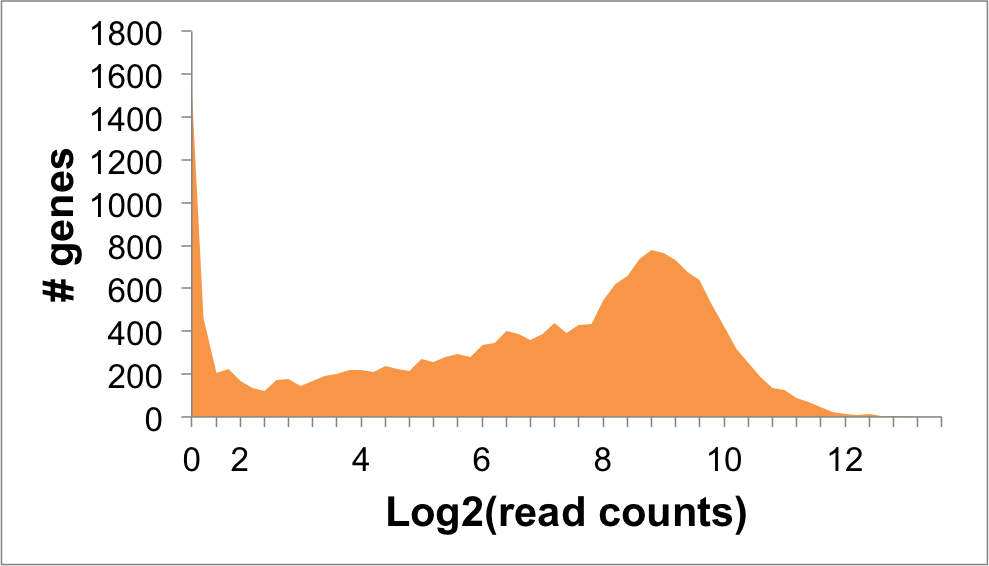
- Expression level (log2 read counts): 4.17
Expression Distribution
NUPR1 Expression in NALM6 Cells: 4.17