SIRT2
Gene Information
- Official Symbol: SIRT2
- Official Name: sirtuin 2
- Aliases and Previous Symbols: N/A
- Entrez ID: 22933
- UniProt: Q8IXJ6
- Interactions: BioGRID
- PubMed articles: Open PubMed
- OMIM: Open OMIM
Function Summary
- Entrez Summary: N/A
- UniProt Summary: N/A
Pfam Domains GO Terms
Pfam Domains
| SIR2 |
GO Terms
| NAD-dependent histone deacetylase activity (H4-K16 specific) |
| cellular response to caloric restriction |
| negative regulation of oligodendrocyte progenitor proliferation |
| positive regulation of oocyte maturation |
| tubulin deacetylation |
| positive regulation of proteasomal ubiquitin-dependent protein catabolic process involved in cellular response to hypoxia |
| tubulin deacetylase activity |
| response to caloric restriction |
| lateral loop |
| NAD-dependent histone deacetylase activity |
| positive regulation of oocyte development |
| negative regulation of transcription from RNA polymerase II promoter in response to hypoxia |
| positive regulation of oogenesis |
| NAD-dependent protein deacetylase activity |
| positive regulation of attachment of spindle microtubules to kinetochore |
| chromatin silencing at telomere |
| negative regulation of defense response to bacterium |
| regulation of oocyte maturation |
| negative regulation of NLRP3 inflammasome complex assembly |
| chromatin silencing complex |
| paranodal junction |
| regulation of oligodendrocyte progenitor proliferation |
| peptidyl-lysine deacetylation |
| positive regulation of cell maturation |
| juxtaparanode region of axon |
| meiotic spindle |
| glial cell projection |
| regulation of oocyte development |
| regulation of oogenesis |
| protein deacetylase activity |
| Schmidt-Lanterman incisure |
| histone H4 deacetylation |
| negative regulation of transcription from RNA polymerase II promoter in response to stress |
| chromatin silencing at rDNA |
| paranode region of axon |
| hepatocyte growth factor receptor signaling pathway |
| regulation of attachment of spindle microtubules to kinetochore |
| cellular response to epinephrine stimulus |
| positive regulation of meiotic nuclear division |
| response to redox state |
| positive regulation of execution phase of apoptosis |
| regulation of NLRP3 inflammasome complex assembly |
| NAD+ binding |
| cellular response to hepatocyte growth factor stimulus |
| response to epinephrine |
| regulation of defense response to bacterium |
| response to hepatocyte growth factor |
| negative regulation of peptidyl-threonine phosphorylation |
| regulation of exit from mitosis |
| histone H3 deacetylation |
| nuclear heterochromatin |
| regulation of cell maturation |
| negative regulation of neural precursor cell proliferation |
| positive regulation of meiotic cell cycle |
| peripheral nervous system axon ensheathment |
| myelination in peripheral nervous system |
| histone deacetylase activity |
| NAD+ ADP-ribosyltransferase activity |
| positive regulation of chromosome segregation |
| Schwann cell development |
| histone acetyltransferase binding |
| protein ADP-ribosylation |
| regulation of meiotic nuclear division |
| myelin sheath |
| phosphatidylinositol 3-kinase signaling |
| Schwann cell differentiation |
| protein kinase B signaling |
| regulation of execution phase of apoptosis |
| negative regulation of gliogenesis |
| regulation of myelination |
| substantia nigra development |
| regulation of peptidyl-threonine phosphorylation |
| negative regulation of fat cell differentiation |
| negative regulation of striated muscle tissue development |
| negative regulation of muscle organ development |
| regulation of meiotic cell cycle |
| histone deacetylation |
| chromosome, telomeric region |
| negative regulation of muscle tissue development |
| protein deacetylation |
| negative regulation of reactive oxygen species metabolic process |
| positive regulation of DNA binding |
| chromatin silencing |
| chromatin organization involved in negative regulation of transcription |
| protein deacylation |
| neural nucleus development |
| macromolecule deacylation |
| positive regulation of nuclear division |
| chromatin organization involved in regulation of transcription |
| phosphatidylinositol-mediated signaling |
| peripheral nervous system development |
| inositol lipid-mediated signaling |
| mitotic spindle |
| regulation of transcription from RNA polymerase II promoter in response to hypoxia |
| positive regulation of reproductive process |
| ubiquitin binding |
| negative regulation of gene expression, epigenetic |
| positive regulation of proteasomal ubiquitin-dependent protein catabolic process |
| negative regulation of autophagy |
| midbrain development |
| positive regulation of cell division |
| regulation of neural precursor cell proliferation |
| negative regulation of response to biotic stimulus |
| positive regulation of ubiquitin-dependent protein catabolic process |
| cellular response to catecholamine stimulus |
| cellular response to monoamine stimulus |
| regulation of chromosome segregation |
| positive regulation of proteasomal protein catabolic process |
| response to catecholamine |
| myelination |
| response to monoamine |
| glial cell development |
| axon ensheathment |
| ensheathment of neurons |
| histone deacetylase binding |
| regulation of gliogenesis |
| regulation of transcription from RNA polymerase II promoter in response to stress |
| spindle |
| positive regulation of proteolysis involved in cellular protein catabolic process |
| regulation of fat cell differentiation |
| regulation of proteasomal ubiquitin-dependent protein catabolic process |
| chromosome |
| regulation of DNA-templated transcription in response to stress |
| regulation of DNA binding |
| growth cone |
| negative regulation of protein complex assembly |
| regulation of striated muscle tissue development |
| negative regulation of protein catabolic process |
| perikaryon |
| regulation of muscle tissue development |
| regulation of muscle organ development |
| positive regulation of cellular protein catabolic process |
| centriole |
| gene silencing |
| regulation of ubiquitin-dependent protein catabolic process |
| midbody |
| regulation of reproductive process |
| regulation of cell division |
| regulation of mitotic nuclear division |
| glial cell differentiation |
| positive regulation of binding |
| regulation of reactive oxygen species metabolic process |
| regulation of proteasomal protein catabolic process |
| cellular response to hypoxia |
| cellular response to molecule of bacterial origin |
| regulation of nuclear division |
| cellular lipid catabolic process |
| cellular response to decreased oxygen levels |
| negative regulation of defense response |
| gliogenesis |
| cellular response to oxygen levels |
| cellular response to biotic stimulus |
| negative regulation of multi-organism process |
| regulation of proteolysis involved in cellular protein catabolic process |
| positive regulation of protein catabolic process |
| meiotic cell cycle |
| regulation of gene expression, epigenetic |
| cellular response to oxidative stress |
| regulation of cellular protein catabolic process |
| negative regulation of cellular catabolic process |
| autophagy |
| process utilizing autophagic mechanism |
| positive regulation of cell cycle process |
| negative regulation of neurogenesis |
| lipid catabolic process |
| negative regulation of catabolic process |
| negative regulation of nervous system development |
| peptidyl-lysine modification |
| microtubule |
| proteasome-mediated ubiquitin-dependent protein catabolic process |
| response to molecule of bacterial origin |
| regulation of autophagy |
| transcription factor binding |
| negative regulation of cell development |
| response to hypoxia |
| proteasomal protein catabolic process |
| positive regulation of proteolysis |
| response to decreased oxygen levels |
| histone modification |
| negative regulation of response to external stimulus |
| positive regulation of cellular catabolic process |
| covalent chromatin modification |
| regulation of binding |
| positive regulation of cell cycle |
| response to oxygen levels |
| regulation of protein catabolic process |
| response to oxidative stress |
| chromatin binding |
| negative regulation of protein phosphorylation |
| regulation of mitotic cell cycle phase transition |
| positive regulation of catabolic process |
| negative regulation of phosphorylation |
| regulation of cell cycle phase transition |
| regulation of protein complex assembly |
| centrosome |
| cell division |
| response to nutrient levels |
| cellular response to growth factor stimulus |
| positive regulation of multi-organism process |
| transmembrane receptor protein tyrosine kinase signaling pathway |
| regulation of response to biotic stimulus |
| ubiquitin-dependent protein catabolic process |
| response to extracellular stimulus |
| response to growth factor |
| modification-dependent protein catabolic process |
| cellular response to organic cyclic compound |
| positive regulation of cell development |
| modification-dependent macromolecule catabolic process |
| negative regulation of phosphate metabolic process |
| negative regulation of phosphorus metabolic process |
| proteolysis involved in cellular protein catabolic process |
| negative regulation of protein modification process |
| cellular response to organonitrogen compound |
| cellular protein catabolic process |
| positive regulation of organelle organization |
| regulation of mitotic cell cycle |
| positive regulation of apoptotic process |
| positive regulation of programmed cell death |
| cellular response to nitrogen compound |
| negative regulation of cell population proliferation |
| protein catabolic process |
| response to bacterium |
| perinuclear region of cytoplasm |
| positive regulation of cell death |
| chromatin organization |
| negative regulation of cellular component organization |
| negative regulation of cell differentiation |
| enzyme linked receptor protein signaling pathway |
| regulation of proteolysis |
| brain development |
| regulation of cell cycle process |
| regulation of defense response |
| innate immune response |
| regulation of multi-organism process |
| head development |
| regulation of neurogenesis |
| regulation of cellular catabolic process |
| zinc ion binding |
| nucleolus |
| negative regulation of transcription by RNA polymerase II |
| peptidyl-amino acid modification |
| cellular macromolecule catabolic process |
| response to organic cyclic compound |
| regulation of nervous system development |
| regulation of cell development |
| negative regulation of developmental process |
| defense response to other organism |
| cellular lipid metabolic process |
| regulation of cellular component biogenesis |
| positive regulation of cell differentiation |
| central nervous system development |
| regulation of catabolic process |
| response to organonitrogen compound |
| negative regulation of cellular protein metabolic process |
| macromolecule catabolic process |
| cellular response to oxygen-containing compound |
| organonitrogen compound catabolic process |
| chromosome organization |
| response to nitrogen compound |
| regulation of response to external stimulus |
| negative regulation of protein metabolic process |
| response to abiotic stimulus |
| regulation of cell cycle |
| negative regulation of transcription, DNA-templated |
| negative regulation of multicellular organismal process |
| positive regulation of cellular component organization |
| lipid metabolic process |
| positive regulation of transcription by RNA polymerase II |
| cellular response to endogenous stimulus |
| negative regulation of nucleic acid-templated transcription |
| negative regulation of RNA biosynthetic process |
| mitochondrion |
| proteolysis |
| regulation of organelle organization |
| response to other organism |
| response to external biotic stimulus |
| response to biotic stimulus |
| negative regulation of RNA metabolic process |
| defense response |
| cell cycle |
| positive regulation of developmental process |
| negative regulation of cellular macromolecule biosynthetic process |
| reproductive process |
| reproduction |
| negative regulation of nucleobase-containing compound metabolic process |
| regulation of protein phosphorylation |
| negative regulation of macromolecule biosynthetic process |
| response to endogenous stimulus |
| regulation of response to stress |
| negative regulation of cellular biosynthetic process |
| generation of neurons |
| regulation of apoptotic process |
| positive regulation of transcription, DNA-templated |
| negative regulation of biosynthetic process |
| response to oxygen-containing compound |
| regulation of programmed cell death |
| regulation of phosphorylation |
| positive regulation of cellular protein metabolic process |
| regulation of cell population proliferation |
| negative regulation of response to stimulus |
| neurogenesis |
| positive regulation of nucleic acid-templated transcription |
| positive regulation of RNA biosynthetic process |
| cell development |
| regulation of cell death |
| intracellular signal transduction |
| cellular response to stress |
| positive regulation of protein metabolic process |
| negative regulation of gene expression |
| positive regulation of RNA metabolic process |
| positive regulation of multicellular organismal process |
| organic substance catabolic process |
| positive regulation of molecular function |
| regulation of phosphate metabolic process |
| regulation of phosphorus metabolic process |
| cellular catabolic process |
| regulation of cell differentiation |
| regulation of protein modification process |
| immune response |
| positive regulation of nucleobase-containing compound metabolic process |
| positive regulation of macromolecule biosynthetic process |
| positive regulation of cellular biosynthetic process |
| positive regulation of gene expression |
| positive regulation of biosynthetic process |
CRISPR Data
Compound Hit Most Correlated Genes in Chemogenomics Tissues where Essential in the Avana Dataset (DepMap 20Q1)
Compound Hit
| Screen | Score |
|---|---|
| UM0125461 0.74μM R02 exp84 | -2.16 |
| Genistein 15μM R07 exp360 | -1.89 |
| Docosahexaenoic-acid 50μM R07 exp356 | -1.73 |
| UM131593 0.2μM R03 exp106 | -1.71 |
Most Correlated Genes in Chemogenomics
No correlation found to any other genes in chemogenomics.
Tissues where Essential in the Avana Dataset (DepMap 20Q1)
Global Fraction of Cell Lines Where Essential: 0/726
| Tissue | Fraction Of Cell Lines Where Essential |
|---|---|
| 1290807.0 | 0/1 |
| 909776.0 | 0/1 |
| bile duct | 0/28 |
| blood | 0/28 |
| bone | 0/25 |
| breast | 0/33 |
| central nervous system | 0/56 |
| cervix | 0/4 |
| colorectal | 0/17 |
| esophagus | 0/13 |
| fibroblast | 0/1 |
| gastric | 0/15 |
| kidney | 0/21 |
| liver | 0/20 |
| lung | 0/75 |
| lymphocyte | 0/14 |
| ovary | 0/26 |
| pancreas | 0/24 |
| peripheral nervous system | 0/16 |
| plasma cell | 0/15 |
| prostate | 0/1 |
| skin | 0/24 |
| soft tissue | 0/7 |
| thyroid | 0/2 |
| upper aerodigestive | 0/22 |
| urinary tract | 0/29 |
| uterus | 0/5 |
Essentiality in NALM6
- Essentiality Rank: 10882
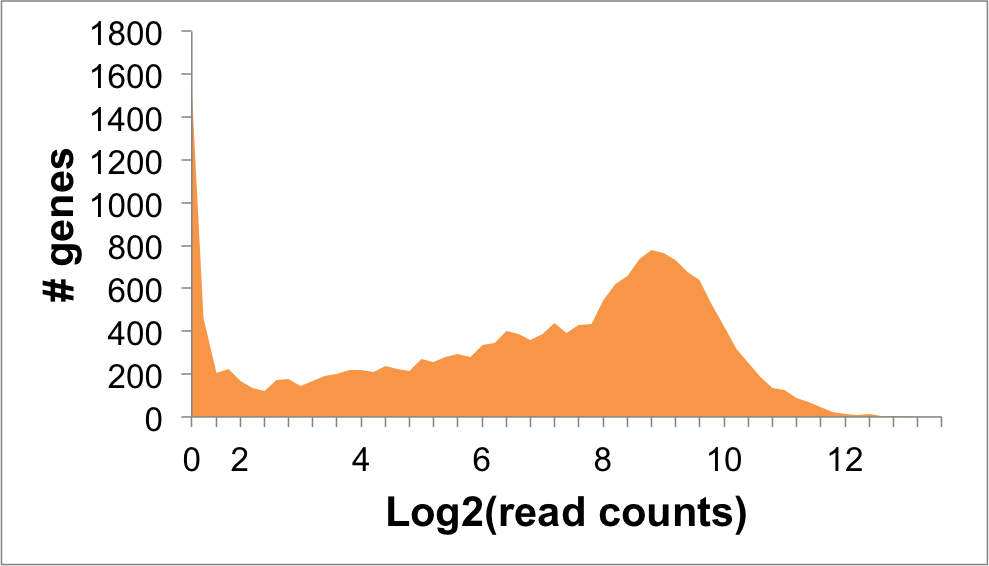
- Expression level (log2 read counts): 5.17
Expression Distribution
SIRT2 Expression in NALM6 Cells: 5.17