APOD
Gene Information
- Official Symbol: APOD
- Official Name: apolipoprotein D
- Aliases and Previous Symbols: N/A
- Entrez ID: 347
- UniProt: P05090
- Interactions: BioGRID
- PubMed articles: Open PubMed
- OMIM: Open OMIM
Function Summary
- Entrez Summary: N/A
- UniProt Summary: APOD occurs in the macromolecular complex with lecithin- cholesterol acyltransferase. It is probably involved in the transport and binding of bilin. Appears to be able to transport a variety of ligands in a number of different contexts.
Pfam Domains GO Terms
Pfam Domains
| Lipocalin 2 |
| Lipocalin |
GO Terms
| negative regulation of lipoprotein lipid oxidation |
| negative regulation of lipoprotein oxidation |
| regulation of lipoprotein lipid oxidation |
| regulation of lipoprotein oxidation |
| negative regulation of smooth muscle cell-matrix adhesion |
| regulation of smooth muscle cell-matrix adhesion |
| negative regulation of lipoprotein metabolic process |
| negative regulation of T cell migration |
| peripheral nervous system axon regeneration |
| negative regulation of monocyte chemotactic protein-1 production |
| cytosolic ribosome |
| negative regulation of protein import into nucleus |
| negative regulation of protein import |
| negative regulation of platelet-derived growth factor receptor signaling pathway |
| regulation of lipoprotein metabolic process |
| negative regulation of lymphocyte migration |
| regulation of monocyte chemotactic protein-1 production |
| negative regulation of cytokine production involved in inflammatory response |
| negative regulation of focal adhesion assembly |
| negative regulation of chemokine production |
| negative regulation of nucleocytoplasmic transport |
| negative regulation of adherens junction organization |
| regulation of platelet-derived growth factor receptor signaling pathway |
| axon regeneration |
| negative regulation of cell junction assembly |
| neuron projection regeneration |
| negative regulation of protein localization to nucleus |
| lipid transporter activity |
| negative regulation of cell-matrix adhesion |
| regulation of cytokine production involved in inflammatory response |
| negative regulation of intracellular protein transport |
| regulation of T cell migration |
| negative regulation of leukocyte migration |
| negative regulation of smooth muscle cell proliferation |
| response to axon injury |
| cholesterol binding |
| regulation of protein import into nucleus |
| regulation of protein import |
| negative regulation of intracellular transport |
| regulation of focal adhesion assembly |
| regulation of cell-substrate junction assembly |
| regulation of lymphocyte migration |
| negative regulation of cell-substrate adhesion |
| tissue regeneration |
| regulation of adherens junction organization |
| regulation of chemokine production |
| negative regulation of lipid metabolic process |
| regulation of cell junction assembly |
| regulation of nucleocytoplasmic transport |
| negative regulation of cellular protein localization |
| glucose metabolic process |
| regulation of cell-matrix adhesion |
| regulation of protein localization to nucleus |
| regulation of smooth muscle cell proliferation |
| negative regulation of inflammatory response |
| regeneration |
| hexose metabolic process |
| negative regulation of protein transport |
| negative regulation of establishment of protein localization |
| response to reactive oxygen species |
| regulation of leukocyte migration |
| monosaccharide metabolic process |
| negative regulation of defense response |
| regulation of cell-substrate adhesion |
| regulation of intracellular protein transport |
| negative regulation of cell migration |
| negative regulation of cell adhesion |
| negative regulation of cell motility |
| negative regulation of cytokine production |
| aging |
| lipid transport |
| negative regulation of cellular component movement |
| angiogenesis |
| lipid localization |
| negative regulation of locomotion |
| regulation of inflammatory response |
| regulation of intracellular transport |
| negative regulation of response to external stimulus |
| neuronal cell body |
| response to oxidative stress |
| developmental growth |
| growth |
| regulation of lipid metabolic process |
| blood vessel morphogenesis |
| axon development |
| dendrite |
| negative regulation of immune system process |
| carbohydrate metabolic process |
| wound healing |
| negative regulation of transport |
| blood vessel development |
| vasculature development |
| cardiovascular system development |
| regulation of cellular protein localization |
| response to wounding |
| tube morphogenesis |
| neuron projection development |
| negative regulation of cell population proliferation |
| regulation of cell adhesion |
| regulation of cytokine production |
| perinuclear region of cytoplasm |
| negative regulation of cellular component organization |
| regulation of protein transport |
| regulation of peptide transport |
| brain development |
| regulation of establishment of protein localization |
| regulation of defense response |
| head development |
| neuron development |
| tube development |
| regulation of cell migration |
| circulatory system development |
| anatomical structure formation involved in morphogenesis |
| regulation of cell motility |
| regulation of cellular localization |
| regulation of cellular component biogenesis |
| central nervous system development |
| regulation of locomotion |
| regulation of cellular component movement |
| endoplasmic reticulum |
| neuron differentiation |
| response to drug |
| regulation of protein localization |
| regulation of response to external stimulus |
| negative regulation of protein metabolic process |
| plasma membrane bounded cell projection organization |
| cell projection organization |
| negative regulation of multicellular organismal process |
| lipid metabolic process |
| negative regulation of signal transduction |
| negative regulation of cell communication |
| negative regulation of signaling |
| regulation of response to stress |
| generation of neurons |
| response to oxygen-containing compound |
| extracellular space |
| regulation of cell population proliferation |
| negative regulation of response to stimulus |
| neurogenesis |
| cell development |
| regulation of immune system process |
| cellular response to stress |
| small molecule metabolic process |
| tissue development |
| regulation of transport |
| extracellular region |
CRISPR Data
Compound Hit Most Correlated Genes in Chemogenomics Tissues where Essential in the Avana Dataset (DepMap 20Q1)
Compound Hit
No hits were found.
Most Correlated Genes in Chemogenomics
No correlation found to any other genes in chemogenomics.
Tissues where Essential in the Avana Dataset (DepMap 20Q1)
Global Fraction of Cell Lines Where Essential: 0/739
| Tissue | Fraction Of Cell Lines Where Essential |
|---|---|
| 1290807.0 | 0/1 |
| 909776.0 | 0/1 |
| bile duct | 0/28 |
| blood | 0/28 |
| bone | 0/26 |
| breast | 0/33 |
| central nervous system | 0/56 |
| cervix | 0/4 |
| colorectal | 0/17 |
| esophagus | 0/13 |
| fibroblast | 0/1 |
| gastric | 0/16 |
| kidney | 0/21 |
| liver | 0/20 |
| lung | 0/75 |
| lymphocyte | 0/16 |
| ovary | 0/26 |
| pancreas | 0/24 |
| peripheral nervous system | 0/16 |
| plasma cell | 0/15 |
| prostate | 0/1 |
| skin | 0/24 |
| soft tissue | 0/9 |
| thyroid | 0/2 |
| upper aerodigestive | 0/22 |
| urinary tract | 0/29 |
| uterus | 0/5 |
Essentiality in NALM6
- Essentiality Rank: 15954
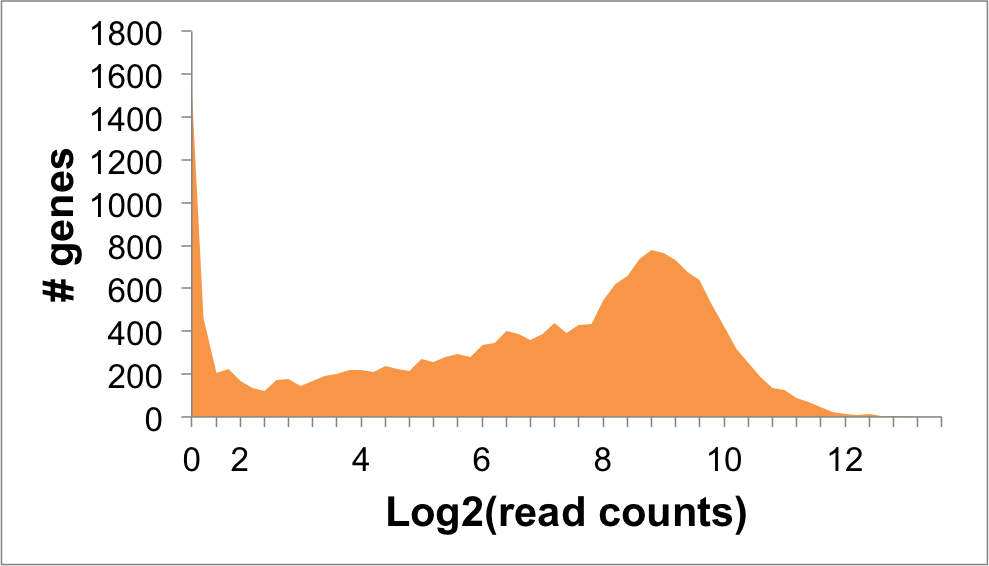
- Expression level (log2 read counts): -1.47
Expression Distribution
APOD Expression in NALM6 Cells: -1.47