BAX
Gene Information
- Official Symbol: BAX
- Official Name: BCL2 associated X, apoptosis regulator
- Aliases and Previous Symbols: N/A
- Entrez ID: 581
- UniProt: Q07812
- Interactions: BioGRID
- PubMed articles: Open PubMed
- OMIM: Open OMIM
Function Summary
- Entrez Summary: The protein encoded by this gene belongs to the BCL2 protein family. BCL2 family members form hetero- or homodimers and act as anti- or pro-apoptotic regulators that are involved in a wide variety of cellular activities. This protein forms a heterodimer with BCL2, and functions as an apoptotic activator. This protein is reported to interact with, and increase the opening of, the mitochondrial voltage-dependent anion channel (VDAC), which leads to the loss in membrane potential and the release of cytochrome c. The expression of this gene is regulated by the tumor suppressor P53 and has been shown to be involved in P53-mediated apoptosis. Multiple alternatively spliced transcript variants, which encode different isoforms, have been reported for this gene. [provided by RefSeq, Jul 2008].
- UniProt Summary: N/A
Pfam Domains GO Terms
Pfam Domains
| Bcl-2 |
GO Terms
| BAX complex |
| B cell receptor apoptotic signaling pathway |
| T cell homeostatic proliferation |
| release of matrix enzymes from mitochondria |
| B cell negative selection |
| retinal cell programmed cell death |
| positive regulation of mammary gland involution |
| B cell homeostatic proliferation |
| positive regulation of apoptotic process involved in mammary gland involution |
| regulation of mammary gland involution |
| apoptotic process involved in embryonic digit morphogenesis |
| regulation of mitochondrial membrane permeability involved in programmed necrotic cell death |
| post-embryonic camera-type eye morphogenesis |
| B cell selection |
| positive regulation of B cell apoptotic process |
| mitochondrial permeability transition pore complex |
| apoptotic process involved in blood vessel morphogenesis |
| Sertoli cell proliferation |
| activation of cysteine-type endopeptidase activity involved in apoptotic signaling pathway |
| regulation of nitrogen utilization |
| positive regulation of apoptotic process involved in morphogenesis |
| Bcl-2 family protein complex |
| BH3 domain binding |
| thymocyte apoptotic process |
| positive regulation of apoptotic DNA fragmentation |
| positive regulation of apoptotic process involved in development |
| post-embryonic eye morphogenesis |
| positive regulation of DNA catabolic process |
| protein insertion into mitochondrial membrane involved in apoptotic signaling pathway |
| post-embryonic camera-type eye development |
| ectopic germ cell programmed cell death |
| activation of cysteine-type endopeptidase activity involved in apoptotic process by cytochrome c |
| positive regulation of IRE1-mediated unfolded protein response |
| development of secondary sexual characteristics |
| post-embryonic animal organ morphogenesis |
| regulation of protein heterodimerization activity |
| B cell apoptotic process |
| negative regulation of endoplasmic reticulum calcium ion concentration |
| positive regulation of developmental pigmentation |
| mitochondrial fragmentation involved in apoptotic process |
| vagina development |
| programmed cell death involved in cell development |
| positive regulation of cysteine-type endopeptidase activity involved in apoptotic signaling pathway |
| regulation of apoptotic DNA fragmentation |
| negative regulation of mitochondrial membrane potential |
| regulation of apoptotic process involved in development |
| regulation of IRE1-mediated unfolded protein response |
| regulation of apoptotic process involved in morphogenesis |
| post-embryonic animal morphogenesis |
| pore complex |
| positive regulation of endoplasmic reticulum unfolded protein response |
| regulation of DNA catabolic process |
| negative regulation of membrane potential |
| channel activity |
| mitochondrial outer membrane permeabilization |
| establishment or maintenance of transmembrane electrochemical gradient |
| T cell apoptotic process |
| post-embryonic animal organ development |
| positive regulation of execution phase of apoptosis |
| regulation of developmental pigmentation |
| apoptotic process involved in morphogenesis |
| positive regulation of mitochondrial membrane permeability involved in apoptotic process |
| regulation of cysteine-type endopeptidase activity involved in apoptotic signaling pathway |
| female genitalia development |
| mitochondrial fusion |
| regulation of mammary gland epithelial cell proliferation |
| regulation of B cell apoptotic process |
| mitochondrial outer membrane permeabilization involved in programmed cell death |
| lymphocyte apoptotic process |
| positive regulation of lymphocyte apoptotic process |
| positive regulation of mitochondrial membrane permeability |
| mitochondrion morphogenesis |
| protein insertion into mitochondrial membrane |
| regulation of protein homodimerization activity |
| hypothalamus development |
| release of cytochrome c from mitochondria |
| endoplasmic reticulum calcium ion homeostasis |
| positive regulation of membrane permeability |
| regulation of mitochondrial membrane permeability involved in apoptotic process |
| response to salt stress |
| leukocyte apoptotic process |
| regulation of endoplasmic reticulum unfolded protein response |
| B cell homeostasis |
| positive regulation of protein oligomerization |
| negative regulation of peptidyl-serine phosphorylation |
| apoptotic process involved in development |
| programmed necrotic cell death |
| positive regulation of leukocyte apoptotic process |
| negative regulation of fibroblast proliferation |
| homeostasis of number of cells within a tissue |
| necrotic cell death |
| positive regulation of release of cytochrome c from mitochondria |
| signal transduction in absence of ligand |
| extrinsic apoptotic signaling pathway in absence of ligand |
| positive regulation of tissue remodeling |
| blood vessel remodeling |
| intrinsic apoptotic signaling pathway in response to endoplasmic reticulum stress |
| T cell homeostasis |
| extrinsic apoptotic signaling pathway via death domain receptors |
| positive regulation of mitochondrial outer membrane permeabilization involved in apoptotic signaling pathway |
| protein insertion into membrane |
| positive regulation of response to endoplasmic reticulum stress |
| cell periphery |
| T cell proliferation |
| positive regulation of release of sequestered calcium ion into cytosol |
| regulation of execution phase of apoptosis |
| B cell proliferation |
| Hsp70 protein binding |
| regulation of protein oligomerization |
| neuron apoptotic process |
| regulation of mitochondrial outer membrane permeabilization involved in apoptotic signaling pathway |
| genitalia development |
| regulation of release of cytochrome c from mitochondria |
| response to axon injury |
| intrinsic apoptotic signaling pathway by p53 class mediator |
| ovarian follicle development |
| regulation of lymphocyte apoptotic process |
| neuron death |
| lymphocyte homeostasis |
| positive regulation of calcium ion transport into cytosol |
| positive regulation of neuron apoptotic process |
| DNA damage response, signal transduction by p53 class mediator resulting in cell cycle arrest |
| response to gamma radiation |
| signal transduction involved in mitotic DNA integrity checkpoint |
| intracellular signal transduction involved in G1 DNA damage checkpoint |
| signal transduction involved in mitotic G1 DNA damage checkpoint |
| signal transduction involved in mitotic DNA damage checkpoint |
| signal transduction involved in mitotic cell cycle checkpoint |
| positive regulation of intrinsic apoptotic signaling pathway |
| apoptotic mitochondrial changes |
| embryonic digit morphogenesis |
| mitotic G1/S transition checkpoint |
| mitotic G1 DNA damage checkpoint |
| G1 DNA damage checkpoint |
| glycosphingolipid metabolic process |
| leukocyte homeostasis |
| regulation of mitochondrial membrane potential |
| positive regulation of calcium ion transmembrane transport |
| intrinsic apoptotic signaling pathway in response to DNA damage |
| establishment of protein localization to mitochondrion |
| regulation of mitochondrial membrane permeability |
| signal transduction involved in DNA damage checkpoint |
| signal transduction involved in DNA integrity checkpoint |
| signal transduction involved in cell cycle checkpoint |
| regulation of tissue remodeling |
| diencephalon development |
| response to osmotic stress |
| protein localization to mitochondrion |
| regulation of release of sequestered calcium ion into cytosol |
| DNA damage response, signal transduction by p53 class mediator |
| positive regulation of cell cycle arrest |
| regulation of fibroblast proliferation |
| regulation of membrane permeability |
| positive regulation of animal organ morphogenesis |
| odontogenesis of dentin-containing tooth |
| regulation of leukocyte apoptotic process |
| lymphocyte proliferation |
| cellular response to UV |
| regulation of response to endoplasmic reticulum stress |
| mononuclear cell proliferation |
| epithelial cell proliferation |
| activation of cysteine-type endopeptidase activity involved in apoptotic process |
| female gonad development |
| post-embryonic development |
| positive regulation of neuron death |
| development of primary female sexual characteristics |
| mitotic DNA damage checkpoint |
| extrinsic apoptotic signaling pathway |
| organelle fusion |
| leukocyte proliferation |
| regulation of calcium ion transport into cytosol |
| tissue remodeling |
| negative regulation of G1/S transition of mitotic cell cycle |
| negative regulation of protein binding |
| chaperone binding |
| signal transduction in response to DNA damage |
| mitotic DNA integrity checkpoint |
| negative regulation of cell cycle G1/S phase transition |
| myeloid cell homeostasis |
| regulation of cell cycle arrest |
| female sex differentiation |
| B cell differentiation |
| glycolipid metabolic process |
| liposaccharide metabolic process |
| limbic system development |
| camera-type eye morphogenesis |
| cellular response to light stimulus |
| positive regulation of mitochondrion organization |
| cerebral cortex development |
| neuron migration |
| odontogenesis |
| signal transduction by p53 class mediator |
| positive regulation of calcium ion transport |
| regulation of sequestering of calcium ion |
| embryonic limb morphogenesis |
| embryonic appendage morphogenesis |
| cellular response to unfolded protein |
| mitochondrial membrane organization |
| B cell receptor signaling pathway |
| DNA damage checkpoint |
| positive regulation of cysteine-type endopeptidase activity involved in apoptotic process |
| male gonad development |
| development of primary male sexual characteristics |
| regulation of peptidyl-serine phosphorylation |
| retina development in camera-type eye |
| positive regulation of cation transmembrane transport |
| response to UV |
| DNA integrity checkpoint |
| negative regulation of neuron apoptotic process |
| eye morphogenesis |
| regulation of calcium ion transmembrane transport |
| cellular response to topologically incorrect protein |
| intrinsic apoptotic signaling pathway |
| response to ionizing radiation |
| regulation of G1/S transition of mitotic cell cycle |
| appendage morphogenesis |
| limb morphogenesis |
| positive regulation of cysteine-type endopeptidase activity |
| mitotic cell cycle checkpoint |
| B cell activation |
| sphingolipid metabolic process |
| lipid binding |
| positive regulation of ion transmembrane transport |
| male sex differentiation |
| spermatid differentiation |
| regulation of intrinsic apoptotic signaling pathway |
| response to unfolded protein |
| mitochondrial outer membrane |
| regulation of cell cycle G1/S phase transition |
| negative regulation of binding |
| fertilization |
| positive regulation of endopeptidase activity |
| pallium development |
| positive regulation of apoptotic signaling pathway |
| cellular response to radiation |
| transcription initiation from RNA polymerase II promoter |
| nuclear envelope |
| appendage development |
| limb development |
| regulation of mitochondrion organization |
| response to topologically incorrect protein |
| tissue homeostasis |
| positive regulation of peptidase activity |
| positive regulation of DNA metabolic process |
| cell cycle checkpoint |
| homeostasis of number of cells |
| positive regulation of transmembrane transport |
| membrane lipid metabolic process |
| negative regulation of neuron death |
| regulation of neuron apoptotic process |
| gonad development |
| negative regulation of mitotic cell cycle phase transition |
| mitochondrial transport |
| regulation of cysteine-type endopeptidase activity involved in apoptotic process |
| development of primary sexual characteristics |
| DNA-templated transcription, initiation |
| regulation of protein binding |
| negative regulation of apoptotic signaling pathway |
| negative regulation of cell cycle phase transition |
| T cell activation |
| lymphocyte differentiation |
| regulation of cysteine-type endopeptidase activity |
| positive regulation of protein complex assembly |
| regulation of calcium ion transport |
| sensory organ morphogenesis |
| germ cell development |
| telencephalon development |
| regulation of animal organ morphogenesis |
| response to endoplasmic reticulum stress |
| establishment of protein localization to membrane |
| sex differentiation |
| kidney development |
| positive regulation of ion transport |
| positive regulation of cytosolic calcium ion concentration |
| apoptotic signaling pathway |
| renal system development |
| positive regulation of cell cycle process |
| antigen receptor-mediated signaling pathway |
| negative regulation of mitotic cell cycle |
| response to light stimulus |
| regulation of neuron death |
| camera-type eye development |
| cellular response to abiotic stimulus |
| cellular response to environmental stimulus |
| urogenital system development |
| multicellular organismal homeostasis |
| negative regulation of cell cycle process |
| regulation of cytosolic calcium ion concentration |
| leukocyte differentiation |
| regulation of cation transmembrane transport |
| regulation of epithelial cell proliferation |
| protein homooligomerization |
| anatomical structure homeostasis |
| regulation of DNA metabolic process |
| cellular process involved in reproduction in multicellular organism |
| positive regulation of proteolysis |
| eye development |
| visual system development |
| positive regulation of cellular catabolic process |
| sensory system development |
| positive regulation of cell cycle |
| regulation of binding |
| lymphocyte activation |
| regulation of metal ion transport |
| forebrain development |
| regulation of apoptotic signaling pathway |
| negative regulation of protein phosphorylation |
| blood vessel morphogenesis |
| regulation of mitotic cell cycle phase transition |
| regulation of endopeptidase activity |
| reproductive structure development |
| reproductive system development |
| regulation of membrane potential |
| establishment of protein localization to organelle |
| positive regulation of catabolic process |
| cellular calcium ion homeostasis |
| response to radiation |
| mitochondrion organization |
| regulation of peptidase activity |
| negative regulation of phosphorylation |
| regulation of cell cycle phase transition |
| calcium ion homeostasis |
| immune response-activating cell surface receptor signaling pathway |
| regulation of protein complex assembly |
| cellular divalent inorganic cation homeostasis |
| regulation of ion transmembrane transport |
| protein localization to membrane |
| transcription by RNA polymerase II |
| immune response-regulating cell surface receptor signaling pathway |
| blood vessel development |
| protein heterodimerization activity |
| divalent inorganic cation homeostasis |
| response to toxic substance |
| vasculature development |
| cell part morphogenesis |
| cardiovascular system development |
| protein complex oligomerization |
| positive regulation of cellular component biogenesis |
| spermatogenesis |
| sensory organ development |
| cell population proliferation |
| cellular metal ion homeostasis |
| hemopoiesis |
| negative regulation of phosphate metabolic process |
| negative regulation of phosphorus metabolic process |
| immune response-activating signal transduction |
| regulation of transmembrane transport |
| male gamete generation |
| embryonic morphogenesis |
| response to wounding |
| negative regulation of cell cycle |
| negative regulation of protein modification process |
| immune response-regulating signaling pathway |
| mitotic cell cycle process |
| hematopoietic or lymphoid organ development |
| positive regulation of organelle organization |
| metal ion homeostasis |
| regulation of mitotic cell cycle |
| activation of immune response |
| cellular cation homeostasis |
| transcription, DNA-templated |
| nucleic acid-templated transcription |
| positive regulation of apoptotic process |
| cellular ion homeostasis |
| positive regulation of programmed cell death |
| immune system development |
| RNA biosynthetic process |
| tube morphogenesis |
| developmental process involved in reproduction |
| negative regulation of cell population proliferation |
| mitotic cell cycle |
| gamete generation |
| positive regulation of cell death |
| regulation of ion transport |
| viral process |
| cation homeostasis |
| inorganic ion homeostasis |
| regulation of proteolysis |
| regulation of cellular response to stress |
| protein localization to organelle |
| brain development |
| cellular chemical homeostasis |
| regulation of cell cycle process |
| positive regulation of hydrolase activity |
| cellular response to DNA damage stimulus |
| head development |
| symbiotic process |
| ion homeostasis |
| interspecies interaction between organisms |
| cellular component morphogenesis |
| multicellular organismal reproductive process |
| sexual reproduction |
| regulation of cellular catabolic process |
| multicellular organism reproduction |
| tube development |
| membrane organization |
| positive regulation of immune response |
| circulatory system development |
| protein homodimerization activity |
| negative regulation of apoptotic process |
| cellular homeostasis |
| negative regulation of programmed cell death |
| regulation of cellular localization |
| apoptotic process |
| leukocyte activation |
| endoplasmic reticulum membrane |
| ion transmembrane transport |
| cellular lipid metabolic process |
| animal organ morphogenesis |
| regulation of cellular component biogenesis |
| cell migration |
| embryo development |
| central nervous system development |
| positive regulation of transport |
| regulation of catabolic process |
| negative regulation of cell death |
| multi-organism reproductive process |
| cell cycle process |
| endoplasmic reticulum |
| positive regulation of intracellular signal transduction |
| carbohydrate derivative metabolic process |
| negative regulation of cellular protein metabolic process |
| programmed cell death |
| regulation of anatomical structure morphogenesis |
| identical protein binding |
| cell activation |
| localization of cell |
| cell motility |
| cell death |
| nucleobase-containing compound biosynthetic process |
| negative regulation of protein metabolic process |
| chemical homeostasis |
| negative regulation of molecular function |
| positive regulation of immune system process |
| regulation of immune response |
| response to abiotic stimulus |
| heterocycle biosynthetic process |
| aromatic compound biosynthetic process |
| regulation of cell cycle |
| positive regulation of cellular component organization |
| lipid metabolic process |
| mitochondrion |
| negative regulation of signal transduction |
| transmembrane transport |
| regulation of hydrolase activity |
| regulation of organelle organization |
| organic cyclic compound biosynthetic process |
| locomotion |
| cell cycle |
| negative regulation of cell communication |
| negative regulation of signaling |
| positive regulation of developmental process |
| ion transport |
| reproductive process |
| reproduction |
| positive regulation of catalytic activity |
| regulation of protein phosphorylation |
| regulation of response to stress |
| generation of neurons |
| regulation of apoptotic process |
| movement of cell or subcellular component |
| protein-containing complex assembly |
| regulation of programmed cell death |
| cellular protein localization |
| regulation of phosphorylation |
| cellular macromolecule localization |
| positive regulation of cellular protein metabolic process |
| establishment of protein localization |
| regulation of cell population proliferation |
| negative regulation of response to stimulus |
| neurogenesis |
| cellular nitrogen compound biosynthetic process |
| homeostatic process |
| cell development |
| regulation of immune system process |
| positive regulation of signal transduction |
| RNA metabolic process |
| regulation of cell death |
| intracellular signal transduction |
| cellular response to stress |
| positive regulation of protein metabolic process |
| cellular macromolecule biosynthetic process |
| positive regulation of multicellular organismal process |
| macromolecule biosynthetic process |
| positive regulation of molecular function |
| regulation of phosphate metabolic process |
| regulation of phosphorus metabolic process |
| positive regulation of cell communication |
| positive regulation of signaling |
| regulation of intracellular signal transduction |
| establishment of localization in cell |
| regulation of protein modification process |
| protein-containing complex subunit organization |
| regulation of transport |
| positive regulation of nucleobase-containing compound metabolic process |
| membrane |
| gene expression |
CRISPR Data
Compound Hit Most Correlated Genes in Chemogenomics Tissues where Essential in the Avana Dataset (DepMap 20Q1)
Compound Hit
| Screen | Score |
|---|---|
| THZ531 0.11 to 0.125 to 0.35μM on day4 then day6 R07 exp412 | 1.7 |
Most Correlated Genes in Chemogenomics
No correlation found to any other genes in chemogenomics.
Tissues where Essential in the Avana Dataset (DepMap 20Q1)
Global Fraction of Cell Lines Where Essential: 0/739
| Tissue | Fraction Of Cell Lines Where Essential |
|---|---|
| 1290807.0 | 0/1 |
| 909776.0 | 0/1 |
| bile duct | 0/28 |
| blood | 0/28 |
| bone | 0/26 |
| breast | 0/33 |
| central nervous system | 0/56 |
| cervix | 0/4 |
| colorectal | 0/17 |
| esophagus | 0/13 |
| fibroblast | 0/1 |
| gastric | 0/16 |
| kidney | 0/21 |
| liver | 0/20 |
| lung | 0/75 |
| lymphocyte | 0/16 |
| ovary | 0/26 |
| pancreas | 0/24 |
| peripheral nervous system | 0/16 |
| plasma cell | 0/15 |
| prostate | 0/1 |
| skin | 0/24 |
| soft tissue | 0/9 |
| thyroid | 0/2 |
| upper aerodigestive | 0/22 |
| urinary tract | 0/29 |
| uterus | 0/5 |
Essentiality in NALM6
- Essentiality Rank: 8295
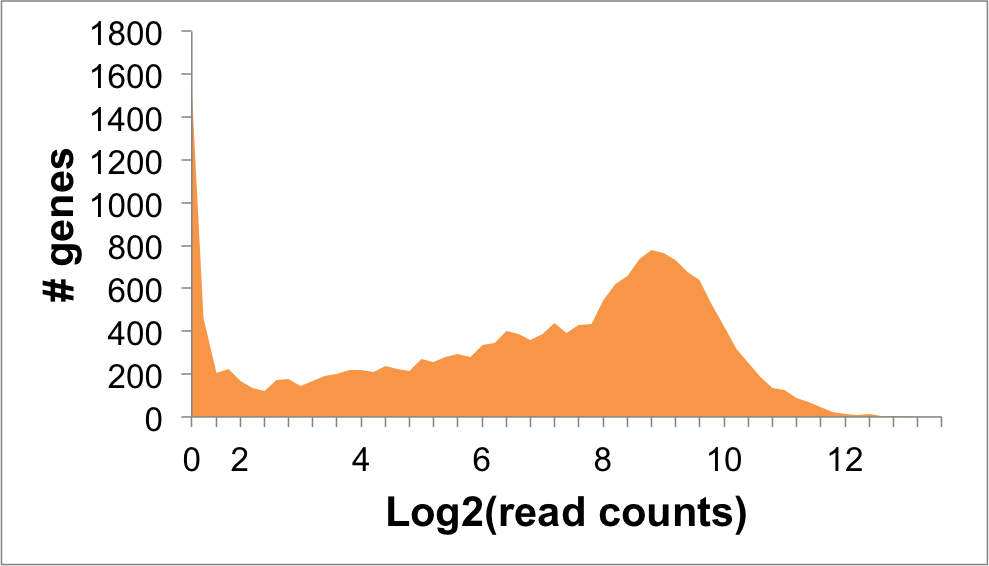
- Expression level (log2 read counts): 5.05
Expression Distribution
BAX Expression in NALM6 Cells: 5.05