ICAM1
Gene Information
- Official Symbol: ICAM1
- Official Name: intercellular adhesion molecule 1
- Aliases and Previous Symbols: N/A
- Entrez ID: 3383
- UniProt: P05362
- Interactions: BioGRID
- PubMed articles: Open PubMed
- OMIM: Open OMIM
Function Summary
- Entrez Summary: This gene encodes a cell surface glycoprotein which is typically expressed on endothelial cells and cells of the immune system. It binds to integrins of type CD11a / CD18, or CD11b / CD18 and is also exploited by Rhinovirus as a receptor. [provided by RefSeq, Jul 2008].
- UniProt Summary: ICAM proteins are ligands for the leukocyte adhesion protein LFA-1 (integrin alpha-L/beta-2). During leukocyte trans- endothelial migration, ICAM1 engagement promotes the assembly of endothelial apical cups through ARHGEF26/SGEF and RHOG activation. {ECO:0000269|PubMed:11173916, ECO:0000269|PubMed:17875742}. (Microbial infection) Acts as a receptor for Coxsackievirus A21 capsid proteins. {ECO:0000269|PubMed:11160747, ECO:0000269|PubMed:16004874, ECO:0000269|PubMed:9539703}.
Pfam Domains GO Terms
Pfam Domains
| ICAM N |
GO Terms
| response to sulfur dioxide |
| T cell antigen processing and presentation |
| T cell activation via T cell receptor contact with antigen bound to MHC molecule on antigen presenting cell |
| membrane to membrane docking |
| receptor-mediated virion attachment to host cell |
| establishment of Sertoli cell barrier |
| T cell extravasation |
| acute inflammatory response to antigenic stimulus |
| virion attachment to host cell |
| adhesion of symbiont to host cell |
| adhesion of symbiont to host |
| positive regulation of leukocyte adhesion to vascular endothelial cell |
| establishment of endothelial intestinal barrier |
| Sertoli cell development |
| positive regulation of cellular extravasation |
| regulation of leukocyte adhesion to vascular endothelial cell |
| Sertoli cell differentiation |
| cell adhesion mediated by integrin |
| inflammatory response to antigenic stimulus |
| T cell migration |
| response to gonadotropin |
| regulation of cellular extravasation |
| cellular response to dexamethasone stimulus |
| regulation of ruffle assembly |
| negative regulation of endothelial cell apoptotic process |
| positive regulation of vasoconstriction |
| response to amphetamine |
| establishment of endothelial barrier |
| cellular response to interleukin-6 |
| cellular response to alkaloid |
| immunological synapse |
| response to interleukin-6 |
| negative regulation of extrinsic apoptotic signaling pathway via death domain receptors |
| positive regulation of nitric oxide biosynthetic process |
| cellular response to amyloid-beta |
| cellular extravasation |
| positive regulation of nitric oxide metabolic process |
| response to dexamethasone |
| negative regulation of epithelial cell apoptotic process |
| T cell mediated immunity |
| response to copper ion |
| heterophilic cell-cell adhesion via plasma membrane cell adhesion molecules |
| response to amine |
| response to amyloid-beta |
| regulation of endothelial cell apoptotic process |
| endothelial cell development |
| leukocyte cell-cell adhesion |
| positive regulation of reactive oxygen species biosynthetic process |
| response to bronchodilator |
| ovarian follicle development |
| cellular response to glucocorticoid stimulus |
| regulation of nitric oxide biosynthetic process |
| regulation of extrinsic apoptotic signaling pathway via death domain receptors |
| regulation of vasoconstriction |
| cellular response to corticosteroid stimulus |
| negative regulation of calcium ion transport |
| T cell activation involved in immune response |
| cell aging |
| lymphocyte migration |
| cellular response to glucose stimulus |
| positive regulation of blood circulation |
| acute inflammatory response |
| cellular response to hexose stimulus |
| interferon-gamma-mediated signaling pathway |
| cellular response to monosaccharide stimulus |
| virus receptor activity |
| regulation of leukocyte mediated cytotoxicity |
| regulation of epithelial cell apoptotic process |
| cellular response to carbohydrate stimulus |
| endothelial cell differentiation |
| regulation of reactive oxygen species biosynthetic process |
| cellular glucose homeostasis |
| female gonad development |
| cellular response to ketone |
| positive regulation of actin filament polymerization |
| development of primary female sexual characteristics |
| response to antineoplastic agent |
| viral entry into host cell |
| endothelium development |
| positive regulation of reactive oxygen species metabolic process |
| response to leukemia inhibitory factor |
| cellular response to leukemia inhibitory factor |
| regulation of cell killing |
| negative regulation of extrinsic apoptotic signaling pathway |
| entry into host |
| entry into host cell |
| female sex differentiation |
| lymphocyte activation involved in immune response |
| response to alkaloid |
| response to amino acid |
| response to ethanol |
| positive regulation of protein polymerization |
| positive regulation of leukocyte migration |
| integrin binding |
| male gonad development |
| development of primary male sexual characteristics |
| transmembrane signaling receptor activity |
| response to glucose |
| regulation of blood vessel diameter |
| regulation of tube diameter |
| regulation of tube size |
| response to hexose |
| response to glucocorticoid |
| sensory perception of sound |
| negative regulation of ion transport |
| response to monosaccharide |
| response to ionizing radiation |
| regulation of cell shape |
| positive regulation of NF-kappaB transcription factor activity |
| regulation of extrinsic apoptotic signaling pathway |
| male sex differentiation |
| interaction with host |
| response to corticosteroid |
| cellular response to interferon-gamma |
| regulation of actin filament polymerization |
| sensory perception of mechanical stimulus |
| vascular process in circulatory system |
| response to carbohydrate |
| cellular response to interleukin-1 |
| regulation of reactive oxygen species metabolic process |
| membrane docking |
| response to interferon-gamma |
| regulation of actin polymerization or depolymerization |
| regulation of actin filament length |
| glucose homeostasis |
| cellular response to lipopolysaccharide |
| carbohydrate homeostasis |
| cellular response to xenobiotic stimulus |
| cellular response to hypoxia |
| cellular response to steroid hormone stimulus |
| positive regulation of peptidyl-tyrosine phosphorylation |
| epithelial cell development |
| cellular response to molecule of bacterial origin |
| response to ketone |
| regulation of leukocyte migration |
| positive regulation of supramolecular fiber organization |
| cellular response to decreased oxygen levels |
| response to interleukin-1 |
| regulation of plasma membrane bounded cell projection assembly |
| viral life cycle |
| regulation of cell projection assembly |
| signaling receptor activity |
| gonad development |
| positive regulation of ERK1 and ERK2 cascade |
| cellular response to biotic stimulus |
| cellular response to oxygen levels |
| development of primary sexual characteristics |
| positive regulation of leukocyte cell-cell adhesion |
| antigen processing and presentation |
| positive regulation of cytoskeleton organization |
| regulation of protein polymerization |
| negative regulation of apoptotic signaling pathway |
| membrane raft |
| response to insulin |
| response to alcohol |
| cellular response to nutrient levels |
| T cell activation |
| cellular response to tumor necrosis factor |
| positive regulation of protein complex assembly |
| regulation of calcium ion transport |
| regulation of peptidyl-tyrosine phosphorylation |
| positive regulation of cell-cell adhesion |
| cell-cell adhesion via plasma-membrane adhesion molecules |
| regulation of actin filament organization |
| positive regulation of DNA-binding transcription factor activity |
| response to tumor necrosis factor |
| cellular response to extracellular stimulus |
| sex differentiation |
| lymphocyte mediated immunity |
| adaptive immune response based on somatic recombination of immune receptors built from immunoglobulin superfamily domains |
| aging |
| regulation of blood circulation |
| regulation of ERK1 and ERK2 cascade |
| regulation of leukocyte cell-cell adhesion |
| response to xenobiotic stimulus |
| response to antibiotic |
| response to lipopolysaccharide |
| response to molecule of bacterial origin |
| cellular response to peptide |
| response to steroid hormone |
| cellular response to external stimulus |
| extracellular matrix organization |
| response to hypoxia |
| regulation of actin cytoskeleton organization |
| response to acid chemical |
| regulation of supramolecular fiber organization |
| regulation of neurotransmitter levels |
| response to decreased oxygen levels |
| collagen-containing extracellular matrix |
| response to metal ion |
| regulation of cellular component size |
| leukocyte migration |
| response to oxygen levels |
| lymphocyte activation |
| regulation of metal ion transport |
| extracellular structure organization |
| regulation of actin filament-based process |
| blood circulation |
| response to peptide hormone |
| external side of plasma membrane |
| circulatory system process |
| regulation of apoptotic signaling pathway |
| regulation of cell-cell adhesion |
| positive regulation of cell adhesion |
| cellular response to drug |
| positive regulation of GTPase activity |
| focal adhesion |
| reproductive structure development |
| regulation of DNA-binding transcription factor activity |
| reproductive system development |
| response to radiation |
| regulation of protein complex assembly |
| response to peptide |
| regulation of GTPase activity |
| negative regulation of transport |
| regulation of cell morphogenesis |
| response to nutrient levels |
| inflammatory response |
| positive regulation of cell migration |
| cell-cell adhesion |
| response to toxic substance |
| regulation of anatomical structure size |
| positive regulation of cellular component biogenesis |
| cellular response to lipid |
| positive regulation of cell motility |
| response to extracellular stimulus |
| response to inorganic substance |
| positive regulation of cellular component movement |
| regulation of cytoskeleton organization |
| cellular response to organic cyclic compound |
| positive regulation of MAPK cascade |
| positive regulation of locomotion |
| regulation of system process |
| cellular response to organonitrogen compound |
| cellular response to hormone stimulus |
| adaptive immune response |
| cell surface |
| positive regulation of organelle organization |
| leukocyte activation involved in immune response |
| cell activation involved in immune response |
| cellular response to nitrogen compound |
| developmental process involved in reproduction |
| cytokine-mediated signaling pathway |
| regulation of cell adhesion |
| epithelial cell differentiation |
| response to bacterium |
| regulation of plasma membrane bounded cell projection organization |
| regulation of ion transport |
| viral process |
| regulation of cell projection organization |
| cellular chemical homeostasis |
| regulation of MAPK cascade |
| leukocyte mediated immunity |
| innate immune response |
| positive regulation of hydrolase activity |
| symbiotic process |
| interspecies interaction between organisms |
| regulation of cell migration |
| response to lipid |
| negative regulation of apoptotic process |
| cellular homeostasis |
| negative regulation of programmed cell death |
| response to hormone |
| regulation of cell motility |
| response to organic cyclic compound |
| leukocyte activation |
| cell adhesion |
| biological adhesion |
| defense response to other organism |
| regulation of cellular component biogenesis |
| cell migration |
| sensory perception |
| regulation of locomotion |
| negative regulation of cell death |
| regulation of cellular component movement |
| response to organonitrogen compound |
| cellular response to cytokine stimulus |
| positive regulation of protein phosphorylation |
| response to drug |
| positive regulation of intracellular signal transduction |
| cellular response to oxygen-containing compound |
| positive regulation of phosphorylation |
| regulation of anatomical structure morphogenesis |
| cell activation |
| cell motility |
| localization of cell |
| response to nitrogen compound |
| immune effector process |
| response to cytokine |
| chemical homeostasis |
| epithelium development |
| positive regulation of phosphorus metabolic process |
| positive regulation of phosphate metabolic process |
| positive regulation of immune system process |
| regulation of immune response |
| response to abiotic stimulus |
| positive regulation of cellular component organization |
| cellular response to endogenous stimulus |
| positive regulation of protein modification process |
| negative regulation of signal transduction |
| regulation of hydrolase activity |
| regulation of organelle organization |
| response to other organism |
| response to external biotic stimulus |
| locomotion |
| response to biotic stimulus |
| defense response |
| negative regulation of cell communication |
| negative regulation of signaling |
| nervous system process |
| integral component of plasma membrane |
| reproductive process |
| reproduction |
| positive regulation of catalytic activity |
| regulation of protein phosphorylation |
| response to endogenous stimulus |
| regulation of apoptotic process |
| movement of cell or subcellular component |
| response to oxygen-containing compound |
| regulation of programmed cell death |
| regulation of phosphorylation |
| extracellular space |
| positive regulation of cellular protein metabolic process |
| negative regulation of response to stimulus |
| homeostatic process |
| cell development |
| regulation of immune system process |
| positive regulation of signal transduction |
| regulation of cell death |
| cellular response to stress |
| positive regulation of protein metabolic process |
| positive regulation of multicellular organismal process |
| tissue development |
| positive regulation of molecular function |
| regulation of phosphate metabolic process |
| regulation of phosphorus metabolic process |
| positive regulation of cell communication |
| positive regulation of signaling |
| regulation of intracellular signal transduction |
| regulation of protein modification process |
| regulation of transport |
| immune response |
| system process |
| positive regulation of cellular biosynthetic process |
| membrane |
| positive regulation of biosynthetic process |
CRISPR Data
Compound Hit Most Correlated Genes in Chemogenomics Tissues where Essential in the Avana Dataset (DepMap 20Q1)
Compound Hit
No hits were found.
Most Correlated Genes in Chemogenomics
No correlation found to any other genes in chemogenomics.
Tissues where Essential in the Avana Dataset (DepMap 20Q1)
Global Fraction of Cell Lines Where Essential: 0/739
| Tissue | Fraction Of Cell Lines Where Essential |
|---|---|
| 1290807.0 | 0/1 |
| 909776.0 | 0/1 |
| bile duct | 0/28 |
| blood | 0/28 |
| bone | 0/26 |
| breast | 0/33 |
| central nervous system | 0/56 |
| cervix | 0/4 |
| colorectal | 0/17 |
| esophagus | 0/13 |
| fibroblast | 0/1 |
| gastric | 0/16 |
| kidney | 0/21 |
| liver | 0/20 |
| lung | 0/75 |
| lymphocyte | 0/16 |
| ovary | 0/26 |
| pancreas | 0/24 |
| peripheral nervous system | 0/16 |
| plasma cell | 0/15 |
| prostate | 0/1 |
| skin | 0/24 |
| soft tissue | 0/9 |
| thyroid | 0/2 |
| upper aerodigestive | 0/22 |
| urinary tract | 0/29 |
| uterus | 0/5 |
Essentiality in NALM6
- Essentiality Rank: 6786
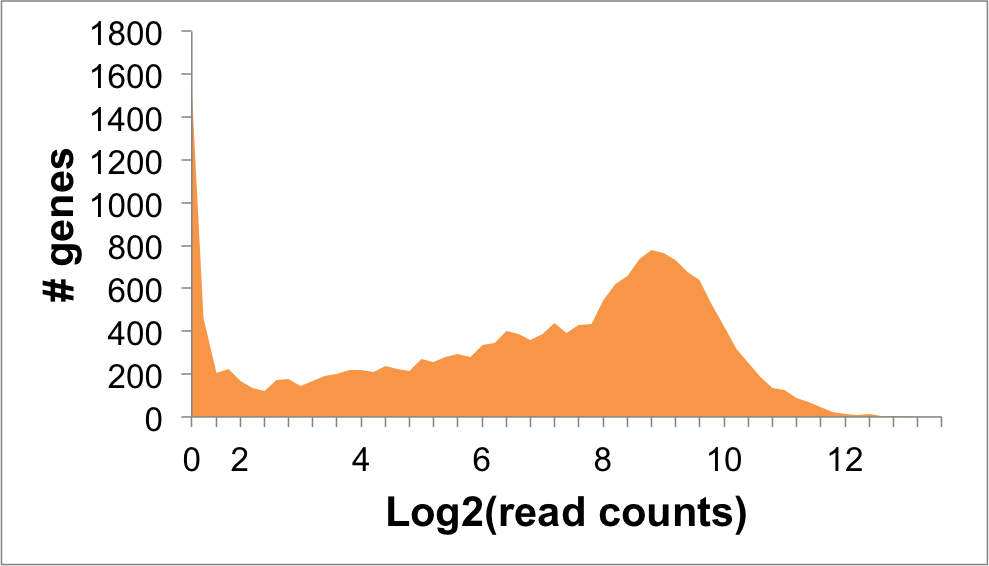
- Expression level (log2 read counts): 5.42
Expression Distribution
ICAM1 Expression in NALM6 Cells: 5.42