IL4R
Gene Information
- Official Symbol: IL4R
- Official Name: interleukin 4 receptor
- Aliases and Previous Symbols: N/A
- Entrez ID: 3566
- UniProt: P24394
- Interactions: BioGRID
- PubMed articles: Open PubMed
- OMIM: Open OMIM
Function Summary
- Entrez Summary: This gene encodes the alpha chain of the interleukin-4 receptor, a type I transmembrane protein that can bind interleukin 4 and interleukin 13 to regulate IgE production. The encoded protein also can bind interleukin 4 to promote differentiation of Th2 cells. A soluble form of the encoded protein can be produced by proteolysis of the membrane-bound protein, and this soluble form can inhibit IL4-mediated cell proliferation and IL5 upregulation by T-cells. Allelic variations in this gene have been associated with atopy, a condition that can manifest itself as allergic rhinitis, sinusitus, asthma, or eczema. Polymorphisms in this gene are also associated with resistance to human immunodeficiency virus type-1 infection. Alternate splicing results in multiple transcript variants. [provided by RefSeq, Apr 2012].
- UniProt Summary: N/A
Pfam Domains GO Terms
Pfam Domains
| IL4Ra N |
GO Terms
| interleukin-4 receptor activity |
| negative regulation of T-helper 1 cell differentiation |
| interleukin-4-mediated signaling pathway |
| response to odorant |
| negative regulation of T-helper 1 type immune response |
| positive regulation of T-helper 2 cell differentiation |
| regulation of T-helper 1 cell differentiation |
| regulation of T-helper 2 cell differentiation |
| positive regulation of mast cell degranulation |
| positive regulation of chemokine secretion |
| positive regulation of mast cell activation involved in immune response |
| negative regulation of T-helper cell differentiation |
| positive regulation of type 2 immune response |
| production of molecular mediator involved in inflammatory response |
| regulation of chemokine secretion |
| ovulation |
| positive regulation of myoblast fusion |
| negative regulation of CD4-positive, alpha-beta T cell differentiation |
| positive regulation of mast cell activation |
| regulation of myoblast fusion |
| positive regulation of T-helper cell differentiation |
| defense response to protozoan |
| response to protozoan |
| negative regulation of alpha-beta T cell differentiation |
| positive regulation of leukocyte degranulation |
| positive regulation of macrophage activation |
| regulation of T-helper 1 type immune response |
| positive regulation of syncytium formation by plasma membrane fusion |
| negative regulation of CD4-positive, alpha-beta T cell activation |
| cellular response to interleukin-4 |
| regulation of syncytium formation by plasma membrane fusion |
| positive regulation of CD4-positive, alpha-beta T cell differentiation |
| regulation of type 2 immune response |
| response to interleukin-4 |
| positive regulation of myeloid leukocyte mediated immunity |
| positive regulation of myotube differentiation |
| regulation of T-helper cell differentiation |
| positive regulation of CD4-positive, alpha-beta T cell activation |
| regulation of mast cell degranulation |
| regulation of mast cell activation involved in immune response |
| negative regulation of alpha-beta T cell activation |
| negative regulation of adaptive immune response based on somatic recombination of immune receptors built from immunoglobulin superfamily domains |
| positive regulation of immunoglobulin production |
| negative regulation of T cell differentiation |
| regulation of mast cell activation |
| negative regulation of adaptive immune response |
| positive regulation of alpha-beta T cell differentiation |
| regulation of CD4-positive, alpha-beta T cell differentiation |
| regulation of leukocyte degranulation |
| regulation of macrophage activation |
| negative regulation of lymphocyte differentiation |
| positive regulation of regulated secretory pathway |
| positive regulation of chemokine production |
| regulation of myotube differentiation |
| positive regulation of striated muscle cell differentiation |
| regulation of myeloid leukocyte mediated immunity |
| positive regulation of alpha-beta T cell activation |
| regulation of CD4-positive, alpha-beta T cell activation |
| regulation of alpha-beta T cell differentiation |
| regulation of immunoglobulin production |
| response to estrogen |
| regulation of chemokine production |
| positive regulation of T cell differentiation |
| positive regulation of muscle cell differentiation |
| positive regulation of exocytosis |
| regulation of alpha-beta T cell activation |
| positive regulation of lymphocyte differentiation |
| positive regulation of production of molecular mediator of immune response |
| positive regulation of cold-induced thermogenesis |
| negative regulation of leukocyte differentiation |
| regulation of striated muscle cell differentiation |
| negative regulation of T cell activation |
| negative regulation of immune effector process |
| negative regulation of leukocyte cell-cell adhesion |
| female gamete generation |
| positive regulation of leukocyte mediated immunity |
| negative regulation of hemopoiesis |
| regulation of T cell differentiation |
| positive regulation of cytokine secretion |
| regulation of production of molecular mediator of immune response |
| regulation of cold-induced thermogenesis |
| negative regulation of lymphocyte activation |
| regulation of adaptive immune response based on somatic recombination of immune receptors built from immunoglobulin superfamily domains |
| positive regulation of leukocyte differentiation |
| negative regulation of immune response |
| regulation of muscle cell differentiation |
| regulation of adaptive immune response |
| regulation of regulated secretory pathway |
| regulation of lymphocyte differentiation |
| negative regulation of cell-cell adhesion |
| negative regulation of leukocyte activation |
| positive regulation of hemopoiesis |
| negative regulation of cell activation |
| positive regulation of T cell activation |
| regulation of cytokine secretion |
| receptor complex |
| regulation of leukocyte mediated immunity |
| immunoglobulin mediated immune response |
| positive regulation of intracellular transport |
| B cell mediated immunity |
| positive regulation of leukocyte cell-cell adhesion |
| positive regulation of immune effector process |
| regulation of exocytosis |
| positive regulation of cell-cell adhesion |
| lymphocyte mediated immunity |
| positive regulation of protein secretion |
| regulation of leukocyte differentiation |
| negative regulation of cell adhesion |
| adaptive immune response based on somatic recombination of immune receptors built from immunoglobulin superfamily domains |
| positive regulation of peptide secretion |
| regulation of leukocyte cell-cell adhesion |
| regulation of T cell activation |
| regulation of intracellular transport |
| positive regulation of lymphocyte activation |
| regulation of cell-cell adhesion |
| positive regulation of leukocyte activation |
| positive regulation of secretion by cell |
| positive regulation of cell adhesion |
| positive regulation of cell activation |
| positive regulation of protein transport |
| positive regulation of secretion |
| negative regulation of immune system process |
| positive regulation of cytokine production |
| regulation of hemopoiesis |
| positive regulation of establishment of protein localization |
| regulation of protein secretion |
| regulation of immune effector process |
| regulation of peptide secretion |
| inflammatory response |
| regulation of lymphocyte activation |
| regulation of vesicle-mediated transport |
| regulation of leukocyte activation |
| adaptive immune response |
| regulation of cell activation |
| cytokine-mediated signaling pathway |
| regulation of cell adhesion |
| gamete generation |
| regulation of cytokine production |
| regulation of protein transport |
| negative regulation of cell differentiation |
| regulation of peptide transport |
| regulation of establishment of protein localization |
| regulation of secretion by cell |
| leukocyte mediated immunity |
| regulation of secretion |
| multicellular organismal reproductive process |
| sexual reproduction |
| multicellular organism reproduction |
| positive regulation of immune response |
| regulation of cellular localization |
| negative regulation of developmental process |
| defense response to other organism |
| positive regulation of cell differentiation |
| positive regulation of transport |
| multi-organism reproductive process |
| cellular response to cytokine stimulus |
| regulation of protein localization |
| regulation of anatomical structure morphogenesis |
| immune effector process |
| response to cytokine |
| positive regulation of immune system process |
| regulation of immune response |
| negative regulation of multicellular organismal process |
| positive regulation of cellular component organization |
| response to other organism |
| response to external biotic stimulus |
| response to biotic stimulus |
| defense response |
| positive regulation of developmental process |
| integral component of plasma membrane |
| reproductive process |
| reproduction |
| extracellular space |
| regulation of cell population proliferation |
| negative regulation of response to stimulus |
| regulation of immune system process |
| positive regulation of multicellular organismal process |
| regulation of cell differentiation |
| regulation of transport |
| immune response |
CRISPR Data
Compound Hit Most Correlated Genes in Chemogenomics Tissues where Essential in the Avana Dataset (DepMap 20Q1)
Compound Hit
No hits were found.
Most Correlated Genes in Chemogenomics
No correlation found to any other genes in chemogenomics.
Tissues where Essential in the Avana Dataset (DepMap 20Q1)
Global Fraction of Cell Lines Where Essential: 1/739
| Tissue | Fraction Of Cell Lines Where Essential |
|---|---|
| 1290807.0 | 0/1 |
| 909776.0 | 0/1 |
| bile duct | 0/28 |
| blood | 0/28 |
| bone | 0/26 |
| breast | 0/33 |
| central nervous system | 0/56 |
| cervix | 0/4 |
| colorectal | 0/17 |
| esophagus | 0/13 |
| fibroblast | 0/1 |
| gastric | 0/16 |
| kidney | 0/21 |
| liver | 0/20 |
| lung | 0/75 |
| lymphocyte | 1/16 |
| ovary | 0/26 |
| pancreas | 0/24 |
| peripheral nervous system | 0/16 |
| plasma cell | 0/15 |
| prostate | 0/1 |
| skin | 0/24 |
| soft tissue | 0/9 |
| thyroid | 0/2 |
| upper aerodigestive | 0/22 |
| urinary tract | 0/29 |
| uterus | 0/5 |
Essentiality in NALM6
- Essentiality Rank: 14393
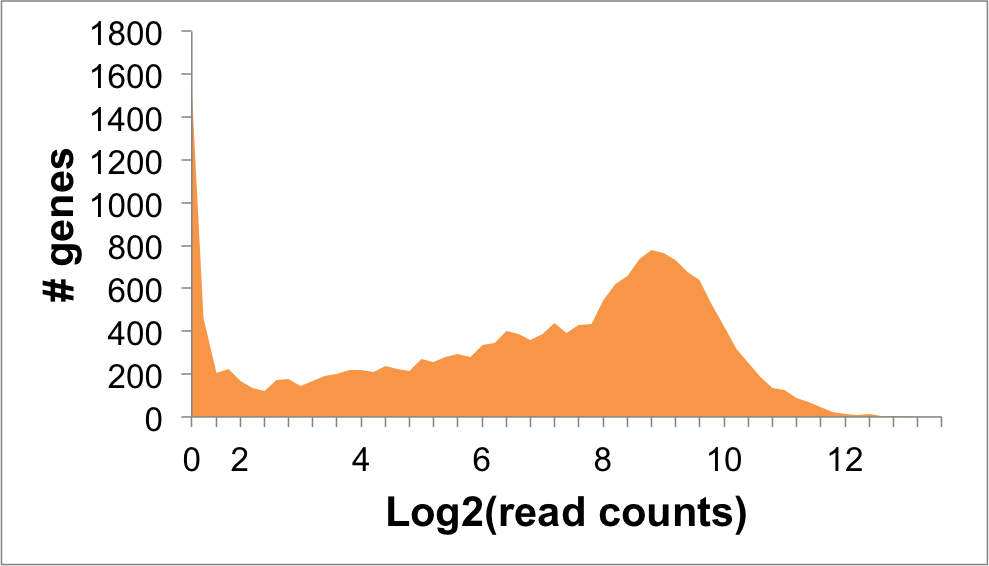
- Expression level (log2 read counts): 4.77
Expression Distribution
IL4R Expression in NALM6 Cells: 4.77