KCNA4
Gene Information
- Official Symbol: KCNA4
- Official Name: potassium voltage-gated channel subfamily A member 4
- Aliases and Previous Symbols: N/A
- Entrez ID: 3739
- UniProt: P22459
- Interactions: BioGRID
- PubMed articles: Open PubMed
- OMIM: Open OMIM
Function Summary
- Entrez Summary: Potassium channels represent the most complex class of voltage-gated ion channels from both functional and structural standpoints. Their diverse functions include regulating neurotransmitter release, heart rate, insulin secretion, neuronal excitability, epithelial electrolyte transport, smooth muscle contraction, and cell volume. Four sequence-related potassium channel genes - shaker, shaw, shab, and shal - have been identified in Drosophila, and each has been shown to have human homolog(s). This gene encodes a member of the potassium channel, voltage-gated, shaker-related subfamily. This member contains six membrane-spanning domains with a shaker-type repeat in the fourth segment. It belongs to the A-type potassium current class, the members of which may be important in the regulation of the fast repolarizing phase of action potentials in heart and thus may influence the duration of cardiac action potential.[provided by RefSeq, Mar 2011].
- UniProt Summary: Voltage-gated potassium channel that mediates transmembrane potassium transport in excitable membranes. Forms tetrameric potassium-selective channels through which potassium ions pass in accordance with their electrochemical gradient. The channel alternates between opened and closed conformations in response to the voltage difference across the membrane (PubMed:19912772, PubMed:8495559). Can form functional homotetrameric channels and heterotetrameric channels that contain variable proportions of KCNA1, KCNA2, KCNA4, KCNA5, and possibly other family members as well; channel properties depend on the type of alpha subunits that are part of the channel (PubMed:8495559). Channel properties are modulated by cytoplasmic beta subunits that regulate the subcellular location of the alpha subunits and promote rapid inactivation. In vivo, membranes probably contain a mixture of heteromeric potassium channel complexes, making it difficult to assign currents observed in intact tissues to any particular potassium channel family member. Homotetrameric KCNA4 forms a potassium channel that opens in response to membrane depolarization, followed by rapid spontaneous channel closure (PubMed:19912772, PubMed:8495559). Likewise, a heterotetrameric channel formed by KCNA1 and KCNA4 shows rapid inactivation (PubMed:17156368). {ECO:0000269|PubMed:17156368, ECO:0000269|PubMed:19912772, ECO:0000269|PubMed:8495559}.
CRISPR Data
Essentiality in NALM6
- Essentiality Rank: 9186
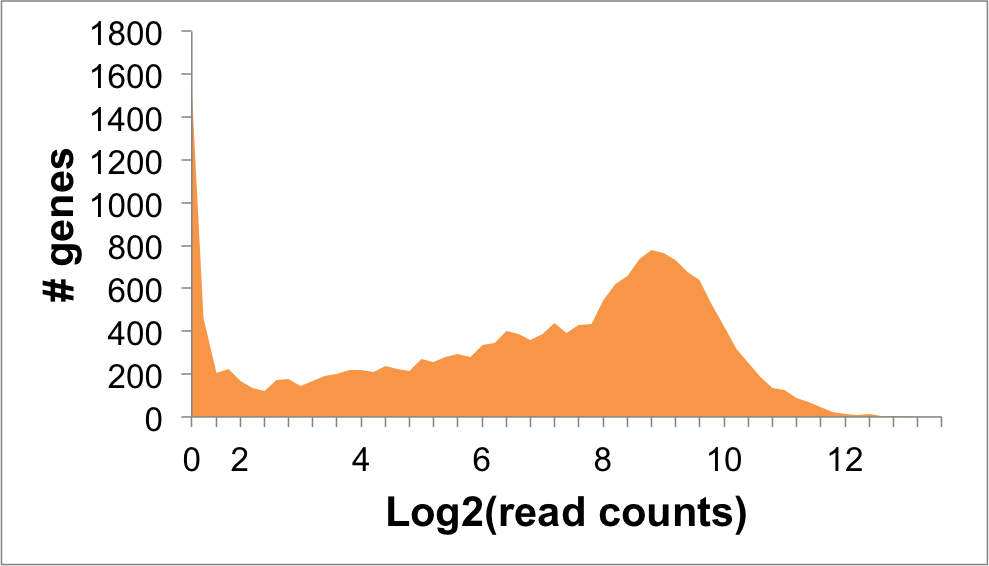
- Expression level (log2 read counts): -0.69
KCNA4 Expression in NALM6 Cells: -0.69