NALCN
Gene Information
- Official Symbol: N/ALCN
- Official Name: sodium leak channel, non-selective
- Aliases and Previous Symbols: N/A
- Entrez ID: 259232
- UniProt: Q8IZF0
- Interactions: BioGRID
- PubMed articles: Open PubMed
- OMIM: Open OMIM
Function Summary
- Entrez Summary: This gene encodes a voltage-independent, nonselective cation channel which belongs to a family of voltage-gated sodium and calcium channels that regulates the resting membrane potential and excitability of neurons. This family is expressed throughout the nervous system and conducts a persistent sodium leak current that contributes to tonic neuronal excitability. The encoded protein forms a channelosome complex that includes G-protein-coupled receptors, UNC-79, UNC-80, NCA localization factor-1, and src family tyrosine kinases. Naturally occurring mutations in this gene are associated with infantile neuroaxonal dystrophy, infantile hypotonia with psychomotor retardation and characteristic facies (IHPRF) syndrome, and congenital contractures of the limbs and face with hypotonia and developmental delay (CLIFAHDD) syndrome. A knockout of the orthologous gene in mice results in paralysis with a severely disrupted respiratory rhythm, and lethality within 24 hours after birth. [provided by RefSeq, Apr 2017].
- UniProt Summary: Voltage-independent, cation-nonselective channel which is permeable to sodium, potassium and calcium ions. Regulates the resting membrane potential and controls neuronal excitability (PubMed:17448995). Neuropeptides such as neurotensin and substance P (SP) stimulate the firing of action potentials by activating NALCN through a SRC family kinases-dependent pathway. In addition to its baseline activity, NALCN activity is enhanced/modulated by several GPCRs. Required for normal respiratory rhythm and neonatal survival. Involved in systemic osmoregulation by controlling the serum sodium concentration. NALCN is partly responsible for the substance P-induced depolarization and regulation of the intestinal pace-making activity in the interstitial cells of Cajal. Plays a critical role in both maintenance of spontaneous firing of substantia nigra pars reticulata (SNr) neurons and physiological modulation of SNr neuron excitability (By similarity). {ECO:0000250|UniProtKB:Q8BXR5, ECO:0000269|PubMed:17448995}.
CRISPR Data
Essentiality in NALM6
- Essentiality Rank: 17646
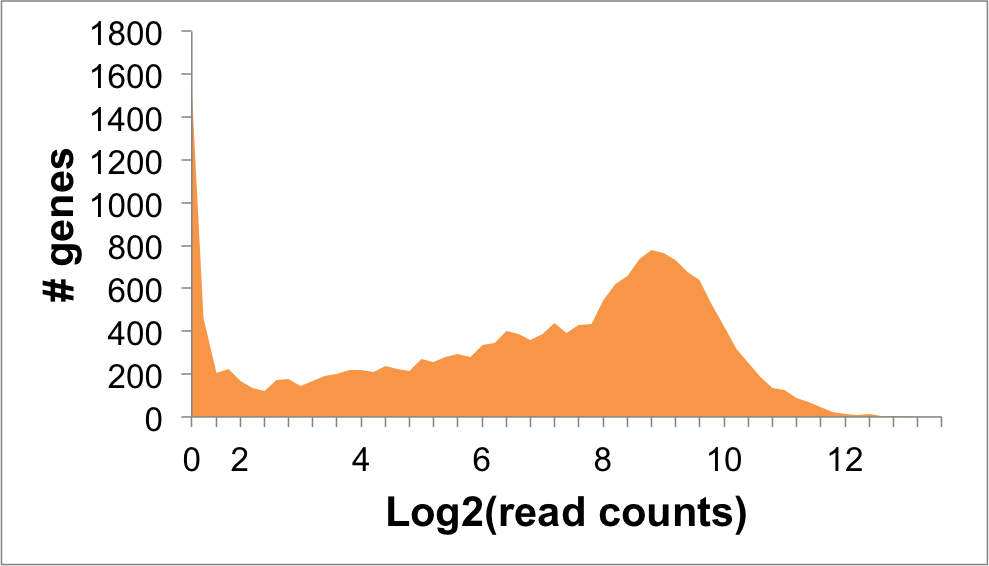
- Expression level (log2 read counts): 1.41
NALCN Expression in NALM6 Cells: 1.41