PTH
Gene Information
- Official Symbol: PTH
- Official Name: parathyroid hormone
- Aliases and Previous Symbols: N/A
- Entrez ID: 5741
- UniProt: P01270
- Interactions: BioGRID
- PubMed articles: Open PubMed
- OMIM: Open OMIM
Function Summary
- Entrez Summary: This gene encodes a member of the parathyroid family of proteins. The encoded preproprotein is proteolytically processed to generate a protein that binds to the parathyroid hormone/parathyroid hormone-related peptide receptor and regulates blood calcium and phosphate levels. Excess production of the encoded protein, known as hyperparathyroidism, can result in hypercalcemia and kidney stones. On the other hand, defective processing of the encoded protein may lead to hypoparathyroidism, which can result in hypocalcemia and numbness. Alternative splicing results in multiple transcript variants. [provided by RefSeq, Oct 2015].
- UniProt Summary: PTH elevates calcium level by dissolving the salts in bone and preventing their renal excretion. Stimulates [1-14C]-2- deoxy-D-glucose (2DG) transport and glycogen synthesis in osteoblastic cells. {ECO:0000269|PubMed:21076856}.
Pfam Domains GO Terms
Pfam Domains
| Parathyroid |
GO Terms
| type 1 parathyroid hormone receptor binding |
| parathyroid hormone receptor binding |
| positive regulation of osteoclast proliferation |
| negative regulation of bone mineralization involved in bone maturation |
| regulation of osteoclast proliferation |
| regulation of bone mineralization involved in bone maturation |
| hormone-mediated apoptotic signaling pathway |
| regulation of apoptotic process in bone marrow cell |
| negative regulation of apoptotic process in bone marrow cell |
| positive regulation of cell proliferation in bone marrow |
| regulation of cell proliferation in bone marrow |
| peptide hormone receptor binding |
| negative regulation of bone development |
| trivalent inorganic anion homeostasis |
| phosphate ion homeostasis |
| magnesium ion homeostasis |
| response to parathyroid hormone |
| divalent inorganic anion homeostasis |
| positive regulation of inositol phosphate biosynthetic process |
| regulation of inositol phosphate biosynthetic process |
| positive regulation of glycogen biosynthetic process |
| positive regulation of glycogen metabolic process |
| negative regulation of bone mineralization |
| negative regulation of chondrocyte differentiation |
| cAMP metabolic process |
| regulation of bone development |
| bone resorption |
| response to lead ion |
| positive regulation of alcohol biosynthetic process |
| monovalent inorganic anion homeostasis |
| negative regulation of cartilage development |
| negative regulation of biomineralization |
| negative regulation of biomineral tissue development |
| regulation of glycogen biosynthetic process |
| regulation of glucan biosynthetic process |
| homeostasis of number of cells within a tissue |
| response to vitamin D |
| activation of phospholipase C activity |
| receptor ligand activity |
| regulation of glycogen metabolic process |
| positive regulation of glucose import |
| regulation of polysaccharide biosynthetic process |
| positive regulation of glucose metabolic process |
| positive regulation of bone mineralization |
| cyclic nucleotide metabolic process |
| regulation of polysaccharide metabolic process |
| positive regulation of phospholipase C activity |
| positive regulation of glucose transmembrane transport |
| regulation of phospholipase C activity |
| bone remodeling |
| positive regulation of biomineral tissue development |
| positive regulation of biomineralization |
| regulation of chondrocyte differentiation |
| regulation of glucose import |
| anion homeostasis |
| positive regulation of cellular carbohydrate metabolic process |
| positive regulation of phospholipase activity |
| negative regulation of calcium ion transport |
| response to cadmium ion |
| regulation of cartilage development |
| regulation of phospholipase activity |
| positive regulation of lipase activity |
| negative regulation of ossification |
| regulation of glucose transmembrane transport |
| regulation of bone mineralization |
| regulation of alcohol biosynthetic process |
| Rho protein signal transduction |
| positive regulation of carbohydrate metabolic process |
| cell |
| positive regulation of ossification |
| response to vitamin |
| regulation of biomineral tissue development |
| regulation of biomineralization |
| regulation of carbohydrate biosynthetic process |
| regulation of lipase activity |
| hormone activity |
| tissue remodeling |
| protein N-terminus binding |
| regulation of glucose metabolic process |
| response to fibroblast growth factor |
| response to ethanol |
| adenylate cyclase-activating G protein-coupled receptor signaling pathway |
| positive regulation of leukocyte proliferation |
| positive regulation of small molecule metabolic process |
| regulation of cellular carbohydrate metabolic process |
| negative regulation of ion transport |
| cAMP-mediated signaling |
| regulation of generation of precursor metabolites and energy |
| hormone-mediated signaling pathway |
| cyclic-nucleotide-mediated signaling |
| regulation of ossification |
| tissue homeostasis |
| homeostasis of number of cells |
| positive regulation of transmembrane transport |
| regulation of carbohydrate metabolic process |
| adenylate cyclase-modulating G protein-coupled receptor signaling pathway |
| response to nutrient |
| regulation of leukocyte proliferation |
| response to alcohol |
| G protein-coupled receptor signaling pathway, coupled to cyclic nucleotide second messenger |
| Ras protein signal transduction |
| regulation of calcium ion transport |
| apoptotic signaling pathway |
| response to antibiotic |
| purine ribonucleotide metabolic process |
| small GTPase mediated signal transduction |
| multicellular organismal homeostasis |
| ribonucleotide metabolic process |
| purine nucleotide metabolic process |
| ribose phosphate metabolic process |
| second-messenger-mediated signaling |
| anatomical structure homeostasis |
| purine-containing compound metabolic process |
| response to metal ion |
| regulation of metal ion transport |
| regulation of small molecule metabolic process |
| cellular calcium ion homeostasis |
| nucleotide metabolic process |
| calcium ion homeostasis |
| nucleoside phosphate metabolic process |
| cellular divalent inorganic cation homeostasis |
| negative regulation of transport |
| divalent inorganic cation homeostasis |
| skeletal system development |
| response to nutrient levels |
| response to toxic substance |
| response to growth factor |
| response to extracellular stimulus |
| response to inorganic substance |
| nucleobase-containing small molecule metabolic process |
| cellular metal ion homeostasis |
| regulation of transmembrane transport |
| cellular response to hormone stimulus |
| metal ion homeostasis |
| cellular cation homeostasis |
| cellular ion homeostasis |
| regulation of ion transport |
| cation homeostasis |
| negative regulation of cell differentiation |
| inorganic ion homeostasis |
| cellular chemical homeostasis |
| positive regulation of hydrolase activity |
| ion homeostasis |
| response to lipid |
| negative regulation of transcription by RNA polymerase II |
| organophosphate metabolic process |
| negative regulation of apoptotic process |
| cellular homeostasis |
| negative regulation of programmed cell death |
| response to hormone |
| positive regulation of cell population proliferation |
| response to organic cyclic compound |
| apoptotic process |
| negative regulation of developmental process |
| positive regulation of transport |
| negative regulation of cell death |
| response to drug |
| carbohydrate derivative metabolic process |
| programmed cell death |
| cell death |
| chemical homeostasis |
| cell-cell signaling |
| positive regulation of phosphate metabolic process |
| positive regulation of phosphorus metabolic process |
| negative regulation of transcription, DNA-templated |
| negative regulation of multicellular organismal process |
| positive regulation of transcription by RNA polymerase II |
| cellular response to endogenous stimulus |
| negative regulation of nucleic acid-templated transcription |
| negative regulation of RNA biosynthetic process |
| regulation of hydrolase activity |
| G protein-coupled receptor signaling pathway |
| negative regulation of RNA metabolic process |
| positive regulation of developmental process |
| negative regulation of cellular macromolecule biosynthetic process |
| positive regulation of catalytic activity |
| negative regulation of nucleobase-containing compound metabolic process |
| negative regulation of macromolecule biosynthetic process |
| response to endogenous stimulus |
| negative regulation of cellular biosynthetic process |
| regulation of apoptotic process |
| positive regulation of transcription, DNA-templated |
| negative regulation of biosynthetic process |
| response to oxygen-containing compound |
| DNA-binding transcription factor activity, RNA polymerase II-specific |
| regulation of programmed cell death |
| extracellular space |
| regulation of cell population proliferation |
| positive regulation of nucleic acid-templated transcription |
| positive regulation of RNA biosynthetic process |
| homeostatic process |
| positive regulation of signal transduction |
| regulation of cell death |
| intracellular signal transduction |
| cellular macromolecule biosynthetic process |
| negative regulation of gene expression |
| positive regulation of RNA metabolic process |
| positive regulation of multicellular organismal process |
| small molecule metabolic process |
| macromolecule biosynthetic process |
| positive regulation of molecular function |
| regulation of phosphate metabolic process |
| regulation of phosphorus metabolic process |
| regulation of cell differentiation |
| positive regulation of cell communication |
| positive regulation of signaling |
| regulation of transport |
| positive regulation of nucleobase-containing compound metabolic process |
| positive regulation of macromolecule biosynthetic process |
| extracellular region |
| positive regulation of cellular biosynthetic process |
| positive regulation of gene expression |
| positive regulation of biosynthetic process |
CRISPR Data
Compound Hit Most Correlated Genes in Chemogenomics Tissues where Essential in the Avana Dataset (DepMap 20Q1)
Compound Hit
| Screen | Score |
|---|---|
| Torin1 0.08μM R02 exp82 | 1.89 |
Most Correlated Genes in Chemogenomics
No correlation found to any other genes in chemogenomics.
Tissues where Essential in the Avana Dataset (DepMap 20Q1)
Global Fraction of Cell Lines Where Essential: 0/739
| Tissue | Fraction Of Cell Lines Where Essential |
|---|---|
| 1290807.0 | 0/1 |
| 909776.0 | 0/1 |
| bile duct | 0/28 |
| blood | 0/28 |
| bone | 0/26 |
| breast | 0/33 |
| central nervous system | 0/56 |
| cervix | 0/4 |
| colorectal | 0/17 |
| esophagus | 0/13 |
| fibroblast | 0/1 |
| gastric | 0/16 |
| kidney | 0/21 |
| liver | 0/20 |
| lung | 0/75 |
| lymphocyte | 0/16 |
| ovary | 0/26 |
| pancreas | 0/24 |
| peripheral nervous system | 0/16 |
| plasma cell | 0/15 |
| prostate | 0/1 |
| skin | 0/24 |
| soft tissue | 0/9 |
| thyroid | 0/2 |
| upper aerodigestive | 0/22 |
| urinary tract | 0/29 |
| uterus | 0/5 |
Essentiality in NALM6
- Essentiality Rank: 18484
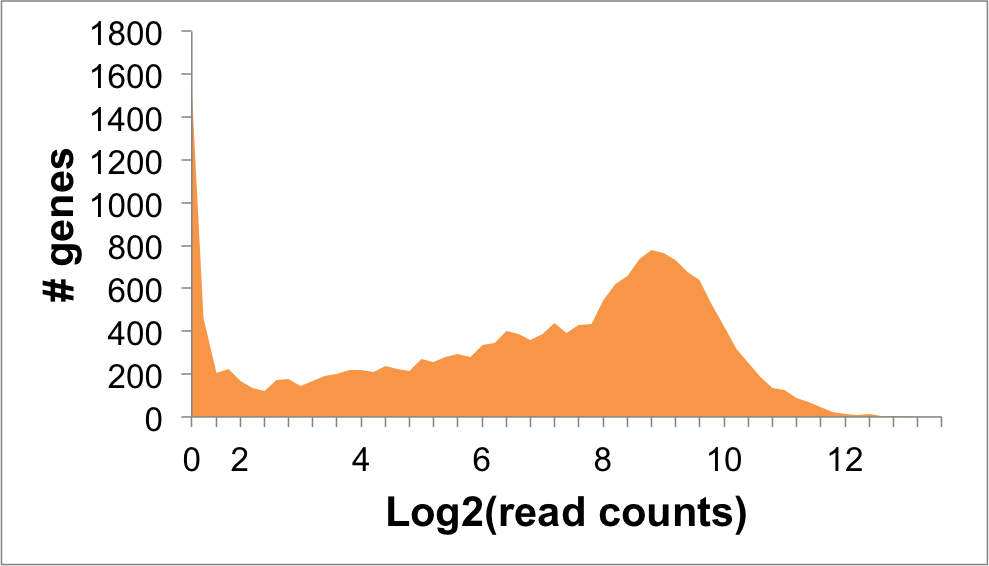
- Expression level (log2 read counts): -7.68
Expression Distribution
PTH Expression in NALM6 Cells: -7.68