SFRP1
Gene Information
- Official Symbol: SFRP1
- Official Name: secreted frizzled related protein 1
- Aliases and Previous Symbols: N/A
- Entrez ID: 6422
- UniProt: Q8N474
- Interactions: BioGRID
- PubMed articles: Open PubMed
- OMIM: Open OMIM
Function Summary
- Entrez Summary: N/A
- UniProt Summary: Soluble frizzled-related proteins (sFRPS) function as modulators of Wnt signaling through direct interaction with Wnts. They have a role in regulating cell growth and differentiation in specific cell types. SFRP1 decreases intracellular beta-catenin levels (By similarity). Has antiproliferative effects on vascular cells, in vitro and in vivo, and can induce, in vivo, an angiogenic response. In vascular cell cycle, delays the G1 phase and entry into the S phase (By similarity). In kidney development, inhibits tubule formation and bud growth in metanephroi (By similarity). Inhibits WNT1/WNT4-mediated TCF-dependent transcription. {ECO:0000250}.
Pfam Domains GO Terms
Pfam Domains
| NTR |
| Fz |
GO Terms
| stromal-epithelial cell signaling involved in prostate gland development |
| convergent extension involved in somitogenesis |
| negative regulation of canonical Wnt signaling pathway involved in controlling type B pancreatic cell proliferation |
| regulation of Wnt signaling pathway involved in dorsal/ventral axis specification |
| negative regulation of Wnt signaling pathway involved in dorsal/ventral axis specification |
| negative regulation of planar cell polarity pathway involved in axis elongation |
| regulation of planar cell polarity pathway involved in axis elongation |
| regulation of canonical Wnt signaling pathway involved in controlling type B pancreatic cell proliferation |
| axis elongation involved in somitogenesis |
| neural crest cell fate commitment |
| Wnt signaling pathway involved in somitogenesis |
| cellular response to heparin |
| regulation of midbrain dopaminergic neuron differentiation |
| negative regulation of B cell differentiation |
| prostate epithelial cord arborization involved in prostate glandular acinus morphogenesis |
| prostate glandular acinus morphogenesis |
| negative regulation of non-canonical Wnt signaling pathway |
| response to heparin |
| convergent extension involved in axis elongation |
| regulation of branching involved in prostate gland morphogenesis |
| negative regulation of fibroblast apoptotic process |
| response to anticoagulant |
| convergent extension involved in gastrulation |
| positive regulation of fibroblast apoptotic process |
| bone trabecula formation |
| negative regulation of osteoblast proliferation |
| stem cell fate commitment |
| branching involved in prostate gland morphogenesis |
| cellular response to X-ray |
| regulation of dopaminergic neuron differentiation |
| dorsal/ventral axis specification |
| prostate glandular acinus development |
| neural crest formation |
| bone trabecula morphogenesis |
| hematopoietic stem cell differentiation |
| regulation of type B pancreatic cell proliferation |
| positive regulation of non-canonical Wnt signaling pathway |
| negative regulation of JUN kinase activity |
| planar cell polarity pathway involved in neural tube closure |
| convergent extension |
| positive regulation of extrinsic apoptotic signaling pathway via death domain receptors |
| regulation of establishment of planar polarity involved in neural tube closure |
| negative regulation of bone remodeling |
| negative regulation of androgen receptor signaling pathway |
| cellular response to estrogen stimulus |
| regulation of Wnt signaling pathway, planar cell polarity pathway |
| cellular response to vitamin D |
| cellular response to prostaglandin E stimulus |
| regulation of fibroblast apoptotic process |
| regulation of epithelial tube formation |
| negative regulation of tissue remodeling |
| trabecula formation |
| prostate gland epithelium morphogenesis |
| regulation of osteoblast proliferation |
| cellular response to prostaglandin stimulus |
| regulation of non-canonical Wnt signaling pathway |
| response to prostaglandin E |
| cellular response to vitamin |
| prostate gland morphogenesis |
| positive regulation of focal adhesion assembly |
| regulation of androgen receptor signaling pathway |
| negative regulation of osteoclast differentiation |
| regulation of B cell differentiation |
| axis elongation |
| negative regulation of epithelial to mesenchymal transition |
| response to X-ray |
| negative regulation of fibroblast proliferation |
| dopaminergic neuron differentiation |
| response to vitamin D |
| negative regulation of B cell activation |
| positive regulation of adherens junction organization |
| response to prostaglandin |
| positive regulation of smoothened signaling pathway |
| positive regulation of cell junction assembly |
| cellular response to estradiol stimulus |
| negative regulation of intracellular steroid hormone receptor signaling pathway |
| negative regulation of JNK cascade |
| Wnt-protein binding |
| negative regulation of insulin secretion |
| frizzled binding |
| prostate gland development |
| negative regulation of osteoblast differentiation |
| negative regulation of stress-activated MAPK cascade |
| negative regulation of stress-activated protein kinase signaling cascade |
| negative regulation of peptide hormone secretion |
| trabecula morphogenesis |
| negative regulation of myeloid leukocyte differentiation |
| regulation of bone remodeling |
| digestive tract morphogenesis |
| positive regulation of extrinsic apoptotic signaling pathway |
| negative regulation of BMP signaling pathway |
| negative regulation of peptidyl-tyrosine phosphorylation |
| positive regulation of cell-matrix adhesion |
| positive regulation of stress fiber assembly |
| negative regulation of lymphocyte differentiation |
| cellular response to fatty acid |
| regulation of extrinsic apoptotic signaling pathway via death domain receptors |
| regulation of morphogenesis of a branching structure |
| drug binding |
| regulation of focal adhesion assembly |
| regulation of cell-substrate junction assembly |
| positive regulation of actin filament bundle assembly |
| positive regulation of fat cell differentiation |
| negative regulation of hormone secretion |
| somatic stem cell population maintenance |
| regulation of osteoclast differentiation |
| somitogenesis |
| cellular response to nutrient |
| regulation of adherens junction organization |
| cellular response to ionizing radiation |
| epithelial to mesenchymal transition |
| negative regulation of ossification |
| regulation of tissue remodeling |
| negative regulation of MAP kinase activity |
| response to estrogen |
| negative regulation of myeloid cell differentiation |
| regulation of intracellular steroid hormone receptor signaling pathway |
| regulation of smoothened signaling pathway |
| regulation of stress fiber assembly |
| dorsal/ventral pattern formation |
| regulation of fibroblast proliferation |
| somite development |
| regulation of epithelial to mesenchymal transition |
| response to fatty acid |
| cellular response to alcohol |
| axis specification |
| ureteric bud development |
| regulation of JUN kinase activity |
| hematopoietic progenitor cell differentiation |
| mesonephric tubule development |
| response to vitamin |
| mesonephric epithelium development |
| female gonad development |
| regulation of BMP signaling pathway |
| regulation of cell junction assembly |
| neural crest cell differentiation |
| regulation of actomyosin structure organization |
| canonical Wnt signaling pathway |
| neural tube closure |
| mesonephros development |
| tube closure |
| cellular response to ketone |
| cysteine-type endopeptidase activity |
| development of primary female sexual characteristics |
| regulation of actin filament bundle assembly |
| segmentation |
| Wnt signaling pathway, planar cell polarity pathway |
| primary neural tube formation |
| gland morphogenesis |
| negative regulation of leukocyte differentiation |
| cellular response to BMP stimulus |
| negative regulation of developmental growth |
| response to BMP |
| neural tube formation |
| female sex differentiation |
| cellular response to fibroblast growth factor stimulus |
| regulation of establishment of planar polarity |
| regulation of osteoblast differentiation |
| developmental growth involved in morphogenesis |
| regulation of cell-matrix adhesion |
| negative regulation of transmembrane receptor protein serine/threonine kinase signaling pathway |
| response to fibroblast growth factor |
| regulation of myeloid leukocyte differentiation |
| positive regulation of cell-substrate adhesion |
| regulation of fat cell differentiation |
| embryonic epithelial tube formation |
| negative regulation of epithelial cell proliferation |
| osteoblast differentiation |
| regulation of embryonic development |
| kidney epithelium development |
| digestive tract development |
| epithelial tube formation |
| negative regulation of protein secretion |
| negative regulation of protein serine/threonine kinase activity |
| non-canonical Wnt signaling pathway |
| male gonad development |
| stem cell population maintenance |
| development of primary male sexual characteristics |
| response to estradiol |
| negative regulation of hemopoiesis |
| maintenance of cell number |
| negative regulation of peptide secretion |
| digestive system development |
| positive regulation of canonical Wnt signaling pathway |
| morphogenesis of embryonic epithelium |
| negative regulation of lymphocyte activation |
| tube formation |
| negative regulation of cellular response to growth factor stimulus |
| response to ionizing radiation |
| cellular response to starvation |
| regulation of extrinsic apoptotic signaling pathway |
| cellular response to transforming growth factor beta stimulus |
| mesenchymal cell differentiation |
| male sex differentiation |
| stem cell differentiation |
| gastrulation |
| morphogenesis of a branching epithelium |
| neural tube development |
| regulation of reproductive process |
| response to transforming growth factor beta |
| positive regulation of cell growth |
| negative regulation of MAPK cascade |
| regulation of lymphocyte differentiation |
| morphogenesis of a branching structure |
| heparin binding |
| negative regulation of leukocyte activation |
| cellular response to radiation |
| negative regulation of canonical Wnt signaling pathway |
| cellular response to interleukin-1 |
| positive regulation of apoptotic signaling pathway |
| positive regulation of Wnt signaling pathway |
| regulation of insulin secretion |
| regulation of morphogenesis of an epithelium |
| negative regulation of protein transport |
| negative regulation of cell growth |
| regulation of JNK cascade |
| negative regulation of establishment of protein localization |
| cellular response to hypoxia |
| positive regulation of epithelial cell proliferation |
| regulation of ossification |
| response to ketone |
| response to starvation |
| negative regulation of cell activation |
| positive regulation of supramolecular fiber organization |
| cellular response to decreased oxygen levels |
| response to interleukin-1 |
| negative regulation of secretion by cell |
| regulation of B cell activation |
| cellular response to acid chemical |
| regulation of peptide hormone secretion |
| gonad development |
| negative regulation of Wnt signaling pathway |
| regulation of cell-substrate adhesion |
| response to nutrient |
| cellular response to oxygen levels |
| anterior/posterior pattern specification |
| development of primary sexual characteristics |
| positive regulation of cytoskeleton organization |
| mesenchyme development |
| regulation of myeloid cell differentiation |
| negative regulation of protein kinase activity |
| negative regulation of secretion |
| response to alcohol |
| cellular response to nutrient levels |
| regulation of stress-activated MAPK cascade |
| regulation of transmembrane receptor protein serine/threonine kinase signaling pathway |
| regulation of stress-activated protein kinase signaling cascade |
| skeletal system morphogenesis |
| cellular response to tumor necrosis factor |
| negative regulation of growth |
| cell fate commitment |
| negative regulation of kinase activity |
| regulation of peptidyl-tyrosine phosphorylation |
| regulation of animal organ morphogenesis |
| negative regulation of cell migration |
| positive regulation of growth |
| regulation of actin filament organization |
| ossification |
| response to tumor necrosis factor |
| cellular response to extracellular stimulus |
| sex differentiation |
| regulation of hormone secretion |
| kidney development |
| regulation of cellular response to growth factor stimulus |
| regulation of leukocyte differentiation |
| negative regulation of cell motility |
| negative regulation of transferase activity |
| regulation of canonical Wnt signaling pathway |
| renal system development |
| regulation of angiogenesis |
| epithelial tube morphogenesis |
| negative regulation of cellular component movement |
| cellular response to environmental stimulus |
| cellular response to abiotic stimulus |
| urogenital system development |
| regulation of vasculature development |
| negative regulation of locomotion |
| regulation of developmental growth |
| regionalization |
| regulation of epithelial cell proliferation |
| cellular response to external stimulus |
| regulation of MAP kinase activity |
| regulation of actin cytoskeleton organization |
| response to hypoxia |
| response to acid chemical |
| regulation of supramolecular fiber organization |
| cellular process involved in reproduction in multicellular organism |
| Wnt signaling pathway |
| cell-cell signaling by wnt |
| response to decreased oxygen levels |
| regulation of Wnt signaling pathway |
| collagen-containing extracellular matrix |
| response to oxygen levels |
| developmental growth |
| regulation of actin filament-based process |
| growth |
| regulation of apoptotic signaling pathway |
| cellular response to drug |
| positive regulation of cell adhesion |
| negative regulation of protein phosphorylation |
| gland development |
| positive regulation of GTPase activity |
| regulation of cell growth |
| reproductive structure development |
| cell surface receptor signaling pathway involved in cell-cell signaling |
| reproductive system development |
| morphogenesis of an epithelium |
| pattern specification process |
| response to radiation |
| negative regulation of immune system process |
| negative regulation of phosphorylation |
| regulation of hemopoiesis |
| regulation of protein secretion |
| regulation of GTPase activity |
| negative regulation of transport |
| regulation of peptide secretion |
| skeletal system development |
| regulation of neuron projection development |
| response to nutrient levels |
| cellular response to growth factor stimulus |
| negative regulation of intracellular signal transduction |
| regulation of lymphocyte activation |
| regulation of protein serine/threonine kinase activity |
| cellular response to lipid |
| positive regulation of cellular component biogenesis |
| response to growth factor |
| response to extracellular stimulus |
| regulation of hormone levels |
| regulation of cytoskeleton organization |
| cellular response to organic cyclic compound |
| hemopoiesis |
| negative regulation of phosphate metabolic process |
| negative regulation of phosphorus metabolic process |
| tissue morphogenesis |
| embryonic morphogenesis |
| negative regulation of protein modification process |
| cellular response to organonitrogen compound |
| regulation of leukocyte activation |
| cellular response to hormone stimulus |
| hematopoietic or lymphoid organ development |
| cell surface |
| positive regulation of organelle organization |
| chordate embryonic development |
| regulation of cell activation |
| positive regulation of apoptotic process |
| immune system development |
| positive regulation of programmed cell death |
| embryo development ending in birth or egg hatching |
| tube morphogenesis |
| regulation of neuron differentiation |
| cellular response to nitrogen compound |
| developmental process involved in reproduction |
| regulation of growth |
| negative regulation of cell population proliferation |
| regulation of cell adhesion |
| regulation of plasma membrane bounded cell projection organization |
| positive regulation of cell death |
| regulation of protein transport |
| regulation of cell projection organization |
| negative regulation of cell differentiation |
| regulation of cellular response to stress |
| regulation of peptide transport |
| regulation of establishment of protein localization |
| regulation of secretion by cell |
| regulation of cell cycle process |
| regulation of MAPK cascade |
| positive regulation of hydrolase activity |
| negative regulation of catalytic activity |
| regulation of protein kinase activity |
| regulation of secretion |
| regulation of neurogenesis |
| multicellular organism reproduction |
| tube development |
| regulation of cell migration |
| response to lipid |
| regulation of kinase activity |
| negative regulation of apoptotic process |
| anatomical structure formation involved in morphogenesis |
| negative regulation of programmed cell death |
| response to hormone |
| regulation of cell motility |
| positive regulation of cell population proliferation |
| response to organic cyclic compound |
| regulation of nervous system development |
| regulation of cell development |
| negative regulation of developmental process |
| animal organ morphogenesis |
| regulation of cellular component biogenesis |
| positive regulation of cell differentiation |
| regulation of transferase activity |
| embryo development |
| regulation of locomotion |
| regulation of cellular component movement |
| negative regulation of cell death |
| response to organonitrogen compound |
| cellular response to cytokine stimulus |
| neuron differentiation |
| response to drug |
| regulation of protein localization |
| negative regulation of cellular protein metabolic process |
| cellular response to oxygen-containing compound |
| regulation of anatomical structure morphogenesis |
| identical protein binding |
| response to nitrogen compound |
| response to cytokine |
| negative regulation of protein metabolic process |
| epithelium development |
| cell-cell signaling |
| negative regulation of molecular function |
| response to abiotic stimulus |
| regulation of cell cycle |
| negative regulation of transcription, DNA-templated |
| negative regulation of multicellular organismal process |
| positive regulation of cellular component organization |
| cellular response to endogenous stimulus |
| negative regulation of nucleic acid-templated transcription |
| negative regulation of RNA biosynthetic process |
| negative regulation of signal transduction |
| proteolysis |
| regulation of hydrolase activity |
| regulation of organelle organization |
| negative regulation of RNA metabolic process |
| negative regulation of cell communication |
| negative regulation of signaling |
| positive regulation of developmental process |
| negative regulation of cellular macromolecule biosynthetic process |
| reproductive process |
| reproduction |
| positive regulation of catalytic activity |
| negative regulation of nucleobase-containing compound metabolic process |
| regulation of protein phosphorylation |
| negative regulation of macromolecule biosynthetic process |
| response to endogenous stimulus |
| regulation of response to stress |
| negative regulation of cellular biosynthetic process |
| generation of neurons |
| regulation of apoptotic process |
| positive regulation of transcription, DNA-templated |
| negative regulation of biosynthetic process |
| response to oxygen-containing compound |
| regulation of programmed cell death |
| regulation of phosphorylation |
| extracellular space |
| regulation of cell population proliferation |
| negative regulation of response to stimulus |
| neurogenesis |
| positive regulation of nucleic acid-templated transcription |
| positive regulation of RNA biosynthetic process |
| positive regulation of signal transduction |
| regulation of immune system process |
| regulation of cell death |
| cellular response to stress |
| negative regulation of gene expression |
| positive regulation of RNA metabolic process |
| tissue development |
| positive regulation of molecular function |
| regulation of phosphate metabolic process |
| regulation of phosphorus metabolic process |
| regulation of cell differentiation |
| positive regulation of cell communication |
| positive regulation of signaling |
| regulation of intracellular signal transduction |
| regulation of protein modification process |
| regulation of transport |
| positive regulation of nucleobase-containing compound metabolic process |
| positive regulation of macromolecule biosynthetic process |
| extracellular region |
| positive regulation of cellular biosynthetic process |
| positive regulation of gene expression |
| positive regulation of biosynthetic process |
CRISPR Data
Compound Hit Most Correlated Genes in Chemogenomics Tissues where Essential in the Avana Dataset (DepMap 20Q1)
Compound Hit
| Screen | Score |
|---|---|
| GSK2606414 1μM R05 exp236 | -1.84 |
Most Correlated Genes in Chemogenomics
No correlation found to any other genes in chemogenomics.
Tissues where Essential in the Avana Dataset (DepMap 20Q1)
Global Fraction of Cell Lines Where Essential: 0/739
| Tissue | Fraction Of Cell Lines Where Essential |
|---|---|
| 1290807.0 | 0/1 |
| 909776.0 | 0/1 |
| bile duct | 0/28 |
| blood | 0/28 |
| bone | 0/26 |
| breast | 0/33 |
| central nervous system | 0/56 |
| cervix | 0/4 |
| colorectal | 0/17 |
| esophagus | 0/13 |
| fibroblast | 0/1 |
| gastric | 0/16 |
| kidney | 0/21 |
| liver | 0/20 |
| lung | 0/75 |
| lymphocyte | 0/16 |
| ovary | 0/26 |
| pancreas | 0/24 |
| peripheral nervous system | 0/16 |
| plasma cell | 0/15 |
| prostate | 0/1 |
| skin | 0/24 |
| soft tissue | 0/9 |
| thyroid | 0/2 |
| upper aerodigestive | 0/22 |
| urinary tract | 0/29 |
| uterus | 0/5 |
Essentiality in NALM6
- Essentiality Rank: 12328
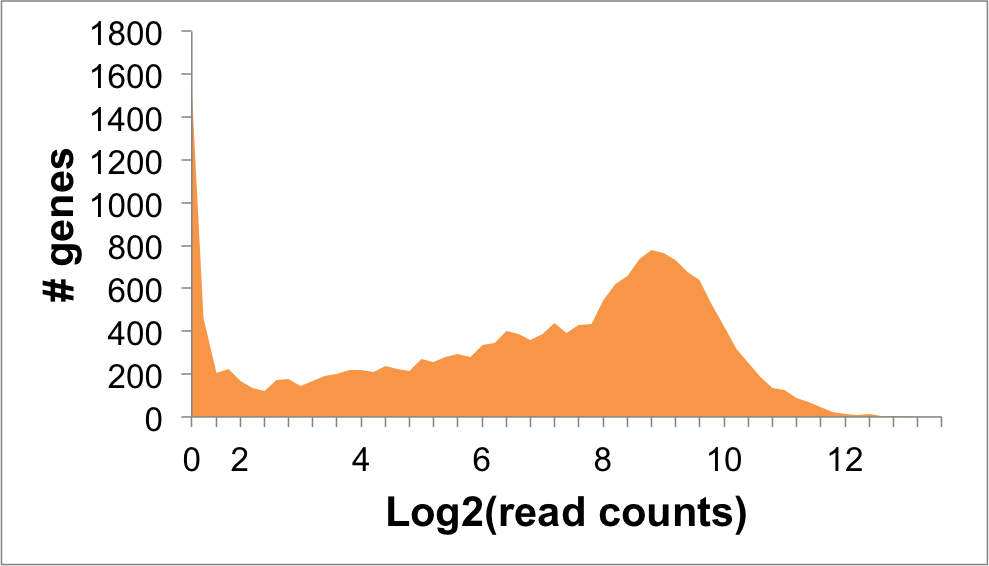
- Expression level (log2 read counts): -6.6
Expression Distribution
SFRP1 Expression in NALM6 Cells: -6.6