TBX1
Gene Information
- Official Symbol: TBX1
- Official Name: T-box transcription factor 1
- Aliases and Previous Symbols: N/A
- Entrez ID: 6899
- UniProt: O43435
- Interactions: BioGRID
- PubMed articles: Open PubMed
- OMIM: Open OMIM
Function Summary
- Entrez Summary: This gene is a member of a phylogenetically conserved family of genes that share a common DNA-binding domain, the T-box. T-box genes encode transcription factors involved in the regulation of developmental processes. This gene product shares 98% amino acid sequence identity with the mouse ortholog. DiGeorge syndrome (DGS)/velocardiofacial syndrome (VCFS), a common congenital disorder characterized by neural-crest-related developmental defects, has been associated with deletions of chromosome 22q11.2, where this gene has been mapped. Studies using mouse models of DiGeorge syndrome suggest a major role for this gene in the molecular etiology of DGS/VCFS. Several alternatively spliced transcript variants encoding different isoforms have been described for this gene. [provided by RefSeq, Jul 2008].
- UniProt Summary: Probable transcriptional regulator involved in developmental processes. Is required for normal development of the pharyngeal arch arteries (By similarity). {ECO:0000250}.
Pfam Domains GO Terms
Pfam Domains
| T-box |
GO Terms
| positive regulation of tongue muscle cell differentiation |
| regulation of tongue muscle cell differentiation |
| mesenchymal cell apoptotic process |
| vagus nerve morphogenesis |
| positive regulation of skeletal muscle fiber differentiation |
| vagus nerve development |
| regulation of skeletal muscle fiber differentiation |
| soft palate development |
| positive regulation of skeletal muscle cell differentiation |
| parathyroid gland development |
| semicircular canal morphogenesis |
| tongue morphogenesis |
| coronary artery morphogenesis |
| outer ear morphogenesis |
| semicircular canal development |
| embryonic viscerocranium morphogenesis |
| negative regulation of mesenchymal cell apoptotic process |
| enamel mineralization |
| regulation of mesenchymal cell apoptotic process |
| muscle cell fate commitment |
| tooth mineralization |
| retinoic acid receptor signaling pathway |
| coronary vasculature morphogenesis |
| preganglionic parasympathetic fiber development |
| regulation of skeletal muscle cell differentiation |
| parasympathetic nervous system development |
| middle ear morphogenesis |
| tongue development |
| amelogenesis |
| thyroid gland development |
| lymph vessel development |
| cochlea morphogenesis |
| secondary palate development |
| positive regulation of skeletal muscle tissue development |
| positive regulation of mesenchymal cell proliferation |
| pharyngeal system development |
| aorta morphogenesis |
| outflow tract septum morphogenesis |
| cranial nerve morphogenesis |
| positive regulation of myotube differentiation |
| face morphogenesis |
| regulation of mesenchymal cell proliferation |
| head morphogenesis |
| thymus development |
| autonomic nervous system development |
| embryonic cranial skeleton morphogenesis |
| body morphogenesis |
| coronary vasculature development |
| face development |
| regulation of skeletal muscle tissue development |
| cranial nerve development |
| aorta development |
| cochlea development |
| social behavior |
| intraspecies interaction between organisms |
| RNA polymerase II activating transcription factor binding |
| neural crest cell migration |
| regulation of myotube differentiation |
| positive regulation of striated muscle cell differentiation |
| heart looping |
| artery morphogenesis |
| embryonic heart tube morphogenesis |
| cranial skeletal system development |
| determination of heart left/right asymmetry |
| multi-organism behavior |
| positive regulation of muscle organ development |
| cellular response to retinoic acid |
| positive regulation of striated muscle tissue development |
| positive regulation of muscle tissue development |
| outflow tract morphogenesis |
| cardiac septum morphogenesis |
| embryonic heart tube development |
| neural crest cell development |
| nerve development |
| muscle tissue morphogenesis |
| odontogenesis of dentin-containing tooth |
| stem cell development |
| mesenchymal cell development |
| artery development |
| muscle organ morphogenesis |
| positive regulation of muscle cell differentiation |
| cell fate specification |
| neural crest cell differentiation |
| roof of mouth development |
| biomineralization |
| biomineral tissue development |
| embryonic skeletal system morphogenesis |
| inner ear morphogenesis |
| regulation of striated muscle cell differentiation |
| cellular response to fibroblast growth factor stimulus |
| response to retinoic acid |
| cardiac septum development |
| response to fibroblast growth factor |
| determination of left/right symmetry |
| ear morphogenesis |
| odontogenesis |
| endocrine system development |
| determination of bilateral symmetry |
| specification of symmetry |
| mesoderm development |
| embryonic skeletal system development |
| cardiac chamber morphogenesis |
| regulation of striated muscle tissue development |
| regulation of muscle tissue development |
| regulation of muscle organ development |
| sensory perception of sound |
| regulation of muscle cell differentiation |
| mesenchymal cell differentiation |
| stem cell differentiation |
| intracellular receptor signaling pathway |
| sensory perception of mechanical stimulus |
| cardiac chamber development |
| ameboidal-type cell migration |
| positive regulation of epithelial cell proliferation |
| inner ear development |
| cellular response to acid chemical |
| anterior/posterior pattern specification |
| ear development |
| mesenchyme development |
| skeletal system morphogenesis |
| muscle cell differentiation |
| cell fate commitment |
| heart morphogenesis |
| sensory organ morphogenesis |
| regulation of animal organ morphogenesis |
| embryonic organ morphogenesis |
| muscle organ development |
| epithelial tube morphogenesis |
| RNA polymerase II regulatory region sequence-specific DNA binding |
| angiogenesis |
| regionalization |
| regulation of epithelial cell proliferation |
| response to acid chemical |
| blood vessel morphogenesis |
| gland development |
| sequence-specific DNA binding |
| morphogenesis of an epithelium |
| embryonic organ development |
| pattern specification process |
| DNA-binding transcription activator activity, RNA polymerase II-specific |
| muscle structure development |
| blood vessel development |
| skeletal system development |
| cellular response to growth factor stimulus |
| vasculature development |
| cardiovascular system development |
| cellular response to lipid |
| heart development |
| response to growth factor |
| positive regulation of MAPK cascade |
| sensory organ development |
| cell population proliferation |
| tissue morphogenesis |
| embryonic morphogenesis |
| behavior |
| hematopoietic or lymphoid organ development |
| chordate embryonic development |
| immune system development |
| embryo development ending in birth or egg hatching |
| tube morphogenesis |
| DNA-binding transcription factor activity |
| epithelial cell differentiation |
| negative regulation of cell differentiation |
| regulation of MAPK cascade |
| head development |
| tube development |
| response to lipid |
| negative regulation of transcription by RNA polymerase II |
| circulatory system development |
| protein homodimerization activity |
| negative regulation of apoptotic process |
| anatomical structure formation involved in morphogenesis |
| negative regulation of programmed cell death |
| positive regulation of cell population proliferation |
| apoptotic process |
| negative regulation of developmental process |
| animal organ morphogenesis |
| cell migration |
| positive regulation of cell differentiation |
| sensory perception |
| embryo development |
| central nervous system development |
| negative regulation of cell death |
| positive regulation of protein phosphorylation |
| positive regulation of intracellular signal transduction |
| programmed cell death |
| cellular response to oxygen-containing compound |
| positive regulation of phosphorylation |
| regulation of anatomical structure morphogenesis |
| localization of cell |
| cell motility |
| cell death |
| epithelium development |
| positive regulation of phosphorus metabolic process |
| positive regulation of phosphate metabolic process |
| negative regulation of transcription, DNA-templated |
| positive regulation of transcription by RNA polymerase II |
| cellular response to endogenous stimulus |
| positive regulation of protein modification process |
| negative regulation of nucleic acid-templated transcription |
| negative regulation of RNA biosynthetic process |
| locomotion |
| negative regulation of RNA metabolic process |
| positive regulation of developmental process |
| nervous system process |
| negative regulation of cellular macromolecule biosynthetic process |
| negative regulation of nucleobase-containing compound metabolic process |
| regulation of protein phosphorylation |
| negative regulation of macromolecule biosynthetic process |
| response to endogenous stimulus |
| negative regulation of cellular biosynthetic process |
| positive regulation of transcription, DNA-templated |
| regulation of apoptotic process |
| negative regulation of biosynthetic process |
| movement of cell or subcellular component |
| response to oxygen-containing compound |
| DNA-binding transcription factor activity, RNA polymerase II-specific |
| regulation of programmed cell death |
| regulation of phosphorylation |
| positive regulation of cellular protein metabolic process |
| regulation of cell population proliferation |
| positive regulation of nucleic acid-templated transcription |
| positive regulation of RNA biosynthetic process |
| cell development |
| positive regulation of signal transduction |
| regulation of cell death |
| positive regulation of protein metabolic process |
| negative regulation of gene expression |
| positive regulation of RNA metabolic process |
| positive regulation of multicellular organismal process |
| tissue development |
| regulation of phosphate metabolic process |
| regulation of phosphorus metabolic process |
| regulation of cell differentiation |
| positive regulation of cell communication |
| positive regulation of signaling |
| regulation of intracellular signal transduction |
| regulation of protein modification process |
| positive regulation of nucleobase-containing compound metabolic process |
| positive regulation of macromolecule biosynthetic process |
| system process |
| positive regulation of cellular biosynthetic process |
| positive regulation of gene expression |
| positive regulation of biosynthetic process |
CRISPR Data
Compound Hit Most Correlated Genes in Chemogenomics Tissues where Essential in the Avana Dataset (DepMap 20Q1)
Compound Hit
| Screen | Score |
|---|---|
| Arsenic trioxide 60μM R08 exp449 | 1.76 |
Most Correlated Genes in Chemogenomics
No correlation found to any other genes in chemogenomics.
Tissues where Essential in the Avana Dataset (DepMap 20Q1)
Global Fraction of Cell Lines Where Essential: 0/739
| Tissue | Fraction Of Cell Lines Where Essential |
|---|---|
| 1290807.0 | 0/1 |
| 909776.0 | 0/1 |
| bile duct | 0/28 |
| blood | 0/28 |
| bone | 0/26 |
| breast | 0/33 |
| central nervous system | 0/56 |
| cervix | 0/4 |
| colorectal | 0/17 |
| esophagus | 0/13 |
| fibroblast | 0/1 |
| gastric | 0/16 |
| kidney | 0/21 |
| liver | 0/20 |
| lung | 0/75 |
| lymphocyte | 0/16 |
| ovary | 0/26 |
| pancreas | 0/24 |
| peripheral nervous system | 0/16 |
| plasma cell | 0/15 |
| prostate | 0/1 |
| skin | 0/24 |
| soft tissue | 0/9 |
| thyroid | 0/2 |
| upper aerodigestive | 0/22 |
| urinary tract | 0/29 |
| uterus | 0/5 |
Essentiality in NALM6
- Essentiality Rank: 15143
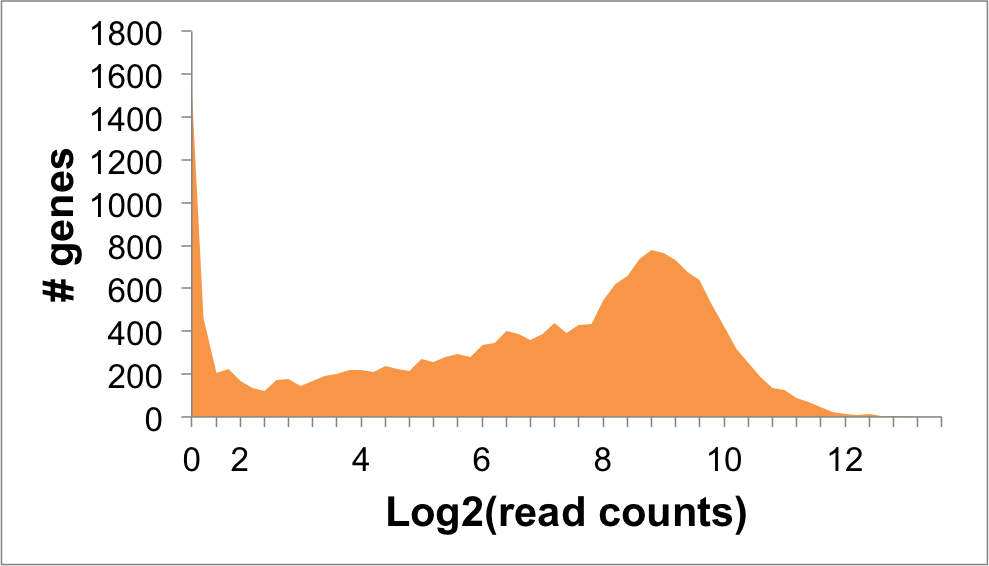
- Expression level (log2 read counts): -0.1
Expression Distribution
TBX1 Expression in NALM6 Cells: -0.1