ADM
Gene Information
- Official Symbol: ADM
- Official Name: adrenomedullin
- Aliases and Previous Symbols: N/A
- Entrez ID: 133
- UniProt: P35318
- Interactions: BioGRID
- PubMed articles: Open PubMed
- OMIM: Open OMIM
Function Summary
- Entrez Summary: N/A
- UniProt Summary: AM and PAMP are potent hypotensive and vasodilatator agents. Numerous actions have been reported most related to the physiologic control of fluid and electrolyte homeostasis. In the kidney, am is diuretic and natriuretic, and both am and pamp inhibit aldosterone secretion by direct adrenal actions. In pituitary gland, both peptides at physiologically relevant doses inhibit basal ACTH secretion. Both peptides appear to act in brain and pituitary gland to facilitate the loss of plasma volume, actions which complement their hypotensive effects in blood vessels.
Pfam Domains GO Terms
Pfam Domains
| Calc CGRP IAPP |
GO Terms
| adrenomedullin receptor binding |
| positive regulation of progesterone biosynthetic process |
| adrenomedullin receptor signaling pathway |
| regulation of progesterone biosynthetic process |
| amylin receptor signaling pathway |
| negative regulation of vasoconstriction |
| calcitonin family receptor signaling pathway |
| vascular smooth muscle cell development |
| positive regulation of vasculogenesis |
| spongiotrophoblast layer development |
| positive regulation of hormone biosynthetic process |
| negative regulation of vascular permeability |
| branching involved in labyrinthine layer morphogenesis |
| G protein-coupled receptor internalization |
| regulation of vasculogenesis |
| vascular smooth muscle cell differentiation |
| positive regulation of hormone metabolic process |
| regulation of ketone biosynthetic process |
| positive regulation of steroid biosynthetic process |
| negative adaptation of signaling pathway |
| desensitization of G protein-coupled receptor signaling pathway |
| adaptation of signaling pathway |
| labyrinthine layer morphogenesis |
| regulation of urine volume |
| positive regulation of heart rate |
| embryonic placenta morphogenesis |
| positive regulation of steroid metabolic process |
| androgen metabolic process |
| regulation of the force of heart contraction |
| regulation of hormone biosynthetic process |
| neuron projection regeneration |
| smooth muscle cell differentiation |
| negative regulation of blood circulation |
| regulation of vascular permeability |
| regulation of hormone metabolic process |
| positive regulation of heart contraction |
| labyrinthine layer development |
| negative regulation of G protein-coupled receptor signaling pathway |
| response to cold |
| regulation of vasoconstriction |
| positive regulation of blood vessel diameter |
| receptor internalization |
| vasculogenesis |
| positive regulation of blood circulation |
| hormone secretion |
| animal organ regeneration |
| positive regulation of lipid biosynthetic process |
| hormone transport |
| odontogenesis of dentin-containing tooth |
| embryonic placenta development |
| regulation of steroid biosynthetic process |
| neural tube closure |
| tube closure |
| regulation of systemic arterial blood pressure |
| regulation of heart rate |
| hormone activity |
| primary neural tube formation |
| receptor metabolic process |
| neural tube formation |
| renal system process |
| regulation of steroid metabolic process |
| odontogenesis |
| cellular hormone metabolic process |
| embryonic epithelial tube formation |
| adenylate cyclase-activating G protein-coupled receptor signaling pathway |
| epithelial tube formation |
| positive regulation of small molecule metabolic process |
| regulation of blood vessel diameter |
| regulation of tube diameter |
| regulation of tube size |
| positive regulation of lipid metabolic process |
| regulation of G protein-coupled receptor signaling pathway |
| response to glucocorticoid |
| morphogenesis of embryonic epithelium |
| cAMP-mediated signaling |
| tube formation |
| muscle cell development |
| placenta development |
| regeneration |
| morphogenesis of a branching epithelium |
| neural tube development |
| response to corticosteroid |
| positive regulation of angiogenesis |
| morphogenesis of a branching structure |
| vascular process in circulatory system |
| signal release |
| regulation of cellular ketone metabolic process |
| cyclic-nucleotide-mediated signaling |
| response to temperature stimulus |
| female pregnancy |
| regulation of blood pressure |
| positive regulation of vasculature development |
| regulation of lipid biosynthetic process |
| response to starvation |
| hormone metabolic process |
| adenylate cyclase-modulating G protein-coupled receptor signaling pathway |
| multi-multicellular organism process |
| response to insulin |
| receptor-mediated endocytosis |
| regulation of heart contraction |
| muscle cell differentiation |
| G protein-coupled receptor signaling pathway, coupled to cyclic nucleotide second messenger |
| steroid metabolic process |
| aging |
| positive regulation of cytosolic calcium ion concentration |
| regulation of angiogenesis |
| regulation of blood circulation |
| epithelial tube morphogenesis |
| response to lipopolysaccharide |
| regulation of vasculature development |
| response to molecule of bacterial origin |
| regulation of cytosolic calcium ion concentration |
| response to steroid hormone |
| signaling receptor binding |
| second-messenger-mediated signaling |
| response to hypoxia |
| response to decreased oxygen levels |
| in utero embryonic development |
| response to oxygen levels |
| developmental growth |
| blood circulation |
| response to peptide hormone |
| growth |
| regulation of lipid metabolic process |
| circulatory system process |
| blood vessel morphogenesis |
| reproductive structure development |
| regulation of small molecule metabolic process |
| reproductive system development |
| morphogenesis of an epithelium |
| embryonic organ development |
| cellular calcium ion homeostasis |
| calcium ion homeostasis |
| cellular divalent inorganic cation homeostasis |
| response to peptide |
| muscle structure development |
| blood vessel development |
| divalent inorganic cation homeostasis |
| regulation of body fluid levels |
| inflammatory response |
| response to nutrient levels |
| vasculature development |
| regulation of anatomical structure size |
| cardiovascular system development |
| heart development |
| response to extracellular stimulus |
| regulation of hormone levels |
| endocytosis |
| cellular metal ion homeostasis |
| tissue morphogenesis |
| embryonic morphogenesis |
| response to wounding |
| regulation of system process |
| metal ion homeostasis |
| cellular cation homeostasis |
| chordate embryonic development |
| positive regulation of apoptotic process |
| cellular ion homeostasis |
| positive regulation of programmed cell death |
| embryo development ending in birth or egg hatching |
| tube morphogenesis |
| neuron projection development |
| developmental process involved in reproduction |
| negative regulation of cell population proliferation |
| import into cell |
| response to bacterium |
| positive regulation of cell death |
| cation homeostasis |
| inorganic ion homeostasis |
| cellular chemical homeostasis |
| ion homeostasis |
| neuron development |
| tube development |
| response to lipid |
| circulatory system development |
| anatomical structure formation involved in morphogenesis |
| cellular homeostasis |
| response to hormone |
| positive regulation of cell population proliferation |
| response to organic cyclic compound |
| animal organ morphogenesis |
| positive regulation of cell differentiation |
| embryo development |
| multi-organism reproductive process |
| response to organonitrogen compound |
| secretion by cell |
| neuron differentiation |
| export from cell |
| regulation of anatomical structure morphogenesis |
| response to nitrogen compound |
| chemical homeostasis |
| epithelium development |
| cell-cell signaling |
| secretion |
| plasma membrane bounded cell projection organization |
| response to abiotic stimulus |
| cell projection organization |
| negative regulation of multicellular organismal process |
| lipid metabolic process |
| negative regulation of signal transduction |
| response to other organism |
| response to external biotic stimulus |
| G protein-coupled receptor signaling pathway |
| response to biotic stimulus |
| defense response |
| negative regulation of cell communication |
| negative regulation of signaling |
| positive regulation of developmental process |
| reproductive process |
| reproduction |
| response to endogenous stimulus |
| generation of neurons |
| regulation of apoptotic process |
| response to oxygen-containing compound |
| regulation of programmed cell death |
| extracellular space |
| regulation of cell population proliferation |
| negative regulation of response to stimulus |
| neurogenesis |
| homeostatic process |
| cell development |
| regulation of cell death |
| intracellular signal transduction |
| cellular response to stress |
| positive regulation of multicellular organismal process |
| tissue development |
| regulation of cell differentiation |
| extracellular region |
| vesicle-mediated transport |
| system process |
| positive regulation of cellular biosynthetic process |
| positive regulation of biosynthetic process |
CRISPR Data
Compound Hit Most Correlated Genes in Chemogenomics Tissues where Essential in the Avana Dataset (DepMap 20Q1)
Compound Hit
| Screen | Score |
|---|---|
| Q15 2.7μM R02 exp79 | 1.87 |
Most Correlated Genes in Chemogenomics
No correlation found to any other genes in chemogenomics.
Tissues where Essential in the Avana Dataset (DepMap 20Q1)
Global Fraction of Cell Lines Where Essential: 0/739
| Tissue | Fraction Of Cell Lines Where Essential |
|---|---|
| 1290807.0 | 0/1 |
| 909776.0 | 0/1 |
| bile duct | 0/28 |
| blood | 0/28 |
| bone | 0/26 |
| breast | 0/33 |
| central nervous system | 0/56 |
| cervix | 0/4 |
| colorectal | 0/17 |
| esophagus | 0/13 |
| fibroblast | 0/1 |
| gastric | 0/16 |
| kidney | 0/21 |
| liver | 0/20 |
| lung | 0/75 |
| lymphocyte | 0/16 |
| ovary | 0/26 |
| pancreas | 0/24 |
| peripheral nervous system | 0/16 |
| plasma cell | 0/15 |
| prostate | 0/1 |
| skin | 0/24 |
| soft tissue | 0/9 |
| thyroid | 0/2 |
| upper aerodigestive | 0/22 |
| urinary tract | 0/29 |
| uterus | 0/5 |
Essentiality in NALM6
- Essentiality Rank: 11806
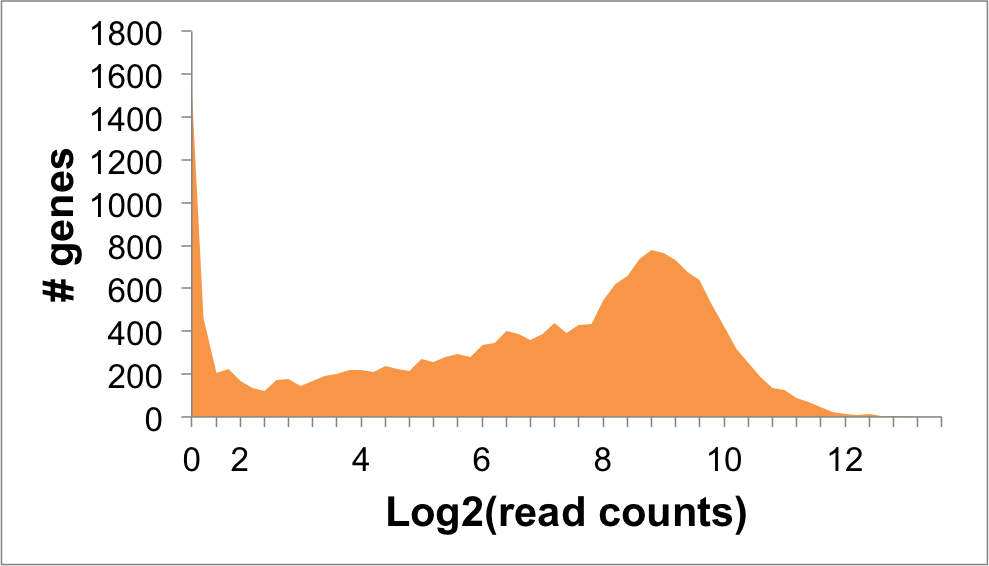
- Expression level (log2 read counts): -5.6
Expression Distribution
ADM Expression in NALM6 Cells: -5.6