ANXA1
Gene Information
- Official Symbol: ANXA1
- Official Name: annexin A1
- Aliases and Previous Symbols: N/A
- Entrez ID: 301
- UniProt: P04083
- Interactions: BioGRID
- PubMed articles: Open PubMed
- OMIM: Open OMIM
Function Summary
- Entrez Summary: N/A
- UniProt Summary: Plays important roles in the innate immune response as effector of glucocorticoid-mediated responses and regulator of the inflammatory process. Has anti-inflammatory activity (PubMed:8425544). Plays a role in glucocorticoid-mediated down- regulation of the early phase of the inflammatory response (By similarity). Promotes resolution of inflammation and wound healing (PubMed:25664854). Functions at least in part by activating the formyl peptide receptors and downstream signaling cascades (PubMed:15187149, PubMed:25664854). Promotes chemotaxis of granulocytes and monocytes via activation of the formyl peptide receptors (PubMed:15187149). Contributes to the adaptive immune response by enhancing signaling cascades that are triggered by T- cell activation, regulates differentiation and proliferation of activated T-cells (PubMed:17008549). Promotes the differentiation of T-cells into Th1 cells and negatively regulates differentiation into Th2 cells (PubMed:17008549). Has no effect on unstimulated T cells (PubMed:17008549). Promotes rearrangement of the actin cytoskeleton, cell polarization and cell migration (PubMed:15187149). Negatively regulates hormone exocytosis via activation of the formyl peptide receptors and reorganization of the actin cytoskeleton (PubMed:19625660). Has high affinity for Ca(2+) and can bind up to eight Ca(2+) ions (By similarity). Displays Ca(2+)-dependent binding to phospholipid membranes (PubMed:2532504, PubMed:8557678). Plays a role in the formation of phagocytic cups and phagosomes. Plays a role in phagocytosis by mediating the Ca(2+)-dependent interaction between phagosomes and the actin cytoskeleton (By similarity). {ECO:0000250|UniProtKB:P10107, ECO:0000250|UniProtKB:P19619, ECO:0000269|PubMed:15187149, ECO:0000269|PubMed:17008549, ECO:0000269|PubMed:19625660, ECO:0000269|PubMed:2532504, ECO:0000269|PubMed:25664854, ECO:0000269|PubMed:2936963, ECO:0000269|PubMed:8425544, ECO:0000269|PubMed:8557678}.
Pfam Domains GO Terms
Pfam Domains
| Annexin |
GO Terms
| DNA/DNA annealing activity |
| prolactin secretion |
| positive regulation of neutrophil apoptotic process |
| myoblast migration involved in skeletal muscle regeneration |
| negative regulation of phospholipase A2 activity |
| negative regulation of T-helper 2 cell differentiation |
| phospholipase A2 inhibitor activity |
| neutrophil clearance |
| positive regulation of T-helper 1 cell differentiation |
| positive regulation of prostaglandin biosynthetic process |
| regulation of neutrophil apoptotic process |
| negative regulation of interleukin-8 secretion |
| positive regulation of myeloid cell apoptotic process |
| extrinsic component of endosome membrane |
| extrinsic component of external side of plasma membrane |
| negative regulation of phospholipase activity |
| positive regulation of unsaturated fatty acid biosynthetic process |
| regulation of prostaglandin biosynthetic process |
| regulation of T-helper 1 cell differentiation |
| positive regulation of vesicle fusion |
| regulation of T-helper 2 cell differentiation |
| regulation of unsaturated fatty acid biosynthetic process |
| neutrophil homeostasis |
| regulation of phospholipase A2 activity |
| myoblast migration |
| hepatocyte differentiation |
| negative regulation of type 2 immune response |
| negative regulation of T-helper cell differentiation |
| negative regulation of lipase activity |
| estrous cycle |
| negative regulation of interleukin-8 production |
| positive regulation of fatty acid biosynthetic process |
| cadherin binding involved in cell-cell adhesion |
| positive regulation of T-helper 1 type immune response |
| negative regulation of CD4-positive, alpha-beta T cell differentiation |
| positive regulation of cell migration involved in sprouting angiogenesis |
| positive regulation of T-helper cell differentiation |
| mast cell granule |
| muscle cell migration |
| arachidonate transport |
| arachidonic acid secretion |
| negative regulation of alpha-beta T cell differentiation |
| regulation of interleukin-8 secretion |
| synaptic membrane |
| icosanoid secretion |
| phagocytic cup |
| regulation of T-helper 1 type immune response |
| positive regulation of leukocyte apoptotic process |
| positive regulation of CD4-positive, alpha-beta T cell differentiation |
| response to X-ray |
| regulation of myeloid cell apoptotic process |
| negative regulation of CD4-positive, alpha-beta T cell activation |
| regulation of type 2 immune response |
| positive regulation of interleukin-2 production |
| icosanoid transport |
| fatty acid derivative transport |
| regulation of vesicle fusion |
| positive regulation of fatty acid metabolic process |
| positive regulation of CD4-positive, alpha-beta T cell activation |
| negative regulation of exocytosis |
| regulation of T-helper cell differentiation |
| skeletal muscle tissue regeneration |
| positive regulation of G1/S transition of mitotic cell cycle |
| regulation of cell migration involved in sprouting angiogenesis |
| negative regulation of alpha-beta T cell activation |
| endocrine pancreas development |
| insulin secretion |
| positive regulation of sprouting angiogenesis |
| cellular response to vascular endothelial growth factor stimulus |
| prostate gland development |
| negative regulation of T cell differentiation |
| monocyte chemotaxis |
| regulation of fatty acid biosynthetic process |
| regulation of CD4-positive, alpha-beta T cell differentiation |
| positive regulation of alpha-beta T cell differentiation |
| positive regulation of cell cycle G1/S phase transition |
| single-stranded RNA binding |
| mononuclear cell migration |
| alpha-beta T cell differentiation |
| negative regulation of lymphocyte differentiation |
| regulation of interleukin-2 production |
| positive regulation of wound healing |
| positive regulation of blood vessel endothelial cell migration |
| cellular response to glucocorticoid stimulus |
| calcium-dependent phospholipid binding |
| lateral plasma membrane |
| peptide hormone secretion |
| long-chain fatty acid transport |
| cellular response to corticosteroid stimulus |
| positive regulation of alpha-beta T cell activation |
| regulation of CD4-positive, alpha-beta T cell activation |
| peptide cross-linking |
| alpha-beta T cell activation |
| calcium-dependent protein binding |
| regulation of alpha-beta T cell differentiation |
| tissue regeneration |
| positive regulation of response to wounding |
| extrinsic component of membrane |
| cornified envelope |
| actin cytoskeleton reorganization |
| ovulation cycle |
| negative regulation of cytokine secretion |
| leukocyte homeostasis |
| regulation of sprouting angiogenesis |
| regulation of interleukin-8 production |
| cellular response to hydrogen peroxide |
| regulation of phospholipase activity |
| pancreas development |
| hormone secretion |
| fatty acid transport |
| positive regulation of mitotic cell cycle phase transition |
| protein binding, bridging |
| positive regulation of lipid biosynthetic process |
| acid secretion |
| actin filament |
| hormone transport |
| regulation of leukocyte apoptotic process |
| positive regulation of T cell differentiation |
| regulation of fatty acid metabolic process |
| granulocyte chemotaxis |
| regulation of blood vessel endothelial cell migration |
| regulation of alpha-beta T cell activation |
| positive regulation of lymphocyte differentiation |
| positive regulation of cell cycle phase transition |
| positive regulation of T cell proliferation |
| regulation of interleukin-1 production |
| regulation of lipase activity |
| positive regulation of endothelial cell migration |
| sarcolemma |
| granulocyte migration |
| negative regulation of leukocyte differentiation |
| positive regulation of adaptive immune response based on somatic recombination of immune receptors built from immunoglobulin superfamily domains |
| tissue remodeling |
| motile cilium |
| mitochondrial membrane |
| positive regulation of adaptive immune response |
| cell-cell adherens junction |
| phospholipid binding |
| myeloid cell homeostasis |
| single-stranded DNA binding |
| DNA duplex unwinding |
| negative regulation of T cell activation |
| cellular response to antibiotic |
| response to hydrogen peroxide |
| DNA geometric change |
| negative regulation of immune effector process |
| endocrine system development |
| negative regulation of leukocyte cell-cell adhesion |
| liver development |
| myeloid leukocyte migration |
| hepaticobiliary system development |
| positive regulation of lymphocyte proliferation |
| cellular response to reactive oxygen species |
| positive regulation of mononuclear cell proliferation |
| negative regulation of protein secretion |
| T cell differentiation |
| response to estradiol |
| monocarboxylic acid transport |
| negative regulation of hemopoiesis |
| positive regulation of leukocyte proliferation |
| positive regulation of small molecule metabolic process |
| regulation of wound healing |
| regulation of T cell differentiation |
| negative regulation of peptide secretion |
| positive regulation of epithelial cell migration |
| positive regulation of lipid metabolic process |
| vesicle |
| cytoplasmic vesicle membrane |
| response to glucocorticoid |
| regulation of adaptive immune response based on somatic recombination of immune receptors built from immunoglobulin superfamily domains |
| leukocyte chemotaxis |
| negative regulation of lymphocyte activation |
| positive regulation of leukocyte differentiation |
| negative regulation of immune response |
| response to ionizing radiation |
| regulation of G1/S transition of mitotic cell cycle |
| positive regulation of mitotic cell cycle |
| regulation of cell shape |
| early endosome membrane |
| regeneration |
| regulation of T cell proliferation |
| regulation of endothelial cell migration |
| protein secretion |
| establishment of protein localization to extracellular region |
| regulation of adaptive immune response |
| response to corticosteroid |
| positive regulation of angiogenesis |
| regulation of cell cycle G1/S phase transition |
| protein localization to extracellular region |
| regulation of response to wounding |
| regulation of lymphocyte differentiation |
| signal release |
| regulation of cellular ketone metabolic process |
| peptide secretion |
| negative regulation of cell-cell adhesion |
| negative regulation of leukocyte activation |
| negative regulation of protein transport |
| positive regulation of vasculature development |
| negative regulation of establishment of protein localization |
| regulation of lipid biosynthetic process |
| positive regulation of hemopoiesis |
| cellular response to steroid hormone stimulus |
| structural molecule activity |
| response to reactive oxygen species |
| regulation of leukocyte migration |
| negative regulation of cell activation |
| basolateral plasma membrane |
| response to interleukin-1 |
| homeostasis of number of cells |
| positive regulation of T cell activation |
| negative regulation of secretion by cell |
| regulation of cytokine secretion |
| regulation of lymphocyte proliferation |
| regulation of mononuclear cell proliferation |
| cell chemotaxis |
| cellular response to toxic substance |
| gliogenesis |
| positive regulation of leukocyte cell-cell adhesion |
| positive regulation of immune effector process |
| regulation of epithelial cell migration |
| regulation of leukocyte proliferation |
| regulation of exocytosis |
| negative regulation of secretion |
| T cell activation |
| lymphocyte differentiation |
| cellular response to oxidative stress |
| G protein-coupled receptor signaling pathway, coupled to cyclic nucleotide second messenger |
| positive regulation of cell-cell adhesion |
| regulation of hormone secretion |
| endosome |
| negative regulation of cell adhesion |
| regulation of leukocyte differentiation |
| negative regulation of cytokine production |
| keratinocyte differentiation |
| rhythmic process |
| positive regulation of cell cycle process |
| regulation of angiogenesis |
| organic acid transport |
| carboxylic acid transport |
| regulation of leukocyte cell-cell adhesion |
| DNA conformation change |
| lipid transport |
| response to antibiotic |
| epidermal cell differentiation |
| regulation of T cell activation |
| apical plasma membrane |
| urogenital system development |
| lipid localization |
| regulation of vasculature development |
| response to steroid hormone |
| phagocytosis |
| leukocyte differentiation |
| signaling receptor binding |
| regulation of inflammatory response |
| positive regulation of lymphocyte activation |
| collagen-containing extracellular matrix |
| positive regulation of cell cycle |
| leukocyte migration |
| lymphocyte activation |
| skin development |
| response to oxidative stress |
| developmental growth |
| response to peptide hormone |
| growth |
| regulation of lipid metabolic process |
| regulation of cell-cell adhesion |
| positive regulation of cell adhesion |
| cellular response to drug |
| positive regulation of leukocyte activation |
| gland development |
| regulation of mitotic cell cycle phase transition |
| epidermis development |
| focal adhesion |
| positive regulation of cell activation |
| reproductive structure development |
| regulation of small molecule metabolic process |
| reproductive system development |
| response to radiation |
| negative regulation of immune system process |
| regulation of cell cycle phase transition |
| positive regulation of cytokine production |
| regulation of hemopoiesis |
| negative regulation of hydrolase activity |
| organic anion transport |
| regulation of protein secretion |
| regulation of immune effector process |
| response to peptide |
| wound healing |
| negative regulation of transport |
| regulation of cell morphogenesis |
| regulation of peptide secretion |
| actin cytoskeleton organization |
| inflammatory response |
| cellular response to growth factor stimulus |
| positive regulation of cell migration |
| cell-cell adhesion |
| response to toxic substance |
| regulation of lymphocyte activation |
| cellular response to lipid |
| positive regulation of cell motility |
| response to growth factor |
| regulation of hormone levels |
| response to inorganic substance |
| positive regulation of cellular component movement |
| cellular response to organic cyclic compound |
| chemotaxis |
| regulation of vesicle-mediated transport |
| positive regulation of locomotion |
| taxis |
| hemopoiesis |
| actin filament-based process |
| response to wounding |
| anion transport |
| protein-containing complex |
| regulation of leukocyte activation |
| cellular response to hormone stimulus |
| hematopoietic or lymphoid organ development |
| adaptive immune response |
| cell surface |
| positive regulation of organelle organization |
| regulation of mitotic cell cycle |
| regulation of cell activation |
| positive regulation of apoptotic process |
| immune system development |
| positive regulation of programmed cell death |
| developmental process involved in reproduction |
| cytokine-mediated signaling pathway |
| epithelial cell differentiation |
| regulation of cell adhesion |
| regulation of cytokine production |
| positive regulation of cell death |
| regulation of protein transport |
| negative regulation of cell differentiation |
| calcium ion binding |
| regulation of peptide transport |
| regulation of establishment of protein localization |
| regulation of secretion by cell |
| regulation of cell cycle process |
| regulation of defense response |
| innate immune response |
| negative regulation of catalytic activity |
| regulation of secretion |
| multicellular organismal reproductive process |
| multicellular organism reproduction |
| regulation of cell migration |
| response to lipid |
| positive regulation of immune response |
| protein homodimerization activity |
| negative regulation of apoptotic process |
| negative regulation of programmed cell death |
| response to hormone |
| regulation of cell motility |
| positive regulation of cell population proliferation |
| response to organic cyclic compound |
| leukocyte activation |
| cell adhesion |
| biological adhesion |
| negative regulation of developmental process |
| defense response to other organism |
| cell migration |
| positive regulation of cell differentiation |
| regulation of locomotion |
| positive regulation of transport |
| negative regulation of cell death |
| regulation of cellular component movement |
| response to organonitrogen compound |
| secretion by cell |
| cellular response to cytokine stimulus |
| response to drug |
| regulation of protein localization |
| export from cell |
| cellular response to oxygen-containing compound |
| regulation of anatomical structure morphogenesis |
| chromosome organization |
| cell activation |
| cell motility |
| localization of cell |
| response to nitrogen compound |
| regulation of response to external stimulus |
| response to cytokine |
| cytoskeleton organization |
| epithelium development |
| cell-cell signaling |
| secretion |
| negative regulation of molecular function |
| positive regulation of immune system process |
| regulation of immune response |
| response to abiotic stimulus |
| regulation of cell cycle |
| negative regulation of multicellular organismal process |
| positive regulation of cellular component organization |
| cellular response to endogenous stimulus |
| regulation of hydrolase activity |
| regulation of organelle organization |
| response to other organism |
| response to external biotic stimulus |
| locomotion |
| G protein-coupled receptor signaling pathway |
| response to biotic stimulus |
| defense response |
| positive regulation of developmental process |
| ion transport |
| reproductive process |
| reproduction |
| response to endogenous stimulus |
| regulation of response to stress |
| protein transport |
| peptide transport |
| regulation of apoptotic process |
| movement of cell or subcellular component |
| response to oxygen-containing compound |
| regulation of programmed cell death |
| amide transport |
| extracellular space |
| establishment of protein localization |
| regulation of cell population proliferation |
| negative regulation of response to stimulus |
| neurogenesis |
| homeostatic process |
| regulation of immune system process |
| regulation of cell death |
| cellular response to stress |
| positive regulation of multicellular organismal process |
| tissue development |
| regulation of cell differentiation |
| nitrogen compound transport |
| regulation of transport |
| immune response |
| extracellular region |
| vesicle-mediated transport |
| positive regulation of cellular biosynthetic process |
| positive regulation of biosynthetic process |
CRISPR Data
Compound Hit Most Correlated Genes in Chemogenomics Tissues where Essential in the Avana Dataset (DepMap 20Q1)
Compound Hit
No hits were found.
Most Correlated Genes in Chemogenomics
No correlation found to any other genes in chemogenomics.
Tissues where Essential in the Avana Dataset (DepMap 20Q1)
Global Fraction of Cell Lines Where Essential: 0/739
| Tissue | Fraction Of Cell Lines Where Essential |
|---|---|
| 1290807.0 | 0/1 |
| 909776.0 | 0/1 |
| bile duct | 0/28 |
| blood | 0/28 |
| bone | 0/26 |
| breast | 0/33 |
| central nervous system | 0/56 |
| cervix | 0/4 |
| colorectal | 0/17 |
| esophagus | 0/13 |
| fibroblast | 0/1 |
| gastric | 0/16 |
| kidney | 0/21 |
| liver | 0/20 |
| lung | 0/75 |
| lymphocyte | 0/16 |
| ovary | 0/26 |
| pancreas | 0/24 |
| peripheral nervous system | 0/16 |
| plasma cell | 0/15 |
| prostate | 0/1 |
| skin | 0/24 |
| soft tissue | 0/9 |
| thyroid | 0/2 |
| upper aerodigestive | 0/22 |
| urinary tract | 0/29 |
| uterus | 0/5 |
Essentiality in NALM6
- Essentiality Rank: 12863
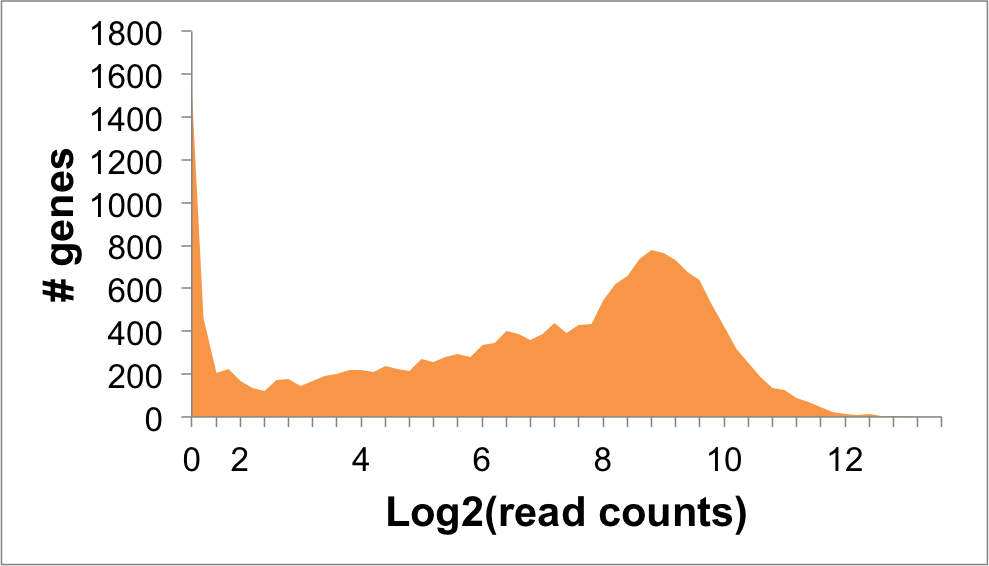
- Expression level (log2 read counts): -1.65
Expression Distribution
ANXA1 Expression in NALM6 Cells: -1.65