B2M
Gene Information
- Official Symbol: B2M
- Official Name: beta-2-microglobulin
- Aliases and Previous Symbols: N/A
- Entrez ID: 567
- UniProt: P61769
- Interactions: BioGRID
- PubMed articles: Open PubMed
- OMIM: Open OMIM
Function Summary
- Entrez Summary: This gene encodes a serum protein found in association with the major histocompatibility complex (MHC) class I heavy chain on the surface of nearly all nucleated cells. The protein has a predominantly beta-pleated sheet structure that can form amyloid fibrils in some pathological conditions. The encoded antimicrobial protein displays antibacterial activity in amniotic fluid. A mutation in this gene has been shown to result in hypercatabolic hypoproteinemia.[provided by RefSeq, Aug 2014].
- UniProt Summary: Component of the class I major histocompatibility complex (MHC). Involved in the presentation of peptide antigens to the immune system. Exogenously applied M.tuberculosis EsxA or EsxA-EsxB (or EsxA expressed in host) binds B2M and decreases its export to the cell surface (total protein levels do not change), probably leading to defects in class I antigen presentation (PubMed:25356553). {ECO:0000269|PubMed:25356553}.
Pfam Domains GO Terms
Pfam Domains
| C1-set |
GO Terms
| antigen processing and presentation of exogenous protein antigen via MHC class Ib, TAP-dependent |
| cellular response to iron(III) ion |
| regulation of transferrin receptor binding |
| positive regulation of ferrous iron binding |
| regulation of ferrous iron binding |
| positive regulation of transferrin receptor binding |
| antigen processing and presentation of exogenous peptide antigen via MHC class Ib |
| negative regulation of forebrain neuron differentiation |
| early endosome lumen |
| regulation of forebrain neuron differentiation |
| response to iron(III) ion |
| MHC class I peptide loading complex |
| regulation of iron ion transport |
| HFE-transferrin receptor complex |
| cellular response to nicotine |
| antigen processing and presentation of peptide antigen via MHC class Ib |
| modulation of age-related behavioral decline |
| antigen processing and presentation of exogenous peptide antigen via MHC class I, TAP-independent |
| amyloid fibril formation |
| positive regulation of receptor binding |
| cellular response to iron ion |
| MHC class I protein complex |
| negative regulation of receptor binding |
| positive regulation of cellular senescence |
| antigen processing and presentation of endogenous peptide antigen via MHC class I |
| antigen processing and presentation of endogenous peptide antigen |
| positive regulation of cell aging |
| antigen processing and presentation via MHC class Ib |
| positive regulation of T cell cytokine production |
| antigen processing and presentation of endogenous antigen |
| regulation of receptor binding |
| positive regulation of T cell mediated cytotoxicity |
| regulation of defense response to virus by virus |
| regulation of T cell cytokine production |
| response to iron ion |
| regulation of T cell mediated cytotoxicity |
| protein refolding |
| regulation of cellular senescence |
| regulation of erythrocyte differentiation |
| T cell differentiation in thymus |
| positive regulation of T cell mediated immunity |
| regulation of cell aging |
| response to nicotine |
| positive regulation of receptor-mediated endocytosis |
| ER to Golgi transport vesicle membrane |
| positive regulation of cytokine production involved in immune response |
| tertiary granule lumen |
| positive regulation of leukocyte mediated cytotoxicity |
| specific granule lumen |
| response to cadmium ion |
| positive regulation of cell killing |
| regulation of T cell mediated immunity |
| iron ion transport |
| interferon-gamma-mediated signaling pathway |
| phagocytic vesicle membrane |
| retina homeostasis |
| antigen processing and presentation of exogenous peptide antigen via MHC class I, TAP-dependent |
| regulation of leukocyte mediated cytotoxicity |
| antigen processing and presentation of exogenous peptide antigen via MHC class I |
| iron ion homeostasis |
| recycling endosome membrane |
| regulation of cytokine production involved in immune response |
| protein homotetramerization |
| positive regulation of protein binding |
| positive regulation of production of molecular mediator of immune response |
| antigen processing and presentation of peptide antigen via MHC class I |
| regulation of receptor-mediated endocytosis |
| positive regulation of adaptive immune response based on somatic recombination of immune receptors built from immunoglobulin superfamily domains |
| positive regulation of endocytosis |
| regulation of cell killing |
| negative regulation of protein binding |
| positive regulation of lymphocyte mediated immunity |
| positive regulation of adaptive immune response |
| transition metal ion transport |
| negative regulation of epithelial cell proliferation |
| transition metal ion homeostasis |
| positive regulation of leukocyte mediated immunity |
| T cell differentiation |
| regulation of production of molecular mediator of immune response |
| regulation of adaptive immune response based on somatic recombination of immune receptors built from immunoglobulin superfamily domains |
| protein tetramerization |
| regulation of lymphocyte mediated immunity |
| early endosome membrane |
| negative regulation of neuron projection development |
| regulation of adaptive immune response |
| cellular response to interferon-gamma |
| negative regulation of binding |
| antigen processing and presentation of exogenous peptide antigen |
| positive regulation of binding |
| negative regulation of cell projection organization |
| response to interferon-gamma |
| antigen processing and presentation of exogenous antigen |
| tissue homeostasis |
| antigen processing and presentation of peptide antigen |
| cellular response to metal ion |
| regulation of leukocyte mediated immunity |
| regulation of endocytosis |
| cellular response to toxic substance |
| antigen processing and presentation |
| positive regulation of immune effector process |
| regulation of protein binding |
| cellular response to inorganic substance |
| regulation of myeloid cell differentiation |
| negative regulation of neuron differentiation |
| protein folding |
| T cell activation |
| lymphocyte differentiation |
| learning or memory |
| aging |
| negative regulation of neurogenesis |
| cognition |
| endoplasmic reticulum lumen |
| negative regulation of nervous system development |
| multicellular organismal homeostasis |
| response to molecule of bacterial origin |
| leukocyte differentiation |
| negative regulation of cell development |
| regulation of epithelial cell proliferation |
| protein homooligomerization |
| anatomical structure homeostasis |
| response to metal ion |
| regulation of binding |
| lymphocyte activation |
| regulation of metal ion transport |
| external side of plasma membrane |
| cellular response to drug |
| focal adhesion |
| positive regulation of cytokine production |
| regulation of hemopoiesis |
| supramolecular fiber organization |
| regulation of immune effector process |
| neutrophil degranulation |
| neutrophil activation involved in immune response |
| regulation of neuron projection development |
| neutrophil mediated immunity |
| neutrophil activation |
| granulocyte activation |
| response to toxic substance |
| leukocyte degranulation |
| myeloid leukocyte mediated immunity |
| protein complex oligomerization |
| myeloid cell activation involved in immune response |
| response to inorganic substance |
| regulation of vesicle-mediated transport |
| hemopoiesis |
| behavior |
| myeloid leukocyte activation |
| hematopoietic or lymphoid organ development |
| Golgi membrane |
| metal ion homeostasis |
| leukocyte activation involved in immune response |
| cell activation involved in immune response |
| metal ion transport |
| immune system development |
| regulation of neuron differentiation |
| cytokine-mediated signaling pathway |
| negative regulation of cell population proliferation |
| response to bacterium |
| regulation of cytokine production |
| regulation of plasma membrane bounded cell projection organization |
| regulation of ion transport |
| viral process |
| regulated exocytosis |
| negative regulation of cellular component organization |
| cation homeostasis |
| regulation of cell projection organization |
| negative regulation of cell differentiation |
| inorganic ion homeostasis |
| regulation of cellular response to stress |
| innate immune response |
| leukocyte mediated immunity |
| symbiotic process |
| ion homeostasis |
| exocytosis |
| regulation of neurogenesis |
| interspecies interaction between organisms |
| cation transport |
| positive regulation of immune response |
| protein homodimerization activity |
| regulation of nervous system development |
| leukocyte activation |
| regulation of cell development |
| negative regulation of developmental process |
| defense response to other organism |
| Golgi apparatus |
| positive regulation of transport |
| secretion by cell |
| cellular response to cytokine stimulus |
| response to drug |
| export from cell |
| identical protein binding |
| cell activation |
| immune effector process |
| response to cytokine |
| chemical homeostasis |
| secretion |
| negative regulation of molecular function |
| regulation of immune response |
| positive regulation of immune system process |
| negative regulation of multicellular organismal process |
| positive regulation of cellular component organization |
| response to other organism |
| response to external biotic stimulus |
| response to biotic stimulus |
| defense response |
| positive regulation of developmental process |
| ion transport |
| nervous system process |
| regulation of response to stress |
| generation of neurons |
| protein-containing complex assembly |
| extracellular space |
| regulation of cell population proliferation |
| neurogenesis |
| homeostatic process |
| regulation of immune system process |
| positive regulation of multicellular organismal process |
| positive regulation of molecular function |
| regulation of cell differentiation |
| protein-containing complex subunit organization |
| regulation of transport |
| immune response |
| extracellular region |
| vesicle-mediated transport |
| system process |
| membrane |
CRISPR Data
Compound Hit Most Correlated Genes in Chemogenomics Tissues where Essential in the Avana Dataset (DepMap 20Q1)
Compound Hit
No hits were found.
Most Correlated Genes in Chemogenomics
No correlation found to any other genes in chemogenomics.
Tissues where Essential in the Avana Dataset (DepMap 20Q1)
Global Fraction of Cell Lines Where Essential: 0/739
| Tissue | Fraction Of Cell Lines Where Essential |
|---|---|
| 1290807.0 | 0/1 |
| 909776.0 | 0/1 |
| bile duct | 0/28 |
| blood | 0/28 |
| bone | 0/26 |
| breast | 0/33 |
| central nervous system | 0/56 |
| cervix | 0/4 |
| colorectal | 0/17 |
| esophagus | 0/13 |
| fibroblast | 0/1 |
| gastric | 0/16 |
| kidney | 0/21 |
| liver | 0/20 |
| lung | 0/75 |
| lymphocyte | 0/16 |
| ovary | 0/26 |
| pancreas | 0/24 |
| peripheral nervous system | 0/16 |
| plasma cell | 0/15 |
| prostate | 0/1 |
| skin | 0/24 |
| soft tissue | 0/9 |
| thyroid | 0/2 |
| upper aerodigestive | 0/22 |
| urinary tract | 0/29 |
| uterus | 0/5 |
Essentiality in NALM6
- Essentiality Rank: 16198
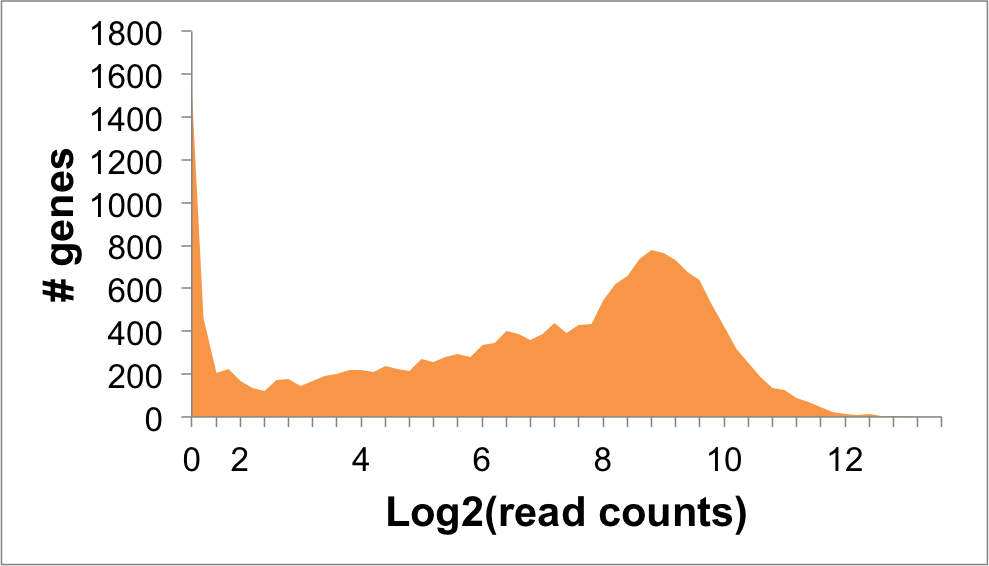
- Expression level (log2 read counts): 9.26
Expression Distribution
B2M Expression in NALM6 Cells: 9.26