BCL3
Gene Information
- Official Symbol: BCL3
- Official Name: BCL3 transcription coactivator
- Aliases and Previous Symbols: N/A
- Entrez ID: 602
- UniProt: P20749
- Interactions: BioGRID
- PubMed articles: Open PubMed
- OMIM: Open OMIM
Function Summary
- Entrez Summary: This gene is a proto-oncogene candidate. It is identified by its translocation into the immunoglobulin alpha-locus in some cases of B-cell leukemia. The protein encoded by this gene contains seven ankyrin repeats, which are most closely related to those found in I kappa B proteins. This protein functions as a transcriptional co-activator that activates through its association with NF-kappa B homodimers. The expression of this gene can be induced by NF-kappa B, which forms a part of the autoregulatory loop that controls the nuclear residence of p50 NF-kappa B. [provided by RefSeq, Jul 2008].
- UniProt Summary: Contributes to the regulation of transcriptional activation of NF-kappa-B target genes. In the cytoplasm, inhibits the nuclear translocation of the NF-kappa-B p50 subunit. In the nucleus, acts as transcriptional activator that promotes transcription of NF-kappa-B target genes. Contributes to the regulation of cell proliferation (By similarity). {ECO:0000250, ECO:0000269|PubMed:8453667}.
Pfam Domains GO Terms
Pfam Domains
| Ank 2 |
| Ank |
GO Terms
| Bcl3-Bcl10 complex |
| Bcl3/NF-kappaB2 complex |
| follicular dendritic cell differentiation |
| T-helper 2 cell differentiation |
| follicular dendritic cell activation |
| negative regulation of interleukin-8 biosynthetic process |
| positive regulation of interleukin-10 biosynthetic process |
| regulation of interleukin-10 biosynthetic process |
| negative regulation of tumor necrosis factor biosynthetic process |
| type 2 immune response |
| germinal center formation |
| marginal zone B cell differentiation |
| regulation of interleukin-8 biosynthetic process |
| response to UV-C |
| negative regulation of interleukin-8 production |
| mature B cell differentiation involved in immune response |
| T-helper 1 type immune response |
| negative regulation of receptor signaling pathway via JAK-STAT |
| negative regulation of receptor signaling pathway via STAT |
| maintenance of protein location in nucleus |
| defense response to protozoan |
| mature B cell differentiation |
| response to protozoan |
| CD4-positive, alpha-beta T cell differentiation involved in immune response |
| T-helper cell differentiation |
| alpha-beta T cell activation involved in immune response |
| alpha-beta T cell differentiation involved in immune response |
| intrinsic apoptotic signaling pathway in response to DNA damage by p53 class mediator |
| regulation of tumor necrosis factor biosynthetic process |
| negative regulation of cytokine biosynthetic process |
| T cell differentiation involved in immune response |
| spleen development |
| CD4-positive, alpha-beta T cell differentiation |
| positive regulation of interleukin-10 production |
| maintenance of protein localization in organelle |
| CD4-positive, alpha-beta T cell activation |
| B cell activation involved in immune response |
| intrinsic apoptotic signaling pathway by p53 class mediator |
| alpha-beta T cell differentiation |
| regulation of interleukin-10 production |
| negative regulation of tumor necrosis factor production |
| negative regulation of tumor necrosis factor superfamily cytokine production |
| alpha-beta T cell activation |
| positive regulation of interferon-gamma production |
| T cell activation involved in immune response |
| positive regulation of cytokine biosynthetic process |
| regulation of interleukin-8 production |
| I-kappaB kinase/NF-kappaB signaling |
| intrinsic apoptotic signaling pathway in response to DNA damage |
| maintenance of protein location in cell |
| DNA damage response, signal transduction by p53 class mediator |
| protein binding, bridging |
| maintenance of location in cell |
| regulation of interferon-gamma production |
| signal transduction in response to DNA damage |
| regulation of cytokine biosynthetic process |
| maintenance of protein location |
| B cell differentiation |
| regulation of NIK/NF-kappaB signaling |
| lymphocyte activation involved in immune response |
| antimicrobial humoral response |
| signal transduction by p53 class mediator |
| positive regulation of translation |
| regulation of DNA binding |
| regulation of receptor signaling pathway via JAK-STAT |
| regulation of receptor signaling pathway via STAT |
| T cell differentiation |
| response to UV |
| intrinsic apoptotic signaling pathway |
| regulation of tumor necrosis factor production |
| positive regulation of cellular amide metabolic process |
| regulation of tumor necrosis factor superfamily cytokine production |
| B cell activation |
| midbody |
| protein localization to nucleus |
| maintenance of location |
| humoral immune response mediated by circulating immunoglobulin |
| immunoglobulin mediated immune response |
| B cell mediated immunity |
| T cell activation |
| lymphocyte differentiation |
| lymphocyte mediated immunity |
| negative regulation of cytokine production |
| adaptive immune response based on somatic recombination of immune receptors built from immunoglobulin superfamily domains |
| response to virus |
| apoptotic signaling pathway |
| response to light stimulus |
| defense response to bacterium |
| leukocyte differentiation |
| transcription factor binding |
| extracellular matrix organization |
| humoral immune response |
| regulation of translation |
| regulation of binding |
| lymphocyte activation |
| extracellular structure organization |
| regulation of cellular amide metabolic process |
| response to radiation |
| positive regulation of cytokine production |
| posttranscriptional regulation of gene expression |
| hemopoiesis |
| protein-containing complex |
| hematopoietic or lymphoid organ development |
| adaptive immune response |
| leukocyte activation involved in immune response |
| cell activation involved in immune response |
| transcription, DNA-templated |
| nucleic acid-templated transcription |
| immune system development |
| RNA biosynthetic process |
| DNA-binding transcription factor activity |
| intracellular membrane-bounded organelle |
| response to bacterium |
| regulation of cytokine production |
| perinuclear region of cytoplasm |
| protein localization to organelle |
| leukocyte mediated immunity |
| cellular response to DNA damage stimulus |
| negative regulation of apoptotic process |
| anatomical structure formation involved in morphogenesis |
| negative regulation of programmed cell death |
| apoptotic process |
| leukocyte activation |
| defense response to other organism |
| negative regulation of cell death |
| programmed cell death |
| cell activation |
| immune effector process |
| cell death |
| nucleobase-containing compound biosynthetic process |
| negative regulation of protein metabolic process |
| response to abiotic stimulus |
| heterocycle biosynthetic process |
| aromatic compound biosynthetic process |
| negative regulation of transcription, DNA-templated |
| negative regulation of multicellular organismal process |
| positive regulation of transcription by RNA polymerase II |
| negative regulation of nucleic acid-templated transcription |
| negative regulation of RNA biosynthetic process |
| negative regulation of signal transduction |
| response to other organism |
| organic cyclic compound biosynthetic process |
| response to external biotic stimulus |
| response to biotic stimulus |
| negative regulation of RNA metabolic process |
| defense response |
| negative regulation of cell communication |
| negative regulation of signaling |
| negative regulation of cellular macromolecule biosynthetic process |
| negative regulation of nucleobase-containing compound metabolic process |
| DNA binding |
| negative regulation of macromolecule biosynthetic process |
| negative regulation of cellular biosynthetic process |
| regulation of apoptotic process |
| positive regulation of transcription, DNA-templated |
| negative regulation of biosynthetic process |
| regulation of programmed cell death |
| cellular protein localization |
| cellular macromolecule localization |
| positive regulation of cellular protein metabolic process |
| negative regulation of response to stimulus |
| cellular nitrogen compound biosynthetic process |
| positive regulation of nucleic acid-templated transcription |
| positive regulation of RNA biosynthetic process |
| RNA metabolic process |
| regulation of cell death |
| intracellular signal transduction |
| cellular response to stress |
| positive regulation of protein metabolic process |
| cellular macromolecule biosynthetic process |
| negative regulation of gene expression |
| positive regulation of RNA metabolic process |
| positive regulation of multicellular organismal process |
| macromolecule biosynthetic process |
| regulation of intracellular signal transduction |
| immune response |
| positive regulation of nucleobase-containing compound metabolic process |
| positive regulation of macromolecule biosynthetic process |
| positive regulation of cellular biosynthetic process |
| positive regulation of gene expression |
| gene expression |
| positive regulation of biosynthetic process |
CRISPR Data
Compound Hit Most Correlated Genes in Chemogenomics Tissues where Essential in the Avana Dataset (DepMap 20Q1)
Compound Hit
| Screen | Score |
|---|---|
| THZ531 0.11 to 0.125μM on day4 R07 exp410 | -1.71 |
Most Correlated Genes in Chemogenomics
No correlation found to any other genes in chemogenomics.
Tissues where Essential in the Avana Dataset (DepMap 20Q1)
Global Fraction of Cell Lines Where Essential: 0/739
| Tissue | Fraction Of Cell Lines Where Essential |
|---|---|
| 1290807.0 | 0/1 |
| 909776.0 | 0/1 |
| bile duct | 0/28 |
| blood | 0/28 |
| bone | 0/26 |
| breast | 0/33 |
| central nervous system | 0/56 |
| cervix | 0/4 |
| colorectal | 0/17 |
| esophagus | 0/13 |
| fibroblast | 0/1 |
| gastric | 0/16 |
| kidney | 0/21 |
| liver | 0/20 |
| lung | 0/75 |
| lymphocyte | 0/16 |
| ovary | 0/26 |
| pancreas | 0/24 |
| peripheral nervous system | 0/16 |
| plasma cell | 0/15 |
| prostate | 0/1 |
| skin | 0/24 |
| soft tissue | 0/9 |
| thyroid | 0/2 |
| upper aerodigestive | 0/22 |
| urinary tract | 0/29 |
| uterus | 0/5 |
Essentiality in NALM6
- Essentiality Rank: 7630
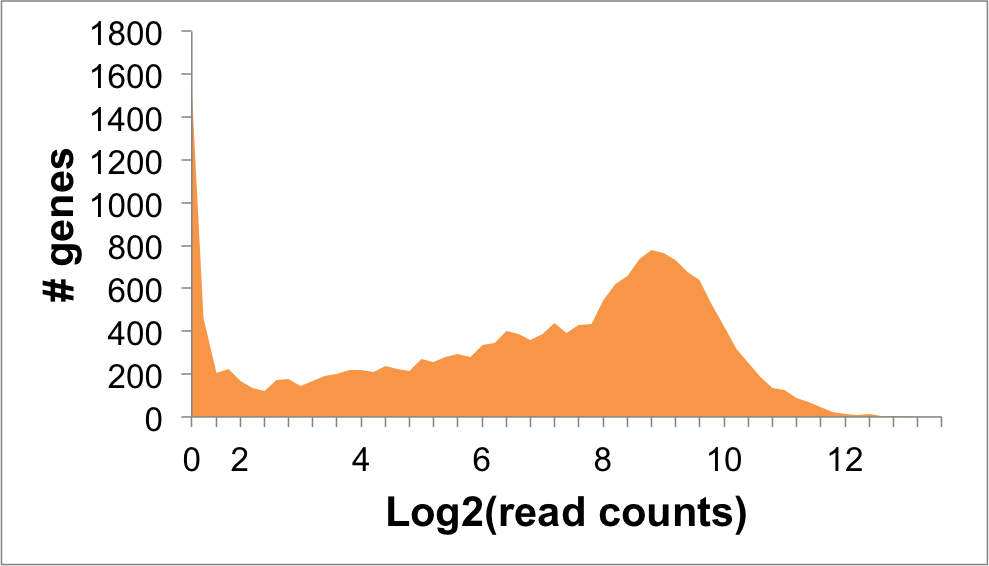
- Expression level (log2 read counts): -0.28
Expression Distribution
BCL3 Expression in NALM6 Cells: -0.28