BIN1
Gene Information
- Official Symbol: BIN1
- Official Name: bridging integrator 1
- Aliases and Previous Symbols: N/A
- Entrez ID: 274
- UniProt: O00499
- Interactions: BioGRID
- PubMed articles: Open PubMed
- OMIM: Open OMIM
Function Summary
- Entrez Summary: This gene encodes several isoforms of a nucleocytoplasmic adaptor protein, one of which was initially identified as a MYC-interacting protein with features of a tumor suppressor. Isoforms that are expressed in the central nervous system may be involved in synaptic vesicle endocytosis and may interact with dynamin, synaptojanin, endophilin, and clathrin. Isoforms that are expressed in muscle and ubiquitously expressed isoforms localize to the cytoplasm and nucleus and activate a caspase-independent apoptotic process. Studies in mouse suggest that this gene plays an important role in cardiac muscle development. Alternate splicing of the gene results in several transcript variants encoding different isoforms. Aberrant splice variants expressed in tumor cell lines have also been described. [provided by RefSeq, Mar 2016].
- UniProt Summary: N/A
Pfam Domains GO Terms
Pfam Domains
| SH3 2 |
| BAR |
| SH3 1 |
GO Terms
| lipid tube |
| negative regulation of ventricular cardiac muscle cell action potential |
| negative regulation of cardiac muscle cell contraction |
| negative regulation of calcium ion transmembrane transport via high voltage-gated calcium channel |
| negative regulation of aspartic-type endopeptidase activity involved in amyloid precursor protein catabolic process |
| negative regulation of aspartic-type peptidase activity |
| lipid tube assembly |
| negative regulation of cardiac muscle contraction |
| negative regulation of action potential |
| negative regulation of striated muscle contraction |
| T-tubule organization |
| regulation of aspartic-type endopeptidase activity involved in amyloid precursor protein catabolic process |
| regulation of aspartic-type peptidase activity |
| regulation of calcium ion transmembrane transport via high voltage-gated calcium channel |
| positive regulation of astrocyte differentiation |
| negative regulation of amyloid-beta formation |
| regulation of ventricular cardiac muscle cell action potential |
| node of Ranvier |
| negative regulation of amyloid precursor protein catabolic process |
| RNA polymerase binding |
| axon initial segment |
| I band |
| negative regulation of muscle contraction |
| negative regulation of heart contraction |
| negative regulation of potassium ion transmembrane transport |
| regulation of amyloid-beta formation |
| nucleus localization |
| regulation of astrocyte differentiation |
| regulation of cardiac muscle cell action potential |
| protein-lipid complex assembly |
| negative regulation of potassium ion transport |
| negative regulation of blood circulation |
| regulation of amyloid precursor protein catabolic process |
| regulation of heart rate by cardiac conduction |
| regulation of cardiac muscle cell contraction |
| clathrin binding |
| negative regulation of calcium ion transmembrane transport |
| positive regulation of glial cell differentiation |
| regulation of actin filament-based movement |
| T-tubule |
| tau protein binding |
| protein-lipid complex subunit organization |
| regulation of action potential |
| endosome to lysosome transport |
| negative regulation of calcium ion transport |
| regulation of glial cell differentiation |
| positive regulation of gliogenesis |
| regulation of cardiac muscle contraction |
| regulation of potassium ion transmembrane transport |
| negative regulation of cation transmembrane transport |
| regulation of striated muscle contraction |
| positive regulation of actin filament polymerization |
| plasma membrane organization |
| cardiac conduction |
| regulation of potassium ion transport |
| negative regulation of ion transmembrane transport |
| regulation of heart rate |
| protease binding |
| chaperone binding |
| phospholipid binding |
| lysosomal transport |
| regulation of cell cycle arrest |
| regulation of gliogenesis |
| negative regulation of transmembrane transport |
| synaptic vesicle |
| positive regulation of protein polymerization |
| Z disc |
| nucleus organization |
| multicellular organismal signaling |
| vacuolar transport |
| negative regulation of cellular amide metabolic process |
| negative regulation of ion transport |
| regulation of calcium ion transmembrane transport |
| muscle cell development |
| regulation of muscle contraction |
| regulation of actin filament polymerization |
| nuclear envelope |
| regulation of actin polymerization or depolymerization |
| regulation of actin filament length |
| positive regulation of supramolecular fiber organization |
| actin filament binding |
| regulation of endocytosis |
| actin cytoskeleton |
| positive regulation of cytoskeleton organization |
| regulation of protein polymerization |
| regulation of muscle system process |
| regulation of heart contraction |
| negative regulation of endopeptidase activity |
| muscle cell differentiation |
| regulation of calcium ion transport |
| positive regulation of protein complex assembly |
| negative regulation of peptidase activity |
| regulation of actin filament organization |
| endosome |
| regulation of blood circulation |
| axon |
| negative regulation of cellular component movement |
| regulation of cation transmembrane transport |
| regulation of actin cytoskeleton organization |
| regulation of supramolecular fiber organization |
| negative regulation of proteolysis |
| cytoskeleton |
| regulation of cellular component size |
| regulation of metal ion transport |
| regulation of actin filament-based process |
| regulation of cellular amide metabolic process |
| regulation of endopeptidase activity |
| endomembrane system organization |
| regulation of membrane potential |
| regulation of peptidase activity |
| regulation of protein complex assembly |
| negative regulation of hydrolase activity |
| positive regulation of neurogenesis |
| muscle structure development |
| regulation of ion transmembrane transport |
| negative regulation of transport |
| regulation of anatomical structure size |
| positive regulation of cellular component biogenesis |
| positive regulation of nervous system development |
| regulation of cytoskeleton organization |
| positive regulation of cell development |
| regulation of vesicle-mediated transport |
| endocytosis |
| regulation of transmembrane transport |
| organelle localization |
| regulation of system process |
| positive regulation of organelle organization |
| positive regulation of apoptotic process |
| positive regulation of programmed cell death |
| regulation of neuron differentiation |
| import into cell |
| positive regulation of cell death |
| regulation of ion transport |
| viral process |
| regulation of proteolysis |
| regulation of cell cycle process |
| symbiotic process |
| negative regulation of catalytic activity |
| regulation of neurogenesis |
| interspecies interaction between organisms |
| cellular protein-containing complex assembly |
| membrane organization |
| regulation of nervous system development |
| regulation of cell development |
| regulation of cellular component biogenesis |
| positive regulation of cell differentiation |
| regulation of cellular component movement |
| negative regulation of cellular protein metabolic process |
| identical protein binding |
| negative regulation of protein metabolic process |
| cytoskeleton organization |
| negative regulation of molecular function |
| regulation of cell cycle |
| negative regulation of multicellular organismal process |
| positive regulation of cellular component organization |
| regulation of hydrolase activity |
| regulation of organelle organization |
| positive regulation of developmental process |
| intracellular transport |
| generation of neurons |
| regulation of apoptotic process |
| protein-containing complex assembly |
| regulation of programmed cell death |
| neurogenesis |
| cell development |
| regulation of cell death |
| positive regulation of multicellular organismal process |
| regulation of cell differentiation |
| establishment of localization in cell |
| protein-containing complex subunit organization |
| regulation of transport |
| vesicle-mediated transport |
| membrane |
CRISPR Data
Compound Hit Most Correlated Genes in Chemogenomics Tissues where Essential in the Avana Dataset (DepMap 20Q1)
Compound Hit
No hits were found.
Most Correlated Genes in Chemogenomics
No correlation found to any other genes in chemogenomics.
Tissues where Essential in the Avana Dataset (DepMap 20Q1)
Global Fraction of Cell Lines Where Essential: 0/739
| Tissue | Fraction Of Cell Lines Where Essential |
|---|---|
| 1290807.0 | 0/1 |
| 909776.0 | 0/1 |
| bile duct | 0/28 |
| blood | 0/28 |
| bone | 0/26 |
| breast | 0/33 |
| central nervous system | 0/56 |
| cervix | 0/4 |
| colorectal | 0/17 |
| esophagus | 0/13 |
| fibroblast | 0/1 |
| gastric | 0/16 |
| kidney | 0/21 |
| liver | 0/20 |
| lung | 0/75 |
| lymphocyte | 0/16 |
| ovary | 0/26 |
| pancreas | 0/24 |
| peripheral nervous system | 0/16 |
| plasma cell | 0/15 |
| prostate | 0/1 |
| skin | 0/24 |
| soft tissue | 0/9 |
| thyroid | 0/2 |
| upper aerodigestive | 0/22 |
| urinary tract | 0/29 |
| uterus | 0/5 |
Essentiality in NALM6
- Essentiality Rank: 14179
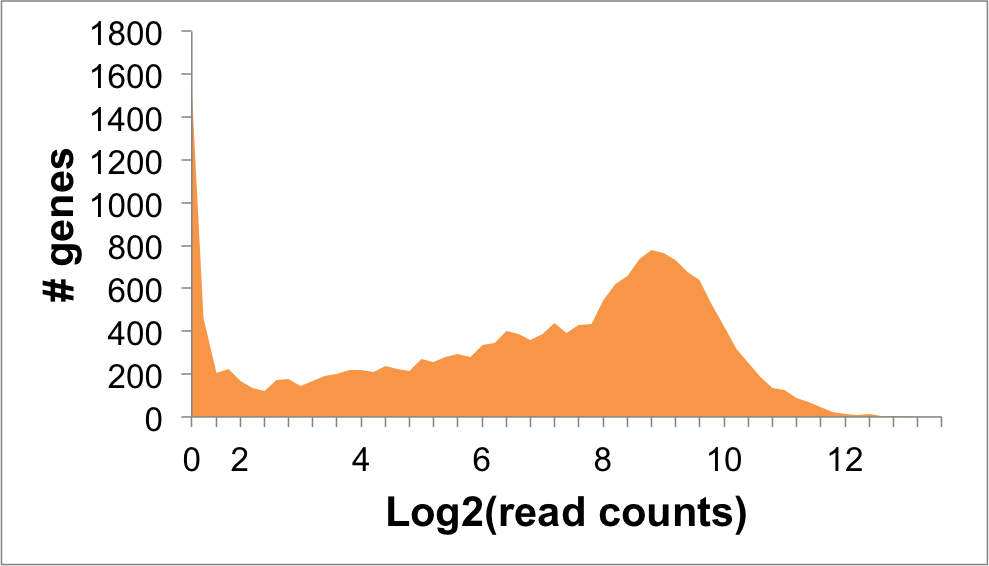
- Expression level (log2 read counts): -0.03
Expression Distribution
BIN1 Expression in NALM6 Cells: -0.03