CSF3
Gene Information
- Official Symbol: CSF3
- Official Name: colony stimulating factor 3
- Aliases and Previous Symbols: N/A
- Entrez ID: 1440
- UniProt: P09919
- Interactions: BioGRID
- PubMed articles: Open PubMed
- OMIM: Open OMIM
Function Summary
- Entrez Summary: N/A
- UniProt Summary: Granulocyte/macrophage colony-stimulating factors are cytokines that act in hematopoiesis by controlling the production, differentiation, and function of 2 related white cell populations of the blood, the granulocytes and the monocytes-macrophages. This CSF induces granulocytes.
Pfam Domains GO Terms
Pfam Domains
| IL6 |
GO Terms
| granulocyte colony-stimulating factor receptor binding |
| granulocyte differentiation |
| positive regulation of actin cytoskeleton reorganization |
| regulation of actin cytoskeleton reorganization |
| positive regulation of phosphatidylinositol 3-kinase signaling |
| positive regulation of myeloid cell differentiation |
| positive regulation of actin filament polymerization |
| positive regulation of protein binding |
| positive regulation of peptidyl-serine phosphorylation |
| myeloid leukocyte differentiation |
| regulation of phosphatidylinositol 3-kinase signaling |
| response to ethanol |
| positive regulation of protein polymerization |
| regulation of peptidyl-serine phosphorylation |
| growth factor activity |
| positive regulation of protein kinase B signaling |
| regulation of actin filament polymerization |
| cytokine activity |
| positive regulation of binding |
| regulation of actin polymerization or depolymerization |
| regulation of actin filament length |
| cellular response to lipopolysaccharide |
| positive regulation of hemopoiesis |
| positive regulation of peptidyl-tyrosine phosphorylation |
| cellular response to molecule of bacterial origin |
| positive regulation of supramolecular fiber organization |
| negative regulation of neuron death |
| cellular response to biotic stimulus |
| regulation of protein binding |
| positive regulation of cytoskeleton organization |
| myeloid cell differentiation |
| regulation of protein kinase B signaling |
| regulation of protein polymerization |
| regulation of myeloid cell differentiation |
| response to alcohol |
| positive regulation of protein complex assembly |
| regulation of peptidyl-tyrosine phosphorylation |
| regulation of actin filament organization |
| positive regulation of DNA-binding transcription factor activity |
| response to antibiotic |
| regulation of neuron death |
| response to lipopolysaccharide |
| response to molecule of bacterial origin |
| leukocyte differentiation |
| regulation of actin cytoskeleton organization |
| enzyme binding |
| regulation of supramolecular fiber organization |
| regulation of binding |
| regulation of cellular component size |
| regulation of actin filament-based process |
| regulation of DNA-binding transcription factor activity |
| regulation of hemopoiesis |
| regulation of protein complex assembly |
| response to toxic substance |
| regulation of anatomical structure size |
| positive regulation of cellular component biogenesis |
| cellular response to lipid |
| regulation of cytoskeleton organization |
| hemopoiesis |
| hematopoietic or lymphoid organ development |
| positive regulation of organelle organization |
| immune system development |
| cytokine-mediated signaling pathway |
| response to bacterium |
| response to lipid |
| positive regulation of cell population proliferation |
| regulation of cellular component biogenesis |
| positive regulation of cell differentiation |
| negative regulation of cell death |
| cellular response to cytokine stimulus |
| positive regulation of protein phosphorylation |
| response to drug |
| positive regulation of intracellular signal transduction |
| cellular response to oxygen-containing compound |
| positive regulation of phosphorylation |
| response to cytokine |
| positive regulation of phosphate metabolic process |
| positive regulation of phosphorus metabolic process |
| positive regulation of immune system process |
| positive regulation of cellular component organization |
| positive regulation of transcription by RNA polymerase II |
| positive regulation of protein modification process |
| regulation of organelle organization |
| response to other organism |
| response to external biotic stimulus |
| response to biotic stimulus |
| positive regulation of developmental process |
| regulation of protein phosphorylation |
| positive regulation of transcription, DNA-templated |
| response to oxygen-containing compound |
| regulation of phosphorylation |
| extracellular space |
| positive regulation of cellular protein metabolic process |
| regulation of cell population proliferation |
| positive regulation of nucleic acid-templated transcription |
| positive regulation of RNA biosynthetic process |
| regulation of immune system process |
| positive regulation of signal transduction |
| regulation of cell death |
| positive regulation of protein metabolic process |
| positive regulation of RNA metabolic process |
| positive regulation of multicellular organismal process |
| positive regulation of molecular function |
| regulation of phosphate metabolic process |
| regulation of phosphorus metabolic process |
| regulation of cell differentiation |
| positive regulation of cell communication |
| positive regulation of signaling |
| regulation of intracellular signal transduction |
| regulation of protein modification process |
| immune response |
| positive regulation of nucleobase-containing compound metabolic process |
| positive regulation of macromolecule biosynthetic process |
| extracellular region |
| positive regulation of cellular biosynthetic process |
| positive regulation of gene expression |
| positive regulation of biosynthetic process |
CRISPR Data
Compound Hit Most Correlated Genes in Chemogenomics Tissues where Essential in the Avana Dataset (DepMap 20Q1)
Compound Hit
| Screen | Score |
|---|---|
| AICAR 240μM R05 exp211 | -1.86 |
| MK2206 4μM R08 exp504 | 1.8 |
| CVT-10216 0.1μM R06 exp278 | 1.81 |
Most Correlated Genes in Chemogenomics
No correlation found to any other genes in chemogenomics.
Tissues where Essential in the Avana Dataset (DepMap 20Q1)
Global Fraction of Cell Lines Where Essential: 0/739
| Tissue | Fraction Of Cell Lines Where Essential |
|---|---|
| 1290807.0 | 0/1 |
| 909776.0 | 0/1 |
| bile duct | 0/28 |
| blood | 0/28 |
| bone | 0/26 |
| breast | 0/33 |
| central nervous system | 0/56 |
| cervix | 0/4 |
| colorectal | 0/17 |
| esophagus | 0/13 |
| fibroblast | 0/1 |
| gastric | 0/16 |
| kidney | 0/21 |
| liver | 0/20 |
| lung | 0/75 |
| lymphocyte | 0/16 |
| ovary | 0/26 |
| pancreas | 0/24 |
| peripheral nervous system | 0/16 |
| plasma cell | 0/15 |
| prostate | 0/1 |
| skin | 0/24 |
| soft tissue | 0/9 |
| thyroid | 0/2 |
| upper aerodigestive | 0/22 |
| urinary tract | 0/29 |
| uterus | 0/5 |
Essentiality in NALM6
- Essentiality Rank: 8367
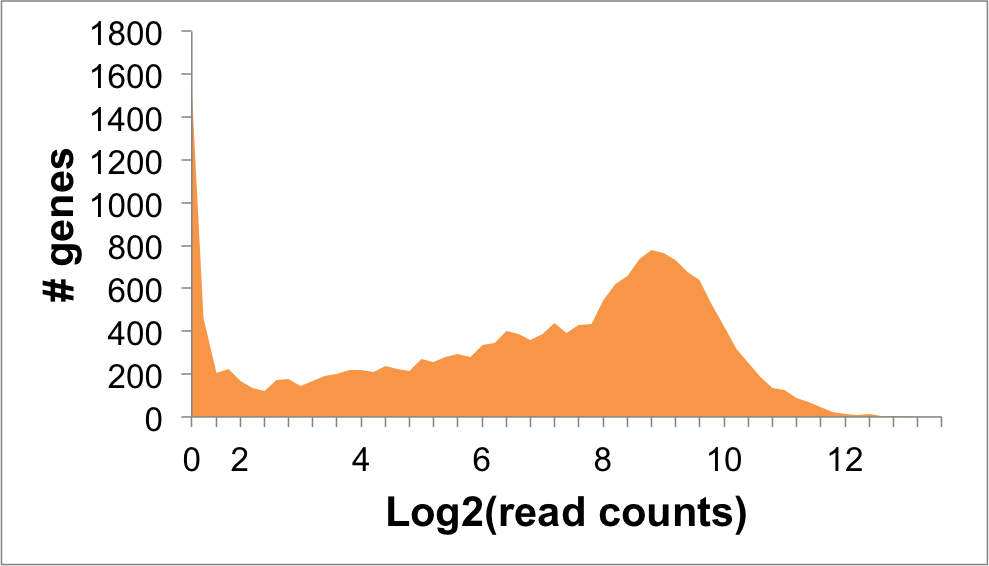
- Expression level (log2 read counts): -4.27
Expression Distribution
CSF3 Expression in NALM6 Cells: -4.27