CX3CR1
Gene Information
- Official Symbol: CX3CR1
- Official Name: C-X3-C motif chemokine receptor 1
- Aliases and Previous Symbols: N/A
- Entrez ID: 1524
- UniProt: P49238
- Interactions: BioGRID
- PubMed articles: Open PubMed
- OMIM: Open OMIM
Function Summary
- Entrez Summary: Fractalkine is a transmembrane protein and chemokine involved in the adhesion and migration of leukocytes. The protein encoded by this gene is a receptor for fractalkine. The encoded protein also is a coreceptor for HIV-1, and some variations in this gene lead to increased susceptibility to HIV-1 infection and rapid progression to AIDS. Four transcript variants encoding two different isoforms have been found for this gene. [provided by RefSeq, Jan 2010].
- UniProt Summary: Receptor for the CX3C chemokine fractalkine (CX3CL1); binds to CX3CL1 and mediates both its adhesive and migratory functions (PubMed:9390561, PubMed:23125415). Acts as coreceptor with CD4 for HIV-1 virus envelope protein (in vitro) (PubMed:9726990). Isoform 2 and isoform 3 seem to be more potent HIV-1 coreceptors than isoform 1 (PubMed:14607932). {ECO:0000269|PubMed:14607932, ECO:0000269|PubMed:23125415, ECO:0000269|PubMed:9390561, ECO:0000269|PubMed:9726990}.
Pfam Domains GO Terms
Pfam Domains
| 7TM GPCR Srsx |
| 7tm 1 |
GO Terms
| multiple spine synapse organization, single dendrite |
| multiple spine synapse organization |
| C-X3-C chemokine receptor activity |
| negative regulation of hippocampal neuron apoptotic process |
| dendritic tree |
| regulation of hippocampal neuron apoptotic process |
| C-X3-C chemokine binding |
| positive regulation of I-kappaB phosphorylation |
| regulation of I-kappaB phosphorylation |
| autocrine signaling |
| central nervous system maturation |
| regulation of microglial cell migration |
| synapse pruning |
| negative regulation of long-term synaptic potentiation |
| synapse maturation |
| regulation of glial cell migration |
| chemokine receptor activity |
| leukocyte tethering or rolling |
| leukocyte adhesion to vascular endothelial cell |
| positive regulation of neuroblast proliferation |
| C-C chemokine receptor activity |
| C-C chemokine binding |
| chemokine binding |
| negative regulation of interleukin-1 beta production |
| neuronal cell body membrane |
| regulation of tumor necrosis factor biosynthetic process |
| regulation of neuroblast proliferation |
| negative regulation of interleukin-1 production |
| regulation of macrophage migration |
| positive regulation of stem cell proliferation |
| cellular extravasation |
| G protein-coupled peptide receptor activity |
| regulation of long-term synaptic potentiation |
| response to ischemia |
| leukocyte cell-cell adhesion |
| intraspecies interaction between organisms |
| social behavior |
| positive regulation of neural precursor cell proliferation |
| cellular defense response |
| regulation of nitric oxide biosynthetic process |
| regulation of stem cell proliferation |
| multi-organism behavior |
| chemokine-mediated signaling pathway |
| regulation of interleukin-1 beta production |
| regulation of reactive oxygen species biosynthetic process |
| regulation of neural precursor cell proliferation |
| response to chemokine |
| cellular response to chemokine |
| regulation of interleukin-1 production |
| phospholipase C-activating G protein-coupled receptor signaling pathway |
| negative regulation of angiogenesis |
| negative regulation of blood vessel morphogenesis |
| regulation of cytokine biosynthetic process |
| regulation of gliogenesis |
| negative regulation of vasculature development |
| memory |
| anatomical structure maturation |
| negative regulation of neuron apoptotic process |
| calcium-mediated signaling |
| regulation of tumor necrosis factor production |
| regulation of tumor necrosis factor superfamily cytokine production |
| positive regulation of NF-kappaB transcription factor activity |
| cellular response to transforming growth factor beta stimulus |
| response to transforming growth factor beta |
| positive regulation of angiogenesis |
| positive regulation of protein kinase B signaling |
| regulation of reactive oxygen species metabolic process |
| positive regulation of vasculature development |
| cellular response to lipopolysaccharide |
| positive regulation of I-kappaB kinase/NF-kappaB signaling |
| regulation of synaptic plasticity |
| cellular response to molecule of bacterial origin |
| regulation of leukocyte migration |
| regulation of neuron apoptotic process |
| negative regulation of neuron death |
| cell chemotaxis |
| cellular response to biotic stimulus |
| regulation of protein kinase B signaling |
| negative regulation of apoptotic signaling pathway |
| regulation of I-kappaB kinase/NF-kappaB signaling |
| developmental maturation |
| learning or memory |
| negative regulation of cell migration |
| positive regulation of DNA-binding transcription factor activity |
| synapse organization |
| negative regulation of cell motility |
| negative regulation of cytokine production |
| positive regulation of cytosolic calcium ion concentration |
| regulation of angiogenesis |
| cognition |
| negative regulation of cellular component movement |
| regulation of neuron death |
| response to lipopolysaccharide |
| neuron projection |
| regulation of vasculature development |
| negative regulation of locomotion |
| response to molecule of bacterial origin |
| regulation of cytosolic calcium ion concentration |
| second-messenger-mediated signaling |
| regulation of neurotransmitter levels |
| leukocyte migration |
| external side of plasma membrane |
| regulation of apoptotic signaling pathway |
| cellular component disassembly |
| regulation of DNA-binding transcription factor activity |
| cellular calcium ion homeostasis |
| modulation of chemical synaptic transmission |
| regulation of trans-synaptic signaling |
| calcium ion homeostasis |
| cellular divalent inorganic cation homeostasis |
| positive regulation of neurogenesis |
| divalent inorganic cation homeostasis |
| cellular response to growth factor stimulus |
| cell-cell adhesion |
| cellular response to lipid |
| response to growth factor |
| positive regulation of nervous system development |
| positive regulation of cell development |
| chemotaxis |
| taxis |
| cellular metal ion homeostasis |
| response to wounding |
| behavior |
| cell surface |
| metal ion homeostasis |
| cellular cation homeostasis |
| cellular ion homeostasis |
| cytokine-mediated signaling pathway |
| response to bacterium |
| regulation of cytokine production |
| perinuclear region of cytoplasm |
| viral process |
| cation homeostasis |
| inorganic ion homeostasis |
| G protein-coupled receptor activity |
| cellular chemical homeostasis |
| innate immune response |
| symbiotic process |
| ion homeostasis |
| regulation of neurogenesis |
| interspecies interaction between organisms |
| regulation of cell migration |
| response to lipid |
| negative regulation of apoptotic process |
| cellular homeostasis |
| negative regulation of programmed cell death |
| regulation of cell motility |
| positive regulation of cell population proliferation |
| regulation of nervous system development |
| cell adhesion |
| regulation of cell development |
| biological adhesion |
| negative regulation of developmental process |
| defense response to other organism |
| cell migration |
| positive regulation of cell differentiation |
| central nervous system development |
| regulation of locomotion |
| regulation of cellular component movement |
| negative regulation of cell death |
| cellular response to cytokine stimulus |
| positive regulation of protein phosphorylation |
| positive regulation of intracellular signal transduction |
| cellular response to oxygen-containing compound |
| positive regulation of phosphorylation |
| regulation of anatomical structure morphogenesis |
| cell motility |
| localization of cell |
| response to cytokine |
| chemical homeostasis |
| cell-cell signaling |
| positive regulation of phosphate metabolic process |
| positive regulation of phosphorus metabolic process |
| negative regulation of multicellular organismal process |
| cellular response to endogenous stimulus |
| positive regulation of protein modification process |
| negative regulation of signal transduction |
| response to other organism |
| response to external biotic stimulus |
| locomotion |
| G protein-coupled receptor signaling pathway |
| response to biotic stimulus |
| defense response |
| negative regulation of cell communication |
| negative regulation of signaling |
| positive regulation of developmental process |
| nervous system process |
| integral component of plasma membrane |
| regulation of protein phosphorylation |
| response to endogenous stimulus |
| generation of neurons |
| regulation of apoptotic process |
| movement of cell or subcellular component |
| response to oxygen-containing compound |
| regulation of programmed cell death |
| regulation of phosphorylation |
| positive regulation of cellular protein metabolic process |
| regulation of cell population proliferation |
| negative regulation of response to stimulus |
| neurogenesis |
| homeostatic process |
| positive regulation of signal transduction |
| regulation of immune system process |
| regulation of cell death |
| intracellular signal transduction |
| positive regulation of protein metabolic process |
| positive regulation of multicellular organismal process |
| positive regulation of molecular function |
| regulation of phosphate metabolic process |
| regulation of phosphorus metabolic process |
| regulation of cell differentiation |
| positive regulation of cell communication |
| positive regulation of signaling |
| regulation of intracellular signal transduction |
| regulation of protein modification process |
| immune response |
| system process |
CRISPR Data
Compound Hit Most Correlated Genes in Chemogenomics Tissues where Essential in the Avana Dataset (DepMap 20Q1)
Compound Hit
No hits were found.
Most Correlated Genes in Chemogenomics
No correlation found to any other genes in chemogenomics.
Tissues where Essential in the Avana Dataset (DepMap 20Q1)
Global Fraction of Cell Lines Where Essential: 0/739
| Tissue | Fraction Of Cell Lines Where Essential |
|---|---|
| 1290807.0 | 0/1 |
| 909776.0 | 0/1 |
| bile duct | 0/28 |
| blood | 0/28 |
| bone | 0/26 |
| breast | 0/33 |
| central nervous system | 0/56 |
| cervix | 0/4 |
| colorectal | 0/17 |
| esophagus | 0/13 |
| fibroblast | 0/1 |
| gastric | 0/16 |
| kidney | 0/21 |
| liver | 0/20 |
| lung | 0/75 |
| lymphocyte | 0/16 |
| ovary | 0/26 |
| pancreas | 0/24 |
| peripheral nervous system | 0/16 |
| plasma cell | 0/15 |
| prostate | 0/1 |
| skin | 0/24 |
| soft tissue | 0/9 |
| thyroid | 0/2 |
| upper aerodigestive | 0/22 |
| urinary tract | 0/29 |
| uterus | 0/5 |
Essentiality in NALM6
- Essentiality Rank: 13306
- Expression level (log2 read counts): -5.6
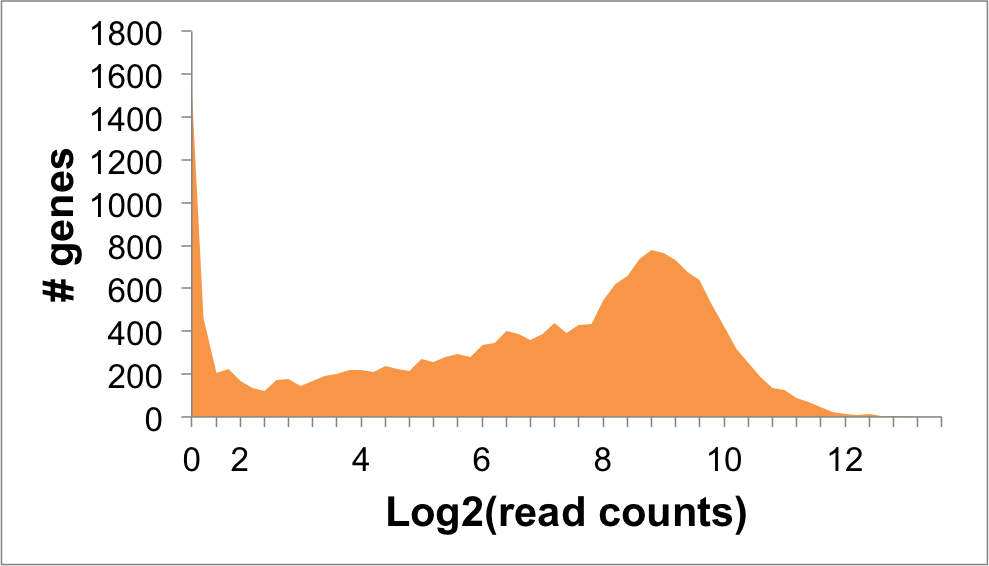
Expression Distribution
CX3CR1 Expression in NALM6 Cells: -5.6