FN1
Gene Information
- Official Symbol: FN1
- Official Name: fibronectin 1
- Aliases and Previous Symbols: N/A
- Entrez ID: 2335
- UniProt: P02751
- Interactions: BioGRID
- PubMed articles: Open PubMed
- OMIM: Open OMIM
Function Summary
- Entrez Summary: This gene encodes fibronectin, a glycoprotein present in a soluble dimeric form in plasma, and in a dimeric or multimeric form at the cell surface and in extracellular matrix. The encoded preproprotein is proteolytically processed to generate the mature protein. Fibronectin is involved in cell adhesion and migration processes including embryogenesis, wound healing, blood coagulation, host defense, and metastasis. The gene has three regions subject to alternative splicing, with the potential to produce 20 different transcript variants, at least one of which encodes an isoform that undergoes proteolytic processing. The full-length nature of some variants has not been determined. [provided by RefSeq, Jan 2016].
- UniProt Summary: N/A
Pfam Domains GO Terms
Pfam Domains
| fn1 |
| fn3 |
| fn2 |
GO Terms
| regulation of substrate-dependent cell migration, cell attachment to substrate |
| positive regulation of substrate-dependent cell migration, cell attachment to substrate |
| symbiotic process mediated by secreted substance |
| negative regulation of transforming growth factor-beta secretion |
| regulation of transforming growth factor-beta secretion |
| calcium-independent cell-matrix adhesion |
| neural crest cell migration involved in autonomic nervous system development |
| fibrinogen complex |
| integrin activation |
| peptidase activator activity |
| proteoglycan binding |
| disordered domain specific binding |
| acute-phase response |
| endodermal cell differentiation |
| positive regulation of axon extension |
| cell-substrate junction assembly |
| autonomic nervous system development |
| endoderm formation |
| positive regulation of fibroblast proliferation |
| substrate adhesion-dependent cell spreading |
| neural crest cell migration |
| peptide cross-linking |
| collagen binding |
| platelet alpha granule lumen |
| negative regulation of cytokine secretion |
| acute inflammatory response |
| endoderm development |
| endoplasmic reticulum-Golgi intermediate compartment |
| interaction with symbiont |
| neural crest cell development |
| regulation of fibroblast proliferation |
| stem cell development |
| mesenchymal cell development |
| positive regulation of axonogenesis |
| basement membrane |
| neural crest cell differentiation |
| regulation of axon extension |
| protease binding |
| chaperone binding |
| regulation of extent of cell growth |
| formation of primary germ layer |
| positive regulation of cell-substrate adhesion |
| cell-matrix adhesion |
| platelet degranulation |
| integrin binding |
| negative regulation of protein secretion |
| extracellular matrix structural constituent |
| negative regulation of peptide secretion |
| blood microparticle |
| regulation of cell shape |
| positive regulation of cell morphogenesis involved in differentiation |
| mesenchymal cell differentiation |
| stem cell differentiation |
| gastrulation |
| positive regulation of cell growth |
| cell junction assembly |
| heparin binding |
| positive regulation of developmental growth |
| ameboidal-type cell migration |
| negative regulation of protein transport |
| regulation of cell size |
| regulation of axonogenesis |
| cell-substrate adhesion |
| negative regulation of establishment of protein localization |
| protein C-terminus binding |
| positive regulation of peptidase activity |
| negative regulation of secretion by cell |
| regulation of cytokine secretion |
| regulation of cell-substrate adhesion |
| cell junction organization |
| mesenchyme development |
| extracellular matrix |
| negative regulation of secretion |
| positive regulation of growth |
| negative regulation of cytokine production |
| positive regulation of neuron projection development |
| regulation of ERK1 and ERK2 cascade |
| endoplasmic reticulum lumen |
| regulation of cell morphogenesis involved in differentiation |
| angiogenesis |
| apical plasma membrane |
| regulation of developmental growth |
| signaling receptor binding |
| extracellular matrix organization |
| enzyme binding |
| positive regulation of proteolysis |
| post-translational protein modification |
| collagen-containing extracellular matrix |
| positive regulation of neuron differentiation |
| regulation of cellular component size |
| leukocyte migration |
| positive regulation of cell projection organization |
| extracellular structure organization |
| positive regulation of cell adhesion |
| blood vessel morphogenesis |
| regulation of cell growth |
| regulation of peptidase activity |
| regulation of protein secretion |
| positive regulation of neurogenesis |
| wound healing |
| negative regulation of transport |
| blood vessel development |
| regulation of cell morphogenesis |
| regulation of peptide secretion |
| regulation of neuron projection development |
| inflammatory response |
| positive regulation of cell migration |
| vasculature development |
| regulation of anatomical structure size |
| cardiovascular system development |
| positive regulation of cell motility |
| positive regulation of nervous system development |
| positive regulation of cellular component movement |
| positive regulation of cell development |
| positive regulation of locomotion |
| cell morphogenesis involved in differentiation |
| embryonic morphogenesis |
| response to wounding |
| tube morphogenesis |
| regulation of neuron differentiation |
| regulation of growth |
| cytokine-mediated signaling pathway |
| regulation of cell adhesion |
| regulation of plasma membrane bounded cell projection organization |
| regulation of cytokine production |
| regulated exocytosis |
| regulation of protein transport |
| regulation of cell projection organization |
| cell morphogenesis |
| regulation of proteolysis |
| regulation of peptide transport |
| regulation of establishment of protein localization |
| regulation of secretion by cell |
| regulation of MAPK cascade |
| positive regulation of hydrolase activity |
| symbiotic process |
| exocytosis |
| regulation of secretion |
| regulation of neurogenesis |
| interspecies interaction between organisms |
| cellular component morphogenesis |
| tube development |
| regulation of cell migration |
| circulatory system development |
| anatomical structure formation involved in morphogenesis |
| regulation of cell motility |
| positive regulation of cell population proliferation |
| regulation of nervous system development |
| cell adhesion |
| regulation of cell development |
| biological adhesion |
| cell migration |
| positive regulation of cell differentiation |
| embryo development |
| regulation of locomotion |
| regulation of cellular component movement |
| secretion by cell |
| cellular response to cytokine stimulus |
| regulation of protein localization |
| export from cell |
| regulation of anatomical structure morphogenesis |
| identical protein binding |
| localization of cell |
| cell motility |
| response to cytokine |
| secretion |
| negative regulation of multicellular organismal process |
| positive regulation of cellular component organization |
| regulation of hydrolase activity |
| locomotion |
| defense response |
| positive regulation of developmental process |
| positive regulation of catalytic activity |
| regulation of protein phosphorylation |
| generation of neurons |
| movement of cell or subcellular component |
| protein-containing complex assembly |
| regulation of phosphorylation |
| extracellular space |
| positive regulation of cellular protein metabolic process |
| regulation of cell population proliferation |
| neurogenesis |
| cell development |
| positive regulation of protein metabolic process |
| positive regulation of multicellular organismal process |
| tissue development |
| positive regulation of molecular function |
| regulation of phosphate metabolic process |
| regulation of phosphorus metabolic process |
| regulation of cell differentiation |
| regulation of intracellular signal transduction |
| regulation of protein modification process |
| protein-containing complex subunit organization |
| regulation of transport |
| extracellular region |
| vesicle-mediated transport |
| positive regulation of gene expression |
CRISPR Data
Compound Hit Most Correlated Genes in Chemogenomics Tissues where Essential in the Avana Dataset (DepMap 20Q1)
Compound Hit
No hits were found.
Most Correlated Genes in Chemogenomics
No correlation found to any other genes in chemogenomics.
Tissues where Essential in the Avana Dataset (DepMap 20Q1)
Global Fraction of Cell Lines Where Essential: 0/739
| Tissue | Fraction Of Cell Lines Where Essential |
|---|---|
| 1290807.0 | 0/1 |
| 909776.0 | 0/1 |
| bile duct | 0/28 |
| blood | 0/28 |
| bone | 0/26 |
| breast | 0/33 |
| central nervous system | 0/56 |
| cervix | 0/4 |
| colorectal | 0/17 |
| esophagus | 0/13 |
| fibroblast | 0/1 |
| gastric | 0/16 |
| kidney | 0/21 |
| liver | 0/20 |
| lung | 0/75 |
| lymphocyte | 0/16 |
| ovary | 0/26 |
| pancreas | 0/24 |
| peripheral nervous system | 0/16 |
| plasma cell | 0/15 |
| prostate | 0/1 |
| skin | 0/24 |
| soft tissue | 0/9 |
| thyroid | 0/2 |
| upper aerodigestive | 0/22 |
| urinary tract | 0/29 |
| uterus | 0/5 |
Essentiality in NALM6
- Essentiality Rank: 8167
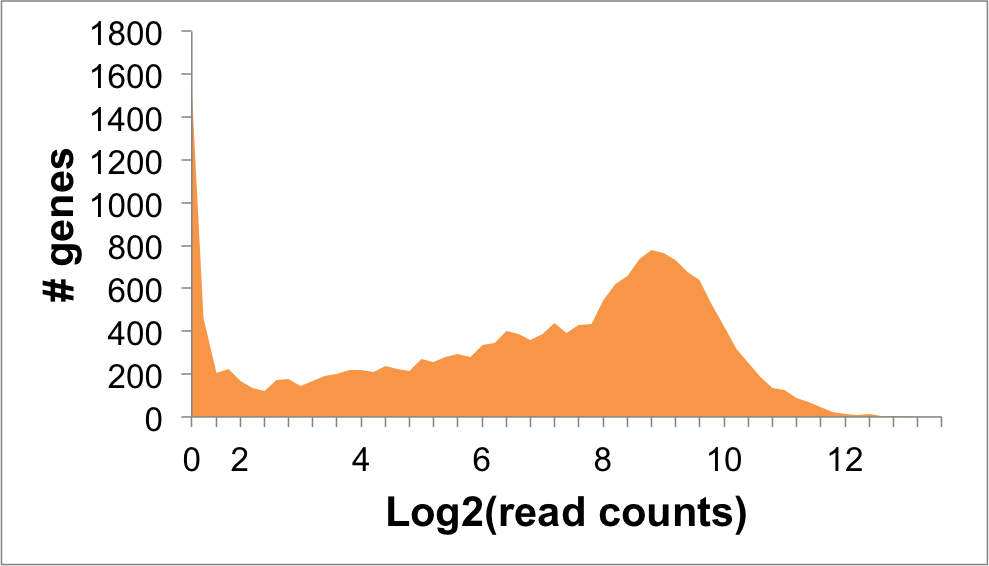
- Expression level (log2 read counts): 2.89
Expression Distribution
FN1 Expression in NALM6 Cells: 2.89