HEYL
Gene Information
- Official Symbol: HEYL
- Official Name: hes related family bHLH transcription factor with YRPW motif like
- Aliases and Previous Symbols: N/A
- Entrez ID: 26508
- UniProt: Q9NQ87
- Interactions: BioGRID
- PubMed articles: Open PubMed
- OMIM: Open OMIM
Function Summary
- Entrez Summary: N/A
- UniProt Summary: Downstream effector of Notch signaling which may be required for cardiovascular development (By similarity). Transcriptional repressor which binds preferentially to the canonical E box sequence 5'-CACGTG-3' (By similarity). Represses transcription by the cardiac transcriptional activators GATA4 and GATA6. {ECO:0000250, ECO:0000269|PubMed:15485867}.
Pfam Domains GO Terms
Pfam Domains
| HLH |
| Hairy orange |
GO Terms
| AF-1 domain binding |
| proximal tubule development |
| Notch signaling involved in heart development |
| epithelial to mesenchymal transition involved in endocardial cushion formation |
| negative regulation of androgen receptor signaling pathway |
| pulmonary valve morphogenesis |
| positive regulation of transcription of Notch receptor target |
| endocardial cushion formation |
| pulmonary valve development |
| cell surface receptor signaling pathway involved in heart development |
| atrioventricular valve morphogenesis |
| regulation of androgen receptor signaling pathway |
| atrioventricular valve development |
| aortic valve morphogenesis |
| cardiac epithelial to mesenchymal transition |
| aortic valve development |
| endocardial cushion morphogenesis |
| negative regulation of intracellular steroid hormone receptor signaling pathway |
| semi-lunar valve development |
| ventricular septum morphogenesis |
| endocardial cushion development |
| skeletal muscle cell differentiation |
| mesenchyme morphogenesis |
| glomerulus development |
| heart valve morphogenesis |
| heart valve development |
| epithelial to mesenchymal transition |
| ventricular septum development |
| cardiac ventricle morphogenesis |
| outflow tract morphogenesis |
| cardiac septum morphogenesis |
| regulation of intracellular steroid hormone receptor signaling pathway |
| nephron tubule development |
| renal tubule development |
| mesenchymal cell development |
| nephron epithelium development |
| cellular response to BMP stimulus |
| response to BMP |
| cardiac septum development |
| skeletal muscle tissue development |
| nephron development |
| Notch signaling pathway |
| cardiac chamber morphogenesis |
| cardiac ventricle development |
| kidney epithelium development |
| skeletal muscle organ development |
| mesenchymal cell differentiation |
| negative regulation of DNA-binding transcription factor activity |
| cardiac chamber development |
| anterior/posterior pattern specification |
| mesenchyme development |
| transcription corepressor activity |
| DNA-binding transcription repressor activity, RNA polymerase II-specific |
| heart morphogenesis |
| kidney development |
| renal system development |
| striated muscle tissue development |
| muscle organ development |
| muscle tissue development |
| RNA polymerase II regulatory region sequence-specific DNA binding |
| urogenital system development |
| regionalization |
| transcription factor binding |
| positive regulation of neuron differentiation |
| regulation of DNA-binding transcription factor activity |
| pattern specification process |
| DNA-binding transcription activator activity, RNA polymerase II-specific |
| positive regulation of neurogenesis |
| muscle structure development |
| protein heterodimerization activity |
| cellular response to growth factor stimulus |
| RNA polymerase II proximal promoter sequence-specific DNA binding |
| heart development |
| response to growth factor |
| positive regulation of nervous system development |
| positive regulation of cell development |
| tissue morphogenesis |
| regulation of neuron differentiation |
| DNA-binding transcription factor activity |
| regulation of neurogenesis |
| tube development |
| negative regulation of transcription by RNA polymerase II |
| circulatory system development |
| protein homodimerization activity |
| anatomical structure formation involved in morphogenesis |
| regulation of nervous system development |
| regulation of cell development |
| animal organ morphogenesis |
| positive regulation of cell differentiation |
| epithelium development |
| negative regulation of molecular function |
| negative regulation of transcription, DNA-templated |
| positive regulation of transcription by RNA polymerase II |
| cellular response to endogenous stimulus |
| negative regulation of nucleic acid-templated transcription |
| negative regulation of RNA biosynthetic process |
| negative regulation of signal transduction |
| negative regulation of RNA metabolic process |
| negative regulation of cell communication |
| negative regulation of signaling |
| positive regulation of developmental process |
| negative regulation of cellular macromolecule biosynthetic process |
| negative regulation of nucleobase-containing compound metabolic process |
| negative regulation of macromolecule biosynthetic process |
| response to endogenous stimulus |
| negative regulation of cellular biosynthetic process |
| generation of neurons |
| positive regulation of transcription, DNA-templated |
| negative regulation of biosynthetic process |
| DNA-binding transcription factor activity, RNA polymerase II-specific |
| negative regulation of response to stimulus |
| neurogenesis |
| positive regulation of nucleic acid-templated transcription |
| positive regulation of RNA biosynthetic process |
| cell development |
| negative regulation of gene expression |
| positive regulation of RNA metabolic process |
| positive regulation of multicellular organismal process |
| tissue development |
| regulation of cell differentiation |
| positive regulation of nucleobase-containing compound metabolic process |
| positive regulation of macromolecule biosynthetic process |
| positive regulation of cellular biosynthetic process |
| positive regulation of gene expression |
| positive regulation of biosynthetic process |
CRISPR Data
Compound Hit Most Correlated Genes in Chemogenomics Tissues where Essential in the Avana Dataset (DepMap 20Q1)
Compound Hit
No hits were found.
Most Correlated Genes in Chemogenomics
No correlation found to any other genes in chemogenomics.
Tissues where Essential in the Avana Dataset (DepMap 20Q1)
Global Fraction of Cell Lines Where Essential: 0/726
| Tissue | Fraction Of Cell Lines Where Essential |
|---|---|
| 1290807.0 | 0/1 |
| 909776.0 | 0/1 |
| bile duct | 0/28 |
| blood | 0/28 |
| bone | 0/25 |
| breast | 0/33 |
| central nervous system | 0/56 |
| cervix | 0/4 |
| colorectal | 0/17 |
| esophagus | 0/13 |
| fibroblast | 0/1 |
| gastric | 0/15 |
| kidney | 0/21 |
| liver | 0/20 |
| lung | 0/75 |
| lymphocyte | 0/14 |
| ovary | 0/26 |
| pancreas | 0/24 |
| peripheral nervous system | 0/16 |
| plasma cell | 0/15 |
| prostate | 0/1 |
| skin | 0/24 |
| soft tissue | 0/7 |
| thyroid | 0/2 |
| upper aerodigestive | 0/22 |
| urinary tract | 0/29 |
| uterus | 0/5 |
Essentiality in NALM6
- Essentiality Rank: 17575
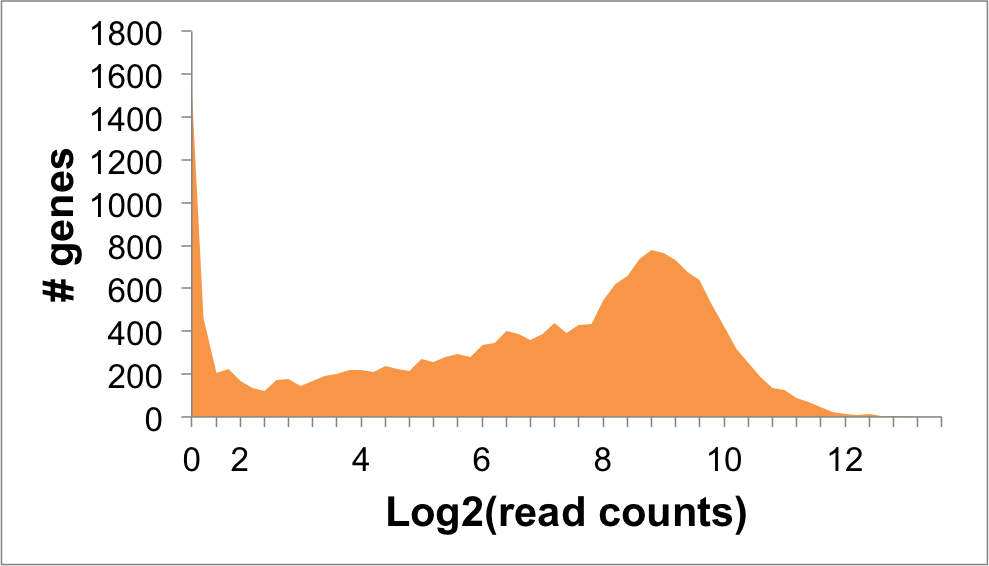
- Expression level (log2 read counts): -5.28
Expression Distribution
HEYL Expression in NALM6 Cells: -5.28