IFI16
Gene Information
- Official Symbol: IFI16
- Official Name: interferon gamma inducible protein 16
- Aliases and Previous Symbols: N/A
- Entrez ID: 3428
- UniProt: Q16666
- Interactions: BioGRID
- PubMed articles: Open PubMed
- OMIM: Open OMIM
Function Summary
- Entrez Summary: This gene encodes a member of the HIN-200 (hematopoietic interferon-inducible nuclear antigens with 200 amino acid repeats) family of cytokines. The encoded protein contains domains involved in DNA binding, transcriptional regulation, and protein-protein interactions. The protein localizes to the nucleoplasm and nucleoli, and interacts with p53 and retinoblastoma-1. It modulates p53 function, and inhibits cell growth in the Ras/Raf signaling pathway. Alternatively spliced transcript variants encoding different isoforms have been found for this gene. [provided by RefSeq, Apr 2011].
- UniProt Summary: N/A
Pfam Domains GO Terms
Pfam Domains
| PAAD DAPIN |
| HIN |
GO Terms
| activation of cysteine-type endopeptidase activity |
| mononuclear cell differentiation |
| monocyte differentiation |
| cellular response to interferon-beta |
| response to interferon-beta |
| intrinsic apoptotic signaling pathway in response to DNA damage by p53 class mediator |
| zymogen activation |
| cellular response to glucose starvation |
| intrinsic apoptotic signaling pathway by p53 class mediator |
| positive regulation of interleukin-1 beta production |
| negative regulation of DNA binding |
| negative regulation of innate immune response |
| negative regulation of viral genome replication |
| positive regulation of interleukin-1 production |
| cellular response to ionizing radiation |
| intrinsic apoptotic signaling pathway in response to DNA damage |
| positive regulation of type I interferon production |
| regulation of interleukin-1 beta production |
| negative regulation of viral life cycle |
| negative regulation of cysteine-type endopeptidase activity |
| negative regulation of response to biotic stimulus |
| regulation of viral genome replication |
| regulation of interleukin-1 production |
| negative regulation of viral process |
| double-stranded DNA binding |
| myeloid leukocyte differentiation |
| signal transduction by p53 class mediator |
| regulation of DNA binding |
| regulation of type I interferon production |
| regulation of viral life cycle |
| intrinsic apoptotic signaling pathway |
| negative regulation of immune response |
| response to ionizing radiation |
| cellular response to starvation |
| positive regulation of cysteine-type endopeptidase activity |
| protein processing |
| negative regulation of binding |
| positive regulation of endopeptidase activity |
| cellular response to radiation |
| defense response to virus |
| positive regulation of peptidase activity |
| response to starvation |
| regulation of viral process |
| negative regulation of defense response |
| negative regulation of multi-organism process |
| regulation of symbiosis, encompassing mutualism through parasitism |
| myeloid cell differentiation |
| protein maturation |
| cellular response to nutrient levels |
| regulation of gene expression, epigenetic |
| regulation of cysteine-type endopeptidase activity |
| negative regulation of endopeptidase activity |
| DNA-binding transcription repressor activity, RNA polymerase II-specific |
| negative regulation of peptidase activity |
| activation of innate immune response |
| autophagy |
| process utilizing autophagic mechanism |
| cellular response to extracellular stimulus |
| response to virus |
| apoptotic signaling pathway |
| cellular response to abiotic stimulus |
| cellular response to environmental stimulus |
| leukocyte differentiation |
| regulation of autophagy |
| transcription factor binding |
| cellular response to external stimulus |
| positive regulation of innate immune response |
| negative regulation of proteolysis |
| positive regulation of proteolysis |
| positive regulation of response to biotic stimulus |
| negative regulation of response to external stimulus |
| regulation of binding |
| nuclear speck |
| regulation of endopeptidase activity |
| response to radiation |
| negative regulation of immune system process |
| regulation of peptidase activity |
| positive regulation of cytokine production |
| regulation of innate immune response |
| negative regulation of hydrolase activity |
| positive regulation of defense response |
| inflammatory response |
| response to nutrient levels |
| RNA polymerase II proximal promoter sequence-specific DNA binding |
| positive regulation of multi-organism process |
| regulation of response to biotic stimulus |
| response to extracellular stimulus |
| cell population proliferation |
| hemopoiesis |
| positive regulation of response to external stimulus |
| hematopoietic or lymphoid organ development |
| activation of immune response |
| immune system development |
| regulation of cytokine production |
| regulation of proteolysis |
| regulation of defense response |
| innate immune response |
| positive regulation of hydrolase activity |
| regulation of multi-organism process |
| cellular response to DNA damage stimulus |
| negative regulation of catalytic activity |
| regulation of cellular catabolic process |
| nucleolus |
| negative regulation of transcription by RNA polymerase II |
| positive regulation of immune response |
| apoptotic process |
| defense response to other organism |
| regulation of catabolic process |
| cellular response to cytokine stimulus |
| negative regulation of cellular protein metabolic process |
| programmed cell death |
| cell death |
| immune effector process |
| regulation of response to external stimulus |
| response to cytokine |
| negative regulation of protein metabolic process |
| negative regulation of molecular function |
| positive regulation of immune system process |
| regulation of immune response |
| response to abiotic stimulus |
| negative regulation of transcription, DNA-templated |
| positive regulation of transcription by RNA polymerase II |
| negative regulation of nucleic acid-templated transcription |
| negative regulation of RNA biosynthetic process |
| proteolysis |
| regulation of hydrolase activity |
| response to other organism |
| response to external biotic stimulus |
| response to biotic stimulus |
| negative regulation of RNA metabolic process |
| defense response |
| negative regulation of cellular macromolecule biosynthetic process |
| RNA binding |
| positive regulation of catalytic activity |
| negative regulation of nucleobase-containing compound metabolic process |
| negative regulation of macromolecule biosynthetic process |
| regulation of response to stress |
| negative regulation of cellular biosynthetic process |
| positive regulation of transcription, DNA-templated |
| negative regulation of biosynthetic process |
| positive regulation of cellular protein metabolic process |
| negative regulation of response to stimulus |
| positive regulation of nucleic acid-templated transcription |
| positive regulation of RNA biosynthetic process |
| regulation of immune system process |
| intracellular signal transduction |
| cellular response to stress |
| positive regulation of protein metabolic process |
| negative regulation of gene expression |
| positive regulation of RNA metabolic process |
| positive regulation of multicellular organismal process |
| positive regulation of molecular function |
| cellular catabolic process |
| immune response |
| positive regulation of nucleobase-containing compound metabolic process |
| positive regulation of macromolecule biosynthetic process |
| positive regulation of cellular biosynthetic process |
| positive regulation of gene expression |
| membrane |
| gene expression |
| positive regulation of biosynthetic process |
CRISPR Data
Compound Hit Most Correlated Genes in Chemogenomics Tissues where Essential in the Avana Dataset (DepMap 20Q1)
Compound Hit
| Screen | Score |
|---|---|
| ABT-702 5μM plus Deferoxamine 11μM R07 exp321 | -2.28 |
| PF-06409577 20μM R07 exp389 | -1.93 |
| CoCl2 18μM R07 exp346 | -1.79 |
| UMK57 0.6μM R03 exp107 | 1.75 |
| Vinblastine 0.002μM R01 exp60 | 1.89 |
Most Correlated Genes in Chemogenomics
No correlation found to any other genes in chemogenomics.
Tissues where Essential in the Avana Dataset (DepMap 20Q1)
Global Fraction of Cell Lines Where Essential: 0/739
| Tissue | Fraction Of Cell Lines Where Essential |
|---|---|
| 1290807.0 | 0/1 |
| 909776.0 | 0/1 |
| bile duct | 0/28 |
| blood | 0/28 |
| bone | 0/26 |
| breast | 0/33 |
| central nervous system | 0/56 |
| cervix | 0/4 |
| colorectal | 0/17 |
| esophagus | 0/13 |
| fibroblast | 0/1 |
| gastric | 0/16 |
| kidney | 0/21 |
| liver | 0/20 |
| lung | 0/75 |
| lymphocyte | 0/16 |
| ovary | 0/26 |
| pancreas | 0/24 |
| peripheral nervous system | 0/16 |
| plasma cell | 0/15 |
| prostate | 0/1 |
| skin | 0/24 |
| soft tissue | 0/9 |
| thyroid | 0/2 |
| upper aerodigestive | 0/22 |
| urinary tract | 0/29 |
| uterus | 0/5 |
Essentiality in NALM6
- Essentiality Rank: 18722
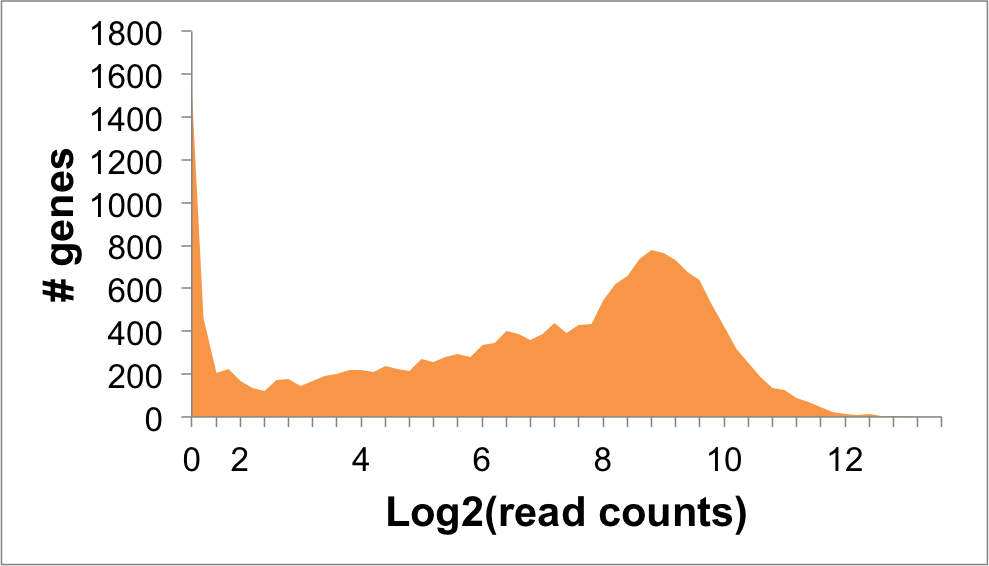
- Expression level (log2 read counts): 6.93
Expression Distribution
IFI16 Expression in NALM6 Cells: 6.93