IGFBP5
Gene Information
- Official Symbol: IGFBP5
- Official Name: insulin like growth factor binding protein 5
- Aliases and Previous Symbols: N/A
- Entrez ID: 3488
- UniProt: P24593
- Interactions: BioGRID
- PubMed articles: Open PubMed
- OMIM: Open OMIM
Function Summary
- Entrez Summary: N/A
- UniProt Summary: IGF-binding proteins prolong the half-life of the IGFs and have been shown to either inhibit or stimulate the growth promoting effects of the IGFs on cell culture. They alter the interaction of IGFs with their cell surface receptors.
Pfam Domains GO Terms
Pfam Domains
| Thyroglobulin 1 |
| IGFBP |
GO Terms
| negative regulation of skeletal muscle hypertrophy |
| insulin-like growth factor binding protein complex |
| regulation of skeletal muscle hypertrophy |
| insulin-like growth factor ternary complex |
| negative regulation of insulin-like growth factor receptor signaling pathway |
| mammary gland involution |
| insulin-like growth factor II binding |
| type B pancreatic cell proliferation |
| negative regulation of muscle adaptation |
| insulin-like growth factor I binding |
| positive regulation of insulin-like growth factor receptor signaling pathway |
| regulation of skeletal muscle adaptation |
| positive regulation of vascular associated smooth muscle cell migration |
| regulation of vascular associated smooth muscle cell migration |
| negative regulation of smooth muscle cell migration |
| regulation of insulin-like growth factor receptor signaling pathway |
| hair follicle morphogenesis |
| fibronectin binding |
| negative regulation of muscle hypertrophy |
| epidermis morphogenesis |
| positive regulation of vascular smooth muscle cell proliferation |
| response to growth hormone |
| positive regulation of smooth muscle cell migration |
| lung alveolus development |
| mammary gland morphogenesis |
| negative regulation of osteoblast differentiation |
| negative regulation of smooth muscle cell proliferation |
| regulation of vascular smooth muscle cell proliferation |
| negative regulation of muscle tissue development |
| cellular response to cAMP |
| regulation of muscle hypertrophy |
| regulation of smooth muscle cell migration |
| hair follicle development |
| negative regulation of ossification |
| skin epidermis development |
| molting cycle process |
| hair cycle process |
| regulation of muscle adaptation |
| positive regulation of smooth muscle cell proliferation |
| epithelial cell proliferation |
| molting cycle |
| hair cycle |
| response to cAMP |
| gland morphogenesis |
| tissue remodeling |
| regulation of osteoblast differentiation |
| osteoblast differentiation |
| mammary gland development |
| negative regulation of translation |
| regulation of smooth muscle cell proliferation |
| regulation of muscle tissue development |
| response to organophosphorus |
| negative regulation of cellular amide metabolic process |
| response to purine-containing compound |
| positive regulation of protein kinase B signaling |
| lung development |
| respiratory tube development |
| female pregnancy |
| glucose homeostasis |
| carbohydrate homeostasis |
| regulation of ossification |
| respiratory system development |
| striated muscle cell differentiation |
| multi-multicellular organism process |
| regulation of protein kinase B signaling |
| regulation of muscle system process |
| negative regulation of growth |
| muscle cell differentiation |
| negative regulation of cell migration |
| ossification |
| negative regulation of cell motility |
| aging |
| endoplasmic reticulum lumen |
| negative regulation of cellular component movement |
| negative regulation of locomotion |
| regulation of translation |
| post-translational protein modification |
| skin development |
| response to peptide hormone |
| regulation of cellular amide metabolic process |
| gland development |
| epidermis development |
| regulation of cell growth |
| morphogenesis of an epithelium |
| response to peptide |
| muscle structure development |
| positive regulation of cell migration |
| positive regulation of cell motility |
| posttranscriptional regulation of gene expression |
| positive regulation of cellular component movement |
| cellular response to organic cyclic compound |
| positive regulation of locomotion |
| cell population proliferation |
| tissue morphogenesis |
| regulation of system process |
| cellular response to organonitrogen compound |
| cellular response to nitrogen compound |
| regulation of growth |
| negative regulation of cell population proliferation |
| negative regulation of cell differentiation |
| tube development |
| regulation of cell migration |
| response to hormone |
| regulation of cell motility |
| positive regulation of cell population proliferation |
| response to organic cyclic compound |
| negative regulation of developmental process |
| animal organ morphogenesis |
| regulation of locomotion |
| regulation of cellular component movement |
| multi-organism reproductive process |
| response to organonitrogen compound |
| positive regulation of intracellular signal transduction |
| negative regulation of cellular protein metabolic process |
| cellular response to oxygen-containing compound |
| response to nitrogen compound |
| negative regulation of protein metabolic process |
| chemical homeostasis |
| epithelium development |
| negative regulation of multicellular organismal process |
| cellular response to endogenous stimulus |
| negative regulation of signal transduction |
| negative regulation of cell communication |
| negative regulation of signaling |
| negative regulation of cellular macromolecule biosynthetic process |
| reproductive process |
| reproduction |
| negative regulation of macromolecule biosynthetic process |
| response to endogenous stimulus |
| negative regulation of cellular biosynthetic process |
| negative regulation of biosynthetic process |
| response to oxygen-containing compound |
| extracellular space |
| regulation of cell population proliferation |
| negative regulation of response to stimulus |
| homeostatic process |
| positive regulation of signal transduction |
| intracellular signal transduction |
| negative regulation of gene expression |
| tissue development |
| regulation of cell differentiation |
| positive regulation of cell communication |
| positive regulation of signaling |
| regulation of intracellular signal transduction |
| extracellular region |
CRISPR Data
Compound Hit Most Correlated Genes in Chemogenomics Tissues where Essential in the Avana Dataset (DepMap 20Q1)
Compound Hit
No hits were found.
Most Correlated Genes in Chemogenomics
No correlation found to any other genes in chemogenomics.
Tissues where Essential in the Avana Dataset (DepMap 20Q1)
Global Fraction of Cell Lines Where Essential: 0/739
| Tissue | Fraction Of Cell Lines Where Essential |
|---|---|
| 1290807.0 | 0/1 |
| 909776.0 | 0/1 |
| bile duct | 0/28 |
| blood | 0/28 |
| bone | 0/26 |
| breast | 0/33 |
| central nervous system | 0/56 |
| cervix | 0/4 |
| colorectal | 0/17 |
| esophagus | 0/13 |
| fibroblast | 0/1 |
| gastric | 0/16 |
| kidney | 0/21 |
| liver | 0/20 |
| lung | 0/75 |
| lymphocyte | 0/16 |
| ovary | 0/26 |
| pancreas | 0/24 |
| peripheral nervous system | 0/16 |
| plasma cell | 0/15 |
| prostate | 0/1 |
| skin | 0/24 |
| soft tissue | 0/9 |
| thyroid | 0/2 |
| upper aerodigestive | 0/22 |
| urinary tract | 0/29 |
| uterus | 0/5 |
Essentiality in NALM6
- Essentiality Rank: 15664
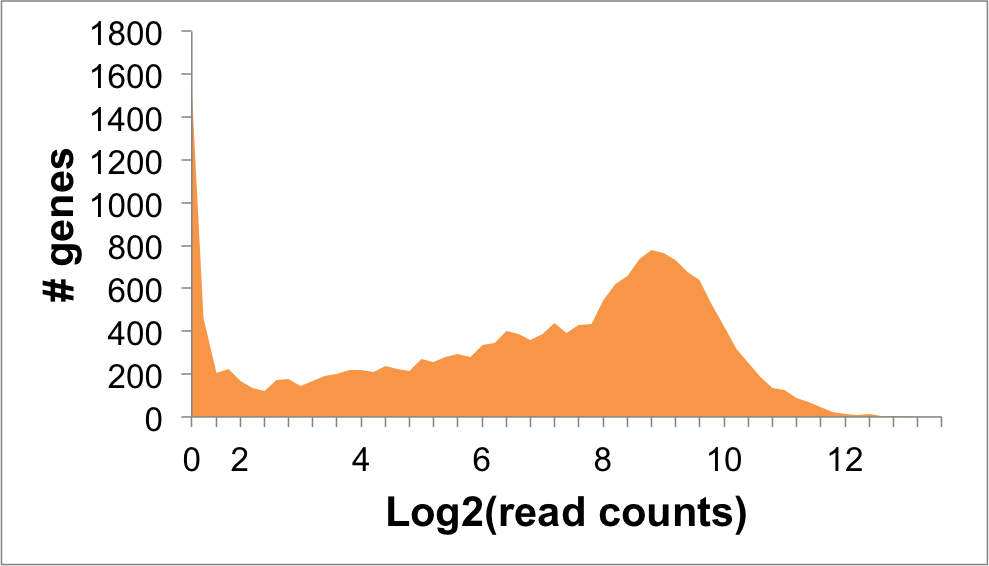
- Expression level (log2 read counts): -1.01
Expression Distribution
IGFBP5 Expression in NALM6 Cells: -1.01