IL23A
Gene Information
- Official Symbol: IL23A
- Official Name: interleukin 23 subunit alpha
- Aliases and Previous Symbols: N/A
- Entrez ID: 51561
- UniProt: Q9NPF7
- Interactions: BioGRID
- PubMed articles: Open PubMed
- OMIM: Open OMIM
Function Summary
- Entrez Summary: N/A
- UniProt Summary: Associates with IL12B to form the IL-23 interleukin, a heterodimeric cytokine which functions in innate and adaptive immunity. IL-23 may constitute with IL-17 an acute response to infection in peripheral tissues. IL-23 binds to a heterodimeric receptor complex composed of IL12RB1 and IL23R, activates the Jak- Stat signaling cascade, stimulates memory rather than naive T- cells and promotes production of proinflammatory cytokines. IL-23 induces autoimmune inflammation and thus may be responsible for autoimmune inflammatory diseases and may be important for tumorigenesis. {ECO:0000269|PubMed:11114383, ECO:0000269|PubMed:12023369, ECO:0000269|PubMed:16424222}.
Pfam Domains GO Terms
Pfam Domains
| IL6 |
GO Terms
| interleukin-23 complex |
| interleukin-23 receptor binding |
| positive regulation of T-helper 17 cell lineage commitment |
| positive regulation of NK T cell proliferation |
| regulation of NK T cell proliferation |
| regulation of T-helper 17 cell lineage commitment |
| positive regulation of memory T cell differentiation |
| positive regulation of natural killer cell proliferation |
| positive regulation of activation of Janus kinase activity |
| positive regulation of NK T cell activation |
| positive regulation of T-helper 17 cell differentiation |
| regulation of natural killer cell proliferation |
| regulation of activation of Janus kinase activity |
| positive regulation of cell fate commitment |
| regulation of memory T cell differentiation |
| interleukin-23-mediated signaling pathway |
| positive regulation of T-helper 17 type immune response |
| regulation of NK T cell activation |
| positive regulation of granulocyte macrophage colony-stimulating factor production |
| regulation of granulocyte macrophage colony-stimulating factor production |
| regulation of T-helper 17 cell differentiation |
| positive regulation of interleukin-17 production |
| negative regulation of interleukin-10 production |
| positive regulation of alpha-beta T cell proliferation |
| regulation of T-helper 17 type immune response |
| positive regulation of natural killer cell activation |
| positive regulation of T-helper 1 type immune response |
| positive regulation of T-helper cell differentiation |
| positive regulation of activated T cell proliferation |
| positive regulation of neutrophil chemotaxis |
| positive regulation of T cell mediated cytotoxicity |
| positive regulation of defense response to virus by host |
| positive regulation of osteoclast differentiation |
| positive regulation of granulocyte chemotaxis |
| regulation of T-helper 1 type immune response |
| regulation of cell fate commitment |
| regulation of interleukin-17 production |
| positive regulation of neutrophil migration |
| positive regulation of CD4-positive, alpha-beta T cell differentiation |
| regulation of neutrophil chemotaxis |
| regulation of alpha-beta T cell proliferation |
| positive regulation of tissue remodeling |
| regulation of natural killer cell activation |
| regulation of T cell mediated cytotoxicity |
| regulation of T-helper cell differentiation |
| positive regulation of CD4-positive, alpha-beta T cell activation |
| positive regulation of interleukin-12 production |
| regulation of neutrophil migration |
| regulation of activated T cell proliferation |
| positive regulation of interleukin-10 production |
| regulation of defense response to virus by host |
| T cell proliferation |
| regulation of granulocyte chemotaxis |
| regulation of CD4-positive, alpha-beta T cell differentiation |
| positive regulation of alpha-beta T cell differentiation |
| positive regulation of T cell mediated immunity |
| regulation of interleukin-10 production |
| regulation of interleukin-12 production |
| positive regulation of leukocyte mediated cytotoxicity |
| positive regulation of myeloid leukocyte differentiation |
| positive regulation of alpha-beta T cell activation |
| regulation of CD4-positive, alpha-beta T cell activation |
| regulation of alpha-beta T cell differentiation |
| positive regulation of interferon-gamma production |
| regulation of osteoclast differentiation |
| positive regulation of cell killing |
| positive regulation of tyrosine phosphorylation of STAT protein |
| regulation of T cell mediated immunity |
| regulation of defense response to virus |
| regulation of tissue remodeling |
| positive regulation of NIK/NF-kappaB signaling |
| regulation of leukocyte mediated cytotoxicity |
| regulation of tyrosine phosphorylation of STAT protein |
| positive regulation of T cell differentiation |
| lymphocyte proliferation |
| defense response to Gram-negative bacterium |
| positive regulation of receptor signaling pathway via JAK-STAT |
| positive regulation of tumor necrosis factor production |
| mononuclear cell proliferation |
| positive regulation of receptor signaling pathway via STAT |
| positive regulation of tumor necrosis factor superfamily cytokine production |
| positive regulation of leukocyte chemotaxis |
| positive regulation of myeloid cell differentiation |
| regulation of alpha-beta T cell activation |
| positive regulation of lymphocyte differentiation |
| positive regulation of T cell proliferation |
| leukocyte proliferation |
| regulation of interferon-gamma production |
| positive regulation of adaptive immune response based on somatic recombination of immune receptors built from immunoglobulin superfamily domains |
| tissue remodeling |
| regulation of cell killing |
| positive regulation of adaptive immune response |
| positive regulation of lymphocyte mediated immunity |
| regulation of NIK/NF-kappaB signaling |
| regulation of leukocyte chemotaxis |
| regulation of myeloid leukocyte differentiation |
| positive regulation of leukocyte migration |
| positive regulation of lymphocyte proliferation |
| regulation of receptor signaling pathway via JAK-STAT |
| positive regulation of mononuclear cell proliferation |
| positive regulation of leukocyte mediated immunity |
| regulation of receptor signaling pathway via STAT |
| positive regulation of chemotaxis |
| positive regulation of leukocyte proliferation |
| regulation of T cell differentiation |
| positive regulation of inflammatory response |
| regulation of adaptive immune response based on somatic recombination of immune receptors built from immunoglobulin superfamily domains |
| positive regulation of leukocyte differentiation |
| regulation of tumor necrosis factor production |
| regulation of lymphocyte mediated immunity |
| regulation of tumor necrosis factor superfamily cytokine production |
| regulation of T cell proliferation |
| regulation of adaptive immune response |
| regulation of lymphocyte differentiation |
| cytokine activity |
| positive regulation of hemopoiesis |
| positive regulation of peptidyl-tyrosine phosphorylation |
| defense response to virus |
| regulation of leukocyte migration |
| positive regulation of T cell activation |
| regulation of leukocyte mediated immunity |
| regulation of lymphocyte proliferation |
| regulation of mononuclear cell proliferation |
| regulation of chemotaxis |
| positive regulation of leukocyte cell-cell adhesion |
| positive regulation of immune effector process |
| regulation of leukocyte proliferation |
| regulation of myeloid cell differentiation |
| T cell activation |
| regulation of peptidyl-tyrosine phosphorylation |
| positive regulation of cell-cell adhesion |
| regulation of leukocyte differentiation |
| negative regulation of cytokine production |
| response to virus |
| regulation of leukocyte cell-cell adhesion |
| endoplasmic reticulum lumen |
| regulation of T cell activation |
| defense response to bacterium |
| regulation of inflammatory response |
| positive regulation of lymphocyte activation |
| lymphocyte activation |
| regulation of cell-cell adhesion |
| positive regulation of leukocyte activation |
| positive regulation of cell adhesion |
| positive regulation of cell activation |
| positive regulation of cytokine production |
| regulation of hemopoiesis |
| regulation of immune effector process |
| positive regulation of defense response |
| inflammatory response |
| positive regulation of cell migration |
| regulation of lymphocyte activation |
| regulation of response to biotic stimulus |
| positive regulation of cell motility |
| positive regulation of protein kinase activity |
| positive regulation of cellular component movement |
| positive regulation of locomotion |
| cell population proliferation |
| positive regulation of kinase activity |
| regulation of leukocyte activation |
| positive regulation of response to external stimulus |
| regulation of cell activation |
| positive regulation of transferase activity |
| cytokine-mediated signaling pathway |
| regulation of cell adhesion |
| response to bacterium |
| regulation of cytokine production |
| regulation of defense response |
| innate immune response |
| regulation of multi-organism process |
| regulation of protein kinase activity |
| regulation of cell migration |
| positive regulation of immune response |
| regulation of kinase activity |
| regulation of cell motility |
| positive regulation of cell population proliferation |
| leukocyte activation |
| defense response to other organism |
| positive regulation of cell differentiation |
| regulation of transferase activity |
| regulation of locomotion |
| regulation of cellular component movement |
| cellular response to cytokine stimulus |
| positive regulation of protein phosphorylation |
| positive regulation of intracellular signal transduction |
| positive regulation of phosphorylation |
| cell activation |
| immune effector process |
| regulation of response to external stimulus |
| response to cytokine |
| positive regulation of phosphorus metabolic process |
| positive regulation of phosphate metabolic process |
| positive regulation of immune system process |
| regulation of immune response |
| negative regulation of multicellular organismal process |
| positive regulation of transcription by RNA polymerase II |
| positive regulation of protein modification process |
| response to other organism |
| response to external biotic stimulus |
| response to biotic stimulus |
| defense response |
| positive regulation of developmental process |
| positive regulation of catalytic activity |
| regulation of protein phosphorylation |
| regulation of response to stress |
| positive regulation of transcription, DNA-templated |
| regulation of phosphorylation |
| positive regulation of cellular protein metabolic process |
| regulation of cell population proliferation |
| positive regulation of nucleic acid-templated transcription |
| positive regulation of RNA biosynthetic process |
| regulation of immune system process |
| positive regulation of signal transduction |
| positive regulation of protein metabolic process |
| positive regulation of RNA metabolic process |
| positive regulation of multicellular organismal process |
| positive regulation of molecular function |
| regulation of phosphate metabolic process |
| regulation of phosphorus metabolic process |
| regulation of cell differentiation |
| positive regulation of cell communication |
| positive regulation of signaling |
| regulation of intracellular signal transduction |
| regulation of protein modification process |
| immune response |
| positive regulation of nucleobase-containing compound metabolic process |
| positive regulation of macromolecule biosynthetic process |
| extracellular region |
| positive regulation of cellular biosynthetic process |
| positive regulation of gene expression |
| positive regulation of biosynthetic process |
CRISPR Data
Compound Hit Most Correlated Genes in Chemogenomics Tissues where Essential in the Avana Dataset (DepMap 20Q1)
Compound Hit
No hits were found.
Most Correlated Genes in Chemogenomics
No correlation found to any other genes in chemogenomics.
Tissues where Essential in the Avana Dataset (DepMap 20Q1)
Global Fraction of Cell Lines Where Essential: 0/739
| Tissue | Fraction Of Cell Lines Where Essential |
|---|---|
| 1290807.0 | 0/1 |
| 909776.0 | 0/1 |
| bile duct | 0/28 |
| blood | 0/28 |
| bone | 0/26 |
| breast | 0/33 |
| central nervous system | 0/56 |
| cervix | 0/4 |
| colorectal | 0/17 |
| esophagus | 0/13 |
| fibroblast | 0/1 |
| gastric | 0/16 |
| kidney | 0/21 |
| liver | 0/20 |
| lung | 0/75 |
| lymphocyte | 0/16 |
| ovary | 0/26 |
| pancreas | 0/24 |
| peripheral nervous system | 0/16 |
| plasma cell | 0/15 |
| prostate | 0/1 |
| skin | 0/24 |
| soft tissue | 0/9 |
| thyroid | 0/2 |
| upper aerodigestive | 0/22 |
| urinary tract | 0/29 |
| uterus | 0/5 |
Essentiality in NALM6
- Essentiality Rank: 13720
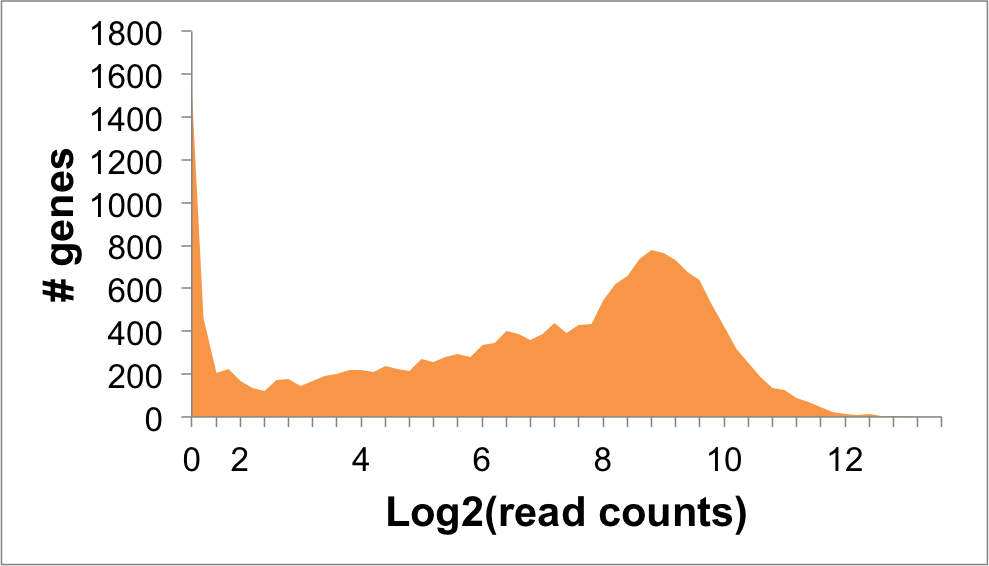
- Expression level (log2 read counts): 0.68
Expression Distribution
IL23A Expression in NALM6 Cells: 0.68