ILK
Gene Information
- Official Symbol: ILK
- Official Name: integrin linked kinase
- Aliases and Previous Symbols: N/A
- Entrez ID: 3611
- UniProt: Q13418
- Interactions: BioGRID
- PubMed articles: Open PubMed
- OMIM: Open OMIM
Function Summary
- Entrez Summary: This gene encodes a protein with a kinase-like domain and four ankyrin-like repeats. The encoded protein associates at the cell membrane with the cytoplasmic domain of beta integrins, where it regulates integrin-mediated signal transduction. Activity of this protein is important in the epithelial to mesenchymal transition, and over-expression of this gene is implicated in tumor growth and metastasis. Alternative splicing results in multiple transcript variants. [provided by RefSeq, Jun 2013].
- UniProt Summary: Receptor-proximal protein kinase regulating integrin- mediated signal transduction (PubMed:8538749, PubMed:9736715). May act as a mediator of inside-out integrin signaling. Focal adhesion protein part of the complex ILK-PINCH. This complex is considered to be one of the convergence points of integrin- and growth factor-signaling pathway. Could be implicated in mediating cell architecture, adhesion to integrin substrates and anchorage- dependent growth in epithelial cells. Phosphorylates beta-1 and beta-3 integrin subunit on serine and threonine residues, but also AKT1 and GSK3B (PubMed:8538749, PubMed:9736715). {ECO:0000269|PubMed:8538749, ECO:0000269|PubMed:9736715, ECO:0000303|PubMed:10712922}.
Pfam Domains GO Terms
Pfam Domains
| Pkinase Tyr |
| Ank |
| Ank 2 |
| Pkinase |
GO Terms
| fibroblast migration |
| myelin assembly |
| costamere |
| negative regulation of cardiac muscle cell apoptotic process |
| positive regulation of myoblast differentiation |
| negative regulation of smooth muscle cell migration |
| negative regulation of neural precursor cell proliferation |
| negative regulation of striated muscle cell apoptotic process |
| peripheral nervous system axon ensheathment |
| myelination in peripheral nervous system |
| Schwann cell development |
| positive regulation of BMP signaling pathway |
| Schwann cell differentiation |
| dendritic shaft |
| negative regulation of muscle cell apoptotic process |
| regulation of cardiac muscle cell apoptotic process |
| protein kinase B signaling |
| positive regulation of dendrite morphogenesis |
| regulation of striated muscle cell apoptotic process |
| positive regulation of axon extension |
| platelet aggregation |
| branching involved in ureteric bud morphogenesis |
| negative regulation of smooth muscle cell proliferation |
| establishment or maintenance of epithelial cell apical/basal polarity |
| establishment or maintenance of bipolar cell polarity |
| establishment or maintenance of apical/basal cell polarity |
| terminal bouton |
| sarcomere |
| positive regulation of cell-matrix adhesion |
| substrate adhesion-dependent cell spreading |
| regulation of myoblast differentiation |
| ureteric bud morphogenesis |
| mesonephric tubule morphogenesis |
| positive regulation of osteoblast differentiation |
| homotypic cell-cell adhesion |
| regulation of smooth muscle cell migration |
| nephron tubule morphogenesis |
| cell aging |
| nephron epithelium morphogenesis |
| nephron morphogenesis |
| regulation of muscle cell apoptotic process |
| renal tubule morphogenesis |
| stress fiber |
| outflow tract morphogenesis |
| positive regulation of dendrite development |
| peripheral nervous system development |
| nephron tubule development |
| positive regulation of NIK/NF-kappaB signaling |
| nerve development |
| renal tubule development |
| kidney morphogenesis |
| positive regulation of ossification |
| positive regulation of axonogenesis |
| ureteric bud development |
| mesonephric epithelium development |
| mesonephric tubule development |
| regulation of BMP signaling pathway |
| regulation of neural precursor cell proliferation |
| mesonephros development |
| regulation of dendrite morphogenesis |
| integrin-mediated signaling pathway |
| nephron epithelium development |
| regulation of axon extension |
| positive regulation of transmembrane receptor protein serine/threonine kinase signaling pathway |
| cellular component assembly involved in morphogenesis |
| myelination |
| glial cell development |
| protein heterooligomerization |
| axon ensheathment |
| ensheathment of neurons |
| regulation of NIK/NF-kappaB signaling |
| regulation of extent of cell growth |
| regulation of osteoblast differentiation |
| regulation of cell-matrix adhesion |
| tumor necrosis factor-mediated signaling pathway |
| positive regulation of cell-substrate adhesion |
| nephron development |
| cell-matrix adhesion |
| kidney epithelium development |
| SH3 domain binding |
| branching morphogenesis of an epithelial tube |
| integrin binding |
| regulation of smooth muscle cell proliferation |
| platelet activation |
| positive regulation of canonical Wnt signaling pathway |
| negative regulation of neuron apoptotic process |
| cell cycle arrest |
| regulation of dendrite development |
| positive regulation of cell morphogenesis involved in differentiation |
| morphogenesis of a branching epithelium |
| positive regulation of cell growth |
| positive regulation of protein kinase B signaling |
| cell junction assembly |
| morphogenesis of a branching structure |
| glial cell differentiation |
| positive regulation of developmental growth |
| cell-cell junction |
| ameboidal-type cell migration |
| peptidyl-serine phosphorylation |
| positive regulation of Wnt signaling pathway |
| lamellipodium |
| regulation of cell size |
| cell-substrate adhesion |
| regulation of axonogenesis |
| regulation of ossification |
| establishment or maintenance of cell polarity |
| peptidyl-serine modification |
| regulation of neuron apoptotic process |
| negative regulation of neuron death |
| regulation of cell-substrate adhesion |
| gliogenesis |
| cell junction organization |
| regulation of protein kinase B signaling |
| negative regulation of protein kinase activity |
| regulation of transmembrane receptor protein serine/threonine kinase signaling pathway |
| cellular response to tumor necrosis factor |
| negative regulation of kinase activity |
| heart morphogenesis |
| positive regulation of growth |
| negative regulation of cell migration |
| positive regulation of MAP kinase activity |
| response to tumor necrosis factor |
| kidney development |
| regulation of cellular response to growth factor stimulus |
| negative regulation of cell motility |
| negative regulation of transferase activity |
| aging |
| positive regulation of neuron projection development |
| regulation of canonical Wnt signaling pathway |
| renal system development |
| blood coagulation |
| coagulation |
| hemostasis |
| regulation of cell morphogenesis involved in differentiation |
| epithelial tube morphogenesis |
| negative regulation of cellular component movement |
| regulation of neuron death |
| urogenital system development |
| negative regulation of locomotion |
| regulation of developmental growth |
| positive regulation of protein serine/threonine kinase activity |
| regulation of MAP kinase activity |
| regulation of actin cytoskeleton organization |
| regulation of Wnt signaling pathway |
| protein serine/threonine kinase activity |
| positive regulation of neuron differentiation |
| neuronal cell body |
| MAPK cascade |
| regulation of cellular component size |
| positive regulation of cell projection organization |
| regulation of actin filament-based process |
| signal transduction by protein phosphorylation |
| positive regulation of cell adhesion |
| negative regulation of protein phosphorylation |
| focal adhesion |
| regulation of cell growth |
| morphogenesis of an epithelium |
| negative regulation of phosphorylation |
| supramolecular fiber organization |
| protein kinase binding |
| positive regulation of neurogenesis |
| wound healing |
| neuron projection morphogenesis |
| plasma membrane bounded cell projection morphogenesis |
| cell projection morphogenesis |
| regulation of cell morphogenesis |
| regulation of neuron projection development |
| regulation of body fluid levels |
| positive regulation of cell migration |
| cell-cell adhesion |
| cell part morphogenesis |
| regulation of anatomical structure size |
| regulation of protein serine/threonine kinase activity |
| protein complex oligomerization |
| positive regulation of cell motility |
| heart development |
| positive regulation of protein kinase activity |
| positive regulation of nervous system development |
| positive regulation of cellular component movement |
| regulation of cytoskeleton organization |
| positive regulation of cell development |
| positive regulation of MAPK cascade |
| cell junction |
| positive regulation of locomotion |
| cell population proliferation |
| cell morphogenesis involved in differentiation |
| negative regulation of phosphate metabolic process |
| negative regulation of phosphorus metabolic process |
| tissue morphogenesis |
| response to wounding |
| negative regulation of cell cycle |
| positive regulation of kinase activity |
| negative regulation of protein modification process |
| protein-containing complex |
| tube morphogenesis |
| positive regulation of transferase activity |
| regulation of neuron differentiation |
| neuron projection development |
| regulation of growth |
| cytokine-mediated signaling pathway |
| negative regulation of cell population proliferation |
| regulation of cell adhesion |
| regulation of plasma membrane bounded cell projection organization |
| regulation of cell projection organization |
| cell morphogenesis |
| regulation of MAPK cascade |
| negative regulation of catalytic activity |
| regulation of protein kinase activity |
| neuron development |
| regulation of neurogenesis |
| cellular component morphogenesis |
| tube development |
| regulation of cell migration |
| circulatory system development |
| regulation of kinase activity |
| peptidyl-amino acid modification |
| negative regulation of apoptotic process |
| anatomical structure formation involved in morphogenesis |
| negative regulation of programmed cell death |
| regulation of cell motility |
| positive regulation of cell population proliferation |
| regulation of nervous system development |
| cell adhesion |
| regulation of cell development |
| biological adhesion |
| animal organ morphogenesis |
| cell migration |
| positive regulation of cell differentiation |
| protein phosphorylation |
| regulation of transferase activity |
| regulation of locomotion |
| negative regulation of cell death |
| regulation of cellular component movement |
| cell cycle process |
| cellular response to cytokine stimulus |
| neuron differentiation |
| positive regulation of protein phosphorylation |
| positive regulation of intracellular signal transduction |
| negative regulation of cellular protein metabolic process |
| positive regulation of phosphorylation |
| regulation of anatomical structure morphogenesis |
| cell activation |
| cell motility |
| localization of cell |
| response to cytokine |
| negative regulation of protein metabolic process |
| epithelium development |
| plasma membrane bounded cell projection organization |
| positive regulation of phosphorus metabolic process |
| positive regulation of phosphate metabolic process |
| negative regulation of molecular function |
| cell projection organization |
| regulation of cell cycle |
| positive regulation of cellular component organization |
| positive regulation of protein modification process |
| phosphorylation |
| regulation of organelle organization |
| locomotion |
| cell cycle |
| positive regulation of developmental process |
| positive regulation of catalytic activity |
| regulation of protein phosphorylation |
| ATP binding |
| generation of neurons |
| regulation of apoptotic process |
| positive regulation of transcription, DNA-templated |
| movement of cell or subcellular component |
| protein-containing complex assembly |
| regulation of programmed cell death |
| regulation of phosphorylation |
| positive regulation of cellular protein metabolic process |
| regulation of cell population proliferation |
| neurogenesis |
| positive regulation of nucleic acid-templated transcription |
| positive regulation of RNA biosynthetic process |
| cell development |
| positive regulation of signal transduction |
| regulation of cell death |
| intracellular signal transduction |
| positive regulation of protein metabolic process |
| positive regulation of RNA metabolic process |
| positive regulation of multicellular organismal process |
| tissue development |
| positive regulation of molecular function |
| regulation of phosphate metabolic process |
| regulation of phosphorus metabolic process |
| regulation of cell differentiation |
| positive regulation of cell communication |
| positive regulation of signaling |
| regulation of intracellular signal transduction |
| regulation of protein modification process |
| protein-containing complex subunit organization |
| positive regulation of nucleobase-containing compound metabolic process |
| positive regulation of macromolecule biosynthetic process |
| positive regulation of cellular biosynthetic process |
| positive regulation of gene expression |
| membrane |
| positive regulation of biosynthetic process |
CRISPR Data
Compound Hit Most Correlated Genes in Chemogenomics Tissues where Essential in the Avana Dataset (DepMap 20Q1)
Compound Hit
| Screen | Score |
|---|---|
| Staurosporine 0.02μM R08 exp524 | 1.7 |
Most Correlated Genes in Chemogenomics
No correlation found to any other genes in chemogenomics.
Tissues where Essential in the Avana Dataset (DepMap 20Q1)
Global Fraction of Cell Lines Where Essential: 35/739
| Tissue | Fraction Of Cell Lines Where Essential |
|---|---|
| 1290807.0 | 0/1 |
| 909776.0 | 0/1 |
| bile duct | 3/28 |
| blood | 0/28 |
| bone | 0/26 |
| breast | 3/33 |
| central nervous system | 2/56 |
| cervix | 0/4 |
| colorectal | 1/17 |
| esophagus | 2/13 |
| fibroblast | 0/1 |
| gastric | 1/16 |
| kidney | 2/21 |
| liver | 0/20 |
| lung | 5/75 |
| lymphocyte | 0/16 |
| ovary | 0/26 |
| pancreas | 1/24 |
| peripheral nervous system | 1/16 |
| plasma cell | 0/15 |
| prostate | 0/1 |
| skin | 3/24 |
| soft tissue | 0/9 |
| thyroid | 0/2 |
| upper aerodigestive | 1/22 |
| urinary tract | 2/29 |
| uterus | 0/5 |
Essentiality in NALM6
- Essentiality Rank: 8465
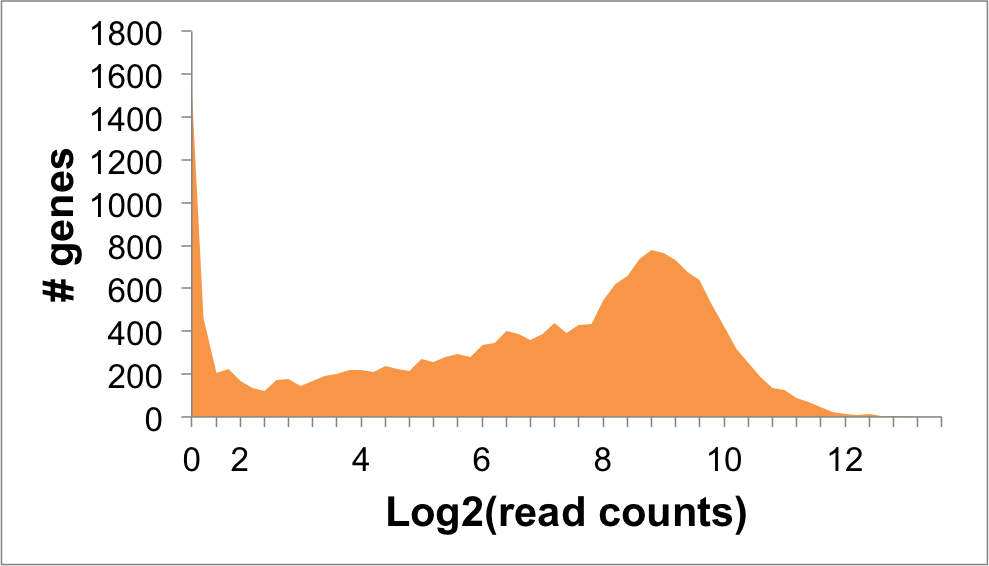
- Expression level (log2 read counts): 5.12
Expression Distribution
ILK Expression in NALM6 Cells: 5.12