MSX2
Gene Information
- Official Symbol: MSX2
- Official Name: msh homeobox 2
- Aliases and Previous Symbols: N/A
- Entrez ID: 4488
- UniProt: P35548
- Interactions: BioGRID
- PubMed articles: Open PubMed
- OMIM: Open OMIM
Function Summary
- Entrez Summary: This gene encodes a member of the muscle segment homeobox gene family. The encoded protein is a transcriptional repressor whose normal activity may establish a balance between survival and apoptosis of neural crest-derived cells required for proper craniofacial morphogenesis. The encoded protein may also have a role in promoting cell growth under certain conditions and may be an important target for the RAS signaling pathways. Mutations in this gene are associated with parietal foramina 1 and craniosynostosis type 2. [provided by RefSeq, Jul 2008].
- UniProt Summary: Acts as a transcriptional regulator in bone development. Represses the ALPL promoter activity and antogonizes the stimulatory effect of DLX5 on ALPL expression during osteoblast differentiation. Probable morphogenetic role. May play a role in limb-pattern formation. In osteoblasts, suppresses transcription driven by the osteocalcin FGF response element (OCFRE). Binds to the homeodomain-response element of the ALPL promoter. {ECO:0000269|PubMed:12145306}.
Pfam Domains GO Terms
Pfam Domains
| Homeobox |
GO Terms
| positive regulation of mesenchymal cell apoptotic process |
| activation of meiosis |
| positive regulation of timing of catagen |
| embryonic nail plate morphogenesis |
| frontal suture morphogenesis |
| regulation of timing of catagen |
| positive regulation of hair follicle maturation |
| BMP signaling pathway involved in heart development |
| negative regulation of CREB transcription factor activity |
| bone trabecula formation |
| negative regulation of keratinocyte differentiation |
| regulation of hair follicle maturation |
| cranial suture morphogenesis |
| wound healing, spreading of epidermal cells |
| nail development |
| bone trabecula morphogenesis |
| enamel mineralization |
| positive regulation of hair follicle development |
| regulation of mesenchymal cell apoptotic process |
| positive regulation of hair cycle |
| epithelial to mesenchymal transition involved in endocardial cushion formation |
| positive regulation of meiotic nuclear division |
| regulation of transcription from RNA polymerase II promoter involved in heart development |
| negative regulation of epidermal cell differentiation |
| tooth mineralization |
| craniofacial suture morphogenesis |
| negative regulation of epidermis development |
| osteoblast development |
| regulation of hair follicle development |
| endocardial cushion formation |
| signal transduction involved in regulation of gene expression |
| negative regulation of transcription regulatory region DNA binding |
| amelogenesis |
| trabecula formation |
| branching involved in mammary gland duct morphogenesis |
| cell surface receptor signaling pathway involved in heart development |
| positive regulation of meiotic cell cycle |
| wound healing, spreading of cells |
| epiboly involved in wound healing |
| epiboly |
| cardiac epithelial to mesenchymal transition |
| regulation of hair cycle |
| embryonic hindlimb morphogenesis |
| outflow tract septum morphogenesis |
| mammary gland duct morphogenesis |
| regulation of meiotic nuclear division |
| positive regulation of BMP signaling pathway |
| embryonic forelimb morphogenesis |
| endocardial cushion morphogenesis |
| hindlimb morphogenesis |
| cellular response to estradiol stimulus |
| positive regulation of epidermis development |
| regulation of keratinocyte differentiation |
| forelimb morphogenesis |
| negative regulation of epithelial cell differentiation |
| endochondral bone growth |
| endocardial cushion development |
| mammary gland morphogenesis |
| chondrocyte development |
| bone growth |
| trabecula morphogenesis |
| negative regulation of fat cell differentiation |
| morphogenesis of an epithelial sheet |
| regulation of meiotic cell cycle |
| mesenchyme morphogenesis |
| regulation of transcription regulatory region DNA binding |
| negative regulation of DNA binding |
| mammary gland epithelium development |
| positive regulation of osteoblast differentiation |
| regulation of epidermal cell differentiation |
| embryonic digit morphogenesis |
| cranial skeletal system development |
| positive regulation of nuclear division |
| epithelial to mesenchymal transition |
| cardiac septum morphogenesis |
| outflow tract morphogenesis |
| positive regulation of reproductive process |
| transcription coregulator activity |
| odontogenesis of dentin-containing tooth |
| chondrocyte differentiation |
| positive regulation of ossification |
| regulation of epidermis development |
| regulation of BMP signaling pathway |
| BMP signaling pathway |
| biomineralization |
| biomineral tissue development |
| organ growth |
| gland morphogenesis |
| positive regulation of transmembrane receptor protein serine/threonine kinase signaling pathway |
| response to BMP |
| cellular response to BMP stimulus |
| cardiac septum development |
| regulation of osteoblast differentiation |
| bone morphogenesis |
| odontogenesis |
| regulation of fat cell differentiation |
| embryonic limb morphogenesis |
| regulation of DNA binding |
| embryonic appendage morphogenesis |
| cardiac chamber morphogenesis |
| osteoblast differentiation |
| mammary gland development |
| branching morphogenesis of an epithelial tube |
| response to estradiol |
| regulation of epithelial cell differentiation |
| appendage morphogenesis |
| limb morphogenesis |
| mesenchymal cell differentiation |
| stem cell differentiation |
| morphogenesis of a branching epithelium |
| negative regulation of DNA-binding transcription factor activity |
| regulation of reproductive process |
| morphogenesis of a branching structure |
| cardiac chamber development |
| negative regulation of binding |
| cartilage development |
| appendage development |
| limb development |
| regulation of ossification |
| regulation of nuclear division |
| transmembrane receptor protein serine/threonine kinase signaling pathway |
| bone development |
| anterior/posterior pattern specification |
| transcription regulatory region DNA binding |
| mesenchyme development |
| connective tissue development |
| regulation of transmembrane receptor protein serine/threonine kinase signaling pathway |
| skeletal system morphogenesis |
| DNA-binding transcription repressor activity, RNA polymerase II-specific |
| heart morphogenesis |
| ossification |
| regulation of cellular response to growth factor stimulus |
| positive regulation of cell cycle process |
| epithelial tube morphogenesis |
| RNA polymerase II regulatory region sequence-specific DNA binding |
| transcription factor binding |
| regionalization |
| positive regulation of cell cycle |
| regulation of binding |
| developmental growth |
| growth |
| nuclear speck |
| gland development |
| sequence-specific DNA binding |
| regulation of DNA-binding transcription factor activity |
| morphogenesis of an epithelium |
| pattern specification process |
| wound healing |
| skeletal system development |
| cellular response to growth factor stimulus |
| cellular response to lipid |
| heart development |
| response to growth factor |
| cellular response to organic cyclic compound |
| tissue morphogenesis |
| embryonic morphogenesis |
| response to wounding |
| cellular response to hormone stimulus |
| positive regulation of organelle organization |
| positive regulation of apoptotic process |
| positive regulation of programmed cell death |
| tube morphogenesis |
| negative regulation of cell population proliferation |
| positive regulation of cell death |
| negative regulation of cell differentiation |
| enzyme linked receptor protein signaling pathway |
| regulation of cell cycle process |
| tube development |
| response to lipid |
| negative regulation of transcription by RNA polymerase II |
| circulatory system development |
| negative regulation of apoptotic process |
| anatomical structure formation involved in morphogenesis |
| negative regulation of programmed cell death |
| response to hormone |
| response to organic cyclic compound |
| negative regulation of developmental process |
| animal organ morphogenesis |
| cell migration |
| positive regulation of cell differentiation |
| embryo development |
| negative regulation of cell death |
| cellular response to oxygen-containing compound |
| cell motility |
| localization of cell |
| epithelium development |
| negative regulation of molecular function |
| regulation of cell cycle |
| negative regulation of transcription, DNA-templated |
| negative regulation of multicellular organismal process |
| positive regulation of cellular component organization |
| cellular response to endogenous stimulus |
| negative regulation of nucleic acid-templated transcription |
| negative regulation of RNA biosynthetic process |
| regulation of organelle organization |
| locomotion |
| negative regulation of RNA metabolic process |
| positive regulation of developmental process |
| negative regulation of cellular macromolecule biosynthetic process |
| negative regulation of nucleobase-containing compound metabolic process |
| negative regulation of macromolecule biosynthetic process |
| response to endogenous stimulus |
| negative regulation of cellular biosynthetic process |
| regulation of apoptotic process |
| negative regulation of biosynthetic process |
| movement of cell or subcellular component |
| response to oxygen-containing compound |
| DNA-binding transcription factor activity, RNA polymerase II-specific |
| regulation of programmed cell death |
| regulation of cell population proliferation |
| cell development |
| positive regulation of signal transduction |
| regulation of cell death |
| negative regulation of gene expression |
| positive regulation of multicellular organismal process |
| tissue development |
| regulation of cell differentiation |
| positive regulation of cell communication |
| positive regulation of signaling |
CRISPR Data
Compound Hit Most Correlated Genes in Chemogenomics Tissues where Essential in the Avana Dataset (DepMap 20Q1)
Compound Hit
No hits were found.
Most Correlated Genes in Chemogenomics
No correlation found to any other genes in chemogenomics.
Tissues where Essential in the Avana Dataset (DepMap 20Q1)
Global Fraction of Cell Lines Where Essential: 0/739
| Tissue | Fraction Of Cell Lines Where Essential |
|---|---|
| 1290807.0 | 0/1 |
| 909776.0 | 0/1 |
| bile duct | 0/28 |
| blood | 0/28 |
| bone | 0/26 |
| breast | 0/33 |
| central nervous system | 0/56 |
| cervix | 0/4 |
| colorectal | 0/17 |
| esophagus | 0/13 |
| fibroblast | 0/1 |
| gastric | 0/16 |
| kidney | 0/21 |
| liver | 0/20 |
| lung | 0/75 |
| lymphocyte | 0/16 |
| ovary | 0/26 |
| pancreas | 0/24 |
| peripheral nervous system | 0/16 |
| plasma cell | 0/15 |
| prostate | 0/1 |
| skin | 0/24 |
| soft tissue | 0/9 |
| thyroid | 0/2 |
| upper aerodigestive | 0/22 |
| urinary tract | 0/29 |
| uterus | 0/5 |
Essentiality in NALM6
- Essentiality Rank: 15750
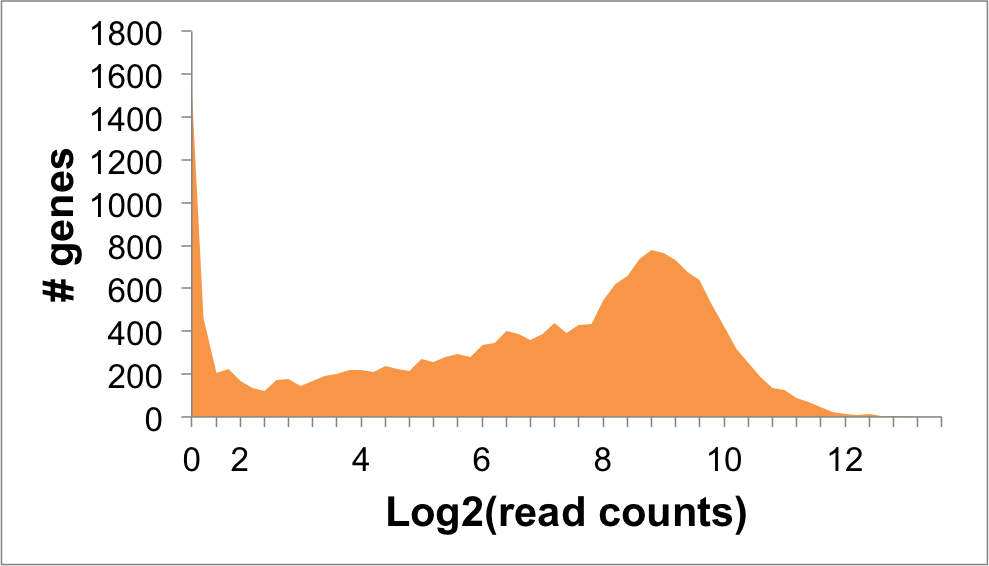
- Expression level (log2 read counts): -5.01
Expression Distribution
MSX2 Expression in NALM6 Cells: -5.01