NOS3
Gene Information
- Official Symbol: NOS3
- Official Name: nitric oxide synthase 3
- Aliases and Previous Symbols: N/A
- Entrez ID: 4846
- UniProt: P29474
- Interactions: BioGRID
- PubMed articles: Open PubMed
- OMIM: Open OMIM
Function Summary
- Entrez Summary: Nitric oxide is a reactive free radical which acts as a biologic mediator in several processes, including neurotransmission and antimicrobial and antitumoral activities. Nitric oxide is synthesized from L-arginine by nitric oxide synthases. Variations in this gene are associated with susceptibility to coronary spasm. Alternative splicing and the use of alternative promoters results in multiple transcript variants. [provided by RefSeq, Oct 2016].
- UniProt Summary: N/A
Pfam Domains GO Terms
Pfam Domains
| FAD binding 1 |
| NAD binding 1 |
| NO synthase |
| Flavodoxin 1 |
GO Terms
| muscle hyperplasia |
| smooth muscle hyperplasia |
| negative regulation of muscle hyperplasia |
| regulation of muscle hyperplasia |
| nitric-oxide synthase activity |
| smooth muscle adaptation |
| tetrahydrobiopterin binding |
| cadmium ion binding |
| regulation of systemic arterial blood pressure by endothelin |
| NADPH-hemoprotein reductase activity |
| regulation of the force of heart contraction by chemical signal |
| arginine binding |
| ovulation from ovarian follicle |
| positive regulation of guanylate cyclase activity |
| arginine catabolic process |
| negative regulation of muscle adaptation |
| regulation of guanylate cyclase activity |
| removal of superoxide radicals |
| nitric oxide biosynthetic process |
| cellular response to superoxide |
| cellular response to oxygen radical |
| FMN binding |
| pulmonary valve morphogenesis |
| arginine metabolic process |
| nitric oxide metabolic process |
| response to superoxide |
| ovulation |
| response to oxygen radical |
| negative regulation of platelet activation |
| nitric oxide mediated signal transduction |
| reactive nitrogen species metabolic process |
| pulmonary valve development |
| positive regulation of nucleotide biosynthetic process |
| positive regulation of cyclase activity |
| positive regulation of purine nucleotide biosynthetic process |
| positive regulation of lyase activity |
| reactive oxygen species biosynthetic process |
| glutamine family amino acid catabolic process |
| regulation of the force of heart contraction |
| negative regulation of biomineralization |
| actin monomer binding |
| negative regulation of biomineral tissue development |
| aortic valve morphogenesis |
| vesicle membrane |
| vasodilation |
| homeostasis of number of cells within a tissue |
| regulation of platelet activation |
| blood vessel remodeling |
| muscle adaptation |
| aortic valve development |
| negative regulation of potassium ion transport |
| response to fluid shear stress |
| lipopolysaccharide-mediated signaling pathway |
| endocardial cushion morphogenesis |
| NADP binding |
| negative regulation of extrinsic apoptotic signaling pathway via death domain receptors |
| regulation of systemic arterial blood pressure by hormone |
| semi-lunar valve development |
| superoxide metabolic process |
| regulation of purine nucleotide biosynthetic process |
| regulation of nucleotide biosynthetic process |
| ventricular septum morphogenesis |
| regulation of cyclase activity |
| ovulation cycle process |
| endocardial cushion development |
| neurotransmitter biosynthetic process |
| regulation of nitric-oxide synthase activity |
| positive regulation of purine nucleotide metabolic process |
| regulation of lyase activity |
| positive regulation of nucleotide metabolic process |
| negative regulation of blood pressure |
| regulation of systemic arterial blood pressure mediated by a chemical signal |
| endocrine process |
| negative regulation of blood coagulation |
| mesenchyme morphogenesis |
| negative regulation of hemostasis |
| positive regulation of Notch signaling pathway |
| negative regulation of coagulation |
| heart valve morphogenesis |
| regulation of monooxygenase activity |
| positive regulation of blood vessel endothelial cell migration |
| regulation of extrinsic apoptotic signaling pathway via death domain receptors |
| flavin adenine dinucleotide binding |
| positive regulation of blood vessel diameter |
| scaffold protein binding |
| negative regulation of calcium ion transport |
| heart valve development |
| endothelial cell migration |
| ovulation cycle |
| endocytic vesicle membrane |
| glutamine family amino acid metabolic process |
| negative regulation of wound healing |
| ventricular septum development |
| cardiac septum morphogenesis |
| caveola |
| cell redox homeostasis |
| regulation of blood coagulation |
| regulation of hemostasis |
| regulation of coagulation |
| epithelial cell migration |
| regulation of muscle adaptation |
| negative regulation of response to wounding |
| epithelium migration |
| regulation of sodium ion transport |
| female gonad development |
| regulation of blood vessel endothelial cell migration |
| cellular oxidant detoxification |
| neurotransmitter metabolic process |
| development of primary female sexual characteristics |
| regulation of biomineralization |
| regulation of biomineral tissue development |
| regulation of systemic arterial blood pressure |
| tissue migration |
| regulation of oxidoreductase activity |
| regulation of potassium ion transport |
| positive regulation of endothelial cell migration |
| tissue remodeling |
| cellular detoxification |
| negative regulation of extrinsic apoptotic signaling pathway |
| regulation of Notch signaling pathway |
| alpha-amino acid catabolic process |
| female sex differentiation |
| response to heat |
| cardiac septum development |
| reactive oxygen species metabolic process |
| regulation of purine nucleotide metabolic process |
| oxidoreductase activity |
| regulation of nucleotide metabolic process |
| cellular amino acid catabolic process |
| cardiac chamber morphogenesis |
| detoxification |
| cardiac ventricle development |
| female gamete generation |
| cellular response to reactive oxygen species |
| regulation of nervous system process |
| positive regulation of small molecule metabolic process |
| regulation of wound healing |
| regulation of blood vessel diameter |
| regulation of tube diameter |
| regulation of tube size |
| positive regulation of epithelial cell migration |
| heme binding |
| negative regulation of ion transport |
| regulation of extrinsic apoptotic signaling pathway |
| regulation of endothelial cell migration |
| positive regulation of angiogenesis |
| regulation of response to wounding |
| vascular process in circulatory system |
| lung development |
| cardiac chamber development |
| ameboidal-type cell migration |
| respiratory tube development |
| response to temperature stimulus |
| regulation of blood pressure |
| positive regulation of vasculature development |
| cellular response to lipopolysaccharide |
| tissue homeostasis |
| cellular response to molecule of bacterial origin |
| response to reactive oxygen species |
| respiratory system development |
| negative regulation of cell activation |
| homeostasis of number of cells |
| calmodulin binding |
| gonad development |
| alpha-amino acid metabolic process |
| cellular response to toxic substance |
| cellular response to biotic stimulus |
| development of primary sexual characteristics |
| regulation of epithelial cell migration |
| mesenchyme development |
| negative regulation of apoptotic signaling pathway |
| regulation of muscle system process |
| cellular response to oxidative stress |
| regulation of heart contraction |
| regulation of calcium ion transport |
| heart morphogenesis |
| sex differentiation |
| organic acid catabolic process |
| carboxylic acid catabolic process |
| rhythmic process |
| regulation of angiogenesis |
| regulation of blood circulation |
| muscle system process |
| cellular amino acid metabolic process |
| response to lipopolysaccharide |
| angiogenesis |
| regulation of vasculature development |
| multicellular organismal homeostasis |
| response to molecule of bacterial origin |
| second-messenger-mediated signaling |
| anatomical structure homeostasis |
| regulation of neurotransmitter levels |
| negative regulation of response to external stimulus |
| cytoskeleton |
| in utero embryonic development |
| response to oxidative stress |
| regulation of metal ion transport |
| blood circulation |
| circulatory system process |
| regulation of apoptotic signaling pathway |
| blood vessel morphogenesis |
| reproductive structure development |
| regulation of small molecule metabolic process |
| reproductive system development |
| small molecule catabolic process |
| cofactor metabolic process |
| mitochondrion organization |
| negative regulation of hydrolase activity |
| negative regulation of transport |
| blood vessel development |
| regulation of body fluid levels |
| drug metabolic process |
| positive regulation of cell migration |
| response to toxic substance |
| vasculature development |
| regulation of anatomical structure size |
| cardiovascular system development |
| cellular response to lipid |
| positive regulation of cell motility |
| heart development |
| response to inorganic substance |
| positive regulation of cellular component movement |
| positive regulation of locomotion |
| tissue morphogenesis |
| regulation of system process |
| Golgi membrane |
| chordate embryonic development |
| regulation of cell activation |
| embryo development ending in birth or egg hatching |
| tube morphogenesis |
| developmental process involved in reproduction |
| negative regulation of cell population proliferation |
| response to bacterium |
| gamete generation |
| regulation of ion transport |
| negative regulation of catalytic activity |
| multicellular organismal reproductive process |
| sexual reproduction |
| multicellular organism reproduction |
| tube development |
| regulation of cell migration |
| response to lipid |
| circulatory system development |
| negative regulation of apoptotic process |
| anatomical structure formation involved in morphogenesis |
| cellular homeostasis |
| negative regulation of programmed cell death |
| response to hormone |
| carboxylic acid metabolic process |
| regulation of cell motility |
| negative regulation of developmental process |
| animal organ morphogenesis |
| oxidation-reduction process |
| cell migration |
| embryo development |
| regulation of locomotion |
| Golgi apparatus |
| negative regulation of cell death |
| multi-organism reproductive process |
| regulation of cellular component movement |
| oxoacid metabolic process |
| organic acid metabolic process |
| cellular response to oxygen-containing compound |
| regulation of anatomical structure morphogenesis |
| organonitrogen compound catabolic process |
| cell motility |
| localization of cell |
| regulation of response to external stimulus |
| positive regulation of phosphorus metabolic process |
| positive regulation of phosphate metabolic process |
| negative regulation of molecular function |
| response to abiotic stimulus |
| negative regulation of multicellular organismal process |
| negative regulation of signal transduction |
| regulation of hydrolase activity |
| response to other organism |
| response to external biotic stimulus |
| locomotion |
| response to biotic stimulus |
| negative regulation of cell communication |
| negative regulation of signaling |
| positive regulation of developmental process |
| reproductive process |
| reproduction |
| positive regulation of catalytic activity |
| response to endogenous stimulus |
| regulation of response to stress |
| regulation of apoptotic process |
| movement of cell or subcellular component |
| response to oxygen-containing compound |
| regulation of programmed cell death |
| regulation of cell population proliferation |
| negative regulation of response to stimulus |
| cellular nitrogen compound biosynthetic process |
| homeostatic process |
| positive regulation of signal transduction |
| regulation of cell death |
| intracellular signal transduction |
| cellular response to stress |
| positive regulation of multicellular organismal process |
| small molecule metabolic process |
| tissue development |
| organic substance catabolic process |
| positive regulation of molecular function |
| regulation of phosphate metabolic process |
| regulation of phosphorus metabolic process |
| cellular catabolic process |
| positive regulation of cell communication |
| positive regulation of signaling |
| regulation of transport |
| positive regulation of nucleobase-containing compound metabolic process |
| system process |
| positive regulation of cellular biosynthetic process |
| positive regulation of gene expression |
| positive regulation of biosynthetic process |
CRISPR Data
Compound Hit Most Correlated Genes in Chemogenomics Tissues where Essential in the Avana Dataset (DepMap 20Q1)
Compound Hit
No hits were found.
Most Correlated Genes in Chemogenomics
No correlation found to any other genes in chemogenomics.
Tissues where Essential in the Avana Dataset (DepMap 20Q1)
Global Fraction of Cell Lines Where Essential: 0/739
| Tissue | Fraction Of Cell Lines Where Essential |
|---|---|
| 1290807.0 | 0/1 |
| 909776.0 | 0/1 |
| bile duct | 0/28 |
| blood | 0/28 |
| bone | 0/26 |
| breast | 0/33 |
| central nervous system | 0/56 |
| cervix | 0/4 |
| colorectal | 0/17 |
| esophagus | 0/13 |
| fibroblast | 0/1 |
| gastric | 0/16 |
| kidney | 0/21 |
| liver | 0/20 |
| lung | 0/75 |
| lymphocyte | 0/16 |
| ovary | 0/26 |
| pancreas | 0/24 |
| peripheral nervous system | 0/16 |
| plasma cell | 0/15 |
| prostate | 0/1 |
| skin | 0/24 |
| soft tissue | 0/9 |
| thyroid | 0/2 |
| upper aerodigestive | 0/22 |
| urinary tract | 0/29 |
| uterus | 0/5 |
Essentiality in NALM6
- Essentiality Rank: 8588
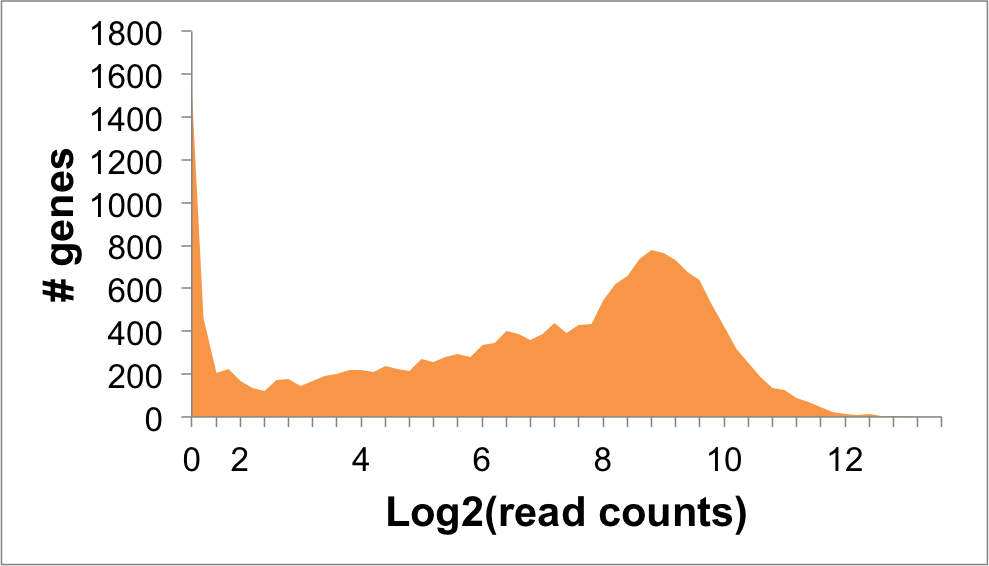
- Expression level (log2 read counts): 2.17
Expression Distribution
NOS3 Expression in NALM6 Cells: 2.17