PSMD9
Gene Information
- Official Symbol: PSMD9
- Official Name: proteasome 26S subunit, non-ATPase 9
- Aliases and Previous Symbols: N/A
- Entrez ID: 5715
- UniProt: O00233
- Interactions: BioGRID
- PubMed articles: Open PubMed
- OMIM: Open OMIM
Function Summary
- Entrez Summary: N/A
- UniProt Summary: Acts as a chaperone during the assembly of the 26S proteasome, specifically of the base subcomplex of the PA700/19S regulatory complex (RC). During the base subcomplex assembly is part of an intermediate PSMD9:PSMC6:PSMC3 module, also known as modulator trimer complex; PSMD9 is released during the further base assembly process. {ECO:0000269|PubMed:19490896}.
Pfam Domains GO Terms
Pfam Domains
No Pfam Domain information is available for this gene.
GO Terms
| proteasome regulatory particle assembly |
| proteasome regulatory particle |
| proteasome regulatory particle, base subcomplex |
| proteasome assembly |
| bHLH transcription factor binding |
| negative regulation of insulin secretion |
| negative regulation of peptide hormone secretion |
| regulation of cellular amino acid metabolic process |
| negative regulation of hormone secretion |
| regulation of hematopoietic stem cell differentiation |
| positive regulation of insulin secretion |
| antigen processing and presentation of exogenous peptide antigen via MHC class I, TAP-dependent |
| regulation of transcription from RNA polymerase II promoter in response to hypoxia |
| antigen processing and presentation of exogenous peptide antigen via MHC class I |
| NIK/NF-kappaB signaling |
| regulation of cellular amine metabolic process |
| anaphase-promoting complex-dependent catabolic process |
| regulation of hematopoietic progenitor cell differentiation |
| negative regulation of G2/M transition of mitotic cell cycle |
| SCF-dependent proteasomal ubiquitin-dependent protein catabolic process |
| interleukin-1-mediated signaling pathway |
| positive regulation of peptide hormone secretion |
| Wnt signaling pathway, planar cell polarity pathway |
| antigen processing and presentation of peptide antigen via MHC class I |
| negative regulation of cell cycle G2/M phase transition |
| regulation of establishment of planar polarity |
| stimulatory C-type lectin receptor signaling pathway |
| innate immune response activating cell surface receptor signaling pathway |
| regulation of stem cell differentiation |
| tumor necrosis factor-mediated signaling pathway |
| regulation of transcription from RNA polymerase II promoter in response to stress |
| regulation of DNA-templated transcription in response to stress |
| positive regulation of hormone secretion |
| negative regulation of protein secretion |
| non-canonical Wnt signaling pathway |
| negative regulation of peptide secretion |
| positive regulation of canonical Wnt signaling pathway |
| regulation of cellular ketone metabolic process |
| Fc-epsilon receptor signaling pathway |
| cellular response to interleukin-1 |
| negative regulation of canonical Wnt signaling pathway |
| T cell receptor signaling pathway |
| antigen processing and presentation of exogenous peptide antigen |
| positive regulation of Wnt signaling pathway |
| regulation of insulin secretion |
| regulation of mRNA stability |
| regulation of morphogenesis of an epithelium |
| negative regulation of protein transport |
| antigen processing and presentation of exogenous antigen |
| regulation of RNA stability |
| negative regulation of establishment of protein localization |
| cellular response to hypoxia |
| antigen processing and presentation of peptide antigen |
| regulation of G2/M transition of mitotic cell cycle |
| cellular response to decreased oxygen levels |
| response to interleukin-1 |
| regulation of mRNA catabolic process |
| negative regulation of secretion by cell |
| negative regulation of Wnt signaling pathway |
| regulation of peptide hormone secretion |
| regulation of cell cycle G2/M phase transition |
| negative regulation of mitotic cell cycle phase transition |
| cellular response to oxygen levels |
| antigen processing and presentation |
| negative regulation of cell cycle phase transition |
| negative regulation of secretion |
| innate immune response-activating signal transduction |
| cellular response to tumor necrosis factor |
| Fc receptor signaling pathway |
| regulation of animal organ morphogenesis |
| activation of innate immune response |
| response to tumor necrosis factor |
| regulation of hormone secretion |
| positive regulation of protein secretion |
| protein deubiquitination |
| regulation of canonical Wnt signaling pathway |
| transcription coactivator activity |
| positive regulation of peptide secretion |
| antigen receptor-mediated signaling pathway |
| protein modification by small protein removal |
| protein polyubiquitination |
| negative regulation of mitotic cell cycle |
| proteasome-mediated ubiquitin-dependent protein catabolic process |
| negative regulation of cell cycle process |
| regulation of mRNA metabolic process |
| positive regulation of innate immune response |
| response to hypoxia |
| proteasomal protein catabolic process |
| Wnt signaling pathway |
| cell-cell signaling by wnt |
| response to decreased oxygen levels |
| regulation of Wnt signaling pathway |
| post-translational protein modification |
| positive regulation of response to biotic stimulus |
| MAPK cascade |
| response to oxygen levels |
| signal transduction by protein phosphorylation |
| positive regulation of secretion by cell |
| regulation of mitotic cell cycle phase transition |
| positive regulation of protein transport |
| cell surface receptor signaling pathway involved in cell-cell signaling |
| regulation of small molecule metabolic process |
| positive regulation of secretion |
| regulation of cell cycle phase transition |
| immune response-activating cell surface receptor signaling pathway |
| regulation of hemopoiesis |
| regulation of innate immune response |
| positive regulation of establishment of protein localization |
| regulation of protein secretion |
| positive regulation of defense response |
| immune response-regulating cell surface receptor signaling pathway |
| negative regulation of transport |
| regulation of peptide secretion |
| positive regulation of multi-organism process |
| regulation of response to biotic stimulus |
| posttranscriptional regulation of gene expression |
| ubiquitin-dependent protein catabolic process |
| modification-dependent protein catabolic process |
| regulation of hormone levels |
| modification-dependent macromolecule catabolic process |
| immune response-activating signal transduction |
| negative regulation of cell cycle |
| proteolysis involved in cellular protein catabolic process |
| immune response-regulating signaling pathway |
| positive regulation of response to external stimulus |
| cellular protein catabolic process |
| activation of immune response |
| regulation of mitotic cell cycle |
| cytokine-mediated signaling pathway |
| protein catabolic process |
| protein ubiquitination |
| regulation of protein transport |
| regulation of peptide transport |
| regulation of establishment of protein localization |
| regulation of secretion by cell |
| regulation of cell cycle process |
| regulation of defense response |
| protein modification by small protein conjugation |
| regulation of multi-organism process |
| regulation of secretion |
| regulation of cellular catabolic process |
| cellular protein-containing complex assembly |
| positive regulation of immune response |
| cellular macromolecule catabolic process |
| protein phosphorylation |
| protein modification by small protein conjugation or removal |
| positive regulation of transport |
| regulation of catabolic process |
| cellular response to cytokine stimulus |
| regulation of protein localization |
| macromolecule catabolic process |
| organonitrogen compound catabolic process |
| regulation of anatomical structure morphogenesis |
| regulation of response to external stimulus |
| response to cytokine |
| cell-cell signaling |
| regulation of immune response |
| positive regulation of immune system process |
| response to abiotic stimulus |
| regulation of cell cycle |
| negative regulation of signal transduction |
| proteolysis |
| transmembrane transport |
| phosphorylation |
| negative regulation of cell communication |
| negative regulation of signaling |
| regulation of response to stress |
| positive regulation of transcription, DNA-templated |
| protein-containing complex assembly |
| negative regulation of response to stimulus |
| positive regulation of nucleic acid-templated transcription |
| positive regulation of RNA biosynthetic process |
| positive regulation of signal transduction |
| regulation of immune system process |
| intracellular signal transduction |
| cellular response to stress |
| positive regulation of RNA metabolic process |
| organic substance catabolic process |
| cellular catabolic process |
| regulation of cell differentiation |
| positive regulation of cell communication |
| positive regulation of signaling |
| protein-containing complex subunit organization |
| regulation of transport |
| positive regulation of nucleobase-containing compound metabolic process |
| positive regulation of macromolecule biosynthetic process |
| positive regulation of cellular biosynthetic process |
| positive regulation of gene expression |
| positive regulation of biosynthetic process |
CRISPR Data
Compound Hit Most Correlated Genes in Chemogenomics Tissues where Essential in the Avana Dataset (DepMap 20Q1)
Compound Hit
No hits were found.
Most Correlated Genes in Chemogenomics
No correlation found to any other genes in chemogenomics.
Tissues where Essential in the Avana Dataset (DepMap 20Q1)
Global Fraction of Cell Lines Where Essential: 5/726
| Tissue | Fraction Of Cell Lines Where Essential |
|---|---|
| 1290807.0 | 0/1 |
| 909776.0 | 0/1 |
| bile duct | 0/28 |
| blood | 0/28 |
| bone | 0/25 |
| breast | 0/33 |
| central nervous system | 0/56 |
| cervix | 0/4 |
| colorectal | 0/17 |
| esophagus | 0/13 |
| fibroblast | 0/1 |
| gastric | 0/15 |
| kidney | 0/21 |
| liver | 0/20 |
| lung | 0/75 |
| lymphocyte | 0/14 |
| ovary | 0/26 |
| pancreas | 0/24 |
| peripheral nervous system | 1/16 |
| plasma cell | 0/15 |
| prostate | 0/1 |
| skin | 0/24 |
| soft tissue | 0/7 |
| thyroid | 0/2 |
| upper aerodigestive | 0/22 |
| urinary tract | 0/29 |
| uterus | 0/5 |
Essentiality in NALM6
- Essentiality Rank: 4930
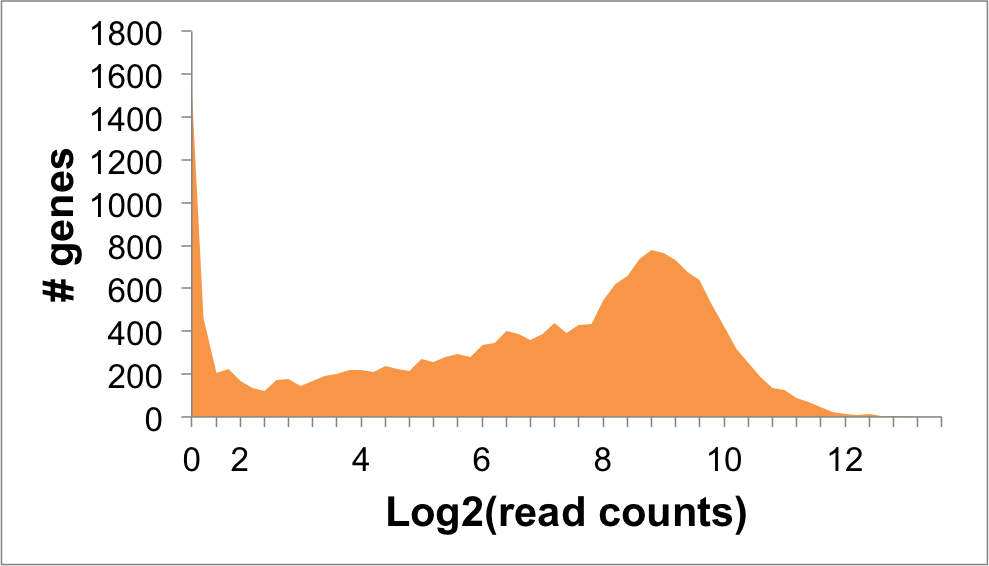
- Expression level (log2 read counts): 6.12
Expression Distribution
PSMD9 Expression in NALM6 Cells: 6.12