SOCS5
Gene Information
- Official Symbol: SOCS5
- Official Name: suppressor of cytokine signaling 5
- Aliases and Previous Symbols: N/A
- Entrez ID: 9655
- UniProt: O75159
- Interactions: BioGRID
- PubMed articles: Open PubMed
- OMIM: Open OMIM
Function Summary
- Entrez Summary: N/A
- UniProt Summary: SOCS family proteins form part of a classical negative feedback system that regulates cytokine signal transduction. May be a substrate-recognition component of a SCF-like ECS (Elongin BC-CUL2/5-SOCS-box protein) E3 ubiquitin-protein ligase complex which mediates the ubiquitination and subsequent proteasomal degradation of target proteins. Inhibits for instance EGF signaling by mediating the degradation of the EGF receptor/EGFR. Involved in the regulation of T-helper cell differentiation by inhibiting of the IL4 signaling pathway which promotes differentiation into the Th2 phenotype. Can also partially inhibit IL6 and LIF signaling. {ECO:0000269|PubMed:15590694}.
Pfam Domains GO Terms
Pfam Domains
| SOCS box |
| SOCS |
| SH2 |
GO Terms
| vascular endothelial cell response to fluid shear stress |
| negative regulation of T-helper 2 cell differentiation |
| negative regulation of monocyte chemotactic protein-1 production |
| positive regulation of T-helper 1 cell differentiation |
| regulation of T-helper 1 cell differentiation |
| regulation of T-helper 2 cell differentiation |
| negative regulation of type 2 immune response |
| 1-phosphatidylinositol-3-kinase regulator activity |
| negative regulation of epidermal growth factor-activated receptor activity |
| negative regulation of T-helper cell differentiation |
| regulation of monocyte chemotactic protein-1 production |
| cellular response to low-density lipoprotein particle stimulus |
| cellular response to fluid shear stress |
| negative regulation of chemokine production |
| phosphatidylinositol 3-kinase complex |
| negative regulation of CD4-positive, alpha-beta T cell differentiation |
| positive regulation of T-helper 1 type immune response |
| positive regulation of T-helper cell differentiation |
| negative regulation of alpha-beta T cell differentiation |
| response to lipoprotein particle |
| regulation of T-helper 1 type immune response |
| regulation of epidermal growth factor-activated receptor activity |
| negative regulation of protein tyrosine kinase activity |
| negative regulation of CD4-positive, alpha-beta T cell activation |
| positive regulation of CD4-positive, alpha-beta T cell differentiation |
| cellular response to lipoprotein particle stimulus |
| regulation of type 2 immune response |
| epidermal growth factor receptor binding |
| regulation of T-helper cell differentiation |
| positive regulation of CD4-positive, alpha-beta T cell activation |
| response to fluid shear stress |
| negative regulation of alpha-beta T cell activation |
| receptor signaling pathway via JAK-STAT |
| receptor signaling pathway via STAT |
| negative regulation of T cell differentiation |
| negative regulation of interleukin-6 production |
| positive regulation of alpha-beta T cell differentiation |
| regulation of CD4-positive, alpha-beta T cell differentiation |
| negative regulation of epidermal growth factor receptor signaling pathway |
| epidermal growth factor receptor signaling pathway |
| negative regulation of peptidyl-tyrosine phosphorylation |
| negative regulation of ERBB signaling pathway |
| phosphatidylinositol phosphorylation |
| negative regulation of lymphocyte differentiation |
| regulation of phosphatidylinositol 3-kinase activity |
| receptor tyrosine kinase binding |
| negative regulation of signaling receptor activity |
| regulation of CD4-positive, alpha-beta T cell activation |
| positive regulation of alpha-beta T cell activation |
| regulation of alpha-beta T cell differentiation |
| regulation of lipid kinase activity |
| lipid phosphorylation |
| ERBB signaling pathway |
| regulation of chemokine production |
| positive regulation of T cell differentiation |
| positive regulation of proteasomal ubiquitin-dependent protein catabolic process |
| regulation of epidermal growth factor receptor signaling pathway |
| regulation of phospholipid metabolic process |
| regulation of protein tyrosine kinase activity |
| regulation of ERBB signaling pathway |
| regulation of alpha-beta T cell activation |
| positive regulation of lymphocyte differentiation |
| positive regulation of ubiquitin-dependent protein catabolic process |
| positive regulation of adaptive immune response based on somatic recombination of immune receptors built from immunoglobulin superfamily domains |
| negative regulation of leukocyte differentiation |
| positive regulation of proteasomal protein catabolic process |
| positive regulation of adaptive immune response |
| negative regulation of T cell activation |
| positive regulation of proteolysis involved in cellular protein catabolic process |
| negative regulation of immune effector process |
| negative regulation of leukocyte cell-cell adhesion |
| regulation of proteasomal ubiquitin-dependent protein catabolic process |
| negative regulation of inflammatory response |
| negative regulation of hemopoiesis |
| regulation of T cell differentiation |
| regulation of interleukin-6 production |
| positive regulation of cellular protein catabolic process |
| negative regulation of lymphocyte activation |
| regulation of adaptive immune response based on somatic recombination of immune receptors built from immunoglobulin superfamily domains |
| positive regulation of leukocyte differentiation |
| negative regulation of immune response |
| regulation of ubiquitin-dependent protein catabolic process |
| regulation of adaptive immune response |
| phosphatidylinositol metabolic process |
| regulation of lymphocyte differentiation |
| regulation of signaling receptor activity |
| negative regulation of cell-cell adhesion |
| negative regulation of leukocyte activation |
| regulation of proteasomal protein catabolic process |
| positive regulation of hemopoiesis |
| negative regulation of cell activation |
| lipid modification |
| positive regulation of T cell activation |
| negative regulation of defense response |
| positive regulation of leukocyte cell-cell adhesion |
| positive regulation of protein catabolic process |
| regulation of proteolysis involved in cellular protein catabolic process |
| positive regulation of immune effector process |
| negative regulation of protein kinase activity |
| negative regulation of kinase activity |
| regulation of cellular protein catabolic process |
| regulation of peptidyl-tyrosine phosphorylation |
| positive regulation of cell-cell adhesion |
| regulation of leukocyte differentiation |
| negative regulation of cell adhesion |
| negative regulation of cytokine production |
| negative regulation of transferase activity |
| regulation of leukocyte cell-cell adhesion |
| glycerophospholipid metabolic process |
| regulation of T cell activation |
| regulation of inflammatory response |
| positive regulation of proteolysis |
| positive regulation of lymphocyte activation |
| post-translational protein modification |
| positive regulation of cellular catabolic process |
| negative regulation of response to external stimulus |
| phospholipid metabolic process |
| glycerolipid metabolic process |
| regulation of protein catabolic process |
| regulation of lipid metabolic process |
| regulation of cell-cell adhesion |
| positive regulation of leukocyte activation |
| positive regulation of cell adhesion |
| negative regulation of protein phosphorylation |
| positive regulation of cell activation |
| positive regulation of catabolic process |
| negative regulation of immune system process |
| negative regulation of phosphorylation |
| regulation of hemopoiesis |
| regulation of immune effector process |
| transmembrane receptor protein tyrosine kinase signaling pathway |
| regulation of lymphocyte activation |
| negative regulation of phosphate metabolic process |
| negative regulation of phosphorus metabolic process |
| negative regulation of protein modification process |
| regulation of leukocyte activation |
| regulation of cell activation |
| regulation of growth |
| cytokine-mediated signaling pathway |
| regulation of cell adhesion |
| protein ubiquitination |
| regulation of cytokine production |
| negative regulation of cell differentiation |
| enzyme linked receptor protein signaling pathway |
| regulation of proteolysis |
| regulation of defense response |
| protein modification by small protein conjugation |
| negative regulation of catalytic activity |
| regulation of protein kinase activity |
| regulation of cellular catabolic process |
| positive regulation of immune response |
| regulation of kinase activity |
| organophosphate metabolic process |
| negative regulation of developmental process |
| cellular lipid metabolic process |
| positive regulation of cell differentiation |
| regulation of transferase activity |
| protein modification by small protein conjugation or removal |
| regulation of catabolic process |
| response to organonitrogen compound |
| cellular response to cytokine stimulus |
| negative regulation of cellular protein metabolic process |
| response to nitrogen compound |
| regulation of response to external stimulus |
| response to cytokine |
| negative regulation of protein metabolic process |
| negative regulation of molecular function |
| positive regulation of immune system process |
| regulation of immune response |
| negative regulation of multicellular organismal process |
| lipid metabolic process |
| negative regulation of signal transduction |
| phosphorylation |
| negative regulation of cell communication |
| negative regulation of signaling |
| positive regulation of developmental process |
| regulation of protein phosphorylation |
| response to endogenous stimulus |
| regulation of response to stress |
| regulation of phosphorylation |
| positive regulation of cellular protein metabolic process |
| negative regulation of response to stimulus |
| regulation of immune system process |
| intracellular signal transduction |
| cellular response to stress |
| positive regulation of protein metabolic process |
| positive regulation of multicellular organismal process |
| regulation of phosphate metabolic process |
| regulation of phosphorus metabolic process |
| regulation of cell differentiation |
| regulation of protein modification process |
CRISPR Data
Compound Hit Most Correlated Genes in Chemogenomics Tissues where Essential in the Avana Dataset (DepMap 20Q1)
Compound Hit
| Screen | Score |
|---|---|
| Nutlin-3A 1.6μM R06 exp294 | 1.86 |
Most Correlated Genes in Chemogenomics
No correlation found to any other genes in chemogenomics.
Tissues where Essential in the Avana Dataset (DepMap 20Q1)
Global Fraction of Cell Lines Where Essential: 0/739
| Tissue | Fraction Of Cell Lines Where Essential |
|---|---|
| 1290807.0 | 0/1 |
| 909776.0 | 0/1 |
| bile duct | 0/28 |
| blood | 0/28 |
| bone | 0/26 |
| breast | 0/33 |
| central nervous system | 0/56 |
| cervix | 0/4 |
| colorectal | 0/17 |
| esophagus | 0/13 |
| fibroblast | 0/1 |
| gastric | 0/16 |
| kidney | 0/21 |
| liver | 0/20 |
| lung | 0/75 |
| lymphocyte | 0/16 |
| ovary | 0/26 |
| pancreas | 0/24 |
| peripheral nervous system | 0/16 |
| plasma cell | 0/15 |
| prostate | 0/1 |
| skin | 0/24 |
| soft tissue | 0/9 |
| thyroid | 0/2 |
| upper aerodigestive | 0/22 |
| urinary tract | 0/29 |
| uterus | 0/5 |
Essentiality in NALM6
- Essentiality Rank: 14070
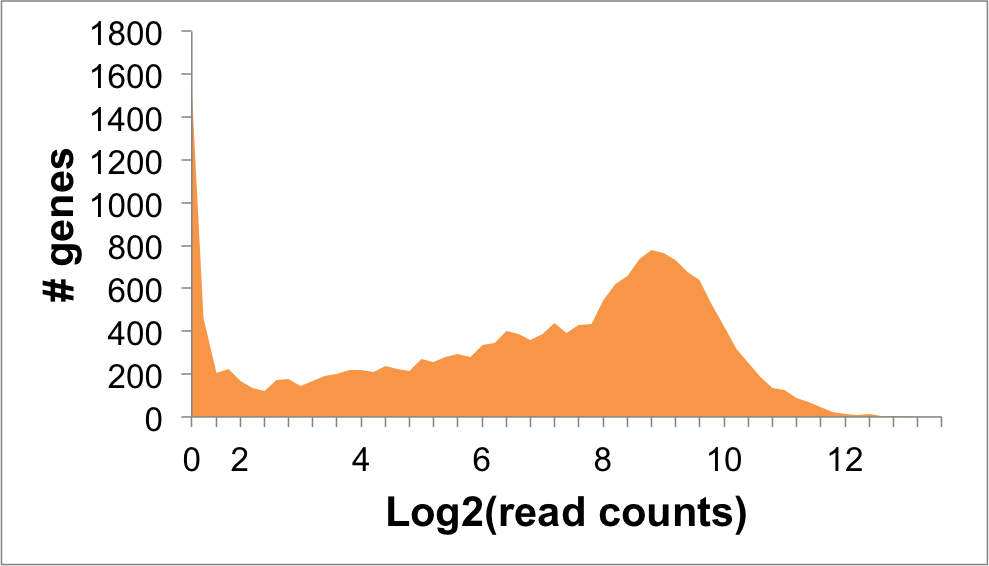
- Expression level (log2 read counts): 4.51
Expression Distribution
SOCS5 Expression in NALM6 Cells: 4.51