UBB
Gene Information
- Official Symbol: UBB
- Official Name: ubiquitin B
- Aliases and Previous Symbols: N/A
- Entrez ID: 7314
- UniProt: P0CG47
- Interactions: BioGRID
- PubMed articles: Open PubMed
- OMIM: Open OMIM
Function Summary
- Entrez Summary: This gene encodes ubiquitin, one of the most conserved proteins known. Ubiquitin has a major role in targeting cellular proteins for degradation by the 26S proteosome. It is also involved in the maintenance of chromatin structure, the regulation of gene expression, and the stress response. Ubiquitin is synthesized as a precursor protein consisting of either polyubiquitin chains or a single ubiquitin moiety fused to an unrelated protein. This gene consists of three direct repeats of the ubiquitin coding sequence with no spacer sequence. Consequently, the protein is expressed as a polyubiquitin precursor with a final amino acid after the last repeat. An aberrant form of this protein has been detected in patients with Alzheimer's disease and Down syndrome. Pseudogenes of this gene are located on chromosomes 1, 2, 13, and 17. Alternative splicing results in multiple transcript variants. [provided by RefSeq, Aug 2013].
- UniProt Summary: N/A
Pfam Domains GO Terms
Pfam Domains
| Rad60-SLD |
| ubiquitin |
GO Terms
| hypothalamus gonadotrophin-releasing hormone neuron development |
| hypothalamus gonadotrophin-releasing hormone neuron differentiation |
| positive regulation of protein monoubiquitination |
| positive regulation of intrinsic apoptotic signaling pathway by p53 class mediator |
| regulation of protein monoubiquitination |
| fat pad development |
| hypothalamus cell differentiation |
| female meiosis I |
| protein tag |
| seminiferous tubule development |
| error-prone translesion synthesis |
| error-free translesion synthesis |
| mitochondrion transport along microtubule |
| establishment of mitochondrion localization, microtubule-mediated |
| positive regulation of signal transduction by p53 class mediator |
| nucleotide-excision repair, DNA duplex unwinding |
| hypothalamus development |
| nucleotide-excision repair, DNA damage recognition |
| nucleotide-excision repair, DNA gap filling |
| male meiosis I |
| establishment of mitochondrion localization |
| global genome nucleotide-excision repair |
| nucleotide-binding oligomerization domain containing signaling pathway |
| nucleotide-binding domain, leucine rich repeat containing receptor signaling pathway |
| nucleotide-excision repair, preincision complex assembly |
| TRIF-dependent toll-like receptor signaling pathway |
| regulation of intrinsic apoptotic signaling pathway by p53 class mediator |
| female meiotic nuclear division |
| forebrain neuron development |
| MyD88-dependent toll-like receptor signaling pathway |
| MyD88-independent toll-like receptor signaling pathway |
| energy homeostasis |
| cytoplasmic pattern recognition receptor signaling pathway |
| adipose tissue development |
| nucleotide-excision repair, DNA incision, 5-to lesion |
| virion assembly |
| DNA damage response, detection of DNA damage |
| nucleotide-excision repair, DNA incision |
| translesion synthesis |
| mitochondrion localization |
| male meiotic nuclear division |
| forebrain neuron differentiation |
| DNA synthesis involved in DNA repair |
| interstrand cross-link repair |
| postreplication repair |
| intracellular transport of virus |
| host cell |
| transport of virus |
| positive regulation of intrinsic apoptotic signaling pathway |
| forebrain generation of neurons |
| protein localization to peroxisome |
| establishment of protein localization to peroxisome |
| protein targeting to peroxisome |
| endocytic vesicle membrane |
| I-kappaB kinase/NF-kappaB signaling |
| multi-organism localization |
| multi-organism transport |
| regulation of mitochondrial membrane potential |
| peroxisomal transport |
| transcription-coupled nucleotide-excision repair |
| negative regulation of transforming growth factor beta receptor signaling pathway |
| diencephalon development |
| negative regulation of cellular response to transforming growth factor beta stimulus |
| regulation of transcription from RNA polymerase II promoter in response to hypoxia |
| peroxisome organization |
| organelle transport along microtubule |
| central nervous system neuron development |
| anaphase-promoting complex-dependent catabolic process |
| JNK cascade |
| female gonad development |
| development of primary female sexual characteristics |
| interleukin-1-mediated signaling pathway |
| toll-like receptor signaling pathway |
| transforming growth factor beta receptor signaling pathway |
| stress-activated MAPK cascade |
| female sex differentiation |
| limbic system development |
| DNA biosynthetic process |
| meiosis I |
| DNA duplex unwinding |
| nucleotide-excision repair |
| meiosis I cell cycle process |
| regulation of transforming growth factor beta receptor signaling pathway |
| negative regulation of transmembrane receptor protein serine/threonine kinase signaling pathway |
| regulation of cellular response to transforming growth factor beta stimulus |
| positive regulation of protein ubiquitination |
| regulation of transcription from RNA polymerase II promoter in response to stress |
| DNA geometric change |
| regulation of DNA-templated transcription in response to stress |
| pattern recognition receptor signaling pathway |
| female gamete generation |
| male gonad development |
| positive regulation of protein modification by small protein conjugation or removal |
| development of primary male sexual characteristics |
| vesicle |
| stress-activated protein kinase signaling cascade |
| negative regulation of cellular response to growth factor stimulus |
| meiotic nuclear division |
| positive regulation of NF-kappaB transcription factor activity |
| cellular response to transforming growth factor beta stimulus |
| activation of MAPK activity |
| transport along microtubule |
| male sex differentiation |
| regulation of intrinsic apoptotic signaling pathway |
| response to transforming growth factor beta |
| mitochondrial outer membrane |
| intracellular receptor signaling pathway |
| meiotic cell cycle process |
| cellular response to interleukin-1 |
| positive regulation of apoptotic signaling pathway |
| cytoskeleton-dependent intracellular transport |
| central nervous system neuron differentiation |
| regulation of mRNA stability |
| regulation of signal transduction by p53 class mediator |
| microtubule-based transport |
| regulation of proteasomal protein catabolic process |
| regulation of RNA stability |
| cellular response to hypoxia |
| cellular response to decreased oxygen levels |
| response to interleukin-1 |
| transmembrane receptor protein serine/threonine kinase signaling pathway |
| regulation of protein ubiquitination |
| protein-DNA complex assembly |
| regulation of mRNA catabolic process |
| viral life cycle |
| gonad development |
| endosome membrane |
| cellular response to oxygen levels |
| regulation of proteolysis involved in cellular protein catabolic process |
| development of primary sexual characteristics |
| meiotic cell cycle |
| connective tissue development |
| endosomal transport |
| regulation of protein modification by small protein conjugation or removal |
| innate immune response-activating signal transduction |
| regulation of transmembrane receptor protein serine/threonine kinase signaling pathway |
| protein-DNA complex subunit organization |
| regulation of cellular protein catabolic process |
| activation of innate immune response |
| positive regulation of DNA-binding transcription factor activity |
| positive regulation of MAP kinase activity |
| sex differentiation |
| microtubule-based movement |
| regulation of cellular response to growth factor stimulus |
| protein deubiquitination |
| nuclear division |
| ubiquitin protein ligase binding |
| protein modification by small protein removal |
| DNA conformation change |
| protein polyubiquitination |
| nucleic acid phosphodiester bond hydrolysis |
| regulation of neuron death |
| organelle fission |
| neuron projection |
| multicellular organismal homeostasis |
| proteasome-mediated ubiquitin-dependent protein catabolic process |
| regulation of mRNA metabolic process |
| activation of protein kinase activity |
| positive regulation of protein serine/threonine kinase activity |
| positive regulation of innate immune response |
| regulation of MAP kinase activity |
| response to hypoxia |
| proteasomal protein catabolic process |
| cellular process involved in reproduction in multicellular organism |
| Wnt signaling pathway |
| response to decreased oxygen levels |
| cell-cell signaling by wnt |
| protein targeting |
| positive regulation of response to biotic stimulus |
| establishment of organelle localization |
| neuronal cell body |
| MAPK cascade |
| response to oxygen levels |
| regulation of protein catabolic process |
| forebrain development |
| signal transduction by protein phosphorylation |
| regulation of apoptotic signaling pathway |
| reproductive structure development |
| cell surface receptor signaling pathway involved in cell-cell signaling |
| regulation of DNA-binding transcription factor activity |
| reproductive system development |
| regulation of membrane potential |
| establishment of protein localization to organelle |
| regulation of innate immune response |
| positive regulation of defense response |
| neuron projection morphogenesis |
| plasma membrane bounded cell projection morphogenesis |
| cell projection morphogenesis |
| cellular response to growth factor stimulus |
| DNA repair |
| positive regulation of multi-organism process |
| cell part morphogenesis |
| regulation of protein serine/threonine kinase activity |
| regulation of response to biotic stimulus |
| posttranscriptional regulation of gene expression |
| ubiquitin-dependent protein catabolic process |
| response to growth factor |
| modification-dependent protein catabolic process |
| positive regulation of protein kinase activity |
| positive regulation of MAPK cascade |
| modification-dependent macromolecule catabolic process |
| immune response-activating signal transduction |
| male gamete generation |
| positive regulation of kinase activity |
| organelle localization |
| proteolysis involved in cellular protein catabolic process |
| immune response-regulating signaling pathway |
| positive regulation of response to external stimulus |
| cellular protein catabolic process |
| activation of immune response |
| positive regulation of apoptotic process |
| positive regulation of programmed cell death |
| positive regulation of transferase activity |
| neuron projection development |
| developmental process involved in reproduction |
| microtubule-based process |
| cytokine-mediated signaling pathway |
| protein catabolic process |
| protein ubiquitination |
| detection of stimulus |
| gamete generation |
| positive regulation of cell death |
| viral process |
| enzyme linked receptor protein signaling pathway |
| cell morphogenesis |
| regulation of proteolysis |
| protein localization to organelle |
| brain development |
| DNA metabolic process |
| regulation of MAPK cascade |
| regulation of defense response |
| protein modification by small protein conjugation |
| cellular response to DNA damage stimulus |
| regulation of multi-organism process |
| head development |
| symbiotic process |
| regulation of protein kinase activity |
| neuron development |
| interspecies interaction between organisms |
| cellular component morphogenesis |
| multicellular organismal reproductive process |
| sexual reproduction |
| regulation of cellular catabolic process |
| cellular protein-containing complex assembly |
| multicellular organism reproduction |
| tube development |
| membrane organization |
| negative regulation of transcription by RNA polymerase II |
| positive regulation of immune response |
| regulation of kinase activity |
| negative regulation of apoptotic process |
| cellular macromolecule catabolic process |
| negative regulation of programmed cell death |
| endoplasmic reticulum membrane |
| protein phosphorylation |
| regulation of transferase activity |
| central nervous system development |
| protein modification by small protein conjugation or removal |
| intracellular protein transport |
| regulation of catabolic process |
| negative regulation of cell death |
| multi-organism reproductive process |
| cell cycle process |
| cellular response to cytokine stimulus |
| neuron differentiation |
| positive regulation of protein phosphorylation |
| positive regulation of intracellular signal transduction |
| macromolecule catabolic process |
| positive regulation of phosphorylation |
| organonitrogen compound catabolic process |
| chromosome organization |
| regulation of response to external stimulus |
| nucleobase-containing compound biosynthetic process |
| response to cytokine |
| cell-cell signaling |
| plasma membrane bounded cell projection organization |
| positive regulation of phosphate metabolic process |
| positive regulation of phosphorus metabolic process |
| regulation of immune response |
| positive regulation of immune system process |
| response to abiotic stimulus |
| cell projection organization |
| heterocycle biosynthetic process |
| aromatic compound biosynthetic process |
| negative regulation of transcription, DNA-templated |
| positive regulation of transcription by RNA polymerase II |
| cellular response to endogenous stimulus |
| positive regulation of protein modification process |
| negative regulation of nucleic acid-templated transcription |
| negative regulation of RNA biosynthetic process |
| mitochondrion |
| negative regulation of signal transduction |
| proteolysis |
| transmembrane transport |
| phosphorylation |
| organic cyclic compound biosynthetic process |
| negative regulation of RNA metabolic process |
| cell cycle |
| negative regulation of cell communication |
| negative regulation of signaling |
| negative regulation of cellular macromolecule biosynthetic process |
| reproductive process |
| reproduction |
| positive regulation of catalytic activity |
| negative regulation of nucleobase-containing compound metabolic process |
| regulation of protein phosphorylation |
| negative regulation of macromolecule biosynthetic process |
| response to endogenous stimulus |
| regulation of response to stress |
| protein transport |
| negative regulation of cellular biosynthetic process |
| intracellular transport |
| generation of neurons |
| peptide transport |
| regulation of apoptotic process |
| positive regulation of transcription, DNA-templated |
| negative regulation of biosynthetic process |
| movement of cell or subcellular component |
| protein-containing complex assembly |
| regulation of programmed cell death |
| amide transport |
| cellular protein localization |
| regulation of phosphorylation |
| extracellular space |
| cellular macromolecule localization |
| positive regulation of cellular protein metabolic process |
| establishment of protein localization |
| negative regulation of response to stimulus |
| neurogenesis |
| cellular nitrogen compound biosynthetic process |
| positive regulation of nucleic acid-templated transcription |
| positive regulation of RNA biosynthetic process |
| homeostatic process |
| cell development |
| positive regulation of signal transduction |
| regulation of immune system process |
| regulation of cell death |
| intracellular signal transduction |
| cellular response to stress |
| positive regulation of protein metabolic process |
| cellular macromolecule biosynthetic process |
| negative regulation of gene expression |
| positive regulation of RNA metabolic process |
| tissue development |
| macromolecule biosynthetic process |
| organic substance catabolic process |
| positive regulation of molecular function |
| regulation of phosphate metabolic process |
| regulation of phosphorus metabolic process |
| cellular catabolic process |
| positive regulation of cell communication |
| positive regulation of signaling |
| regulation of intracellular signal transduction |
| establishment of localization in cell |
| regulation of protein modification process |
| nitrogen compound transport |
| protein-containing complex subunit organization |
| positive regulation of nucleobase-containing compound metabolic process |
| positive regulation of macromolecule biosynthetic process |
| vesicle-mediated transport |
| positive regulation of cellular biosynthetic process |
| positive regulation of gene expression |
| positive regulation of biosynthetic process |
CRISPR Data
Compound Hit Most Correlated Genes in Chemogenomics Tissues where Essential in the Avana Dataset (DepMap 20Q1)
Compound Hit
| Screen | Score |
|---|---|
| Metformin 40μM R03 exp132 | -1.99 |
| Citral 75μM R06 exp275 | -1.9 |
| BN82002 4μM R07 exp340 | 1.79 |
| Rapamycin 2μM R07 exp306 | 1.96 |
Most Correlated Genes in Chemogenomics
| Gene | Correlation |
|---|---|
| OTUB1 | 0.415 |
Tissues where Essential in the Avana Dataset (DepMap 20Q1)
Global Fraction of Cell Lines Where Essential: 0/739
| Tissue | Fraction Of Cell Lines Where Essential |
|---|---|
| 1290807.0 | 0/1 |
| 909776.0 | 0/1 |
| bile duct | 0/28 |
| blood | 0/28 |
| bone | 0/26 |
| breast | 0/33 |
| central nervous system | 0/56 |
| cervix | 0/4 |
| colorectal | 0/17 |
| esophagus | 0/13 |
| fibroblast | 0/1 |
| gastric | 0/16 |
| kidney | 0/21 |
| liver | 0/20 |
| lung | 0/75 |
| lymphocyte | 0/16 |
| ovary | 0/26 |
| pancreas | 0/24 |
| peripheral nervous system | 0/16 |
| plasma cell | 0/15 |
| prostate | 0/1 |
| skin | 0/24 |
| soft tissue | 0/9 |
| thyroid | 0/2 |
| upper aerodigestive | 0/22 |
| urinary tract | 0/29 |
| uterus | 0/5 |
Essentiality in NALM6
- Essentiality Rank: 2788
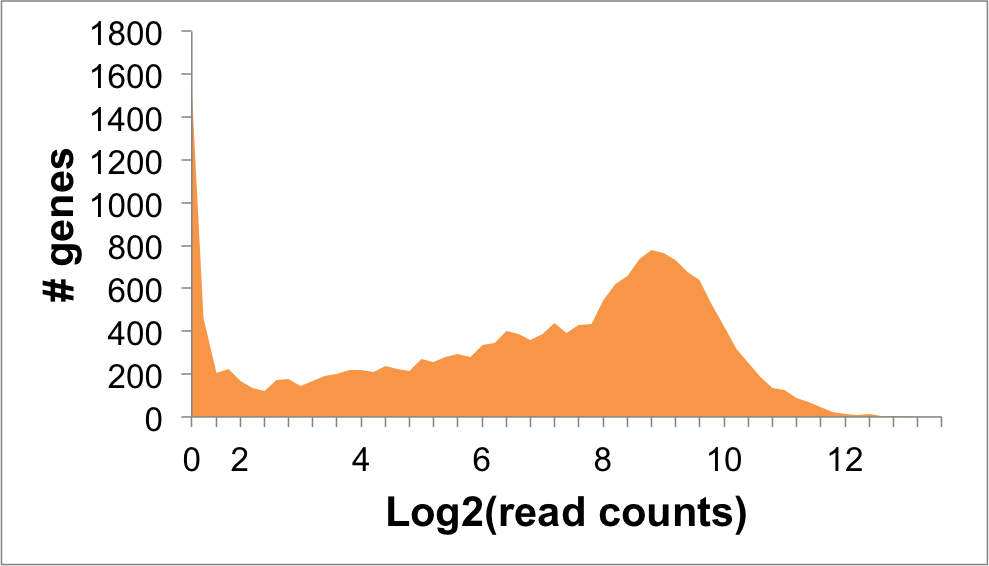
- Expression level (log2 read counts): 8.01
Expression Distribution
UBB Expression in NALM6 Cells: 8.01