UCN
Gene Information
- Official Symbol: UCN
- Official Name: urocortin
- Aliases and Previous Symbols: N/A
- Entrez ID: 7349
- UniProt: P55089
- Interactions: BioGRID
- PubMed articles: Open PubMed
- OMIM: Open OMIM
Function Summary
- Entrez Summary: This gene encodes a member of the sauvagine/corticotropin-releasing factor/urotensin I family. The encoded preproprotein is proteolytically processed to generate the mature peptide, an endogenous ligand for both corticotropin-releasing factor receptor 1 and corticotropin-releasing factor receptor 2. In the brain this peptide may be responsible for the effects of stress on appetite. This peptide may also play a role in mood disorders, neurodegeneration, and skeletal system disorders. In spite of the gene family name similarity, the product of this gene has no sequence similarity to urotensin-2. [provided by RefSeq, Feb 2016].
- UniProt Summary: Acts in vitro to stimulate the secretion of adrenocorticotropic hormone (ACTH) (PubMed:8612563). Binds with high affinity to CRF receptor types 1, 2-alpha, and 2-beta (PubMed:8612563). Plays a role in the establishment of normal hearing thresholds (By similarity). Reduces food intake and regulates ghrelin levels in gastric body and plasma (By similarity). {ECO:0000250|UniProtKB:P55090, ECO:0000250|UniProtKB:P81615, ECO:0000269|PubMed:8612563}.
Pfam Domains GO Terms
Pfam Domains
| CRF |
GO Terms
| histone deacetylase inhibitor activity |
| corticotropin-releasing hormone activity |
| gastric motility |
| gastric emptying |
| corticotropin-releasing hormone receptor 1 binding |
| corticotropin-releasing hormone receptor 2 binding |
| positive regulation of cortisol secretion |
| positive regulation of corticotropin secretion |
| negative regulation of glucagon secretion |
| regulation of cortisol secretion |
| negative regulation of epinephrine secretion |
| negative regulation of histone deacetylation |
| regulation of corticotropin secretion |
| positive regulation of glucocorticoid secretion |
| positive regulation of behavioral fear response |
| positive regulation of fear response |
| negative regulation of gastric acid secretion |
| pancreatic juice secretion |
| regulation of epinephrine secretion |
| varicosity |
| positive regulation of corticosteroid hormone secretion |
| regulation of fear response |
| regulation of behavioral fear response |
| regulation of glucagon secretion |
| drinking behavior |
| negative regulation of feeding behavior |
| regulation of glucocorticoid secretion |
| negative regulation of cell size |
| positive regulation of steroid hormone secretion |
| positive regulation of vascular permeability |
| regulation of gastric acid secretion |
| positive regulation of cardiac muscle contraction |
| negative regulation of appetite |
| negative regulation of response to food |
| positive regulation of striated muscle contraction |
| negative regulation of catecholamine secretion |
| negative regulation of response to extracellular stimulus |
| negative regulation of response to nutrient levels |
| regulation of corticosteroid hormone secretion |
| negative regulation of necrotic cell death |
| negative regulation of behavior |
| activation of protein kinase A activity |
| regulation of response to food |
| negative regulation of digestive system process |
| regulation of steroid hormone secretion |
| secretion by tissue |
| positive regulation of calcium ion import |
| positive regulation of cAMP-mediated signaling |
| regulation of appetite |
| positive regulation of collagen biosynthetic process |
| regulation of response to nutrient levels |
| negative regulation of amine transport |
| regulation of response to extracellular stimulus |
| positive regulation of collagen metabolic process |
| response to auditory stimulus |
| startle response |
| regulation of histone deacetylation |
| positive regulation of behavior |
| neuropeptide hormone activity |
| regulation of feeding behavior |
| regulation of necrotic cell death |
| response to pain |
| positive regulation of response to drug |
| regulation of collagen biosynthetic process |
| positive regulation of DNA replication |
| regulation of vascular permeability |
| positive regulation of heart contraction |
| regulation of calcium ion import |
| regulation of digestive system process |
| regulation of collagen metabolic process |
| negative regulation of histone modification |
| regulation of protein deacetylation |
| regulation of endocrine process |
| positive regulation of muscle contraction |
| negative regulation of blood pressure |
| negative regulation of peptide hormone secretion |
| regulation of cAMP-mediated signaling |
| axon terminus |
| intraspecies interaction between organisms |
| social behavior |
| positive regulation of blood vessel diameter |
| negative regulation of chromatin organization |
| positive regulation of lipid transport |
| regulation of catecholamine secretion |
| negative regulation of hormone secretion |
| multi-organism behavior |
| multicellular organismal response to stress |
| regulation of synaptic transmission, glutamatergic |
| positive regulation of blood circulation |
| regulation of behavior |
| digestive system process |
| body fluid secretion |
| regulation of cardiac muscle contraction |
| associative learning |
| aerobic respiration |
| positive regulation of lipid localization |
| feeding behavior |
| regulation of striated muscle contraction |
| regulation of amine transport |
| positive regulation of interleukin-6 production |
| positive regulation of peptide hormone secretion |
| regulation of response to drug |
| positive regulation of peptidyl-serine phosphorylation |
| neuropeptide signaling pathway |
| neuromuscular process |
| regulation of lipid transport |
| regulation of DNA replication |
| digestion |
| positive regulation of calcium ion transport |
| positive regulation of translation |
| positive regulation of hormone secretion |
| negative regulation of chromosome organization |
| perikaryon |
| response to estradiol |
| regulation of peptidyl-serine phosphorylation |
| regulation of lipid localization |
| regulation of tube diameter |
| regulation of blood vessel diameter |
| negative regulation of peptide secretion |
| regulation of tube size |
| regulation of interleukin-6 production |
| response to glucocorticoid |
| sensory perception of sound |
| regulation of histone modification |
| learning |
| positive regulation of cellular amide metabolic process |
| regulation of muscle contraction |
| response to corticosteroid |
| positive regulation of cell growth |
| sensory perception of mechanical stimulus |
| cellular respiration |
| vascular process in circulatory system |
| female pregnancy |
| regulation of blood pressure |
| regulation of cell size |
| regulation of chromatin organization |
| negative regulation of secretion by cell |
| negative regulation of neuron death |
| regulation of peptide hormone secretion |
| multi-multicellular organism process |
| response to mechanical stimulus |
| negative regulation of secretion |
| energy derivation by oxidation of organic compounds |
| regulation of muscle system process |
| regulation of heart contraction |
| regulation of calcium ion transport |
| positive regulation of growth |
| learning or memory |
| regulation of hormone secretion |
| positive regulation of ion transport |
| regulation of blood circulation |
| positive regulation of peptide secretion |
| cognition |
| regulation of neuron death |
| response to steroid hormone |
| activation of protein kinase activity |
| regulation of chromosome organization |
| regulation of translation |
| negative regulation of response to external stimulus |
| negative regulation of organelle organization |
| regulation of cellular component size |
| regulation of metal ion transport |
| response to oxidative stress |
| blood circulation |
| circulatory system process |
| positive regulation of secretion by cell |
| regulation of cellular amide metabolic process |
| regulation of cell growth |
| dendrite |
| generation of precursor metabolites and energy |
| positive regulation of secretion |
| modulation of chemical synaptic transmission |
| regulation of trans-synaptic signaling |
| positive regulation of cytokine production |
| positive regulation of defense response |
| negative regulation of transport |
| regulation of peptide secretion |
| regulation of body fluid levels |
| inflammatory response |
| response to nutrient levels |
| regulation of anatomical structure size |
| posttranscriptional regulation of gene expression |
| response to extracellular stimulus |
| regulation of hormone levels |
| positive regulation of protein kinase activity |
| behavior |
| positive regulation of kinase activity |
| regulation of system process |
| negative regulation of protein modification process |
| positive regulation of transferase activity |
| neuron projection development |
| regulation of growth |
| regulation of cytokine production |
| regulation of ion transport |
| negative regulation of cellular component organization |
| regulation of peptide transport |
| regulation of secretion by cell |
| regulation of defense response |
| regulation of protein kinase activity |
| regulation of secretion |
| neuron development |
| response to lipid |
| regulation of kinase activity |
| negative regulation of apoptotic process |
| negative regulation of programmed cell death |
| response to hormone |
| response to organic cyclic compound |
| oxidation-reduction process |
| sensory perception |
| regulation of transferase activity |
| positive regulation of transport |
| negative regulation of cell death |
| multi-organism reproductive process |
| neuron differentiation |
| positive regulation of protein phosphorylation |
| positive regulation of intracellular signal transduction |
| negative regulation of cellular protein metabolic process |
| positive regulation of phosphorylation |
| regulation of response to external stimulus |
| negative regulation of protein metabolic process |
| secretion |
| plasma membrane bounded cell projection organization |
| positive regulation of phosphate metabolic process |
| positive regulation of phosphorus metabolic process |
| response to abiotic stimulus |
| cell projection organization |
| negative regulation of multicellular organismal process |
| positive regulation of transcription by RNA polymerase II |
| positive regulation of protein modification process |
| regulation of organelle organization |
| G protein-coupled receptor signaling pathway |
| defense response |
| negative regulation of cell communication |
| negative regulation of signaling |
| nervous system process |
| reproductive process |
| reproduction |
| positive regulation of catalytic activity |
| regulation of protein phosphorylation |
| response to endogenous stimulus |
| regulation of response to stress |
| generation of neurons |
| positive regulation of transcription, DNA-templated |
| regulation of apoptotic process |
| response to oxygen-containing compound |
| regulation of programmed cell death |
| regulation of phosphorylation |
| extracellular space |
| positive regulation of cellular protein metabolic process |
| negative regulation of response to stimulus |
| neurogenesis |
| positive regulation of nucleic acid-templated transcription |
| positive regulation of RNA biosynthetic process |
| cell development |
| positive regulation of signal transduction |
| regulation of cell death |
| positive regulation of protein metabolic process |
| negative regulation of gene expression |
| positive regulation of RNA metabolic process |
| positive regulation of multicellular organismal process |
| positive regulation of molecular function |
| regulation of phosphate metabolic process |
| regulation of phosphorus metabolic process |
| positive regulation of cell communication |
| positive regulation of signaling |
| regulation of intracellular signal transduction |
| regulation of protein modification process |
| regulation of transport |
| positive regulation of nucleobase-containing compound metabolic process |
| positive regulation of macromolecule biosynthetic process |
| extracellular region |
| system process |
| positive regulation of cellular biosynthetic process |
| positive regulation of gene expression |
| positive regulation of biosynthetic process |
CRISPR Data
Compound Hit Most Correlated Genes in Chemogenomics Tissues where Essential in the Avana Dataset (DepMap 20Q1)
Compound Hit
No hits were found.
Most Correlated Genes in Chemogenomics
No correlation found to any other genes in chemogenomics.
Tissues where Essential in the Avana Dataset (DepMap 20Q1)
Global Fraction of Cell Lines Where Essential: 2/739
| Tissue | Fraction Of Cell Lines Where Essential |
|---|---|
| 1290807.0 | 0/1 |
| 909776.0 | 0/1 |
| bile duct | 0/28 |
| blood | 1/28 |
| bone | 0/26 |
| breast | 0/33 |
| central nervous system | 0/56 |
| cervix | 0/4 |
| colorectal | 0/17 |
| esophagus | 0/13 |
| fibroblast | 0/1 |
| gastric | 0/16 |
| kidney | 0/21 |
| liver | 0/20 |
| lung | 0/75 |
| lymphocyte | 0/16 |
| ovary | 0/26 |
| pancreas | 0/24 |
| peripheral nervous system | 0/16 |
| plasma cell | 0/15 |
| prostate | 0/1 |
| skin | 0/24 |
| soft tissue | 0/9 |
| thyroid | 0/2 |
| upper aerodigestive | 0/22 |
| urinary tract | 0/29 |
| uterus | 0/5 |
Essentiality in NALM6
- Essentiality Rank: 3462
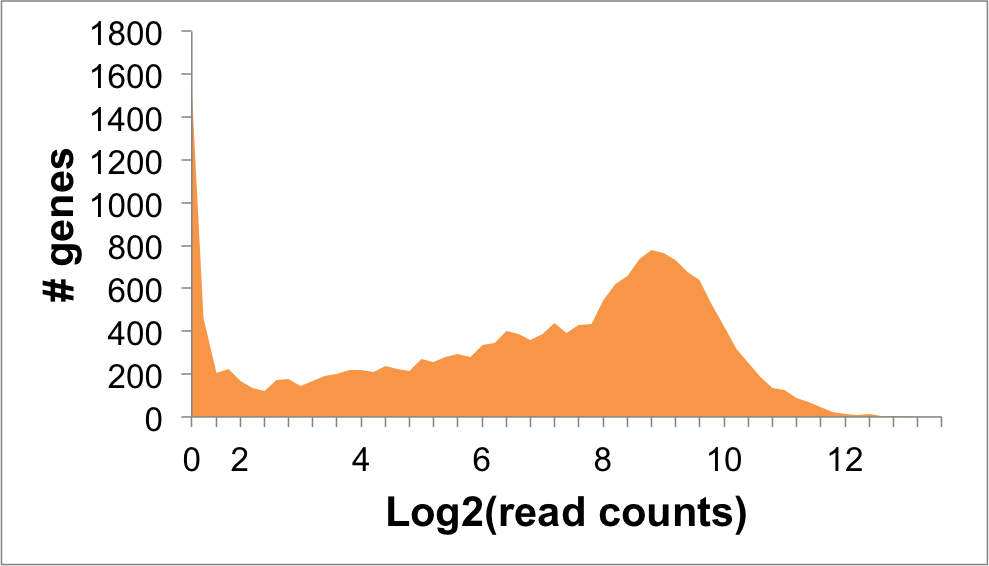
- Expression level (log2 read counts): 0.34
Expression Distribution
UCN Expression in NALM6 Cells: 0.34