KIR3DL2
Gene Information
- Official Symbol: KIR3DL2
- Official Name: killer cell immunoglobulin like receptor, three Ig domains and long cytoplasmic tail 2
- Aliases and Previous Symbols: N/A
- Entrez ID: 3812
- UniProt: P43630
- Interactions: BioGRID
- PubMed articles: Open PubMed
- OMIM: Open OMIM
Function Summary
- Entrez Summary: Killer cell immunoglobulin-like receptors (KIRs) are transmembrane glycoproteins expressed by natural killer cells and subsets of T cells. The KIR genes are polymorphic and highly homologous and they are found in a cluster on chromosome 19q13.4 within the 1 Mb leukocyte receptor complex (LRC). The gene content of the KIR gene cluster varies among haplotypes, although several 'framework' genes are found in all haplotypes (KIR3DL3, KIR3DP1, KIR3DL4, KIR3DL2). The KIR proteins are classified by the number of extracellular immunoglobulin domains (2D or 3D) and by whether they have a long (L) or short (S) cytoplasmic domain. KIR proteins with the long cytoplasmic domain transduce inhibitory signals upon ligand binding via an immune tyrosine-based inhibitory motif (ITIM), while KIR proteins with the short cytoplasmic domain lack the ITIM motif and instead associate with the TYRO protein tyrosine kinase binding protein to transduce activating signals. The ligands for several KIR proteins are subsets of HLA class I molecules; thus, KIR proteins are thought to play an important role in regulation of the immune response. This gene is one of the 'framework' loci that is present on all haplotypes. Alternatively spliced transcript variants encoding multiple isoforms have been observed for this gene. [provided by RefSeq, Jun 2011].
- UniProt Summary: Receptor on natural killer (NK) cells for HLA-A alleles. Inhibits the activity of NK cells thus preventing cell lysis.
CRISPR Data
Essentiality in NALM6
- Essentiality Rank: 9106
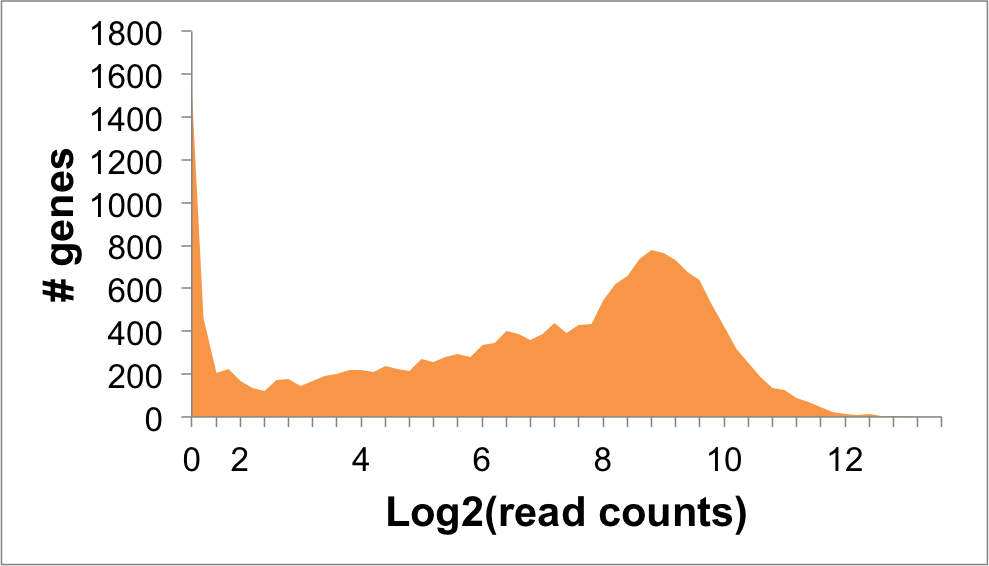
- Expression level (log2 read counts): 4.61
KIR3DL2 Expression in NALM6 Cells: 4.61