PHB2
Gene Information
- Official Symbol: PHB2
- Official Name: prohibitin 2
- Aliases and Previous Symbols: N/A
- Entrez ID: 11331
- UniProt: Q99623
- Interactions: BioGRID
- PubMed articles: Open PubMed
- OMIM: Open OMIM
Function Summary
- Entrez Summary: N/A
- UniProt Summary: Acts as a mediator of transcriptional repression by nuclear hormone receptors via recruitment of histone deacetylases (By similarity). Functions as an estrogen receptor (ER)-selective coregulator that potentiates the inhibitory activities of antiestrogens and represses the activity of estrogens. Competes with NCOA1 for modulation of ER transcriptional activity. Probably involved in regulating mitochondrial respiration activity and in aging. {ECO:0000250|UniProtKB:O35129, ECO:0000269|PubMed:10359819, ECO:0000303|PubMed:11302691}.
Pfam Domains GO Terms
Pfam Domains
| Band 7 |
GO Terms
| amide binding |
| sphingolipid binding |
| negative regulation of mammary gland epithelial cell proliferation |
| mammary gland branching involved in thelarche |
| regulation of branching involved in mammary gland duct morphogenesis |
| positive regulation of exit from mitosis |
| thelarche |
| regulation of cytochrome-c oxidase activity |
| development of secondary female sexual characteristics |
| regulation of electron transfer activity |
| development of secondary sexual characteristics |
| negative regulation of intracellular estrogen receptor signaling pathway |
| regulation of mammary gland epithelial cell proliferation |
| mammary gland lobule development |
| mammary gland alveolus development |
| regulation of exit from mitosis |
| regulation of proton transport |
| branching involved in mammary gland duct morphogenesis |
| mitochondrial calcium ion transmembrane transport |
| mammary gland duct morphogenesis |
| presynaptic active zone |
| negative regulation of intracellular steroid hormone receptor signaling pathway |
| cell periphery |
| regulation of intracellular estrogen receptor signaling pathway |
| mammary gland morphogenesis |
| estrogen receptor binding |
| positive regulation of cell cycle G1/S phase transition |
| sister chromatid cohesion |
| positive regulation of mitotic nuclear division |
| regulation of morphogenesis of a branching structure |
| mammary gland epithelium development |
| positive regulation of nuclear division |
| GABA-ergic synapse |
| cellular response to retinoic acid |
| regulation of intracellular steroid hormone receptor signaling pathway |
| positive regulation of mitotic cell cycle phase transition |
| positive regulation of cell cycle phase transition |
| regulation of oxidoreductase activity |
| protein import into nucleus |
| gland morphogenesis |
| protein N-terminus binding |
| response to retinoic acid |
| nuclear matrix |
| import into nucleus |
| regulation of complement activation |
| negative regulation of epithelial cell proliferation |
| mammary gland development |
| branching morphogenesis of an epithelial tube |
| regulation of humoral immune response |
| protein import |
| sister chromatid segregation |
| positive regulation of mitotic cell cycle |
| morphogenesis of a branching epithelium |
| regulation of generation of precursor metabolites and energy |
| negative regulation of DNA-binding transcription factor activity |
| protein localization to nucleus |
| mitochondrial outer membrane |
| regulation of cell cycle G1/S phase transition |
| morphogenesis of a branching structure |
| regulation of mitotic nuclear division |
| protein stabilization |
| regulation of morphogenesis of an epithelium |
| cellular response to hypoxia |
| protein C-terminus binding |
| regulation of nuclear division |
| cellular response to decreased oxygen levels |
| calcium ion transmembrane transport |
| cellular response to acid chemical |
| positive regulation of ERK1 and ERK2 cascade |
| cellular response to oxygen levels |
| nuclear chromosome segregation |
| calcium ion transport |
| postsynaptic density |
| regulation of animal organ morphogenesis |
| regulation of ion transmembrane transporter activity |
| positive regulation of DNA-binding transcription factor activity |
| nucleocytoplasmic transport |
| regulation of transmembrane transporter activity |
| nuclear transport |
| chromosome segregation |
| regulation of transporter activity |
| positive regulation of cell cycle process |
| regulation of protein stability |
| regulation of ERK1 and ERK2 cascade |
| axon |
| divalent metal ion transport |
| divalent inorganic cation transport |
| epithelial tube morphogenesis |
| regulation of cation transmembrane transport |
| regulation of epithelial cell proliferation |
| response to hypoxia |
| response to acid chemical |
| glutamatergic synapse |
| response to decreased oxygen levels |
| positive regulation of cell cycle |
| response to oxygen levels |
| mitochondrial inner membrane |
| gland development |
| regulation of mitotic cell cycle phase transition |
| regulation of DNA-binding transcription factor activity |
| morphogenesis of an epithelium |
| establishment of protein localization to organelle |
| mitochondrion organization |
| regulation of cell cycle phase transition |
| regulation of immune effector process |
| regulation of ion transmembrane transport |
| cellular response to lipid |
| positive regulation of MAPK cascade |
| inorganic cation transmembrane transport |
| regulation of transmembrane transport |
| tissue morphogenesis |
| response to wounding |
| protein-containing complex |
| cation transmembrane transport |
| cell surface |
| positive regulation of organelle organization |
| regulation of mitotic cell cycle |
| metal ion transport |
| inorganic ion transmembrane transport |
| tube morphogenesis |
| developmental process involved in reproduction |
| negative regulation of cell population proliferation |
| regulation of ion transport |
| protein localization to organelle |
| regulation of cell cycle process |
| regulation of MAPK cascade |
| cation transport |
| tube development |
| response to lipid |
| negative regulation of apoptotic process |
| negative regulation of programmed cell death |
| negative regulation of developmental process |
| ion transmembrane transport |
| animal organ morphogenesis |
| intracellular protein transport |
| negative regulation of cell death |
| cell cycle process |
| positive regulation of protein phosphorylation |
| positive regulation of intracellular signal transduction |
| cellular response to oxygen-containing compound |
| positive regulation of phosphorylation |
| regulation of anatomical structure morphogenesis |
| chromosome organization |
| epithelium development |
| positive regulation of phosphorus metabolic process |
| positive regulation of phosphate metabolic process |
| negative regulation of molecular function |
| regulation of immune response |
| response to abiotic stimulus |
| regulation of cell cycle |
| negative regulation of transcription, DNA-templated |
| negative regulation of multicellular organismal process |
| positive regulation of cellular component organization |
| positive regulation of protein modification process |
| negative regulation of nucleic acid-templated transcription |
| negative regulation of RNA biosynthetic process |
| mitochondrion |
| negative regulation of signal transduction |
| transmembrane transport |
| regulation of organelle organization |
| negative regulation of RNA metabolic process |
| cell cycle |
| negative regulation of cell communication |
| negative regulation of signaling |
| ion transport |
| negative regulation of cellular macromolecule biosynthetic process |
| reproductive process |
| reproduction |
| negative regulation of nucleobase-containing compound metabolic process |
| regulation of protein phosphorylation |
| negative regulation of macromolecule biosynthetic process |
| protein transport |
| negative regulation of cellular biosynthetic process |
| intracellular transport |
| peptide transport |
| regulation of apoptotic process |
| negative regulation of biosynthetic process |
| response to oxygen-containing compound |
| regulation of programmed cell death |
| amide transport |
| cellular protein localization |
| regulation of phosphorylation |
| cellular macromolecule localization |
| positive regulation of cellular protein metabolic process |
| establishment of protein localization |
| regulation of cell population proliferation |
| negative regulation of response to stimulus |
| regulation of immune system process |
| positive regulation of signal transduction |
| regulation of cell death |
| cellular response to stress |
| positive regulation of protein metabolic process |
| negative regulation of gene expression |
| tissue development |
| positive regulation of molecular function |
| regulation of phosphate metabolic process |
| regulation of phosphorus metabolic process |
| positive regulation of cell communication |
| positive regulation of signaling |
| regulation of intracellular signal transduction |
| establishment of localization in cell |
| nitrogen compound transport |
| regulation of protein modification process |
| regulation of transport |
CRISPR Data
Compound Hit Most Correlated Genes in Chemogenomics Tissues where Essential in the Avana Dataset (DepMap 20Q1)
Compound Hit
Tissues where Essential in the Avana Dataset (DepMap 20Q1)
Global Fraction of Cell Lines Where Essential: 537/739
| Tissue | Fraction Of Cell Lines Where Essential |
|---|---|
| 1290807.0 | 1/1 |
| 909776.0 | 1/1 |
| bile duct | 19/28 |
| blood | 25/28 |
| bone | 16/26 |
| breast | 21/33 |
| central nervous system | 42/56 |
| cervix | 3/4 |
| colorectal | 12/17 |
| esophagus | 10/13 |
| fibroblast | 1/1 |
| gastric | 13/16 |
| kidney | 17/21 |
| liver | 16/20 |
| lung | 55/75 |
| lymphocyte | 13/16 |
| ovary | 20/26 |
| pancreas | 16/24 |
| peripheral nervous system | 14/16 |
| plasma cell | 13/15 |
| prostate | 1/1 |
| skin | 17/24 |
| soft tissue | 8/9 |
| thyroid | 1/2 |
| upper aerodigestive | 14/22 |
| urinary tract | 20/29 |
| uterus | 3/5 |
Essentiality in NALM6
- Essentiality Rank: 91
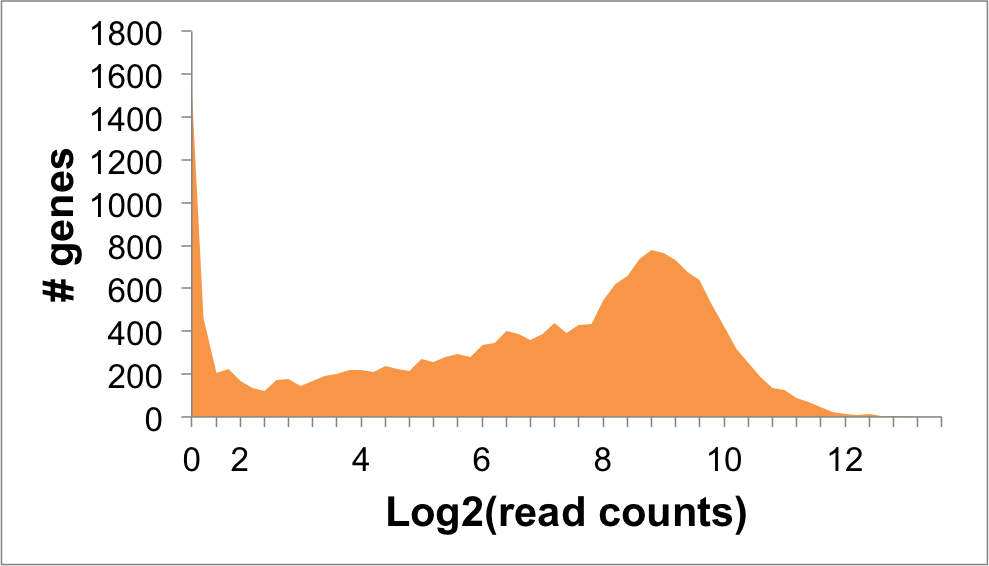
- Expression level (log2 read counts): 8.01
Expression Distribution
PHB2 Expression in NALM6 Cells: 8.01