EDNRB
Gene Information
- Official Symbol: EDNRB
- Official Name: endothelin receptor type B
- Aliases and Previous Symbols: N/A
- Entrez ID: 1910
- UniProt: P24530
- Interactions: BioGRID
- PubMed articles: Open PubMed
- OMIM: Open OMIM
Function Summary
- Entrez Summary: The protein encoded by this gene is a G protein-coupled receptor which activates a phosphatidylinositol-calcium second messenger system. Its ligand, endothelin, consists of a family of three potent vasoactive peptides: ET1, ET2, and ET3. Studies suggest that the multigenic disorder, Hirschsprung disease type 2, is due to mutations in the endothelin receptor type B gene. Alternative splicing and the use of alternative promoters results in multiple transcript variants. [provided by RefSeq, Oct 2016].
- UniProt Summary: N/A
Pfam Domains GO Terms
Pfam Domains
| 7TM GPCR Srsx |
| 7tm 1 |
GO Terms
| enteric smooth muscle cell differentiation |
| response to endothelin |
| endothelin receptor activity |
| posterior midgut development |
| endothelin receptor signaling pathway |
| negative regulation of neuron maturation |
| vein smooth muscle contraction |
| positive regulation of penile erection |
| type 1 angiotensin receptor binding |
| regulation of penile erection |
| negative regulation of cell maturation |
| regulation of fever generation |
| epithelial fluid transport |
| regulation of neuron maturation |
| enteric nervous system development |
| regulation of heat generation |
| midgut development |
| macrophage chemotaxis |
| positive regulation of renal sodium excretion |
| positive regulation of urine volume |
| vascular smooth muscle contraction |
| transepithelial transport |
| phasic smooth muscle contraction |
| negative regulation of adenylate cyclase activity |
| macrophage migration |
| negative regulation of cyclase activity |
| melanocyte differentiation |
| regulation of renal sodium excretion |
| regulation of urine volume |
| negative regulation of lyase activity |
| regulation of cell maturation |
| regulation of excretion |
| cGMP-mediated signaling |
| fluid transport |
| regulation of adenylate cyclase activity |
| response to pain |
| vasodilation |
| vasoconstriction |
| pigment cell differentiation |
| smooth muscle cell differentiation |
| regulation of renal system process |
| negative regulation of blood vessel diameter |
| regulation of sensory perception of pain |
| peptide hormone binding |
| regulation of sensory perception |
| developmental pigmentation |
| regulation of cyclase activity |
| regulation of acute inflammatory response |
| regulation of lyase activity |
| autonomic nervous system development |
| smooth muscle contraction |
| neural crest cell migration |
| positive regulation of blood vessel diameter |
| multicellular organismal response to stress |
| peripheral nervous system development |
| sensory perception of pain |
| positive regulation of reproductive process |
| neural crest cell development |
| mesenchymal cell development |
| stem cell development |
| neural crest cell differentiation |
| pigmentation |
| phospholipase C-activating G protein-coupled receptor signaling pathway |
| regulation of pH |
| renal system process |
| myeloid leukocyte migration |
| digestive tract development |
| regulation of nervous system process |
| regulation of tube diameter |
| regulation of blood vessel diameter |
| monovalent inorganic cation homeostasis |
| regulation of tube size |
| digestive system development |
| leukocyte chemotaxis |
| calcium-mediated signaling |
| mesenchymal cell differentiation |
| stem cell differentiation |
| regulation of reproductive process |
| vascular process in circulatory system |
| cyclic-nucleotide-mediated signaling |
| ameboidal-type cell migration |
| regulation of blood pressure |
| cellular response to lipopolysaccharide |
| cellular response to molecule of bacterial origin |
| cell chemotaxis |
| cellular response to biotic stimulus |
| mesenchyme development |
| negative regulation of neuron differentiation |
| membrane raft |
| nuclear membrane |
| muscle cell differentiation |
| muscle contraction |
| aging |
| positive regulation of cytosolic calcium ion concentration |
| negative regulation of neurogenesis |
| muscle system process |
| negative regulation of nervous system development |
| response to lipopolysaccharide |
| response to molecule of bacterial origin |
| regulation of cytosolic calcium ion concentration |
| regulation of epithelial cell proliferation |
| negative regulation of cell development |
| second-messenger-mediated signaling |
| regulation of inflammatory response |
| leukocyte migration |
| blood circulation |
| response to peptide hormone |
| circulatory system process |
| positive regulation of secretion |
| cellular calcium ion homeostasis |
| calcium ion homeostasis |
| cellular divalent inorganic cation homeostasis |
| response to peptide |
| muscle structure development |
| divalent inorganic cation homeostasis |
| regulation of body fluid levels |
| positive regulation of multi-organism process |
| regulation of anatomical structure size |
| cellular response to lipid |
| chemotaxis |
| taxis |
| cellular metal ion homeostasis |
| regulation of system process |
| metal ion homeostasis |
| cellular cation homeostasis |
| cellular ion homeostasis |
| regulation of neuron differentiation |
| response to bacterium |
| cation homeostasis |
| negative regulation of cell differentiation |
| inorganic ion homeostasis |
| cellular chemical homeostasis |
| regulation of defense response |
| regulation of multi-organism process |
| ion homeostasis |
| negative regulation of catalytic activity |
| regulation of secretion |
| regulation of neurogenesis |
| tube development |
| response to lipid |
| negative regulation of transcription by RNA polymerase II |
| negative regulation of apoptotic process |
| cellular homeostasis |
| negative regulation of programmed cell death |
| response to hormone |
| positive regulation of cell population proliferation |
| response to organic cyclic compound |
| regulation of nervous system development |
| regulation of cell development |
| negative regulation of developmental process |
| cell migration |
| sensory perception |
| positive regulation of transport |
| negative regulation of cell death |
| response to organonitrogen compound |
| positive regulation of protein phosphorylation |
| negative regulation of cellular protein metabolic process |
| cellular response to oxygen-containing compound |
| positive regulation of phosphorylation |
| localization of cell |
| cell motility |
| response to nitrogen compound |
| regulation of response to external stimulus |
| negative regulation of protein metabolic process |
| chemical homeostasis |
| positive regulation of phosphate metabolic process |
| positive regulation of phosphorus metabolic process |
| negative regulation of molecular function |
| negative regulation of transcription, DNA-templated |
| negative regulation of multicellular organismal process |
| positive regulation of protein modification process |
| negative regulation of nucleic acid-templated transcription |
| negative regulation of RNA biosynthetic process |
| response to other organism |
| response to external biotic stimulus |
| locomotion |
| G protein-coupled receptor signaling pathway |
| response to biotic stimulus |
| negative regulation of RNA metabolic process |
| nervous system process |
| negative regulation of cellular macromolecule biosynthetic process |
| integral component of plasma membrane |
| negative regulation of nucleobase-containing compound metabolic process |
| regulation of protein phosphorylation |
| negative regulation of macromolecule biosynthetic process |
| response to endogenous stimulus |
| regulation of response to stress |
| negative regulation of cellular biosynthetic process |
| generation of neurons |
| regulation of apoptotic process |
| negative regulation of biosynthetic process |
| movement of cell or subcellular component |
| response to oxygen-containing compound |
| regulation of programmed cell death |
| regulation of phosphorylation |
| positive regulation of cellular protein metabolic process |
| regulation of cell population proliferation |
| neurogenesis |
| homeostatic process |
| cell development |
| regulation of cell death |
| intracellular signal transduction |
| positive regulation of protein metabolic process |
| negative regulation of gene expression |
| positive regulation of multicellular organismal process |
| tissue development |
| regulation of phosphate metabolic process |
| regulation of phosphorus metabolic process |
| regulation of cell differentiation |
| regulation of protein modification process |
| regulation of transport |
| system process |
CRISPR Data
Compound Hit Most Correlated Genes in Chemogenomics Tissues where Essential in the Avana Dataset (DepMap 20Q1)
Compound Hit
Most Correlated Genes in Chemogenomics
No correlation found to any other genes in chemogenomics.
Tissues where Essential in the Avana Dataset (DepMap 20Q1)
Global Fraction of Cell Lines Where Essential: 0/739
| Tissue | Fraction Of Cell Lines Where Essential |
|---|---|
| 1290807.0 | 0/1 |
| 909776.0 | 0/1 |
| bile duct | 0/28 |
| blood | 0/28 |
| bone | 0/26 |
| breast | 0/33 |
| central nervous system | 0/56 |
| cervix | 0/4 |
| colorectal | 0/17 |
| esophagus | 0/13 |
| fibroblast | 0/1 |
| gastric | 0/16 |
| kidney | 0/21 |
| liver | 0/20 |
| lung | 0/75 |
| lymphocyte | 0/16 |
| ovary | 0/26 |
| pancreas | 0/24 |
| peripheral nervous system | 0/16 |
| plasma cell | 0/15 |
| prostate | 0/1 |
| skin | 0/24 |
| soft tissue | 0/9 |
| thyroid | 0/2 |
| upper aerodigestive | 0/22 |
| urinary tract | 0/29 |
| uterus | 0/5 |
Essentiality in NALM6
- Essentiality Rank: 11798
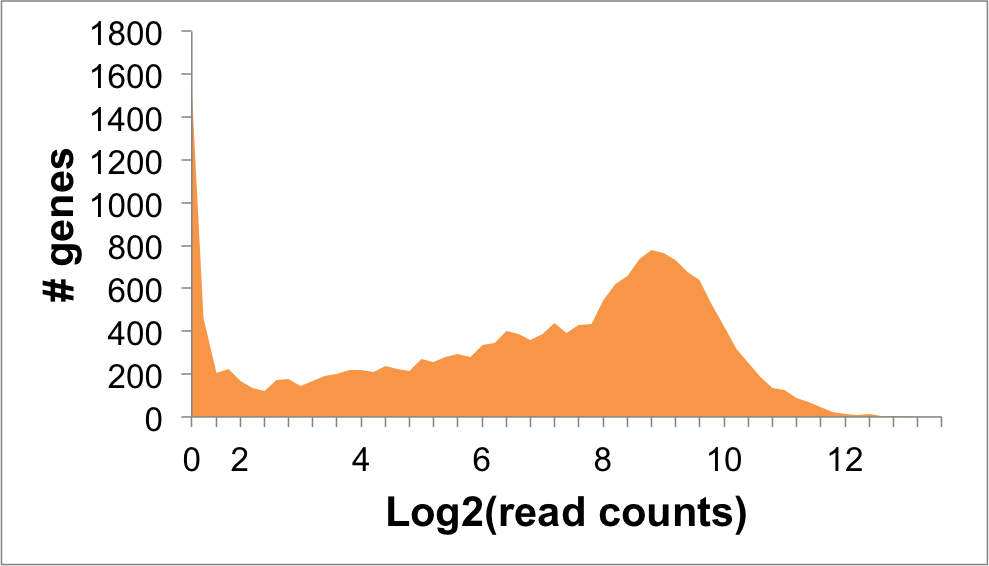
- Expression level (log2 read counts): -4.01
Expression Distribution
EDNRB Expression in NALM6 Cells: -4.01